Road Trip Serbia Bulgaria Romania 10 Days: The Ultimate Balkans Adventure Guide
Planning a road trip Serbia Bulgaria Romania 10 days is one of the best decisions any traveler can make. These three Balkan nations pack an extraordinary mix of medieval fortresses, dramatic mountain landscapes, ancient monasteries, vibrant cities, and some of Europe’s most affordable travel experiences — all within a compact, drivable region. Whether you are a seasoned road tripper or planning your first extended drive across borders, this itinerary delivers raw beauty, cultural depth, and unforgettable memories without breaking the bank.
This guide covers everything you need — from the best route and daily breakdown to border crossing tips, driving regulations, budget estimates, and the hidden gems most tourists never find.
Table of Contents
Why Choose a Road Trip Serbia Bulgaria Romania 10 Days?
The Serbia Bulgaria Romania road trip offers a rare combination of accessibility and authenticity. Unlike Western Europe, these countries remain largely off the mainstream tourist radar, which means fewer crowds, lower prices, and a far more genuine travel experience. The three countries share borders, making overland travel seamless, and the road infrastructure — particularly in Romania — has improved significantly in recent years.
Here is why this route stands out:
- Diverse landscapes: From the Danube gorges and Serbian highlands to the Bulgarian Rhodope Mountains and Romania’s Carpathians, every day brings a different backdrop.
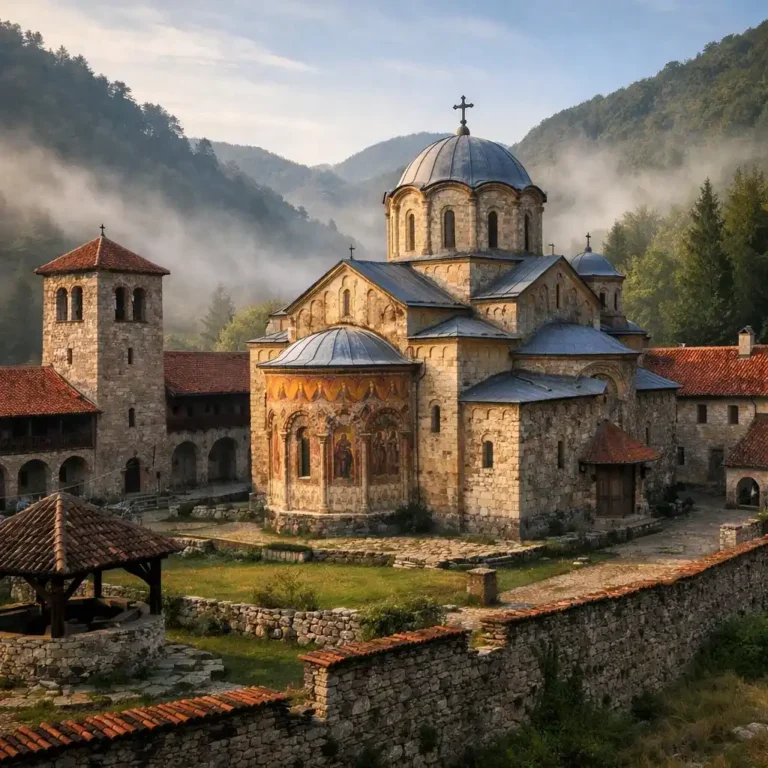
- Rich history: Roman ruins, Ottoman architecture, Byzantine monasteries, Dacian fortresses, and communist-era heritage all coexist along this route.
- Budget-friendly: Compared to Western Europe, daily costs are significantly lower. Budget travelers can manage comfortably on €40–€60 per day, including accommodation, food, and fuel.
- Manageable distances: The total driving distance across all three countries sits comfortably between 1,800 and 2,200 kilometers, making it perfectly achievable in 10 days without feeling rushed.
- Easy border crossings: All three countries are EU members or EU candidate states with well-staffed border crossings and no major complications for EU and most international passport holders.
When it comes to booking accommodation along your road trip Serbia Bulgaria Romania 10 days, you have plenty of reliable platforms to choose from. Booking.com remains the most comprehensive option for this region, offering a wide range of hotels, guesthouses, and apartments across all three countries with free cancellation policies on most listings. For competitive rates and last-minute deals, Agoda and Hotels.com are excellent alternatives worth comparing before you commit. If you prefer a more local, home-like experience — especially in smaller towns like Sighișoara or Veliko Tarnovo — Vrbo and Expedia list a solid selection of vacation rentals and bundled flight-and-hotel packages that can bring your overall cost down considerably.
Best Time to Take a Road Trip Through Serbia, Bulgaria, and Romania
The ideal window for a 10-day Balkans road trip is between May and September. Late spring (May–June) offers lush green landscapes, mild temperatures, and fewer tourists. Summer (July–August) brings warmer weather and festivals but also peak crowds in places like Bucharest and Sinaia. Early autumn (September) is arguably the finest time — the light turns golden, the mountain passes remain open, and the harvest season fills local markets with fresh produce and wine.
Winter travel is possible but challenging. Snow can close mountain roads in Romania and Bulgaria, and some attractions operate on reduced hours. If you travel between November and March, adjust your route to focus on cities rather than highland areas.
Border Crossing & Visa Requirements: What You Need to Know
One of the most critical aspects of planning a road trip through the Balkans is understanding the border regulations. While Serbia, Bulgaria, and Romania are geographically connected, they have different political statuses.
- Serbia: Generally allows visa-free entry for many nationalities, but always verify the latest requirements before departure.
- Bulgaria & Romania: Both are EU members. Although they are not fully part of the Schengen Area for land travel yet, their visa policies align with Schengen standards. Travelers usually need a valid Schengen visa or a specific entry visa for these countries.
⚠️ Important Border Alert: If you are renting a car, you must obtain a “Cross-Border Letter” from the rental agency. Not all companies allow their vehicles to cross from Serbia (non-EU) into Bulgaria and Romania (EU). Missing this document can result in denied crossing at checkpoints like Dimitrovgrad (Serbia-Bulgaria border) or Ruse (Bulgaria-Romania border). Always keep your passport and rental contract accessible.
Road Tolls & Vignettes: How to Pay and Avoid Fines
Navigating the road payment systems is essential to avoid hefty fines. The system changes drastically as you cross borders:
- In Serbia: Uses a traditional toll booth system (Open System). You pay at the gate using cash (Dinar) or card. Prices depend on distance and vehicle category.
- In Bulgaria & Romania: These countries use the Vignette system. You do not pay at toll gates on highways; instead, you must purchase a sticker (physical or electronic) beforehand.
💡 Pro Tip: Do not wait until the last minute to buy your Vignettes. For Bulgaria, buy online at bg-toll.bg, and for Romania, use roviniete.ro. Keep the digital or printed receipt visible, as road checks are frequent, and fines for driving without a valid vignette are steep. Note: Keep some Serbian Dinars (RSD) in cash for the toll roads in Serbia before leaving Belgrade, as card machines can occasionally be offline.
The Best Way to Travel Between Serbia and Bulgaria
For road trippers, the most efficient route is the E75 highway, crossing the border at Dimitrovgrad/Kalotina. The drive from Belgrade to Sofia takes approximately 4 hours on a well-maintained highway. This route is superior to train travel, which can be slow and infrequent, or bus travel, which lacks the freedom to stop at hidden gems along the way.
H3: Are the Roads Safe in Romania?
This is a common concern for travelers. The short answer is yes, but caution is advised. Major highways (like A1 and A2) are modern and safe. However, exploring “The Most Beautiful Villages in the Carpathians” means navigating winding mountain roads.
🚗 Safety Rule for Romanian Roads:
- Avoid Night Driving in Rural Areas: Roads in villages often lack street lighting, and you may encounter stray dogs, horse-drawn carts, or wildlife.
- Watch for Speed Limits: Traffic police are strict, and speed traps are common, especially when entering villages where the limit suddenly drops to 50 km/h.
- Defensive Driving: In cities like Bucharest, driving can be aggressive; stay alert for sudden lane changes.
List: The Most Beautiful Villages in the Carpathians
Don’t just stick to the cities; the Romanian countryside is the highlight of the trip:
- Viscri: A UNESCO World Heritage site famous for its fortified church and Saxon architecture.
- Bran: While famous for Dracula’s Castle, the surrounding village offers stunning mountain views.
- Sinaia: Known as the “Pearl of the Carpathians,” it’s home to Peleș Castle and is a perfect stop for nature lovers.
What to Do If Your Car Breaks Down
Preparation is key to a stress-free road trip. Here is your emergency cheat sheet:
- European Emergency Number: Dial 112. This works in Serbia, Bulgaria, and Romania. Operators usually speak English.
- Rental Car Protocols: Always save the emergency number of your rental agency in your contacts immediately upon picking up the car.
- Essential Apps to Download:
- Maps.me: Essential for offline navigation, especially in remote mountainous areas where signal drops.
- Waze: Great for real-time police traps and traffic updates in major cities.
- Google Translate: Download the offline packs for Serbian, Bulgarian, and Romanian to translate road signs or ask for help without the internet.
A Guide for Muslim Travelers: Halal Food, Mosques, and Language
This region is increasingly welcoming to Muslim tourists. Here is how to navigate your specific needs:
- Halal Food:
- Belgrade: Look for Bosnian restaurants like Hadam or Farah, which serve authentic Balkan grill and are certified Halal. You can also find Halal butchers in the “Dorćol” district.
- Sofia: The area around the Banya Bashi Mosque has several eateries offering Halal-friendly dishes.
- Bucharest: Search for Lebanese or Turkish restaurants near the city center, or visit the social cantine near the Grand Mosque.
- Mosques & Prayer Times:
- Sofia: The Banya Bashi Mosque is located right in the city center near the mineral baths. It is a historic site and active place of worship.
- Bucharest: The Grand Mosque of Bucharest (Geamia Mitropoliei) is a central hub for the Muslim community.
- Language Barrier:
- English is widely spoken in tourist areas of Belgrade, Sofia, and Bucharest, especially by younger generations.
- In rural villages and with older generations, communication can be harder. Using translation apps is highly recommended.
Starting Point: Where to Begin Your Serbia Bulgaria Romania Road Trip
Most travelers begin this 10-day road trip in Belgrade, Serbia, which is well-connected by international flights, trains, and buses. Alternatively, you can start in Bucharest, Romania, and run the itinerary in reverse. Both cities have international airports and established car rental agencies.
If you plan to rent a vehicle, confirm with the rental company that cross-border travel is permitted into all three countries. Some budget agencies restrict international movement, so choose a reputable provider and get the necessary documentation, including a Green Card for insurance coverage.
Getting to Belgrade or Bucharest — and moving between countries — is easier than most travelers expect. Kiwi.com is particularly useful for finding creative multi-city flight combinations that let you fly into one country and out of another, which suits this itinerary perfectly. WayAway aggregates flight deals and offers cashback on bookings, making it a smart tool for budget-conscious road trippers. For overland connections — whether you are taking a train from Sofia to Plovdiv or a bus from Niš to Belgrade — Omio and 12Go cover European routes with clear pricing and easy booking, so you can plan every leg of your journey in one place.
10-Day Road Trip Serbia Bulgaria Romania: Day-by-Day Itinerary
Day 1 – Arrival in Belgrade, Serbia
Fly into Nikola Tesla Airport and collect your rental car. Belgrade deserves at least one full day before the road begins. The Serbian capital sits at the confluence of the Sava and Danube rivers and pulses with energy day and night.
Must-see in Belgrade:
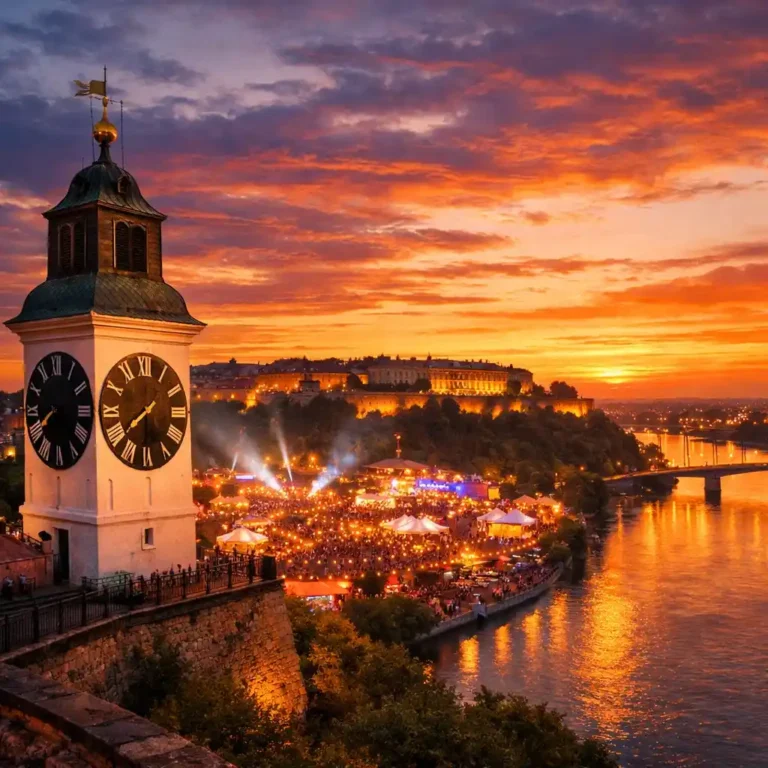
- Kalemegdan Fortress — A vast medieval citadel offering panoramic views over both rivers. Free to enter and ideal for an afternoon stroll.
- Skadarlija — Belgrade’s bohemian quarter, lined with cobblestone streets, kafanas (traditional Serbian taverns), and live folk music.
- St. Sava Temple — One of the largest Orthodox churches in the world. The interior mosaic, completed in recent years, is breathtaking.
- Knez Mihailova Street — The main pedestrian boulevard for shopping, people-watching, and excellent coffee.
Where to stay: The Savamala neighborhood offers boutique hotels and creative hostels. Budget options start at €25 per night; mid-range hotels average €50–€70.
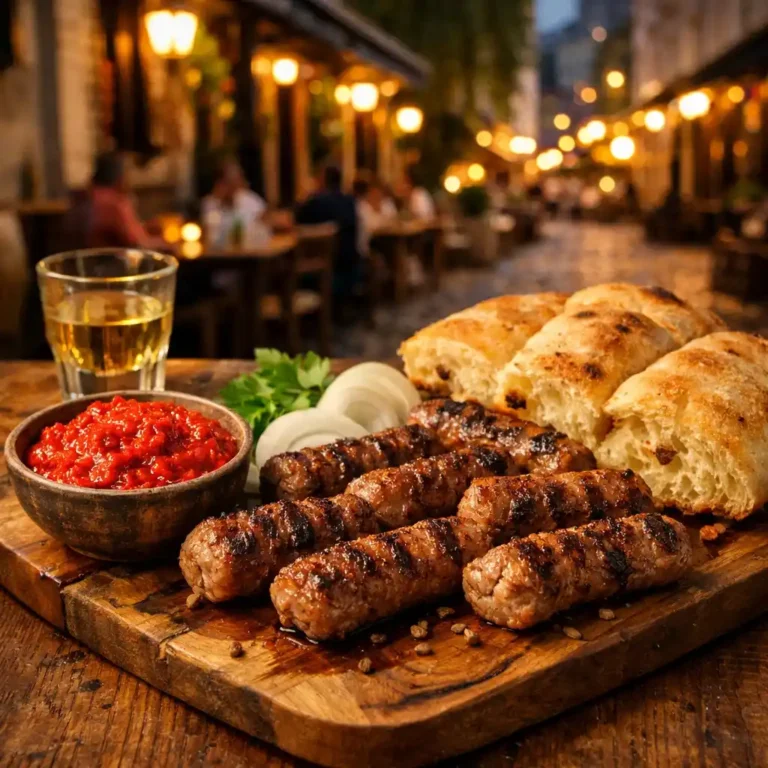
Where to eat: Try ćevapi (grilled minced meat sausages), pljeskavica (Serbian burger), and kajmak (clotted cream) at any local grill house. Dinner for two rarely exceeds €20.
Day 2 – Belgrade to Niš, Serbia (240 km / 2.5 hours)
Head south along the E75 motorway toward Niš, Serbia’s third-largest city and one of the oldest in the Balkans. Niš is the birthplace of Roman Emperor Constantine the Great, and its historical layering — Roman, Ottoman, and Serbian — makes it a compelling stop.
Must-see in Niš:
- Skull Tower (Ćele Kula) — A haunting 19th-century Ottoman structure built from the skulls of Serbian rebels. Grim but historically significant.
- Niš Fortress — A well-preserved Ottoman fortress right in the city center, now a park and social hub.
- Mediana Archaeological Site — Roman ruins including villas, baths, and a granary dating to Constantine’s era.
- Nišlija Čaršija — The old bazaar district, perfect for buying handmade goods and local food.
Niš is also the gateway to the Sićevo Gorge, a scenic canyon carved by the Nišava River — well worth a short detour before arriving in the city.
Overnight: Stay in Niš to soak up the local atmosphere. Budget accommodation starts at €20 per night.
Day 3 – Niš to Sofia, Bulgaria (190 km / 2.5 hours)
Cross the Serbian-Bulgarian border at Gradina/Kalotina — one of the busiest but generally smooth border crossings in the region. From Niš, the E80 motorway leads directly to Sofia, Bulgaria’s compact and fascinating capital.
Sofia sits at the foot of Vitosha Mountain and blends Roman ruins, Ottoman mosques, Soviet-era architecture, and sleek modern districts in a way that is uniquely its own.
Must-see in Sofia:
- Alexander Nevsky Cathedral — Bulgaria’s most iconic landmark. The neo-Byzantine cathedral’s golden domes dominate the city skyline.
- Serdica Roman Ruins — Discovered beneath the city center, these ruins are now integrated into the Serdica metro station complex.
- Boyana Church — A UNESCO World Heritage Site on the outskirts of Sofia, housing exceptionally well-preserved 13th-century frescoes.
- Vitosha Mountain — Drive or take a gondola up to Aleko hut for mountain trails and views over the city.
- Women’s Market (Zhenski Pazar) — Sofia’s most vibrant open-air market, selling everything from spices to ceramics.
Where to stay: Sofia’s city center offers excellent value. A comfortable mid-range hotel costs €45–€70 per night.
Day 4 – Sofia to Plovdiv, Bulgaria (150 km / 1.5 hours)
Drive east along the Trakia motorway to Plovdiv, one of Europe’s oldest continuously inhabited cities and the European Capital of Culture 2019. Plovdiv’s Old Town is a UNESCO-listed treasure of colorful National Revival architecture, Roman ruins, and gallery-lined streets.
Must-see in Plovdiv:
- Old Town (Staria Grad) — Wander the cobblestone streets past 19th-century merchant houses painted in vivid blues, yellows, and reds.
- Roman Amphitheater — A remarkably well-preserved Roman theater still used for open-air performances today.
- Kapana Creative District — A revitalized neighborhood packed with independent cafés, street art, and artisan workshops.
- Nebet Tepe — The hilltop that formed the original Thracian settlement, offering sweeping city views.
If time allows, make a brief stop at the Thracian Tomb of Kazanlak en route — a UNESCO-listed Thracian burial mound with original frescoes, located just off the main road.
Overnight: Stay in Plovdiv’s charming Old Town. Boutique guesthouses range from €35–€65 per night.
Day 5 – Plovdiv to Veliko Tarnovo, Bulgaria (220 km / 2.5 hours)
Travel north toward Veliko Tarnovo, the medieval capital of the Second Bulgarian Empire and arguably the most dramatically situated city in Bulgaria. The city cascades down a hillside above a horseshoe bend in the Yantra River, with the great Tsarevets Fortress crowning the scene.
Must-see in Veliko Tarnovo:
- Tsarevets Fortress — The fortress complex dominates the skyline. Walk the ramparts, explore the ruins of the Royal Palace and Patriarchal Cathedral, and, if your timing is right, watch the spectacular Sound and Light show projected onto the fortress walls each evening.
- Samovodska Čaršija — The old craftsmen’s market street, now home to artisan workshops, galleries, and coffee shops.
- Arbanasi Village — Just 4 km from Veliko Tarnovo, this preserved Bulgarian Revival village contains remarkable churches with vivid frescoes.
Overnight: Stay in Veliko Tarnovo. The hillside hotels offer some of the most scenic views of any accommodation on this entire road trip Serbia Bulgaria Romania 10 days route. Prices range from €30–€60 per night.
Day 6 – Veliko Tarnovo to Bucharest, Romania (220 km / 3 hours)
Cross the Danube into Romania via the Danube Bridge at Ruse/Giurgiu — a dramatic crossing over one of Europe’s mightiest rivers. The border process is generally straightforward for EU passport holders and typically takes 20–40 minutes.
Drive north on the A1 motorway to Bucharest, Romania’s sprawling, contradictory, and endlessly fascinating capital. Known as the “Little Paris of the East,” Bucharest combines grand Belle Époque boulevards with communist-era concrete blocks, buzzing nightlife, world-class museums, and some of the best food in the Balkans.
Must-see in Bucharest:
- Palace of the Parliament — The second-largest administrative building in the world, built by Nicolae Ceaușescu. Guided tours offer a surreal glimpse into communist-era megalomania.
- Calea Victoriei — The grand avenue lined with museums, palaces, and elegant buildings. Stroll from the National Museum of Romanian History to the Cantacuzino Palace.
- Herăstrău Park — A vast lakeside park ideal for an evening walk or bike ride, with an outdoor village museum on its shores.
- Old Town (Centrul Vechi) — Bucharest’s medieval core, now packed with restaurants, craft beer bars, and cocktail lounges housed in historic buildings.
Overnight: Bucharest offers the widest accommodation range on the trip, from €20 hostel dorms to five-star hotels. Budget mid-range options average €50–€80 per night.
If you prefer to complement your self-drive adventure with guided experiences at specific stops, several platforms make it easy to book activities on the go. Viator and GetYourGuide both offer curated day tours, skip-the-line tickets, and local guided walks in Belgrade, Sofia, Plovdiv, and Bucharest — ideal for cities where local context genuinely enriches the experience. Klook is another strong option, particularly for attraction passes and combo deals. For museum entries and landmark tickets — including Peleș Castle and the Palace of the Parliament — Tiqets lets you book mobile tickets in advance, which saves time during peak season. And if your road trip is one leg of a longer journey that includes a Mediterranean or Black Sea sailing, Cruise Critic is the go-to resource for planning and comparing cruise add-ons departing from ports in the region. Finally, if a delayed or cancelled flight disrupts your trip at any point, AirHelp helps you claim compensation quickly and with minimal hassle — a useful safety net for any international road tripper.
Day 7 – Bucharest to Sinaia and Brașov, Romania (170 km / 2 hours)
Head north through the Prahova Valley — one of Romania’s most scenic drives — stopping at Sinaia, a mountain resort town known as the “Pearl of the Carpathians.”
Must-see in Sinaia:
- Peles Castle — One of the most beautiful castles in Europe. Built as a royal summer residence in the late 19th century, the neo-Renaissance palace is filled with ornate interiors, carved wood ceilings, and Venetian mirrors.
- Sinaia Monastery — A 17th-century Orthodox monastery with peaceful courtyards and remarkable frescoes.
Continue north to Brașov, a medieval Saxon city encircled by the Carpathian Mountains.
Must-see in Brașov:
- Black Church (Biserica Neagră) — The largest Gothic church in Romania, darkened by a 17th-century fire that gave it its dramatic name.
- Council Square (Piața Sfatului) — The lively central square surrounded by pastel-colored medieval buildings.
- Tampa Mountain — A cable car or short hike leads to panoramic views and the famous Hollywood-style “BRAȘOV” sign on the hillside.
Overnight: Stay in Brașov. The old town is the perfect base for this section of the journey. Hotels range from €40–€80 per night.
Day 8 – Brașov to Bran Castle and Sighișoara, Romania (120 km / 2 hours)
This day is purpose-built for Romanian legends and medieval time travel.
Must-see:
- Bran Castle — Located 30 km from Brașov, this is the castle most associated with the Dracula legend. While historian connections to Vlad the Impaler are tenuous, the castle itself is genuinely spectacular — a Gothic fortress perched on a rock above a mountain pass.
- Râșnov Citadel — A 13th-century peasant fortress 15 km from Bran, less visited but equally dramatic.
- Sighișoara — The only inhabited medieval citadel in Europe and another UNESCO World Heritage Site. The Clocktower, painted houses, and cobbled lanes feel entirely untouched by time. Vlad the Impaler (the historical inspiration for Dracula) was born here in the 14th century.
Overnight: Spend the night in Sighișoara for a truly medieval atmosphere. Small guesthouses and boutique hotels start at €35 per night.
Day 9 – Sighișoara to Sibiu, Romania (90 km / 1.5 hours) via Transfăgărășan Highway
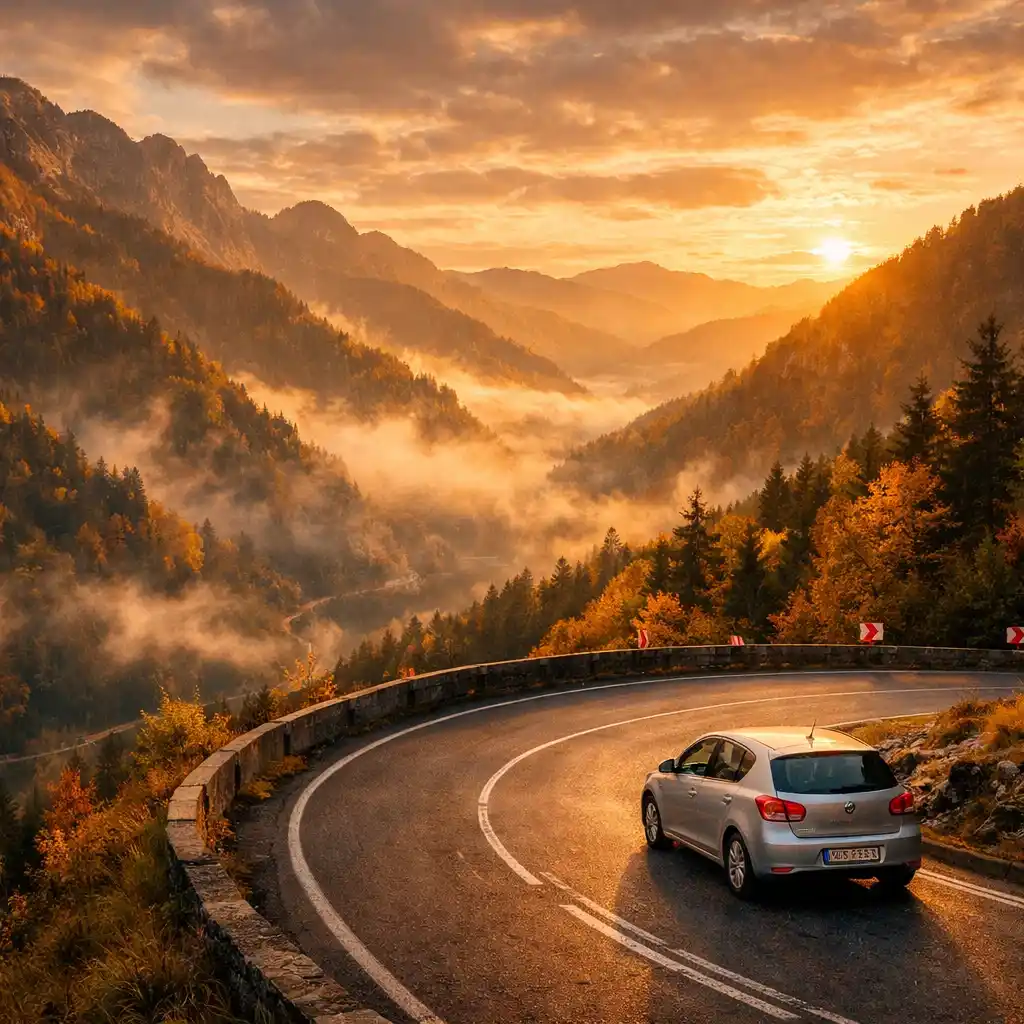
This is the most iconic driving day of the entire road trip Serbia Bulgaria Romania 10 days journey. The Transfăgărășan Highway — declared by Top Gear as “the best road in the world” — cuts through the Southern Carpathians via a series of hairpin bends, tunnels, and mountain lakes at altitudes exceeding 2,000 meters.
Note: The Transfăgărășan is typically open from late June to late October. Check road conditions before departure.
Highlights along the Transfăgărășan:
- Bâlea Lake — A glacial lake at the highest point of the pass, surrounded by rocky peaks. Stop for photos and a walk around the lake.
- Vidraru Dam and Lake — The massive arch dam at the southern end of the road, visible from a dramatic viewpoint.
- Poenari Fortress — The actual fortress used by Vlad the Impaler, perched on a cliff above the Argeș River valley.
End the day in Sibiu, considered one of the most beautiful medieval towns in Central Europe and a former European Capital of Culture.
Must-see in Sibiu:
- Large Square (Piața Mare) — Lined with Gothic and Baroque buildings, anchored by the Council Tower.
- Brukenthal National Museum — One of the oldest museums in Europe with an outstanding art collection.
- Sibiu’s Lid-Like Windows — The city’s narrow dormer windows, said to resemble watchful eyes, give the historic center a distinctive and slightly eerie character.
Overnight: Sibiu offers excellent accommodation at very reasonable prices. Budget €40–€75 per night.
Day 10 – Sibiu to Bucharest (280 km / 3 hours) and Departure
Drive back to Bucharest via the A1 motorway for your return flight, or extend the trip further into Transylvania if your schedule allows. Use any remaining time in Bucharest to explore neighborhoods you missed, pick up souvenirs from the Obor market, or enjoy a final meal of mămăligă cu brânză (polenta with cheese) and a glass of Romanian wine.
Essential Driving Tips for Your Serbia Bulgaria Romania Road Trip
1. Vignettes (Road Tax Stickers)
- Serbia: No motorway vignette needed for standard travel, but tolls apply on specific sections.
- Bulgaria: Purchase an e-vignette online before travel. Cost is approximately €15 for 7 days.
- Romania: Purchase a Rovinieta vignette at petrol stations or online. A 10-day pass costs approximately €7.
2. Speed Limits
- Serbia: 50 km/h in urban areas, 80 km/h on rural roads, 130 km/h on motorways.
- Bulgaria: 50/90/140 km/h (urban/rural/motorway).
- Romania: 50/90/130 km/h (urban/rural/motorway).
3. Fuel Petrol stations are plentiful in all three countries. Prices are lower than Western Europe. Always carry some local currency (Serbian Dinar, Bulgarian Lev, Romanian Leu) for toll booths and smaller stations.
4. Border Crossings Carry your passport, vehicle registration documents, insurance certificate (Green Card), and car rental agreement at all times. Bulgaria and Romania are EU members; Serbia is not, so expect a slightly more thorough check at the Serbian border.
5. Emergency Numbers
- Serbia: 112 (general), 192 (police)
- Bulgaria: 112 (general)
- Romania: 112 (general)
Renting a car for a Balkans road trip requires a bit of research, since cross-border permissions vary between agencies. Discover Cars is one of the best aggregators for comparing rental prices across multiple suppliers, and it clearly flags which companies allow travel into Serbia, Bulgaria, and Romania. RentalCars.com, AutoEurope, EconomyBookings, and Localrent.com are all solid choices with transparent pricing and local pickup options at major airports. For in-city transfers and airport pickups — especially in Belgrade and Bucharest — InDrive offers ride-hailing at negotiable fares, often cheaper than traditional taxis. On the travel insurance and connectivity side, make sure you are covered before departure: Insubuy, VisitorsCoverage, and EKTA all offer solid short-term travel insurance plans suited to multi-country trips. For staying connected across three different country networks without paying roaming fees, Airalo, Saily, and Yesim provide affordable eSIM data plans that activate instantly on your phone.
Budget Breakdown for a 10-Day Serbia Bulgaria Romania Road Trip
| Category | Estimated Cost (per person) |
|---|---|
| Flights (return, international) | €150–€400 |
| Car rental (10 days) | €200–€350 total |
| Accommodation (budget–mid-range) | €250–€500 |
| Fuel | €80–€120 total |
| Food and drink | €150–€250 |
| Entrance fees and activities | €50–€100 |
| Vignettes and tolls | €30–€50 |
| Total (per person, sharing costs) | €900–€1,700 |
Packing List for a Balkans Road Trip
- Valid passport (and visa if required for your nationality)
- International driving permit (if outside the EU)
- Car insurance documents and rental agreement
- Physical road map or downloaded offline maps (Google Maps or Maps.me work well)
- Universal power adapter and car charger
- Layers for mountain weather, especially if crossing the Transfăgărășan
- Cash in local currencies
- Travel insurance covering roadside assistance
Final Thoughts: Is a Road Trip Serbia Bulgaria Romania 10 Days Worth It?
Without question, yes. This 10-day Balkans road trip delivers an extraordinary density of experience — medieval cities, mountain roads, Roman ruins, Gothic castles, Dracula legends, Ottoman bazaars, and Carpathian wilderness — all at a price that would be impossible to replicate in Western Europe.
The Serbia Bulgaria Romania road trip rewards travelers who are curious, flexible, and willing to leave the tourist trail. You will eat incredibly well, sleep comfortably, drive some of Europe’s most scenic roads, and return home with the kind of stories that only come from putting the map in the glove box and heading east.
Start planning today. The Balkans are waiting.Share
Frequently Asked Questions About Road Trip Serbia Bulgaria Romania 10 Days
Do I need a visa to travel through Serbia, Bulgaria, and Romania?
Citizens of EU/EEA countries, the US, UK, Canada, and Australia do not need a visa for Serbia (up to 30 days), Bulgaria (up to 90 days within 180 days), or Romania (up to 90 days within 180 days). Citizens of other countries should check requirements individually, as Serbia, Bulgaria, and Romania each have separate visa policies. Bulgaria and Romania are EU members, while Serbia is not, so the Schengen rules apply differently across the three countries. Always verify your specific nationality’s requirements at each country’s official embassy website before departure.
Can I use one rental car across all three countries?
Yes, but you must confirm cross-border permissions with your rental agency before picking up the vehicle. Not all budget companies allow their cars to cross into non-EU countries like Serbia. Agencies such as Discover Cars, AutoEurope, and RentalCars.com typically offer clear cross-border policies. Always carry the rental agreement, vehicle registration, and a Green Card (international insurance certificate) at every border crossing.
Is the road trip Serbia Bulgaria Romania 10 days suitable for solo travelers?
Absolutely. All three countries rank among the safer destinations in Europe for solo travel. Roads are generally well-maintained, English is widely spoken in cities and tourist areas, and the solo travel community in the Balkans is well-established. Solo travelers benefit most from platforms like Booking.com and Hostelworld for flexible, social accommodation options, and apps like Viator and GetYourGuide for joining group tours at major stops.
What currency is used in each country?
Serbia uses the Serbian Dinar (RSD), Bulgaria uses the Bulgarian Lev (BGN), and Romania uses the Romanian Leu (RON). None of the three countries use the Euro, although some tourist-facing businesses in major cities may accept it informally. It is strongly recommended to carry local currency for tolls, rural fuel stations, smaller restaurants, and market purchases. ATMs are widely available in all three countries.
How much does a 10-day Serbia Bulgaria Romania road trip cost?
A realistic budget for two people sharing costs is between €900 and €1,700 per person, covering flights, car rental, accommodation, fuel, food, entrance fees, and vignettes. Budget travelers who cook occasionally, stay in hostels or guesthouses, and avoid premium attractions can stay closer to the €900 mark. Those preferring mid-range hotels and restaurant dining should plan for €1,200–€1,700 per person.
Is the Transfăgărășan Highway open all year?
No. The highest section of the Transfăgărășan Highway is typically open only from late June to late October, depending on snow conditions. Outside this window, the pass is closed due to snow and ice. If you are traveling in spring or late autumn, plan an alternative route through the Prahova Valley or Bran area instead. Always check current road status on the Romanian Road Authority website before departure.
How long should I spend in each country?
For a balanced 10-day road trip, a recommended split is: 2 days in Serbia (Belgrade and Niš), 3 days in Bulgaria (Sofia, Plovdiv, Veliko Tarnovo), and 5 days in Romania (Bucharest, Sinaia, Brașov, Bran, Sighișoara, Transfăgărășan, Sibiu). Romania’s density of UNESCO sites and iconic roads justifies the longer stay. Travelers with more time should consider adding an extra day in Bulgaria to explore the Rhodope Mountains or the Valley of Thracian Kings.
What are the best roads to drive on this route?
The standout drives on this itinerary are the Transfăgărășan Highway in Romania (arguably the most scenic road in Europe), the Prahova Valley corridor between Bucharest and Brașov, the Sićevo Gorge near Niš in Serbia, and the mountain roads approaching Veliko Tarnovo in Bulgaria. Download offline maps via Google Maps or Maps.me before departure, as mobile coverage can be patchy on mountain passes.