Kosovo Itinerary 5 days for First-Time Visitors: The Ultimate Beginner’s Guide

Planning a Kosovo itinerary 5 days long might be one of the best travel decisions you’ll ever make. Kosovo — Europe’s youngest country — remains one of the continent’s most underrated destinations, offering a fascinating blend of Ottoman heritage, Balkan culture, dramatic mountain landscapes, and some of the warmest hospitality you’ll find anywhere. Yet very few first-time visitors know where to begin. This complete guide walks you through exactly what to do, where to stay, how to get around, and what to eat — day by day — so you can make the most of every hour in this remarkable country.
Table of Contents
Is Kosovo Worth Visiting? (Quick Answer)
Yes — Kosovo is absolutely worth visiting. It is affordable, safe for tourists, rich in history, and almost entirely free of the mass tourism that crowds other Balkan destinations. Whether you’re drawn to medieval monasteries, vibrant café culture, rugged hiking trails, or authentic local food, Kosovo delivers on every front. A 5-day Kosovo itinerary gives you enough time to explore its two major cities, visit its most iconic cultural sites, and experience the natural wonders of the Accursed Mountains — all without breaking the bank.
| Factor | Details |
|---|---|
| 💰 Budget | Very affordable — meals from €3–8, guesthouses from €20/night |
| 🛡️ Safety | Generally safe for tourists; normal urban precautions apply |
| 🌍 Visa | Visa-free for EU, US, UK, and many other nationalities |
| 🗣️ Language | Albanian & Serbian; English widely spoken by younger locals |
| 💳 Currency | Euro (€) — even though Kosovo is not in the EU |
| 🚗 Getting Around | Rental car, buses, or shared taxis (furgons) |
Before You Go: Essential Kosovo Travel Tips
Before diving into the daily Kosovo itinerary breakdown, there are a few practical things every first-time visitor should know.
Best Time to Visit Kosovo
The ideal window for a Kosovo itinerary 5 days trip is between May and September. Spring brings blooming valleys and mild temperatures perfect for sightseeing. Summer (June–August) is lively with festivals and warm weather, though mountain hikes are best done before the July heat peaks. September is arguably the finest month — clear skies, fewer crowds, and the beginning of harvest season. Winter travel is possible but many mountain roads and guesthouses close from November to March.
How to Get to Kosovo
The main entry point is Pristina International Airport Adem Jashari (PRN), which receives direct flights from most major European hubs including London, Vienna, Zurich, Istanbul, and Rome. Budget carriers such as Wizz Air, easyJet, and Turkish Airlines serve the route frequently. Overland arrivals are also possible from North Macedonia, Albania, Montenegro, and Serbia (note: entering Kosovo via Serbia may cause issues when attempting to exit into Serbia afterward, so plan your route accordingly).
Fares to Pristina swing a lot between low-cost and full-service airlines, and summer dates fill up quickly. It’s worth comparing a few departure days and nearby airports before you commit. Compare flights to Pristina
Getting Around Kosovo
Kosovo is compact — the entire country is about the size of Connecticut. Your three best options for getting around during your 5-day Kosovo itinerary are:
- Rental car — the most flexible choice, especially for reaching Rugova Gorge and the Accursed Mountains. Rates start from around €25/day.
- Furgons (shared minibuses) — cheap and authentic, running fixed routes between major towns for €1–3.
- Private taxis / ride apps — affordable for city travel and short day trips. Bolt operates in Pristina.
💡 Quick Tip: SIM Cards & Money
Pick up a local SIM card at the airport (VALA or IPKO, around €5 for data). Kosovo uses the Euro, and ATMs are widely available in cities. Always carry some cash for smaller towns, mountain guesthouses, and local restaurants.
A local SIM from the airport works well, but on a short trip an eSIM saves you the queue and lets you get online for maps and taxi apps as soon as you arrive. Check that your phone supports eSIM before you buy. See Kosovo eSIM plans
The Complete Kosovo Itinerary 5 Days: Day-by-Day Breakdown
Day 1: Arrival in Pristina — Getting to Know Europe’s Youngest Capital
Your Kosovo itinerary 5 days adventure begins in Pristina (Prishtina), the energetic and youthful capital city. Most flights arrive in the morning or early afternoon, leaving plenty of time to explore before sunset.
Morning: Arrive and Get Oriented
After settling into your accommodation, start with a coffee — and in Pristina, that means joining the local ritual of sitting at one of the countless pavement cafés along Nënë Tereza Boulevard. Kosovo has an extraordinarily high number of cafés per capita, and café culture here is a serious social institution. Grab a macchiato and watch the city come to life.
Afternoon: Pristina’s Must-See Landmarks
Spend the afternoon walking Pristina’s most iconic spots:
- Newborn Monument — The bold yellow “NEWBORN” sculpture unveiled on Kosovo’s 2008 independence day is one of the most photographed spots in the Balkans. Each year its design is repainted to reflect current themes.
- Kosovo National Library — A truly bizarre and unforgettable piece of brutalist-meets-Ottoman architecture. Even if you don’t go inside, it’s worth seeing from the outside.
- Pristina Grand Mosque (Xhamia e Madhe) — An elegant Ottoman-era mosque dating to the 15th century, sitting peacefully in the center of the modern city.
- Mother Teresa Square & Cathedral — The city’s central square is anchored by the grand Cathedral of Saint Mother Teresa, completed in 2017 and named after Albania’s most famous daughter, who had roots in the region.
Evening: Dinner in the Old Bazaar Area
Head to the Çarshia e Madhe (the Old Bazaar) for dinner. This atmospheric neighborhood of Ottoman-era stone buildings and cobblestone lanes is home to some of Pristina’s best traditional restaurants. Try flija (a layered crepe-like dish), tavë kosi (baked lamb with soured yogurt), or grilled meats with fresh bread. Budget around €8–12 for a full meal with drinks.
🍽️ Food Tip — Day 1
Don’t miss trying a burek from a local bakery for breakfast — a flaky pastry filled with meat, cheese, or spinach, usually costing under €1.50. It’s the quintessential Balkan breakfast and deeply satisfying before a day of walking.
Day 2: Prizren — Kosovo’s Most Beautiful City
No Kosovo itinerary 5 days is complete without a full day in Prizren, widely considered the country’s most picturesque city. Located about 80 km south of Pristina, it’s an easy 1.5-hour drive or bus ride.
Morning: The Old Town & Riverside
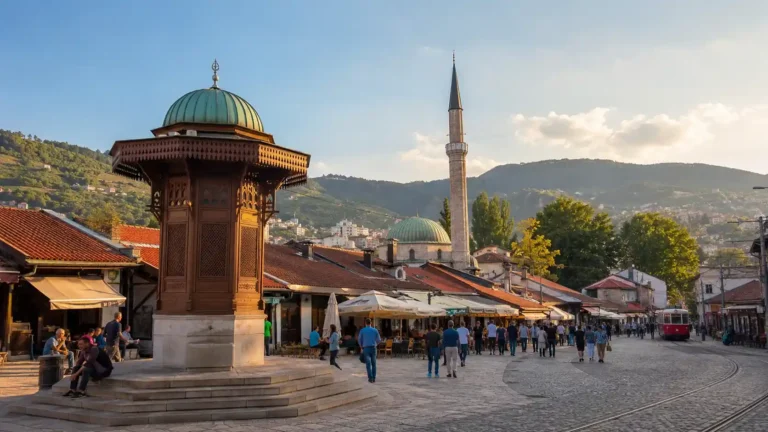
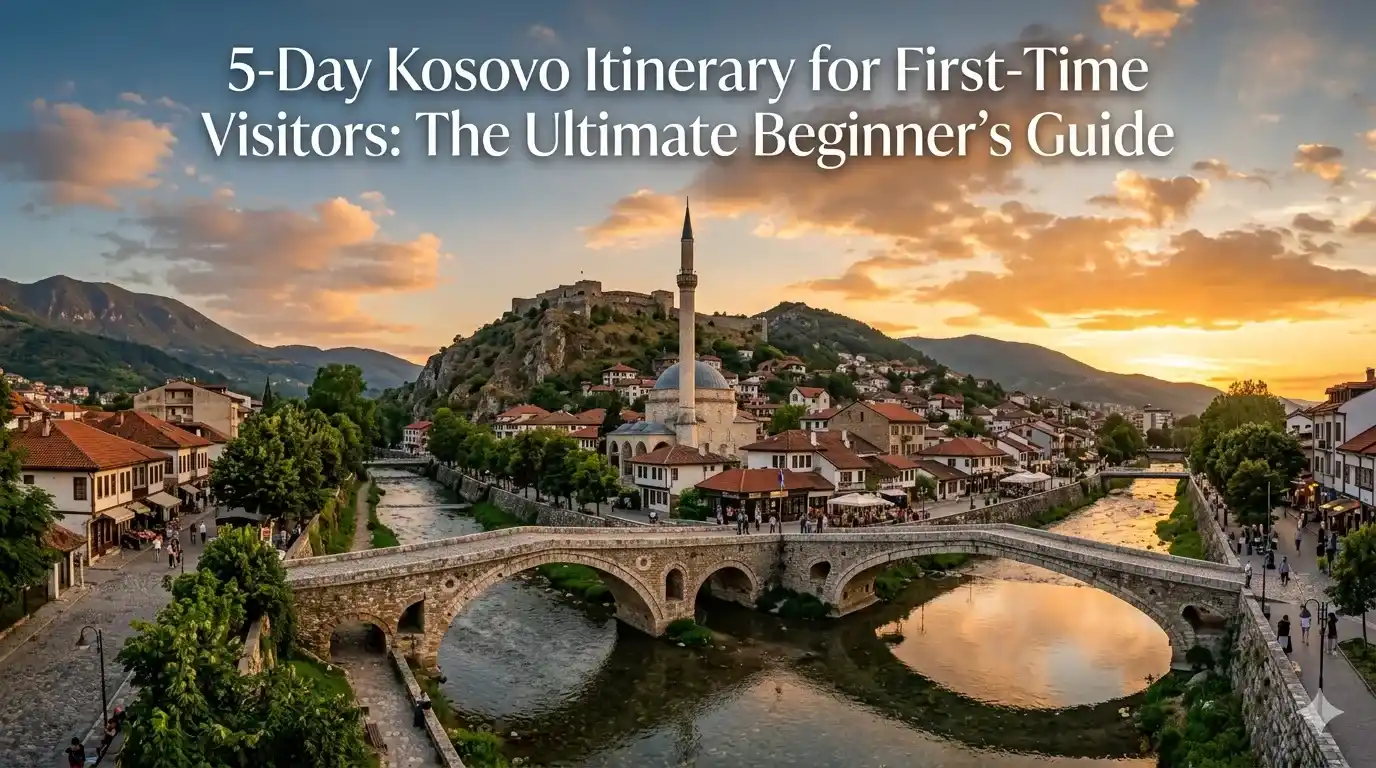
Prizren’s historic old town is a remarkably well-preserved ensemble of Ottoman architecture, cobblestone streets, and stone bridges spanning the Bistrica River. Begin your morning at the famous Shadervan Square, the heart of the old city, where wooden-balconied houses lean over the river and the sound of rushing water mingles with café conversation.
From here, explore:
- Sinan Pasha Mosque (1615) — One of the finest Ottoman mosques in the western Balkans, with an elegant interior that’s open to respectful visitors.
- The Old Stone Bridge — The iconic arched bridge over the Bistrica River is the symbol of Prizren and ideal for photos in the morning light.
- The League of Prizren Building — A historically significant 19th-century building where Albanian leaders met in 1878 to discuss national unification. Now a museum and essential context for understanding Kosovo’s complex history.
Afternoon: Prizren Fortress & Views
After lunch, hike up to Kalaja Fortress, the medieval castle that crowns the hill above the old town. The 20-minute climb is well worth it for the sweeping panoramic views over Prizren’s minarets, red-tiled rooftops, and the valley beyond. The fortress itself dates to Byzantine times and was expanded during the Serbian medieval period and Ottoman era.
On the way down, visit the Church of Our Lady of Ljeviš, a UNESCO World Heritage Site — a stunning 14th-century Serbian Orthodox church with remarkable frescoes, though access may be limited, so check opening hours in advance.
Evening: Sunset & Local Raki
Stay in Prizren for sunset — the old town glows magnificently in the golden hour. Settle into one of the riverside restaurants for a long dinner. Try the local raki (fruit brandy) as an aperitif; in Kosovo it’s usually grape or mulberry-based and served at room temperature. You can either return to Pristina tonight or overnight in Prizren (recommended if budget allows).
📸 Photo Tip — Prizren
For the classic Prizren postcard shot, position yourself on the old stone bridge at golden hour (around 45 minutes before sunset). The mosque’s minaret, the fortress on the hill, and the river reflection all line up perfectly from this vantage point.
Day 3: Rugova Gorge & Peja (Peć) — Mountains and Monasteries
Day 3 of your Kosovo 5-day itinerary takes you northwest to the city of Peja (Peć) and the breathtaking Rugova Gorge — arguably Kosovo’s most dramatic natural attraction. This day works best with a rental car.
Days 3 and 4 are where a car matters most, since the gorge and mountain trailheads aren’t well served by buses. Compare the insurance excess and fuel policy, and if you plan to continue into Albania or North Macedonia, check the rental company’s cross-border rules before you book. Compare car rentals in Pristina
Morning: The Patriarchate of Peć
Begin your morning at the Patriarchate of Peć (Patrijaršija Pećka), a UNESCO-listed medieval Serbian Orthodox monastery complex that ranks among the most important religious sites in the entire Balkans. Nestled at the mouth of Rugova Gorge, with cliffs rising dramatically behind it, the monastery complex contains four interconnected churches decorated with extraordinarily beautiful frescoes dating from the 13th to 17th centuries. It is still an active religious site, guarded by KFOR peacekeeping troops. Dress modestly and respect the contemplative atmosphere.
Late Morning: Drive Through Rugova Gorge
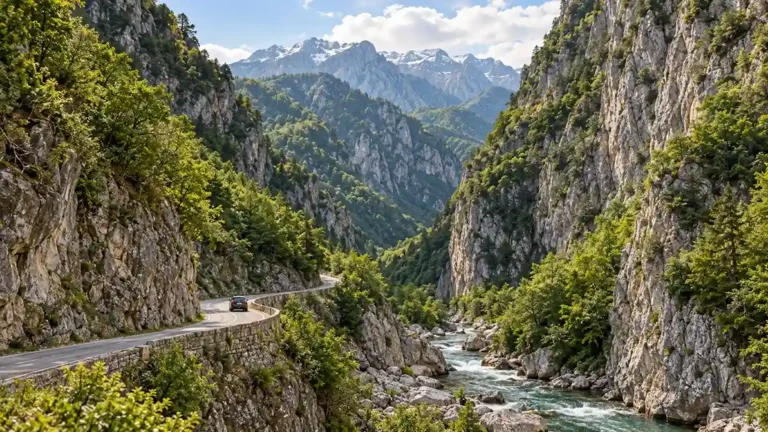
From the Patriarchate, drive into the Rugova Gorge, one of the deepest canyons in Europe at over 25 km long with walls reaching 1,000 meters high. The road that threads through it is spectacular — cutting along cliffsides, crossing stone bridges, and passing turquoise rivers. Stop at pull-offs for photos, and consider a short trail down to the riverbank for a closer look at the crystal-clear Lumbardhi River.
Afternoon: Peja Old Bazaar
Return to Peja for the afternoon and explore the Peja Bazaar — one of the largest and most authentic Ottoman-era bazaars remaining in the Balkans. Unlike the tourist-polished bazaars of Istanbul or Sarajevo, Peja’s market still functions primarily as a working commercial center where locals buy everything from spices and handmade copper goods to fresh produce and traditional textiles. It’s an incredibly atmospheric place to wander.
⚠️ Important Note — Visiting the Patriarchate
The Patriarchate of Peć is open to visitors but requires respectful dress (shoulders and knees covered for all genders). Photography inside the churches may be restricted. Visit in the morning when the light is best and crowds are minimal. Check for seasonal closures before visiting.
Day 4: Accursed Mountains (Bjeshkët e Namuna) — Hiking in the Alps of Kosovo
Day 4 is for the outdoors. The Accursed Mountains (known locally as Bjeshkët e Namuna) straddle the borders of Kosovo, Albania, and Montenegro and contain some of the most spectacular alpine scenery in all of Europe. This region has gained significant attention among hikers in recent years, and for good reason — it’s extraordinary.
Base: Valbona or Gjakova for the Day
From Peja (where you ideally spent the night), the best access point into the mountains is via the village of Reka e Allages or through the Peaks of the Balkans trail network. The most accessible day hike for first-time visitors is the trail toward Hajla Peak (2,403m) or a gentler valley walk through Rugova highlands. Both offer jaw-dropping views of the limestone peaks, alpine meadows, and glacial rivers that make this range so memorable.
What to Expect on the Trail
Trails in the Kosovo Accursed Mountains are well-marked with the red-and-white blazes of the Peaks of the Balkans long-distance hiking route. The terrain ranges from forested valley paths to steep rocky ridgelines. Even a moderate 3–4 hour day hike will reward you with views that rival anything in the Swiss Alps — but with almost no crowds and minimal infrastructure.
- Wear proper hiking shoes — the mountain terrain is rocky and can be wet even in summer.
- Carry water and snacks — mountain huts exist but are sparsely distributed.
- Start early — afternoon thunderstorms are common in summer months.
- Hire a local guide — for more challenging routes, local guides from Peja are affordable and add significant value.
If you’d rather not navigate the trail markings and weather on your own, a guided day hike from Peja takes care of the route and often the transport too. Compare group sizes and what’s included before you choose. Compare Rugova and Peja hiking tours
Afternoon: Mountain Villages & Traditional Guesthouses
After your hike, seek out lunch or an early dinner at one of the traditional konaks (mountain guesthouses) in villages such as Lugu i Baranit or Rastavica. These family-run guesthouses serve homemade mountain food — thick soups, grilled lamb, fresh cheese, honey, and wild herb teas — in settings that feel untouched by modernity. The warmth of Kosovar mountain hospitality in these settings is genuinely unforgettable.
🥾 Hiking Info Box — Accursed Mountains
| Best for | Moderate hikers and above; valley walks suitable for beginners |
| Season | June to September |
| Difficulty | Easy to Challenging (depending on route) |
| Nearest base | Peja (Peć) — 30–40 min to trailheads |
| Maps | Peaks of the Balkans app or printed maps from Peja tourist office |
Day 5: Gračanica Monastery, Last Pristina Sights & Departure
The final day of your Kosovo itinerary 5 days brings you back toward Pristina for a morning of culture before your departure. This day works even on a tight schedule — most of the sights are compact and close together.
Morning: Gračanica Monastery
Located just 10 km southeast of Pristina, Gračanica Monastery is the crown jewel of Kosovo’s medieval Serbian Orthodox heritage. Built by King Stefan Milutin in 1321, it is another UNESCO World Heritage Site and represents the pinnacle of the Raškan school of medieval Serbian architecture. The monastery’s perfectly proportioned Byzantine domes and the extraordinarily well-preserved interior frescoes — vivid portraits of saints, apostles, and Old Testament scenes — are among the finest examples of medieval religious art anywhere in Europe.
The monastery is still active, home to a community of nuns, and open to respectful visitors. Allow 45–60 minutes here and come prepared to be genuinely moved by the quality of the art.
Late Morning: Pristina’s Hidden Gems
Return to Pristina and use your remaining morning to catch anything you missed on Day 1:
- Kosovo Museum — A solid introduction to Kosovo’s history from prehistoric times to the modern era, with important archaeological collections including the famous “Goddess on the Throne” Neolithic figurine.
- Ethnological Museum — Set in a beautifully restored Ottoman-era building, showcasing traditional costumes, household items, and crafts from across Kosovo’s ethnic communities.
- The Sunny Hill Neighborhood — Pristina’s most photographed street of colorful brutalist apartment blocks, beloved by architecture and street photography enthusiasts.
Final Lunch & Farewell
Before heading to the airport, sit down for one last proper Kosovar meal. If you haven’t yet tried flia (the elaborate layered pancake dish typically served at celebrations), seek it out at a traditional restaurant. Alternatively, the Pristina neighborhood of Dardania has several excellent local eateries that are popular with residents rather than tourists — a fitting final taste of the authentic Kosovo you’ve been exploring all week.
🏛️ Culture Tip — Day 5
Gračanica Monastery is about 15 minutes by taxi from central Pristina (around €8–10 one-way). There is no reliable direct bus service, so a taxi or rental car is the best option. Visit on a weekday morning for the most peaceful experience.
Kosovo Itinerary 5 Days: Summary Schedule
| Day | Location | Highlights |
|---|---|---|
| Day 1 | Pristina | Newborn Monument, National Library, Grand Mosque, Old Bazaar dinner |
| Day 2 | Prizren | Shadervan Square, Sinan Pasha Mosque, Fortress, League of Prizren |
| Day 3 | Peja & Rugova Gorge | Patriarchate of Peć, Rugova Gorge drive, Peja Bazaar |
| Day 4 | Accursed Mountains | Mountain hiking, alpine villages, traditional guesthouse lunch |
| Day 5 | Gračanica + Pristina | Gračanica Monastery, Kosovo Museum, farewell lunch, airport |
Kosovo Travel Budget: What to Expect
One of the most appealing aspects of a Kosovo trip is the exceptionally low cost of travel compared to Western Europe. Here’s a rough breakdown for a mid-range budget traveler:
| Category | Budget Traveler | Mid-Range | Comfortable |
|---|---|---|---|
| Accommodation (per night) | €15–25 (hostel/guesthouse) | €35–60 (hotel) | €70–120 (boutique hotel) |
| Meals (per day) | €10–15 | €20–35 | €40–60 |
| Transport (per day) | €5–10 (bus/furgon) | €20–30 (rental car) | €30–50 (car + taxis) |
| Entrance Fees | €5–10 (most sites free) | €10–15 | €15–20 |
| Daily Total | €35–60 | €85–140 | €155–250 |
Where to Stay in Kosovo: Accommodation Recommendations
In Pristina
Pristina has a growing range of quality accommodation from budget hostels to boutique hotels. The best areas to stay are around Nënë Tereza Boulevard and the Dardania neighborhood, both central and walkable. Look for guesthouses run by local families for the most authentic experience and typically better value than chain hotels.
In Prizren
Staying overnight in Prizren is strongly recommended if your schedule allows. Several beautifully renovated Ottoman-era stone guesthouses operate in the old town, offering rooms with wooden-beamed ceilings, courtyard gardens, and breakfast included. These tend to book out in summer so reserve in advance.
In Peja
Peja is a practical overnight base for Days 3 and 4. Options range from family-run guesthouses near the bazaar to modern hotels on the main road. For those planning to hike the Accursed Mountains, consider booking a mountain guesthouse in the Rugova valley for an immersive experience.
Old Town guesthouses in Prizren and central hotels in Pristina are the stays that tend to fill up in summer, so it’s worth comparing options and cancellation terms early. Compare stays in Prizren · Compare stays in Pristina
Kosovo Food Guide: What to Eat on Your 5-Day Trip
Kosovar cuisine is a hearty and satisfying mix of Ottoman, Balkan, and Mediterranean influences. Here are the dishes you absolutely must try during your 5-day Kosovo itinerary:
- Flija — Kosovo’s most celebratory dish; layers of crepe batter cooked over an open fire and served with cream or honey.
- Tavë Kosi — A classic baked lamb and rice casserole topped with tangy yogurt sauce.
- Qebapa (Ćevapi) — Grilled minced meat sausages served with flatbread, raw onion, and ajvar (roasted pepper sauce).
- Byrek — Flaky filo pastry filled with meat, cheese, or spinach; the everyday street food of Kosovo.
- Kompot — A lightly sweetened fruit drink made from stewed seasonal fruits, served cold.
- Raki — The beloved fruit brandy; grape and mulberry varieties are most common in Kosovo.
- Kos — A thick, tangy yogurt served as a side dish or drink; far superior to anything from a supermarket.
🍷 Drink Tip — Kosovo Wine
Kosovo’s wine-growing tradition is ancient and the local wines — particularly from the Rahovec (Orahovac) region — are surprisingly good and remarkably cheap (€3–6 for a quality bottle in a restaurant). The Rahovec area sits in southern Kosovo and produces both red and white varieties in a warm continental climate. Ask for local wine rather than imported brands wherever possible.
Frequently Asked Questions: Kosovo Itinerary 5 Days
Is Kosovo safe for tourists in 2026?
Yes, Kosovo is considered safe for tourists. Violent crime targeting visitors is extremely rare, and the country maintains a visible and active police presence in all major cities and tourist areas. Kosovo ranks among the more stable destinations in the Western Balkans. Standard travel precautions apply — keep an eye on your belongings in crowded bazaars, avoid poorly lit streets late at night, and stay informed about any local developments through your country’s official travel advisory website before departure.
How many days do you need in Kosovo?
For a first-time visitor, 5 days in Kosovo is the ideal minimum. This gives you enough time to properly explore Pristina (1–2 days), visit Prizren (1 day), experience Peja and Rugova Gorge (1 day), and enjoy at least one day in the mountains. If you have more time, you can extend your Kosovo itinerary with a day trip to the Mirusha Waterfalls, a visit to Mitrovica, or a longer multi-day hike on the Peaks of the Balkans trail.
What currency is used in Kosovo?
Kosovo uses the Euro (€) as its official currency, even though it is not a member of the European Union. This makes it very convenient for travelers arriving from Europe. ATMs are widely available in Pristina, Prizren, and Peja, but it is strongly recommended to carry cash when visiting smaller towns, mountain villages, and rural guesthouses, as card payment infrastructure outside of major cities is limited.
Do I need a visa to visit Kosovo?
Citizens of the EU, USA, UK, Canada, Australia, Switzerland, Norway, and many other countries can enter Kosovo visa-free for up to 90 days. However, because Kosovo’s independence is not recognized by all countries, travelers should be aware of a specific border complication: if you plan to visit Serbia either before or after Kosovo, entering or exiting Kosovo via Serbia may result in entry refusal into Serbia. To avoid this, cross between Kosovo and its neighbors Albania, North Macedonia, or Montenegro instead. Always check your country’s specific entry requirements before travel.
What is the best time to visit Kosovo?
The best time to visit Kosovo is between May and September. Spring (May–June) is ideal for city sightseeing with mild temperatures and fresh green landscapes. July and August are the warmest months and coincide with the popular Dokufest film festival in Prizren, but mountain hikes are best done early in the day to avoid afternoon thunderstorms. September is arguably the finest month — the summer crowds thin out, temperatures are comfortable, the harvest season begins, and the mountain scenery takes on beautiful autumnal tones. Winter travel is possible in Pristina and Prizren but mountain roads and alpine guesthouses typically close from November to March.
Can I visit Kosovo and Albania in the same trip?
Yes — combining Kosovo and Albania is one of the most rewarding Balkans itineraries available. The border crossing between Prizren (Kosovo) and the Albanian city of Shkodër is straightforward and can be done by bus or shared taxi. Many travelers pair a 5-day Kosovo itinerary with 4–5 days in northern Albania, visiting the stunning Albanian Alps, Shkodër, and the Valbona Valley. The two countries share deep cultural and linguistic ties, and together they offer an incredibly diverse travel experience in a very compact geographic area.
What language is spoken in Kosovo?
Kosovo has two official languages: Albanian, spoken by roughly 90% of the population, and Serbian, spoken primarily by the Serb minority community in the north. English is widely spoken and understood by younger Kosovars, particularly in Pristina, Prizren, and tourist-facing businesses. In rural and mountain areas, English proficiency drops significantly, so having a translation app or a few Albanian phrases ready is helpful. Learning even a handful of Albanian words — faleminderit (thank you), po (yes), jo (no), sa kushton? (how much does it cost?) — will go a long way in earning warm smiles from locals.
How do I get from Pristina Airport to the city center?
Pristina International Airport (PRN) is located approximately 18 km from the city center. The most convenient and affordable option is the official airport bus, which runs regularly and costs around €2. Taxis from the official rank outside arrivals cost approximately €15–20 and take 20–30 minutes depending on traffic. Ride-hailing apps such as Bolt are not always available at the airport pick-up zone, so a metered taxi or pre-arranged transfer is recommended for arrival. Always agree on a price before getting into any unmarked or unofficial taxi.
Are credit cards accepted in Kosovo?
Credit and debit cards are increasingly accepted in Pristina and major city hotels and restaurants, but cash remains essential for most of Kosovo’s day-to-day transactions. Markets, small family restaurants, guesthouses, taxis, furgons (shared minibuses), and all mountain accommodation will expect cash payment. Visa and Mastercard are the most widely accepted card networks where cards are taken. Always carry a sufficient Euro cash reserve, especially before heading into rural areas or the mountains where ATMs are nonexistent.
Is there a direct flight to Kosovo from the UK?
Yes — there are direct flights from London to Pristina operated by several airlines. Wizz Air flies from London Luton, and British Airways codeshare options are also available. Flight time is approximately 2.5–3 hours. During peak summer months, flights can fill quickly as Kosovo has a large diaspora community in the UK and Switzerland that returns home in July and August — so booking several weeks in advance is advised for the best fares.
Final Thoughts: Why Kosovo Should Be on Your Balkan Bucket List
A well-planned Kosovo itinerary 5 days long will take you through medieval monasteries and Ottoman bazaars, up soaring mountain passes, along turquoise river gorges, and into the heart of one of Europe’s most genuinely hospitable cultures. Kosovo is not a destination that tries to impress you with grand infrastructure or polished tourist experiences. Instead, it offers something increasingly rare in modern travel: authenticity.
The country’s complex recent history — from the 1998–1999 war to its 2008 declaration of independence — has produced a society with a remarkable sense of resilience and optimism. The people of Kosovo are proud of their country and genuinely delighted when visitors choose to discover it. You will almost certainly leave feeling that you found somewhere special before the crowds arrived.
Whether you’re a first-time Balkans explorer or a seasoned traveler looking for somewhere genuinely off the beaten path, Kosovo rewards curiosity with unforgettable experiences. Five days is the perfect starting point — and for many visitors, it won’t be their last trip.
✅ Kosovo Itinerary 5 Days — Quick Checklist Before You Go
- ✈️ Book flights to Pristina (PRN) — compare Wizz Air, easyJet, Turkish Airlines
- 🏨 Reserve accommodation in Pristina, Prizren, and Peja in advance (especially summer)
- 🚗 Consider renting a car for Days 3–4 for maximum flexibility
- 📱 Download the Peaks of the Balkans trail app if hiking
- 💶 Bring Euros in cash for smaller towns and mountain villages
- 📷 Pack a wide-angle lens — the landscapes and architecture reward it
- 🎒 Dress modestly for monastery and mosque visits
- 🗺️ Download offline maps of Kosovo (Maps.me or Google Maps offline)