Things to Do in Peja Kosovo: Rugova, Heritage & 2026 Tips

Things to do in Peja, Kosovo range from an easy Old Bazaar walk and medieval monastery visits to the dramatic cliffs of Rugova Gorge. For a first trip, spend one day in central Peja and at the Patriarchate of Peć, then keep a separate day for Rugova Canyon. With a third day, add White Drin Waterfall and Radavc Cave or visit Visoki Dečani Monastery. These places are not all on the same route.
Peja (also written Pejë; Peć in Serbian) is a useful base for western Kosovo because you can enjoy its central streets without a vehicle, yet reach the foothills of the Accursed Mountains a short distance to the west. The main mistake is treating the entire area as if it were a compact park. The Old Bazaar, Rugova, Radavc and Deçan require different amounts of time and, in most cases, different transport arrangements.
This independently researched Peja guide gives you an actual walking plan, current published transport information, realistic one- and two-day schedules, practical costs and the limitations to check before you travel. For detailed Rugova routes and adventure activities, use our separate guide rather than trying to turn every mountain excursion into another stop on a city sightseeing checklist.
Table of Contents
Peja at a Glance: The Best Plan for First-Time Visitors
| Planning question | Practical answer |
|---|---|
| How many days? | One full day for the city and lower gorge; two for city heritage plus a dedicated Rugova day; three or more for additional excursions or hiking. |
| Main natural attraction | Rugova Gorge, beginning about 2 km west of central Peja according to Peja Tourism. |
| Main cultural attractions | The Old Bazaar, Bajrakli Mosque, Peja Museum and Patriarchate of Peć. |
| Best extra nature outing | White Drin Waterfall and nearby Radavc (Sleeping Beauty) Cave, north of Peja. |
| Worthwhile heritage side trip | Visoki Dečani Monastery, south of the city. |
| Without a car | Base yourself in central Peja; use the intercity bus for Prishtina and pre-arrange your mountain transport. |
| Currency | Euro (€); carry some small cash for local transport and small purchases. |
| Best time for walking | Often late spring through early autumn, subject to mountain weather and trail conditions. |
Choose by interest: Culture-focused visitors can enjoy the city even if the mountains are inaccessible. Scenic-road travelers can see the lower gorge without a long hike. Hikers should plan a named trail, trailhead transfer and weather backup rather than improvising upon arrival.
Which Peja Attractions Fit Together?
The best itinerary is geographical, not a ranking of everything within 30 km of town. These are planning allowances, not fixed admission slots or guaranteed driving times.
| Place | Direction from Peja center | Suggested time on site | Transport consideration |
|---|---|---|---|
| Old Bazaar and Bajrakli Mosque | Central | 45–90 minutes | Walk |
| Peja Museum / Haxhi Zeka Square | Central | 30–60 minutes | Walk; confirm museum hours |
| Haxhi Zeka Mill and central streets | In or near the urban core | 30–60 minutes | City walk; interior access is not guaranteed |
| Patriarchate of Peć | Western edge of city | 45–75 minutes | Walk for confident walkers, otherwise taxi |
| Lower Rugova Gorge | West | 1–3 hours | Car, agreed taxi return or organized activity |
| Upper Rugova / hiking trailheads | Farther west in mountain valley | Half to full day | Pre-arranged transport and current conditions |
| White Drin Waterfall / Radavc Cave | North | Half day including transfers | Separate outing, cave access to confirm |
| Visoki Dečani | South near Deçan | Half day including transfers | Monastery visiting hours and return travel matter |
A driver who offers “all Peja attractions” in one afternoon may be grouping together short photo stops. That is not the same as visiting a museum properly, taking an unhurried walk through Rugova, touring a cave and seeing two monasteries. Decide which two or three experiences actually matter.
1. Walk Peja’s Old Bazaar and Bajrakli Mosque
Start with Çarshia e Vjetër, the Old Bazaar. It is the strongest introduction to Peja as a trading city rather than just a base for hiking. The pedestrian streets bring together crafts, goldsmiths, shopfronts, coffee stops and everyday local commerce. Go in the morning to look at the architecture and browse; return after dark if you prefer the café atmosphere.
The old trading area has a complicated history. The municipality’s cultural-route publication explains that the bazaar was badly damaged in 1999 and later restored, with restoration work undertaken from 2007 to 2016. It is more accurate to describe today’s streets as a historic area with important reconstruction than to suggest that every building survives unchanged from Ottoman times. The streets themselves are an accessible way to see how commercial life continues here. See the official Peja cultural trail publication for background.
Visiting Bajrakli Mosque respectfully
Bajrakli Mosque, also called the Bazaar Mosque, is embedded in this same neighborhood, so it is not a separate drive. The official Peja cultural-route map identifies it as a significant protected Ottoman-era religious building and notes its continued use for worship.
Look at the mosque’s exterior and the relationship between its courtyard and the bazaar. If you hope to enter, check on arrival whether visitors are welcome, especially around prayer times. Dress modestly, avoid interrupting worship and ask permission before photographing people or interiors. Do not plan around a fixed opening schedule that has not been published for tourists.
A manageable Old Bazaar walking route
From your accommodation in central Peja, head towards Haxhi Zeka Square, visit the museum if it is open, then continue through the bazaar towards Bajrakli Mosque. Allow time for a coffee, shops and a second look at the surrounding streets. This is intentionally a flexible route: a meaningful city walk is about noticing Peja’s everyday character, not ticking off every minaret and shop as a different attraction.
2. Add Peja Museum for Local Context
One worthwhile stop that gets overlooked in many short Peja articles is Peja Museum. It occupies the old Konak of Tahir Bey near Haxhi Zeka Square, between the city center and the bazaar. The tourism authority describes archaeology and ethnology exhibitions in a traditional house, with artifacts that help explain how the city’s culture developed over time.
As published on the Peja Museum visitor page, regular visitor hours are 08:30–15:30, with May–October weekend visiting hours of 10:00–14:00. These are posted reference times, not a live guarantee; telephone the museum if your visit falls on a holiday, a weekend outside that period or a day with limited time. Its published contact number is +383 39 431 976.
Allow around 30–60 minutes for a simple visit. It is particularly useful for travelers who want to know more about traditional Peja houses, crafts and local life before walking through the restored bazaar. The museum also offers a good weather-resistant alternative to mountain sightseeing on a rainy afternoon.
3. See the Haxhi Zeka Mill and Peja’s Lesser-Known Heritage
The Haxhi Zeka Mill gives Peja another layer beyond religious buildings. Municipal heritage sources describe it as a late-19th-century industrial complex associated with agricultural trade and milling. The historic site included storage and related buildings, and the restored structures remain an important part of the city’s cultural map. The Peja cultural trail also identifies traditional tower houses (kullas), hammams and religious buildings.
Use the town’s official cultural trail map to locate stops rather than hunting for a guessed street address. You can appreciate the architecture from accessible public areas, but do not assume the mill or every historic building is open internally. Opening arrangements for cultural events or exhibitions may differ from ordinary sightseeing.
This stop suits travelers who have a full city day, people interested in architecture and visitors who prefer learning about working-town history. If you have only a few hours, prioritize the bazaar and museum first; do not force an ambitious architectural circuit into a short transfer stop.
4. Visit the Patriarchate of Peć
The Patriarchate of Peć, near Peja’s western approach towards Rugova, is one of the city’s essential heritage visits. UNESCO includes the monastery complex in its inscription for the Medieval Monuments in Kosovo. This group contains several protected religious sites; the Patriarchate itself comprises four domed churches and important wall paintings, including 13th-century frescoes. You can read the UNESCO World Heritage description.
The site is not simply a museum. It is a functioning Serbian Orthodox monastic complex. Respect the religious setting, ask staff about photography and keep shoulders and knees appropriately covered. Carry a photo ID because access procedures at religious sites can change. A lack of a published online timetable is not a promise that visitors can enter at any hour; check current entry arrangements locally before building a tightly scheduled afternoon.
How to combine the Patriarchate with the city
Plan approximately 45–75 minutes on site, plus your actual transfer time. It lies near the route towards the Rugova Gorge, so the order center → Patriarchate → lower gorge is sensible with a car or taxi. If you are walking, assess how far your hotel is from the monastery and whether you also want enough energy for the bazaar and museum.
Do not mistake the Patriarchate for Visoki Dečani: both are part of UNESCO’s listed property, but they are two distinct monastery locations. Dečani is a separate trip south of Peja, not a short extension of the Rugova road.
5. Explore Rugova Canyon Without Trying to Do Everything
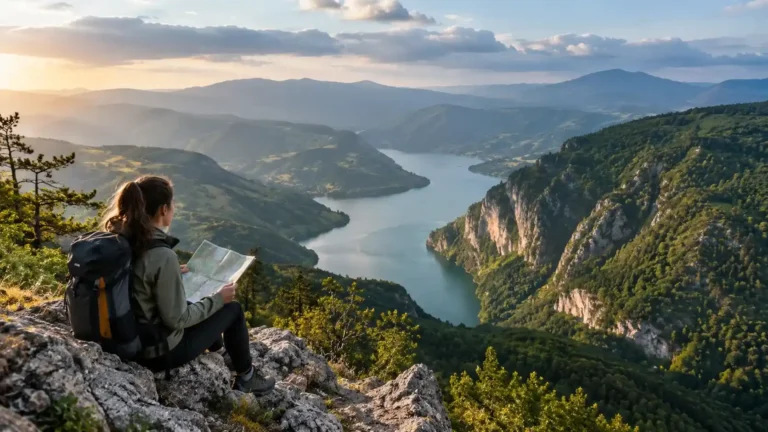
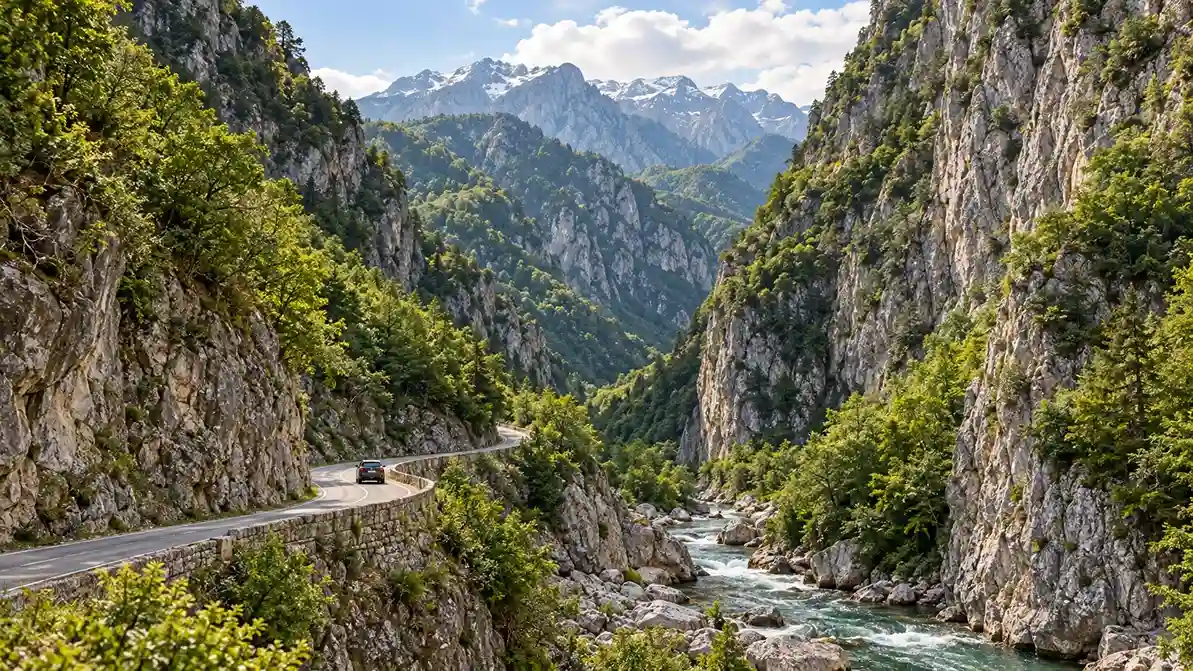
Rugova Gorge begins about 2 km from central Peja and continues for roughly 12 km, according to Peja Tourism’s description of the gorge. The Lumbardhi river runs through the steep limestone landscape. This close proximity can be misleading: you can reach the start quickly, but going farther into the valley, visiting mountain settlements or beginning a serious hike requires much more time.
For a first visit, think in three levels:
- Scenic look: travel into the lower gorge, stop only where it is safe and permitted, and admire the river and cliffs. It is a short outing, not a hike.
- Half-day mountain excursion: spend longer following the main valley road, make selected stops, have a meal if an establishment is open and return to Peja in daylight.
- Full hiking or adventure day: choose a specific trail, zipline or via ferrata activity, arrange a suitable operator or guide where needed, and prioritize safety over sightseeing additions.
The Peja tourism authority also highlights the historic arched stone bridge along the gorge road, at approximately the fifth kilometer from Peja. This is a useful landmark to ask about when organizing a scenic drive, but there may not be safe roadside parking at every place a view opens up. Never stop inside tunnels, on blind bends or on narrow roads to take photographs.
For the more detailed side of these activities, our Rugova Canyon hiking, via ferrata and zipline guide covers the canyon as its own destination. This Peja article deliberately focuses on how much time to allocate and how Rugova fits your city itinerary.
Rugova zipline and via ferrata: what must be checked
The official tourism site places the Marimangat zipline at about kilometer 4 on the gorge road. An activity listing for the June 2026 Peja Outdoor Festival gives a scheduled event program and notes that no event transport is included. Those festival hours are not the operator’s permanent opening hours. Outside a named event, you need to contact the operator about operating dates, participant restrictions, price, gear, briefing and transport.
A via ferrata is a protected climbing route that uses fixed cables and requires appropriate equipment and instruction. It is not the same as walking into the lower canyon with ordinary trainers. Ask for age, weight, fitness and weather restrictions before paying. A visitor who does not want heights can still have an excellent day in Rugova without booking technical activities.
Visiting Rugova with children or limited mobility
Families can enjoy selected viewpoints and a scenic drive, but do not assume the gorge is uniformly accessible. Roads and stops may have uneven surfaces, steep edges and limited barriers. With a stroller or someone who cannot walk far, plan around confirmed parking and accessible facilities rather than choosing random photos of dramatic cliffs as proof that a lookout is easy to reach.
6. Plan a Proper Mountain Day: Rugova Villages and Hiking
Travelers drawn to the Accursed Mountains (Bjeshkët e Nemuna / Prokletije) should treat the upper valley as the start of a mountain trip rather than an extension of the Old Bazaar. Places such as Kuqishtë are used as reference points for exploring the mountainous landscape, but access, trailhead distances and season vary by route.
A useful first decision is whether you want a village-and-scenery drive or a named hiking route. For the former, arranging a driver and return time may be enough. For the latter, you need a trail map, distance, ascent, daylight estimate and an explicit plan for returning from the end of the route. Do not assume a public bus runs to remote trailheads or that an unmarked turnoff leads to a family-friendly path.
Our Prokletije hiking guide for Albania and Kosovo is the more suitable place to compare mountain routes and cross-border permits. Some long-distance hiking routes cross borders at remote passes where specific permission is required in advance; a marked mountain trail is not itself permission to cross a state border.
If mountain weather deteriorates, shorten the day or remain in Peja. Rain in the city does not tell you whether higher ridges are safe, and clear skies at breakfast do not guarantee an afternoon without storms. Carry offline route information, a warm layer, water, appropriate footwear and a charged phone. For immediate emergencies in Kosovo, use 112; reception may be patchy in remote valleys.
7. Take a Separate Trip to White Drin Waterfall and Radavc Cave
White Drin Waterfall (Ujëvara e Drinit të Bardhë / Drini i Bardhë) lies north of Peja, in the Radavc area. It is not inside Rugova Gorge. This distinction is worth repeating because some online lists of “Peja attractions” make it look possible to wander from one to the other on foot.
The official Peja Tourism waterfall page describes the spring, waterfall and nearby cave together, and identifies the protected natural monument designation dating to 1983. You can build a pleasant nature half-day around the waterfall’s surroundings and the hydrology of the spring. Water flow, mud and path conditions change throughout the year, so take care near wet rock and exposed banks.
What about Sleeping Beauty Cave?
Radavc Cave, often called Sleeping Beauty Cave, is another attraction in the same northern excursion area. Do not promise yourself a cave tour merely because the waterfall is accessible. Guided visits, lighting, staffing, admission, and the parts of the cave open to visitors may vary. The official site provides background, but I did not find a reliable, universally applicable 2026 admission price or daily cave-tour timetable to quote here.
If the cave is central to your plans, ask Peja’s tourist information center or your host to confirm that it is open on your day, whether a guide is required, what the fee is, and how to reach the designated entrance. Leave a half-day for the waterfall-and-cave pairing rather than squeezing it between two long mountain trips.
8. Visit Visoki Dečani if You Have Time for More UNESCO Heritage
Visoki Dečani Monastery is south of Peja, near the town of Deçan/Dečani. Like the Patriarchate, it is part of the UNESCO-listed Medieval Monuments in Kosovo, but it needs a separate journey. Visitors interested in architecture and medieval frescoes may decide that it deserves priority over a second nature outing.
The monastery’s official website publishes visiting windows of 09:30–14:30 and 15:30–17:30. Check for any religious-service restrictions and current security or entry procedures. Bring an identity document, dress respectfully and avoid expecting access to every area of the complex.
Combining Visoki Dečani with the Patriarchate in one heritage-oriented day may work with a private car and confirmed visiting arrangements. Without a vehicle, first establish how you will reach Deçan and, crucially, return to Peja. Transport from the town to the monastery entrance should be confirmed separately rather than inferred from an intercity bus timetable.
9. Relax in Karagaq Park and Along Peja’s Central Streets
Not every Peja highlight needs an entrance ticket or a driver. Karagaq Park is a useful place for an easy break away from traffic and historic sightseeing. The Peja Tourism park description notes walking paths, recreational areas, a small lake and play spaces. Autumn colors are another reason to consider it if you are visiting outside the main hiking season.
Families with children, travelers taking a recovery day after hiking and anyone with a long wait before a bus can make better use of this relaxed city option than trying to add one more remote waterfall. Follow a park visit with dinner or a stroll through central Peja. Availability of specific facilities and events is not guaranteed simply because they are mentioned in an overview.
How Many Days Do You Need in Peja?
Two days is a balanced first visit, but the right duration depends on your interests and whether you have a car.
| Time available | What is realistic | What to leave out |
|---|---|---|
| 4–6 hours | Bazaar, mosque exterior, museum if open, short central walk | Rugova’s upper valley and northern/southern side trips |
| 1 full day | City center, Patriarchate, short lower-gorge scenic excursion | Serious mountain hike plus Radavc and Dečani |
| 2 days | Day 1 city heritage; Day 2 Rugova with a single main mountain activity | Trying to fit every Kosovo monastery and cave |
| 3 days | City, dedicated Rugova day, and either Radavc/White Drin or Dečani | Multiple long hikes unless you add more nights |
| 4+ days | A flexible mountain-focused base with weather buffer | Fixed outdoor itineraries that cannot change with conditions |
A practical one-day Peja itinerary
This version works best when you arrange a short taxi outing to lower Rugova or have a car, rather than relying on spontaneous lifts.
- Morning: Walk the Old Bazaar, see Bajrakli Mosque from the public areas and visit Peja Museum if it is open. Pause for coffee rather than rushing through.
- Late morning: Travel to the Patriarchate of Peć and allow about an hour for a respectful visit, subject to access.
- Lunch: Return towards the city for food, or use a pre-confirmed stop on your westbound route.
- Afternoon: Travel a short distance into lower Rugova Gorge for scenery. Stop only in safe places, then return before dark.
- Evening: Eat in central Peja; leave the next day’s intercity bus or hotel arrangements settled.
If you do not arrange a return vehicle for Rugova, make it a city-focused day instead: add Haxhi Zeka Mill and Karagaq Park. It is a better choice than walking beside a narrow canyon road with no reliable pickup.
A practical two-day Peja itinerary
Day 1 — Heritage and city life: Spend the morning in the Old Bazaar, Bajrakli Mosque area and Peja Museum. Add Haxhi Zeka Mill if access and time allow. Visit the Patriarchate later in the day after checking admission arrangements. Finish in the center with a local meal.
Day 2 — Rugova: Depart after checking the mountain forecast, then decide whether the main activity is a scenic drive, a guided via ferrata, a zipline session or a marked hike. Do one significant activity rather than stacking several. Carry snacks, plan your return with the driver in advance and avoid relying on a last-minute ride from a remote trailhead.
If the mountain weather is poor on day two, exchange the days where possible, or choose an easier northern excursion with confirmed access. The goal is to keep the itinerary resilient, not to follow an exact sequence at any cost.
Three days: choose your third-day theme
For a nature-focused third day, reserve the morning for White Drin Waterfall and Radavc Cave, but confirm cave admission. For a heritage-focused third day, visit Visoki Dečani. For serious hikers, use day three for a specific mountain trail in the upper Rugova area and keep an alternative plan if weather is unsuitable. These are alternatives; they do not all fit comfortably into one extra morning.
If you want a country-wide structure, our five-day Kosovo itinerary shows where Peja fits alongside Prishtina, Prizren and the mountains.
Getting to Peja from Prishtina and Other Cities
Prishtina to Peja by bus
The simplest independent approach is often an intercity bus from Prishtina (Pristina). On 20 October 2026, Gjirafa Travel’s Prishtina–Peja route page displayed approximately 83 km, an average journey of 1 hour 23 minutes, and an average listed fare of €5, with many daily departures. These figures describe a published timetable snapshot, not a price or seat guaranteed on your travel date.
Check the return direction separately. Evening return departures can finish earlier than you might expect from looking only at the bus service towards Peja. Leave a buffer for reaching the terminal and allow for possible traffic or schedule changes. If you arrive by plane, first arrange transport from Prishtina Airport to the correct departure station rather than assuming buses to Peja collect passengers at the airport terminal.
Our Pristina travel guide covers airport transport and a city stay if you are beginning your Kosovo itinerary in the capital.
From Prizren, Gjakova or elsewhere
Peja also fits a western Kosovo itinerary linking towns such as Gjakova and Prizren. For multi-city public transport, check the current departure point, direction and whether the route is direct before buying accommodation for the next night. Journey planners may show connections that are less convenient on weekends or later in the day.
If you are continuing to Prizren, allow enough time for travel and evening arrival rather than combining a long Rugova hike with an uncertain onward bus. Our Prizren city guide covers the next stop’s walkable attractions.
Do you need to rent a car?
A car is not necessary for the Old Bazaar, museum and most central errands. It becomes useful if you intend to visit Rugova, Radavc and Deçan within a short stay. The alternative is a carefully pre-arranged taxi or private excursion, with the pickup place and return cost agreed before you leave Peja.
Check the road type and weather for your chosen route. The valley road is not a license to drive down every gravel turnoff in a standard rental vehicle. If you rent a car, confirm insurance, parking, driving restrictions and the rental company’s policies for cross-border travel if applicable. Do not assume an ordinary city taxi will be available in a remote mountain village at the end of the day.
Exploring Peja Without a Car: A Booking Checklist
Peja is quite feasible without a car if you separate the walkable urban center from the transport-dependent day trips. Use the bus station for the intercity journey, stay in or near the center, and get directions to the bazaar and museum from your accommodation.
For your mountain day, ask a driver or licensed local operator these questions before agreeing to the fare:
- Which exact destination is included: the entrance to Rugova Gorge, a specific viewpoint, a village, or a named hiking trailhead?
- Is the price one way, round trip or waiting time included, and in which currency will you pay?
- Where and when will the driver collect you for the return?
- Can the driver safely reach the planned destination with that vehicle today?
- If you are doing a guided activity, does transport to the meeting point come with the booking?
Peja Tourism lists a Tourist Information Center on Mbretëresha Teutë Street, No. 59, and a visitor center at the entrance to Rugova. These can be useful starting points for maps and guidance; verify their current services and hours before relying on them. See the municipal tourism information page.
If you cannot confirm a return arrangement, choose a city sightseeing day or an organized excursion instead. Public transport to Peja does not mean public transport to every Peja-area attraction.
Where to Stay: Center, Rugova or the Outskirts?
For a first visit, central Peja usually offers the best balance. You can walk to cafés, restaurants, the bazaar and services, then use a taxi or driver only when leaving town. This is especially useful for anyone arriving by bus or leaving early the following day.
If you are hiking for several days, a guesthouse in the Rugova Valley may shorten morning transfers and give you quieter mountain surroundings. But check the exact location, the condition of the access road, the possibility of meals, heating outside summer and your way back to Peja. “Rugova” covers a valley and highland area, not one hotel neighborhood.
Staying on the outskirts of Peja can work with a car but can be inconvenient for travelers who expect to walk to dinner every night. Compare total cost, including taxis, parking and the time spent transferring, rather than simply choosing the least expensive nightly rate.
Peja Travel Budget: Confirmed Fare Versus Planning Allowance
A useful budget separates known published examples from expenses that change by date, vendor and the activities you select.
| Expense | What you can budget around | Important qualification |
|---|---|---|
| Prishtina–Peja bus | Around €5 one-way on the 20 Oct 2026 Gjirafa listing | Current service/date can differ; check the reverse route separately. |
| Old Bazaar walk | No ticket required to walk the public streets | Shopping and refreshments extra. |
| Peja Museum | Price should be confirmed directly | Published visiting hours do not confirm a universal 2026 admission fee. |
| Patriarchate of Peć | Contact or check locally for access and any fee | The site is an active monastery; no guaranteed entrance price is claimed here. |
| Rugova scenic outing | Depends chiefly on your transport arrangement | No fixed citywide taxi or tour rate. |
| Zipline / via ferrata | Ask current operator for dated quotation | Gear, guide, eligibility and transfers can affect the total. |
| Radavc Cave | Ask locally for the applicable ticket / guided tour | I could not verify one dependable current price for all visits. |
| Hotels and meals | Price against your actual dates and group size | Seasonal and weekend variation; no invented universal daily budget. |
This is more actionable than promising a “€20 Peja day” without knowing whether you will hire a car, take a taxi deep into Rugova or book technical climbing. If you are traveling as a family, compare a privately arranged round-trip transfer with multiple paid activity bookings; the cheaper-looking option may not include your return or waiting time.
Kosovo uses the euro, so bring a mix of small notes and a payment card. Tipping, where offered, is optional, not a required surcharge. Carry some cash for small purchases or drivers who do not accept cards, and ask the price before committing to a private service.
Food in Peja: What to Try and Where It Fits
Eating in Peja is easiest when you combine it with the day you have actually planned. City-center meals provide choice and flexibility. In Rugova, food availability can depend on the valley location and whether a restaurant or guesthouse is operating that day.
Look for flija (layered baked dough traditionally served with dairy), pite/byrek, qebapa, grilled dishes and local dairy products. These are examples of foods to seek out rather than a promise that every restaurant offers each dish. Ask what is freshly available and whether a place takes payment by card before you set off for a long mountain day.
For breakfast before hiking, buy water and food in Peja. A picnic can be convenient, but pack out litter and avoid leaving food near wildlife or watercourses. If your schedule includes a monastery, allow the visit to proceed respectfully rather than rushing religious services to reach a particular restaurant reservation.
Best Time to Visit Peja and Rugova
Late spring to early autumn often works well for city sightseeing combined with lower-elevation outdoor activities. The city itself is visitable year-round; higher mountain conditions require a different standard of planning.
- Spring: Green landscapes and lively waterfalls, but wet trails and snow remnants at elevation are possible. Check cave access and mountain conditions separately.
- Summer: Longer daylight makes it easier to plan a dedicated Rugova day. Heat in town and afternoon mountain storms can still require an early start.
- Autumn: Comfortable urban walks and attractive colors at Karagaq and parts of Rugova. Days shorten, and high routes become colder.
- Winter: The bazaar and city heritage remain relevant. Treat upper Rugova trails as a specialist decision based on snow, ice, road status and appropriate equipment.
The Peja Museum’s May–October weekend hours are one seasonal detail you can check in advance. Outdoor facilities, adventure operators and cave access may also follow seasonal or event-specific schedules; never assume a summer activity can be booked unchanged in January.
Safety, Accessibility and Travel Etiquette
Peja combines busy urban streets, working places of worship, road-side canyon viewpoints and remote high-country terrain. Each needs its own safety expectations.
Within the city, standard travel precautions apply: protect valuables in crowded streets, cross roads carefully and ask before photographing individuals. At mosques and monasteries, cover appropriately, observe silence where requested and follow site staff’s directions.
In Rugova, do not park on narrow bends, stand at cliff edges for a photograph or enter caves without authorized access. Weather, water and rockfall risk can change after heavy rain. Children need close supervision near the river and viewpoints. For via ferrata, climbing and longer treks, confirm trained supervision, correct equipment, operating conditions and any insurance exclusions before participating.
Accessibility: A central-city walking day is often easier to adapt than a canyon adventure, but historic streets, museum stairs and monastery surfaces may still be uneven. The terrain of any individual trail or cave should be checked with an operator rather than described generically as wheelchair- or stroller-accessible. If access matters, ask about steps, handrails, toilets, pickup points and whether assistance is available.
Common Peja Planning Mistakes
- Treating Rugova, Radavc and Deçan as one destination. They branch from Peja in different directions.
- Assuming every Rugova activity is a gentle walk. Scenic driving and technical climbing are not interchangeable.
- Booking an upper-valley stay without a vehicle plan. A scenic guesthouse can still be difficult to reach after dark.
- Assuming a museum or monastery admits visitors at all times. Confirm operating windows and active religious services.
- Paying for a one-way canyon transfer without planning the return. Clarify the fare and pickup point first.
- Relying on a dated festival schedule as a permanent zipline timetable. Ask the actual operator for your travel date.
- Packing too many “near Peja” places into one day. Choose fewer experiences and see them properly.
FAQ: Things to Do in Peja Kosovo
Is Peja worth visiting if I do not hike?
Yes. The Old Bazaar, Bajrakli Mosque area, Peja Museum, Patriarchate of Peć and relaxed city streets can make a rewarding cultural visit. A scenic drive in lower Rugova is optional rather than a requirement.
Can I visit Rugova Gorge from Peja on foot?
The beginning of the gorge is close to town, but that does not mean it is advisable to walk beside narrow mountain roads to reach viewpoints or upper-valley attractions. A confirmed taxi, vehicle or suitable guided trip is generally more practical for sightseeing beyond the city edge.
Are two days enough in Peja?
Two days provide a sensible first-time balance: one for city and heritage, the other for Rugova. Add another day if you want Radavc, Visoki Dečani or a proper mountain hike without rushing.
What is the easiest way to reach Peja from Prishtina?
An intercity bus is generally the simplest car-free option. A provider listing checked in October 2026 displayed an average fare near €5 and average journey around 1 hour 23 minutes. Verify your actual departure and return dates before traveling.
Is White Drin Waterfall inside Rugova Canyon?
No. The waterfall and Radavc Cave are north of Peja, whereas Rugova Gorge runs west of the city. Treat them as separate excursions rather than stops on the same path.
Does the Patriarchate of Peć belong to UNESCO?
Yes. It forms part of the Medieval Monuments in Kosovo World Heritage property, along with Visoki Dečani and other religious heritage sites. Check visitor access because UNESCO inscription does not mean unlimited opening hours.
Can I use Peja as a base for the Peaks of the Balkans?
It can be a useful starting base for the Kosovo side of the mountain region. But a multi-day international trek needs a route-specific plan, suitable gear, accommodation logistics and border permits for crossings outside official checkpoints. It is not equivalent to a short sightseeing walk.
Which Peja attractions are best in bad weather?
The museum, bazaar cafés and suitable cultural visits may work well, subject to opening arrangements. Avoid treating a stormy mountain day as an invitation to explore wet cliff paths or unfamiliar caves independently.
Final Recommendation: Build Your Visit Around Peja, Not a Giant Checklist
The best things to do in Peja Kosovo reveal two closely connected experiences: a city with a restored trading quarter, local museum and significant religious heritage, and a mountain landscape that begins just beyond the urban edge. They deserve different amounts of time.
For an efficient visit, walk the center and Old Bazaar, visit Peja Museum if it is open, set aside time for the Patriarchate, and keep Rugova for an independent half or full day. Add White Drin Waterfall, Radavc Cave or Visoki Dečani only when your itinerary has enough space for the correct direction and travel time. That approach gives you a more complete understanding of western Kosovo without turning the trip into an exhausting series of transfers.