Serbia Bulgaria Border Crossing Guide 2026: Everything You Need to Know Before You Travel
If you are planning to drive or travel between Serbia and Bulgaria in 2026, understanding the Serbia Bulgaria border crossing procedures, entry requirements, and road regulations is absolutely essential for a smooth and stress-free journey. The Serbia Bulgaria border stretches across approximately 318 kilometres through southeastern Europe Vignettebulgaria, making it one of the most significant land frontiers in the Western Balkans region. Whether you are a tourist, a truck driver, or a frequent cross-border commuter, this complete Serbia Bulgaria border crossing guide 2026 will walk you through every detail you need — from the main crossing points and documentation requirements to road tolls, vignette rules, and practical travel tips.
The Serbia Bulgaria border crossing is not simply a line on a map. The various border posts along the frontier serve an essential role in clearing the way for inter-country cooperation, tourism, and trade. Crucial to the equitable and smooth transit of goods and people, they also promote cross-border development and good relations. Vignettebulgaria As both countries continue to strengthen their bilateral ties and develop their road infrastructure, 2026 marks an important year with several notable updates affecting travellers — particularly following Bulgaria’s entry into the Schengen Area and the broader rollout of new European digital border systems.
One of the most critical updates for 2026 concerns Bulgaria’s Schengen membership status. Bulgaria joined the Schengen Area on January 1, 2025 Migrationvisportal, which means that from a legal standpoint, the Bulgaria Serbia border is now an external Schengen border. This has significant implications for travellers crossing from Serbia — a non-Schengen, non-EU country — into Bulgaria. Border controls remain fully in place, and travellers must comply with all applicable EU and Schengen entry rules.
Serbia and Bulgaria have a strong connection which spans over many centuries. Relations between the two countries have varied as the political landscape across the region has shifted. The area has seen periods of conflict and cooperation, both of which have shaped the evolution of today’s border control measures. Vignettebulgaria Today, the crossing points between these two nations are focal points of regional economic activity, tourism flow, and diplomatic cooperation — making it all the more important for travellers to be well prepared before approaching any Serbia Bulgaria border crossing in 2026.
Plan Your Trip: Recommended Booking Resources
Before you set off toward the Serbia Bulgaria border, it pays to have your entire journey organized in one place. For accommodation on either side of the border, Booking.com, Agoda, and Hotels.com offer a wide range of options from budget guesthouses to city-center hotels in Niš, Sofia, and Dimitrovgrad. If you prefer apartment-style stays, Vrbo and Expedia bundle accommodation with flight deals for added convenience. For premium hotel chains with properties in both Belgrade and Sofia, Marriott remains a reliable choice for business and leisure travellers alike. Booking your stay well in advance — especially during the summer peak season — is strongly recommended to secure the best rates near any Serbia Bulgaria border crossing point.
Table of Contents
All Major Serbia Bulgaria Border Crossings in 2026
Understanding which Serbia Bulgaria border crossing best suits your route is the first practical step for any traveller. There are several official crossing points along the border, each serving different regions, road networks, and travel purposes.
1. Kalotina (Bulgaria) – Gradina (Serbia): The Busiest Crossing
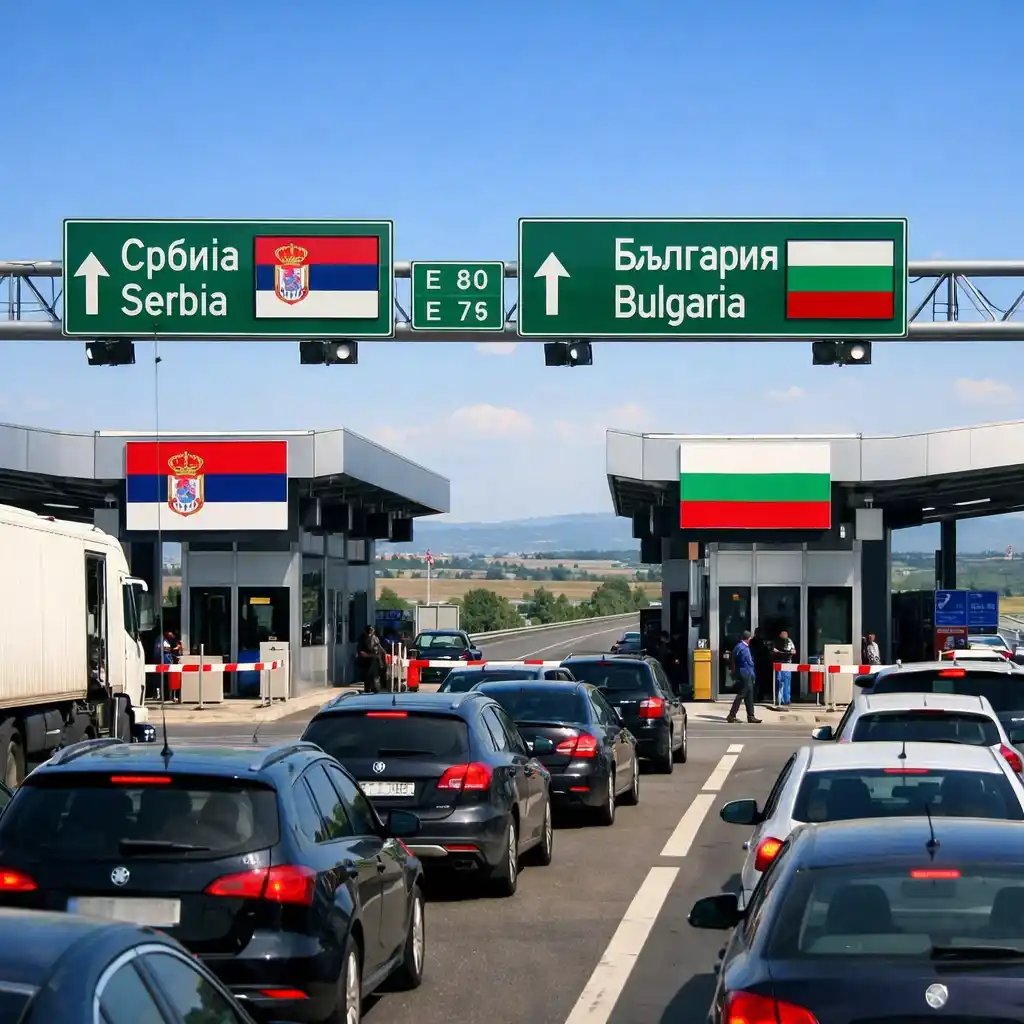
This is by far the most heavily used Serbia Bulgaria border crossing for passenger vehicles and freight trucks alike. This border crossing is one of the busiest between the two countries. Due to extensive construction on the Bulgarian side, there may be additional traffic jams and longer waiting times, especially during high traffic volumes. Vignette-Online.CH
It is situated along the E80 highway, which is a critical route for transportation between Western Europe and the Middle East. As the most trafficked crossing between Bulgaria and Serbia, it plays a pivotal role in the Trans-European Transport Network (TEN-T), facilitating significant cargo flow. The border checkpoint has been undergoing modernization, with expansions to include more lanes for trucks and passenger vehicles, aiming to reduce waiting times. The integration of digital customs systems has also enhanced efficiency. Evignettebulgaria
On the Bulgarian side, the crossing is reached via the A6 motorway (Europa Highway) from Sofia. This motorway is still partially under construction in 2026, with Bulgaria’s “Europe” highway from Sofia to the Kalotina border crossing currently under construction. Republic of Serbia On the Serbian side, the crossing connects to the E80 toward Niš. Dimitrovgrad, the nearest major town on the Serbian side, operates as the primary customs and inspection hub. The Kalotina–Gradina crossing is open 24 hours a day, 7 days a week.
2. Strezimirovtsi (Serbia) – Zheravino (Bulgaria)
This crossing in western Bulgaria is accessible via the E69 from Sofia. On the Serbian side, Route 40 leads from Surdulica to the border crossing. The route passes through picturesque landscapes, especially around Lake Vlasinko Jazero in eastern Serbia. Vignette-Online.CH This crossing is popular with nature travellers and tourists heading toward the scenic interior of both countries. It is less congested than Kalotina–Gradina and serves as a good alternative route for those departing from or arriving in the south of Serbia.
3. Bregovo (Bulgaria) – Mokranje (Serbia): The Scenic Northwestern Route
Moving to northwestern Bulgaria, we find perhaps the most scenic route when travelling between Bulgaria and Serbia. The border is reached on the I-21, via Bregovo, on the east bank of the Timok River in Bulgaria. The I-2 runs to Vidin at the Danube river, where a car ferry offers to cross the Romanian border. In the shadow of the Balkan mountains, it is popular with nature enthusiasts. Vignettebulgaria
This border crossing is recommended as an alternative if there are traffic jams at other crossings. Vignette-Online.CH Travellers heading between northwestern Bulgaria and eastern Serbia will find this crossing particularly convenient, as it avoids the congested Kalotina corridor entirely.
4. Vrashka Chuka (Bulgaria) – Rgotina (Serbia)
This crossing connects Belogradchik in Bulgaria to Zaječar in Serbia, offering a scenic route through the Balkan Mountains. While not as busy as Kalotina–Gradina, this crossing is important for regional trade, local tourism, and small-scale cross-border economic activities. Evignettebulgaria The area around this crossing is rich in natural attractions and historical sites, making it a preferred entry point for eco-tourists and history enthusiasts.
5. Oltomantsi (Bulgaria) – Ribarci (Serbia)
This is a smaller crossing point located in the central section of the border. It connects the municipalities of Tran (Bulgaria) and Babušnica (Serbia), primarily serving local residents and light traffic. It is less suited to heavy freight or international tourism but remains fully operational.
Planned New Crossing: Petačinci
A new border crossing in the village of Petacinci is planned, which will be designed only for passenger traffic. This is expected to relieve the heavily used Gradina crossing, especially during the tourist season. Vignette-Online.CH While no confirmed opening date has been officially announced for 2026, this development signals the increasing importance both governments place on managing cross-border traffic flows more efficiently.
How to Master the Sofia to Belgrade Bus 2026 Route
For those not driving, the Sofia to Belgrade bus 2026 season is busier than ever. Major carriers like Florentia Bus and Trans Jug depart daily from the Sofia Central Bus Station. To ensure a smooth trip, book your tickets at least 48 hours in advance. Keep in mind that as Bulgaria is now part of the Schengen zone, buses are subject to thorough checks, so always allow for a “buffer hour” in your arrival schedule.
Pro Tips for Avoiding Queues at Kalotina and Staying Updated
If you want to spend less time idling, avoiding queues at Kalotina is all about timing. Tuesdays and Wednesdays are statistically the quietest days. To plan your crossing with precision, check the border wait times Serbia Bulgaria live through the official AMSS cameras or the Bulgarian Border Police website. These live feeds are essential during the summer “diaspora” rush when wait times can spike to 6 hours or more.
Roadside Assistance and Legal Essentials
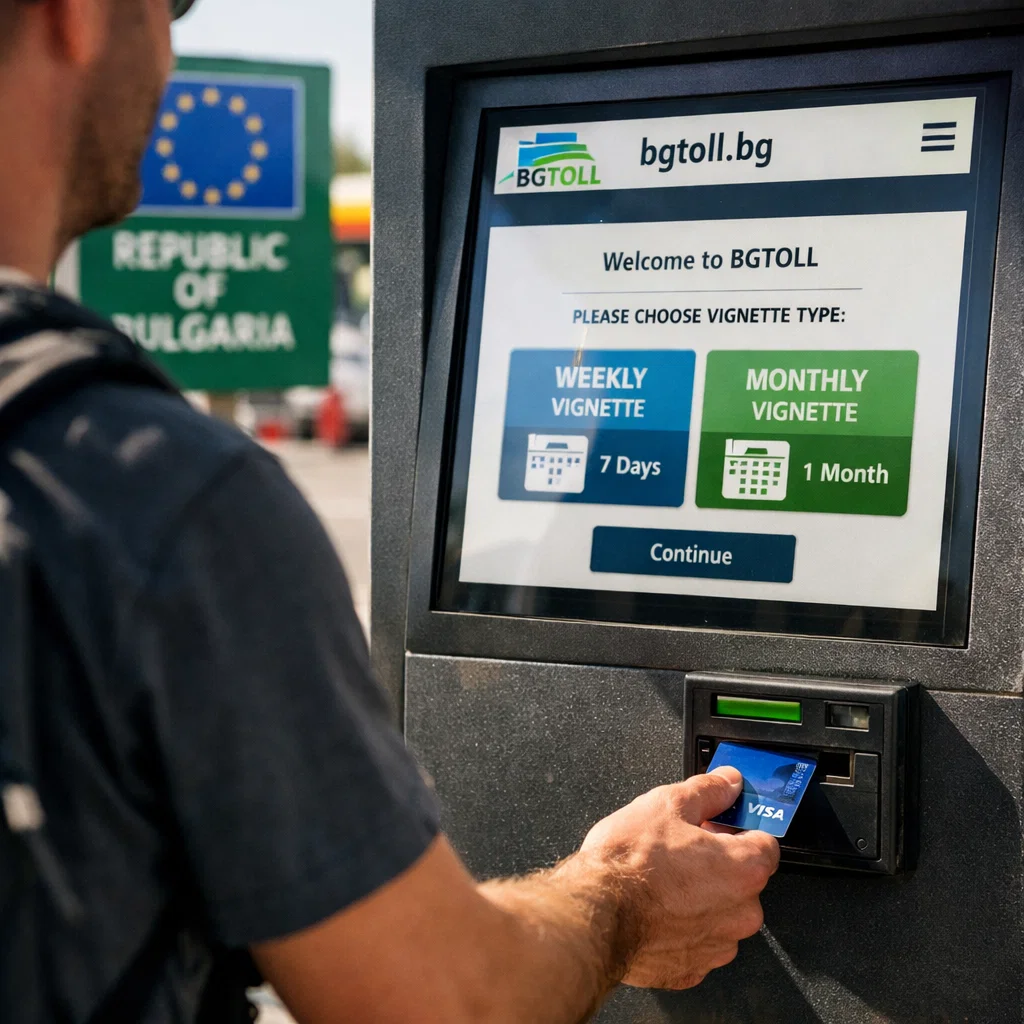
Driving in a foreign country requires a safety net. For Serbian roadside assistance for foreigners, the AMSS (dial 1987) provides reliable English-speaking dispatchers who can assist with towing or mechanical repairs. Once you cross into Bulgaria, your first priority must be the road tax. If you are wondering where to buy Bulgarian vignette at the border, look for the self-service terminals at the Kalotina checkpoint or use the official bgtoll.bg portal. Avoid third-party “resellers” who often add unnecessary service fees to the standard price.
Navigating the Bulgaria Schengen External Border Rules
In 2026, the frontier between Serbia and Bulgaria serves as a critical entry point into the European Union’s travel zone. Under the Bulgaria Schengen external border rules, all travelers from Serbia must undergo biometric registration (EES) and, if applicable, have their ETIAS authorization ready. Ensure your passport has been stamped upon exit from Serbia to avoid any legal discrepancies when entering the Schengen area at the Bulgarian checkpoint.
Documents, Entry Requirements & Schengen Rules at the Serbia Bulgaria Border Crossing in 2026
This section covers the most important topic for any traveller approaching the Serbia Bulgaria border crossing: what documents do you need, and what are the legal entry requirements on each side?
Crossing from Serbia into Bulgaria (Entering Schengen Territory)
Since Bulgaria is now a full member of the Schengen Area, entering Bulgaria from Serbia is legally equivalent to entering the Schengen zone from a non-EU country. This means passport checks and customs controls are mandatory regardless of your nationality.
For Serbian Citizens entering Bulgaria:
Holders of biometric passports of the Republic of Serbia do not require a visa for a stay of up to 90 days during a period of six months. Mfa This visa-free arrangement has been in place for a number of years and continues to apply in 2026. However, Serbian citizens must carry a valid biometric passport — national ID cards are generally not accepted at land borders for entry into the Schengen Area. The 90-day rule is calculated across the entire Schengen zone, not just Bulgaria.
For EU and Schengen Nationals:
EU citizens and nationals of all Schengen member states can cross from Serbia into Bulgaria using either a valid passport or a national identity card. There are no special restrictions beyond standard documentation checks.
For Non-EU, Non-Schengen Nationals:
Travellers who are neither EU citizens nor nationals of visa-exempt countries must hold a valid Schengen visa before approaching the Serbia Bulgaria border crossing. To apply for a short-stay Schengen visa (Type C) in 2026, you will typically need: a valid passport (at least 3 months beyond your departure from the Schengen Area), travel medical insurance covering at least €30,000, proof of travel purpose, proof of financial means, and flight or travel bookings. Astons
Getting to the Border: Flights, Trains & Buses
Reaching the Serbia Bulgaria border does not have to mean driving your own vehicle. A growing number of travellers opt for mixed transport solutions, combining flights, trains, and buses across the region. Kiwi.com is particularly useful for building multi-stop itineraries that connect smaller Balkan airports, while WayAway aggregates flight deals and offers cashback on bookings. For overland travel, Omio is one of the best platforms to compare bus and train routes between Serbian and Bulgarian cities in a single search. If you are traveling from Southeast Asia or connecting through multiple countries, 12Go covers trains, buses, and ferries across the wider region. For those who prefer to travel by private ride, InDrive operates in many Balkan cities and can be a cost-effective way to reach the border crossing from Niš or Sofia.
The ETIAS System: What Travellers Need to Know for 2026
One of the most significant new developments affecting the Serbia Bulgaria border crossing in 2026 is the planned rollout of ETIAS — the European Travel Information and Authorization System. ETIAS is an online authorisation for visitors from visa-exempt countries who plan short stays in the Schengen area. Migrationvisportal
Serbian nationals will need to register online to obtain the ETIAS before departure. The ETIAS is a visa waiver programme that is being developed by the European Union to improve security within the Schengen borders. The new system will register and pre-screen visitors from visa-exempt countries — including Serbia — before their departure from their home country. Schengen Visa
Once ETIAS goes into effect, all Serbian travelers will be required to apply online and receive approval before boarding their flight or crossing a European border. This new requirement adds a digital pre-screening step to your travel preparations, but it doesn’t replace visa-free access — it enhances border security while keeping the process simple. ETIAS
Travellers planning to cross the Serbia Bulgaria border in 2026 should monitor ETIAS developments closely and apply in advance once the system becomes operational.
The Entry/Exit System (EES): New Biometric Checks at the Serbia Bulgaria Border
Another major development for 2026 is the Entry/Exit System (EES). EES began its phased rollout on October 12, 2025, with full implementation expected by April 10, 2026. That means many travellers in 2026 will experience biometric checks at airports and major crossing points. On your first entry after EES is in place, you may be asked to scan your passport, take a photograph, and provide fingerprints. The system stores travel dates and basic biometric information to detect overstayers and prevent identity fraud. Migrationvisportal
Travellers should allow extra time at the Serbia Bulgaria border crossing during the EES rollout period, as initial implementation may cause some additional processing delays.
Crossing from Bulgaria into Serbia (Entering Non-EU Territory)
In order to cross the state border into Serbia, travellers require a valid travel document, or a duly obtained visa for the Republic of Serbia if required. Proof of sufficient funds for staying in Serbia — considered to be 50 Euros per day of stay — must be available if requested, proved by possession of the appropriate amount of cash or a bank statement. Welcome to Serbia
Serbia grants visa-free entry to most Schengen Annex II nationalities. Wikipedia This includes all EU and Schengen member state passport holders, as well as nationals of many other countries worldwide. The standard visa-free stay in Serbia is 90 days. However, travellers should always verify the current visa policy for their specific nationality before travelling.
Road Rules, Tolls & Vignettes at the Serbia Bulgaria Border Crossing
Bulgarian Road Vignette: Mandatory for All Vehicles
One of the most important practical requirements when crossing the Serbia Bulgaria border from Serbia into Bulgaria is purchasing a Bulgarian e-vignette. The fee for driving on Bulgarian roads (road toll) is paid by purchasing an electronic vignette. It is recommended to purchase an e-vignette immediately upon crossing the border, at the sales point located immediately after the customs ramp, on the left side, which is always open. Mfa
In Bulgaria, there is a vignette requirement on national roads. This vignette requirement applies to all vehicles up to 3.5 tons total weight (GVW) as well as motorhomes (regardless of their weight). Vignette-Online.CH The Bulgarian e-vignette can also be purchased online before your trip via the official Bulgarian e-vignette portal. Driving on Bulgarian roads without a valid vignette can result in substantial on-the-spot fines, so ensure you obtain one before or immediately after crossing the border.
Serbian Road Tolls: Distance-Based System
The toll system on the Serbian side of the Serbia Bulgaria border operates differently. In Serbia, there is no vignette requirement, but there is a distance-based toll. The distance-based toll depends on the distance traveled, and it can be paid at toll stations or via electronic systems. Vignette-Online.CH
Payments can be made in cash or with a credit card or bank card. Additionally, it is possible to pay the toll in Euros, but keep in mind that you will receive Serbian currency (Dinars) in change. Vignette-Online.CH Travellers are therefore advised to carry some Serbian Dinars (RSD) or Euros when approaching Serbian toll booths.
Car Rentals & Road Trip Tools for the Serbia Bulgaria Route
If you are not driving your own vehicle, renting a car is an excellent way to explore both sides of the Serbia Bulgaria border at your own pace. Discover Cars, RentalCars.com, AutoEurope, EconomyBookings, and Localrent.com all allow you to compare rental rates across multiple providers in Serbia and Bulgaria with full filter options for cross-border travel permissions. Always confirm explicitly with your rental provider that the vehicle is permitted to cross the Serbia Bulgaria border, as some lower-cost rentals restrict international movement. Once your car is booked, use Trip.com to plan the full itinerary — the platform integrates hotels, flights, and train bookings into a single dashboard, making multi-country road trips far easier to coordinate.
Vehicle Insurance: The Green Card
All drivers crossing the Serbia Bulgaria border must carry valid vehicle insurance recognised in both countries. The internationally recognised Green Card (International Motor Insurance Certificate) is the standard document required. If driving, confirm insurance coverage and obtain a Green Card for your car. The Balkans and Beyond Most European insurance policies automatically cover travel in both Serbia and Bulgaria, but it is prudent to confirm this with your insurer before travelling.
Driving Rules to Know
Both Bulgaria and Serbia follow standard European traffic regulations. Key rules applicable at and near the Serbia Bulgaria border crossing include:
- Headlights — In Bulgaria, it is mandatory by law to drive with the headlights on. Mfa This rule applies at all times, including during daylight hours.
- Mobile phones — Talking on a mobile telephone is only permitted using a hands-free system. Mfa
- Speed limits — Standard EU speed limits apply throughout Bulgaria. In Serbia, follow national posted speed limits on highways and rural roads.
- Alcohol — Both countries enforce strict blood alcohol limits for drivers. The legal limit in both Serbia and Bulgaria is 0.05% BAC (lower than in many Western European countries).
Currency: Serbian Dinar vs Bulgarian Lev
Serbia’s official currency is the Serbian Dinar (RSD). It is advisable for travelers to carry enough Serbian Dinars, as not all border crossings accept Euro or credit cards. However, at some crossings, it is possible to pay toll fees in Euros. Vignette-Online.CH Bulgaria uses the Bulgarian Lev (BGN), not the Euro, despite its EU membership. Currency exchange facilities are typically available at major crossing points, but rates may not be favourable — it is better to exchange money at a bank or ATM in the nearest city.
Practical Tips for Crossing the Serbia Bulgaria Border in 2026
Best Times to Cross — Avoiding Queues
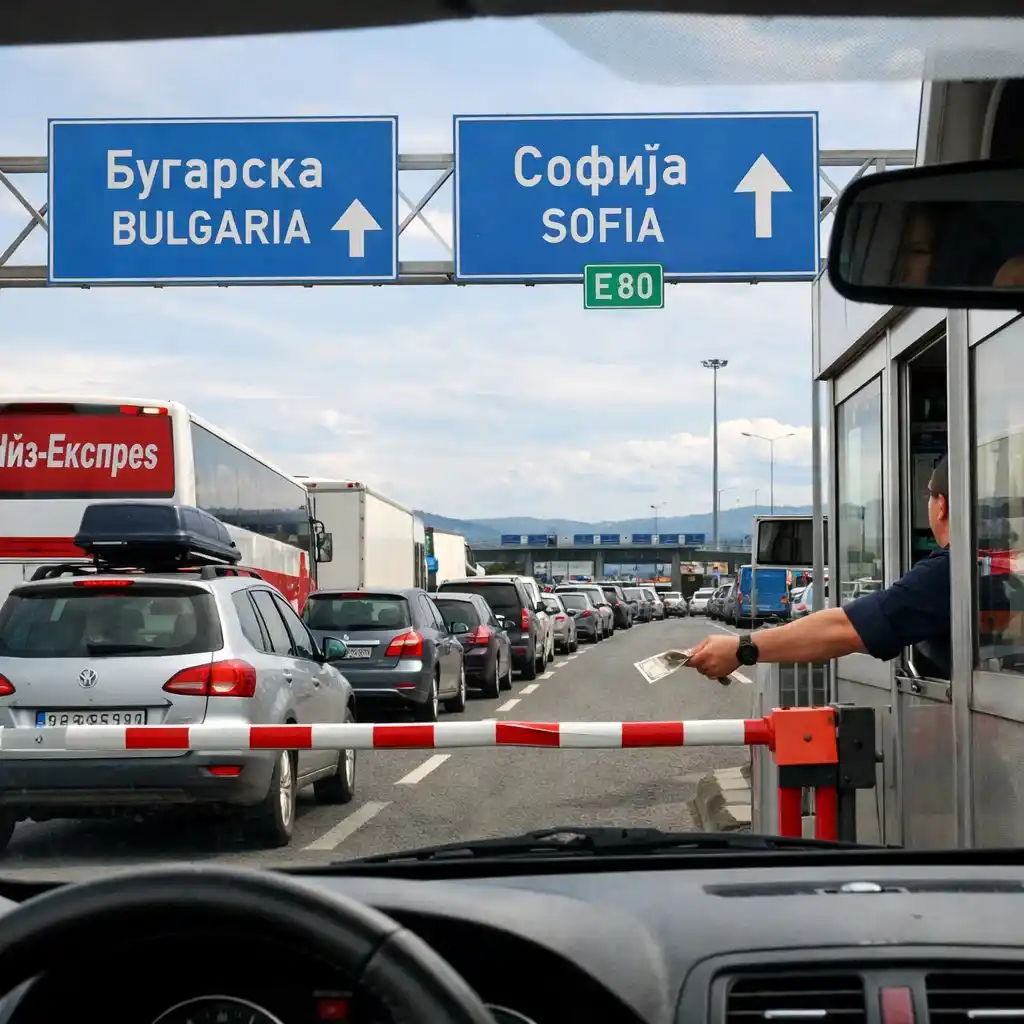
Timing is everything when planning a Serbia Bulgaria border crossing. During the holiday season and on weekends, long waiting times at border crossings can occur. Vignette-Online.CH The Kalotina–Gradina crossing in particular sees very heavy traffic during summer months (July–August), public holidays, and weekend afternoons.
Shortest queues are at night (22:00–06:00) and on weekdays. Avoid Friday after 14:00, weekends, holidays, and summer season (July–August). Nakordoni If your schedule allows, crossing during weekday mornings — particularly Tuesday through Thursday — will give you the best chance of a fast, hassle-free crossing.
For those travelling with heavy vehicles or freight, be aware of the emphasis that both countries’ ministers have placed on establishing Green Corridors to reduce waiting time on the Serbian–Bulgarian border, particularly for trucks. Republic of Serbia Freight crossing times can be significantly longer than passenger vehicle crossings, especially at Kalotina–Gradina.
Infrastructure Updates in 2026
Several important infrastructure projects are directly affecting the Serbia Bulgaria border crossing experience in 2026:
- The Europa Highway (A6), Bulgaria — Bulgaria’s “Europe” highway from Sofia to the Kalotina border crossing is currently under construction. Republic of Serbia Sections of this motorway may cause diversions or slowdowns on the Bulgarian approach to the crossing.
- Niš–Dimitrovgrad Railway — Bulgaria has started with the reconstruction of the railway from Sofia to the border with Serbia. Bulgaria will also help Serbia in order to secure financing of a railway from Niš to Dimitrovgrad from European funds. Republic of Serbia This railway upgrade is aimed at boosting both passenger and freight rail capacity between the two countries.
- Kalotina–Gradina Modernization — The Kalotina–Gradina border checkpoint has been undergoing modernization, with expansions to include more lanes for trucks and passenger vehicles, aiming to reduce waiting times. The integration of digital customs systems has also enhanced efficiency. Evignettebulgaria
Travel Insurance, SIM Cards & Experiences Near the Border
A well-prepared Serbia Bulgaria border crossing in 2026 also means having the right insurance and connectivity sorted before you leave home. For travel health and trip protection insurance, Insubuy, VisitorsCoverage, and EKTA all offer competitive short-term plans that cover Schengen entry requirements and medical emergencies across the Balkans. For mobile data without expensive roaming charges, Yesim, Airalo, and Saily provide affordable eSIM plans valid across Europe including both Serbia and Bulgaria. Once you have crossed the border and settled in, do not miss the chance to explore local attractions — Viator, GetYourGuide, Klook, and Tiqets all list guided tours, day trips, and cultural experiences in Sofia, Niš, and the surrounding Balkan region. For honest traveller reviews of hotels, restaurants, and crossing-area services, Tripadvisor and Cruise Critic remain go-to resources. And if your travel plans are ever disrupted by a flight delay or cancellation, AirHelp can help you claim the compensation you are legally entitled to under EU regulations.
Customs Allowances and Prohibited Items
When crossing the Serbia Bulgaria border, travellers must comply with the customs regulations of both countries. Since Bulgaria is an EU member, EU customs rules apply on the Bulgarian side. Key points to note:
- Cash declarations — Any amount of cash exceeding €10,000 (or equivalent) must be declared at the Serbia Bulgaria border crossing. Failure to do so can result in confiscation.
- Tobacco and alcohol — Personal import limits apply for both countries. Exceeding these limits without declaring goods constitutes a customs violation.
- Firearms and restricted goods — Strict regulations govern the transport of weapons, certain agricultural products, and controlled substances across the border. Always check both countries’ customs regulations before packing.
- Pets — If travelling with pets, ensure you carry an EU Pet Passport (required for entry into Bulgaria) and comply with all applicable health and vaccination documentation requirements.
Safety and Security at Border Areas
There are no serious threats to visitor safety in Bulgaria, but caution should be exercised due to the risk of thefts. Visitors are advised to leave their vehicles on parking lots under surveillance (particularly those with video surveillance) and to always lock them. Under no circumstance should bags with personal documents, mobile telephones, electronic devices, valuables or money, or other items of value be left inside the vehicles. Mfa
The same precautions apply on the Serbian side of the border. Border areas can attract pickpockets and petty thieves, particularly during peak crossing times when vehicles are stationary in long queues. Keep your documents and valuables secure at all times.
Emergency and Consular Contacts
In the event of a problem at the Serbia Bulgaria border crossing, travellers can contact the following official bodies:
- Bulgarian Border Police: Telephone number: 02 983 18 65; after hours: 02 982 53 90 Mfa
- Serbian Embassy in Sofia: Telephone: +359 2 946 16 33 Mfa
- Bulgarian Embassy in Belgrade: Address: Birchaninova 26, 11000 Belgrade, Serbia. Telephone: +381 11 36 13 980 Ministry of Foreign Affairs of Bulgaria
Complete Serbia Bulgaria Border Crossing Checklist for 2026
Before you approach any Serbia Bulgaria border crossing in 2026, use this checklist to ensure you have everything in order:
Documents:
- Valid biometric passport (minimum 3 months validity beyond your planned exit from Bulgaria/Schengen Area)
- National identity card (EU citizens only, for Serbia entry)
- Valid Schengen visa or ETIAS authorisation (if applicable to your nationality)
- Vehicle registration document
- Green Card vehicle insurance certificate
- Driver’s licence (international driving permit recommended for non-EU nationals)
Vehicle & Road Requirements:
- Bulgarian e-vignette purchased (valid before entering Bulgarian roads)
- Serbian Dinars or Euros for toll payments on the Serbian side
- Headlights switched on (mandatory in Bulgaria at all times)
- First aid kit and warning triangle (required in both countries)
- Reflective vest accessible in the car cabin (not the trunk)
Financial & Practical:
- Proof of sufficient funds (minimum €50 per day for Serbia; EU customs declaration for Bulgaria)
- Cash declaration form if carrying more than €10,000
- Travel health insurance (minimum €30,000 coverage recommended)
- Accommodation confirmation and return travel documentation
For Pet Owners:
- EU Pet Passport with valid rabies vaccination record
- Health certificate issued by a licensed veterinarian
Which Serbia-Bulgaria Border Crossing Should You Choose?
To help you decide the best route based on your vehicle type and schedule, refer to the table below:
| Border Crossing (Serbia / Bulgaria) | Vehicle Type Allowed | Peak Season Waiting Time | Distance from Nearest City |
| Gradina / Kalotina | All (Cars, Buses, Trucks) | 3 – 6+ Hours | 95 km from Sofia / 100 km from Niš |
| Ribarci / Oltomantsi | Cars & Small Vans | 20 – 45 Minutes | 30 km from Kyustendil (BG) |
| Mokranje / Bregovo | Cars & Small Vans | 30 – 60 Minutes | 15 km from Negotin (SRB) |
| Vrška Čuka | Cars & Light Trucks | 1 – 2 Hours | 11 km from Zaječar (SRB) |
| Strezimirovci | Cars & Mini-Buses | 15 – 30 Minutes | 50 km from Pernik (BG) |
Best Currency Exchange Tips for the Serbia-Bulgaria Border
While both countries are moving toward digital payments, you will still need local cash (Serbian Dinar – RSD and Bulgarian Lev – BGN) for small tolls, snacks, or local parking.
- The Golden Rule: Avoid “Exchange” booths located directly at the border crossing. These offices often charge a premium of 10% to 15% compared to city rates.
- Pro Tip: If you are entering Bulgaria, wait until you reach the town of Dragoman or use an ATM at a reputable gas station (like Shell or OMV) shortly after the border. For those entering Serbia, the town of Dimitrovgrad has several reliable ATMs and bank-affiliated exchange offices that offer fair market rates.
What to Do if Your Car Breaks Down?
SEO Heading: Roadside Assistance and Emergency Contacts at the Border
A breakdown in the “No Man’s Land” between checkpoints or on the remote mountain passes can be stressful. Here is your emergency action plan:
- In Serbia: Call 1987 for the AMSS (Auto-Moto Savez Srbije). They are the national roadside assistance provider and offer 24/7 towing and repair services.
- In Bulgaria: Call 146 from your mobile to reach the UAB (Union of Bulgarian Automobilists).
- What if it happens at the checkpoint? Notify the border police immediately. Do not attempt to leave your vehicle and wander; they will coordinate with authorized towing services to move your car to a safe zone for repairs.
Stay Safe: Common Scams at the Serbia-Bulgaria Frontier
While generally safe, travelers should be aware of a few common issues that arise at these busy crossings:
- The “Fake Vignette” Seller: Only buy your Bulgarian Vignette from the official bgtoll.bg website or official kiosks at gas stations. Unofficial vendors near the border may sell you a “receipt” that isn’t registered in the system, leading to heavy fines.
- Unsolicited “Help”: Beware of individuals offering to help you “skip the line” for a fee. There is no legal way to bypass the queue, and these individuals are often scammers.
- Headlight Regulations: In both Serbia and Bulgaria, dipped headlights must be on 24/7, even in bright sunlight. Police often wait just a few kilometers after the border to fine tourists who forget to switch them on.
Traveling by Bus or Train from Belgrade to Sofia in 2026
If you aren’t driving, your options are more limited but manageable:
- By Bus: This is the most reliable method. Companies like Florentia Bus and Niš-Ekspres operate daily routes. Expect the bus to take an additional 1–2 hours beyond the scheduled time due to mandatory passenger passport checks.
- By Train: As of 2026, the direct “Balkan Express” line is often subject to seasonal availability or track maintenance. Always check the Srbija Voz or BDZ (Bulgarian State Railways) websites 48 hours before travel to confirm if the international line is operational.
The “Border-Ready” Checklist
A quick, copy-pasteable list for your readers to screenshot.
✅ 2026 Border Crossing Checklist
- Passport: Must be valid for at least 3 months beyond your planned stay.
- Bulgarian E-Vignette: Purchased via bgtoll.bg (mandatory immediately upon entry).
- Headlights: Switched ON (Required 24/7 in both countries).
- Green Card: Original physical copy of your vehicle insurance.
- Rental Authorization: Official “Power of Attorney” if the car isn’t in your name.
- Cash: At least €20–30 in small bills (in case card machines at toll booths are down).
Contact Numbers for Serbia and Bulgaria Border Police Stations
Having the direct line to a border post can be a lifesaver if you are delayed, need to report an incident, or have specific questions about Bulgaria Schengen external border rules.
| Station Name | Country | Contact Number | Notes |
| Gradina Border Police | Serbia | +381 10 360 222 | Main hub for the Niš-Sofia route. |
| Kalotina Border Police | Bulgaria | +359 2 982 5000 | Inquiries for Schengen entry/exit. |
| Vrška Čuka Post | Serbia | +381 19 422 844 | Covers the Zaječar-Vidin corridor. |
| Strezimirovci Post | Bulgaria | +359 76 600 123 | Helpful for southern mountain routes. |
| Customs Hotline | Serbia | +381 11 319 4917 | General customs/import questions. |
Final Thoughts: Serbia Bulgaria Border Crossing in 2026
The Serbia Bulgaria border crossing experience in 2026 is shaped by a combination of exciting infrastructure upgrades, new digital border management systems, and evolving regulatory frameworks tied to Bulgaria’s Schengen membership. Whether you are making a quick day trip between Niš and Sofia or embarking on a longer Balkan road journey, preparation is the key to a seamless crossing.
The most important updates to remember for 2026 are: Bulgaria is now a full Schengen member, meaning EU external border rules apply; the EES biometric system is being rolled out at major crossing points; ETIAS may require pre-registration for Serbian and other visa-exempt travellers; and infrastructure works at Kalotina–Gradina may cause delays. By planning your crossing during off-peak hours, having all documentation ready, purchasing your Bulgarian e-vignette in advance, and staying informed about the latest developments, you can ensure that the Serbia Bulgaria border crossing becomes the least stressful part of your journey through the Balkans.
❓ Frequently Asked Questions (FAQ)
Is the Serbia Bulgaria border open 24 hours?
Yes, the main Serbia Bulgaria border crossing at Kalotina–Gradina is open 24 hours a day, 7 days a week. Most other crossings also operate around the clock, though smaller crossings may have restricted hours. Always verify the schedule for your specific crossing before travelling.
Do I need a visa to cross from Serbia into Bulgaria in 2026?
Serbian citizens holding a valid biometric passport do not need a visa to enter Bulgaria and can stay visa-free for up to 90 days within any 180-day period. However, since Bulgaria is now a full Schengen member, Serbian travellers may be required to obtain an ETIAS authorisation once that system becomes fully operational in 2026. Non-EU, non-exempt nationals must hold a valid Schengen visa.
Do I need a vignette to drive in Bulgaria after crossing the border?
Yes. A Bulgarian e-vignette is mandatory for all vehicles under 3.5 tonnes driving on Bulgarian national roads. You can purchase it online before your trip or at the official sales point immediately after crossing the Serbia Bulgaria border at Kalotina–Gradina. Driving without a valid vignette carries significant fines.
What is the best Serbia Bulgaria border crossing to use by car?
For most travellers, the Kalotina (Bulgaria) – Gradina (Serbia) crossing on the E80 highway is the most convenient and best-connected option. However, it is also the busiest. For a quieter crossing, consider Bregovo–Mokranje in the northwest or Strezimirovtsi–Zheravino in the south, depending on your route.
How long does it take to cross the Serbia Bulgaria border?
Crossing times vary greatly depending on the time of day, season, and which crossing you use. During off-peak hours on weekdays, passenger vehicles can cross in as little as 15–30 minutes. During summer weekends and public holidays, waits at Kalotina–Gradina can exceed 2–3 hours. Crossing between 22:00 and 06:00 on weeknights offers the fastest transit times.
What currency should I carry when crossing the Serbia Bulgaria border?
Serbia uses the Serbian Dinar (RSD) and Bulgaria uses the Bulgarian Lev (BGN). Neither country uses the Euro as its official currency, though Euros are widely accepted at many toll booths and border-area services. It is advisable to carry small amounts of both local currencies for toll payments, fuel, and immediate purchases after crossing.
What is ETIAS and does it affect the Serbia Bulgaria border crossing?
ETIAS (European Travel Information and Authorization System) is a new EU digital pre-screening requirement for visa-exempt travellers — including Serbian nationals — entering the Schengen Area. Once fully launched in 2026, Serbian citizens will need to apply online and receive ETIAS approval before crossing into Bulgaria. The process is straightforward and done entirely online before departure.
Can I cross the Serbia Bulgaria border with a rental car?
Yes, but you must confirm with your rental company that cross-border travel into both Serbia and Bulgaria is permitted under your rental agreement. Not all rental providers allow their vehicles to cross international borders. Companies like Discover Cars, RentalCars.com, and AutoEurope typically offer cross-border options — always request written confirmation before travelling.