Top Novi Sad festivals for first-time Balkan visitors

Novi Sad, the “Serbian Athens” and the capital of the Vojvodina province, is a city where Central European elegance meets Balkan soul. For first-time visitors to the Balkan region, there is perhaps no better introduction to the local culture, hospitality, and creative energy than through its vibrant festival scene. Nestled on the banks of the Danube River, Novi Sad has transformed itself from a historic fortress town into a global cultural hub, a feat recognized by its prestigious title as the European Capital of Culture in 2022.
The city’s allure lies in its ability to balance the old and the new. While the Austro-Hungarian architecture of the city center whispers stories of the past, the booming music, film, and art festivals speak to a forward-looking, cosmopolitan population. For a traveler stepping into the Balkans for the first time, Novi Sad offers a “soft landing.” It is safe, walkable, incredibly affordable compared to Western European counterparts, and speaks a universal language of celebration.
This comprehensive guide explores the top Novi Sad festivals for first-time Balkan visitors, providing an in-depth look at why this city should be the focal point of your Southeast European itinerary. From the thunderous bass of the Petrovaradin Fortress to the refined melodies of classical strings and the intoxicating aroma of local wine festivals, Novi Sad is a city that never stops celebrating.
Table of Contents
Why Novi Sad is the Ultimate Balkan Festival Hub
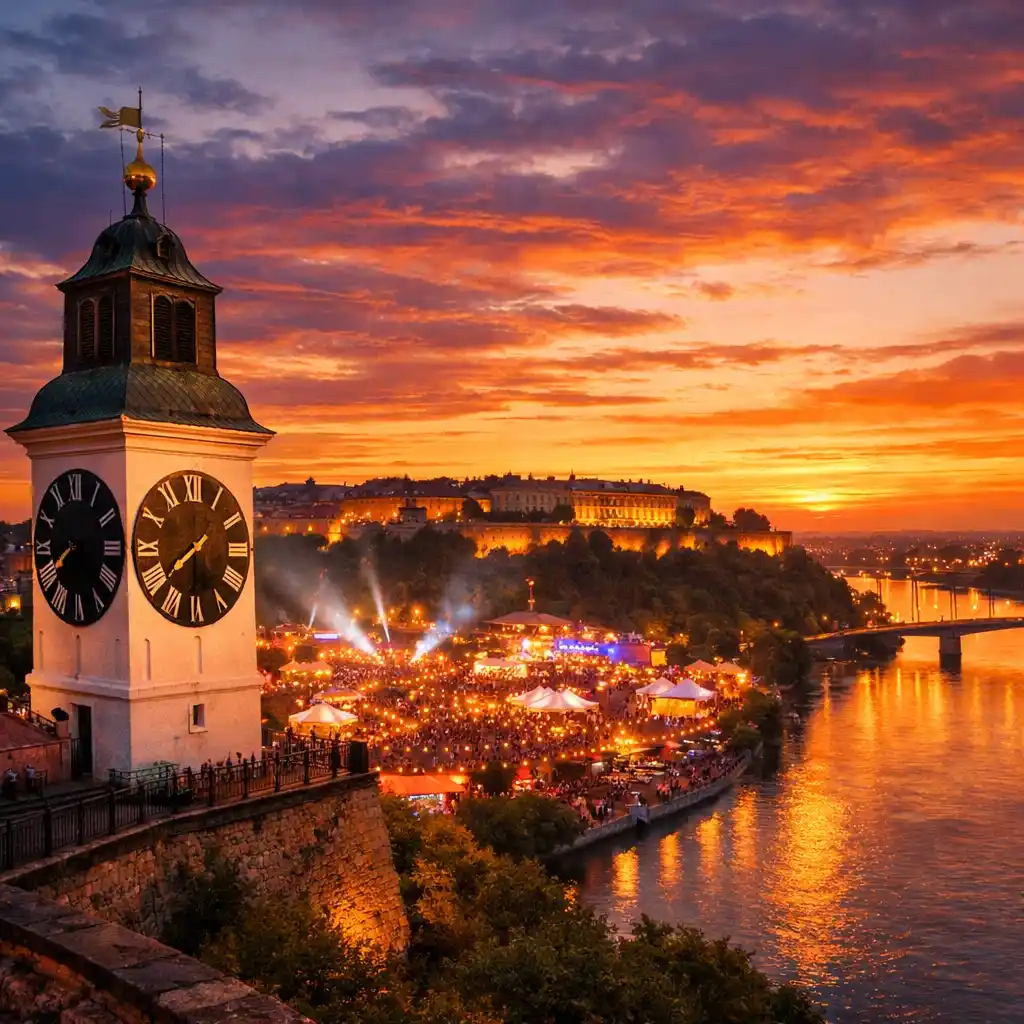
Before diving into the specific events, it is essential to understand the unique “vibe” that makes Novi Sad such a prolific host. The city’s geography plays a starring role. The Petrovaradin Fortress, often called the “Gibraltar on the Danube,” serves as one of the most spectacular festival venues in the world. Its network of tunnels, moats, and ramparts creates a multi-layered stage that provides an acoustic and aesthetic experience unlike any traditional stadium or park.
Furthermore, Novi Sad’s multicultural heritage—home to over 20 ethnic groups—ensures that its festivals are diverse. You aren’t just attending a Serbian event; you are participating in a regional crossroads where Hungarian, Slovak, Romanian, and Roma influences blend seamlessly. For a first-time visitor, this means a rich tapestry of food, music, and traditions that provides a broad overview of Balkan complexity in a single city.
The Strategic Importance of Festival Tourism in Serbia
In recent years, Serbia has pivoted toward “event tourism” as a primary draw for international travelers. Novi Sad is the crown jewel of this strategy. By focusing on high-production values and international lineups while maintaining local authenticity, the city has managed to attract millions of tourists who might otherwise have stuck to the coastal resorts of Croatia or the more famous capitals like Prague or Budapest.
EXIT Festival: The Crown Jewel of Balkan Music
When discussing top Novi Sad festivals for first-time Balkan visitors, the conversation must begin—and often centers around—EXIT Festival. What started as a student protest movement for democracy and freedom in 2000 has evolved into one of the world’s most renowned music festivals, multiple winner of the “Best Major European Festival” award.
The Historic Significance of EXIT
For a first-timer, understanding EXIT requires more than looking at a lineup. It is a festival with a soul. Born out of the desire for social change at the turn of the millennium, it still carries an activist spark. Each year, the festival features a theme related to social responsibility, environmentalism, or mental health. This “protest” DNA gives EXIT an edge and an emotional depth that many commercial festivals lack.
The Venue: Petrovaradin Fortress
The festival takes place within the walls of the Petrovaradin Fortress. For four days in July, the fortress becomes a “State of EXIT.”
- The Main Stage: Located in the heart of the fortress, it hosts global superstars ranging from rock legends like The Cure and Guns N’ Roses to modern icons like David Guetta and Tyga.
- The Dance Arena: Often cited by DJs as the best place to play in the world, this massive moat-turned-dancefloor sees the sunrise over the Danube while thousands of people dance to the world’s top techno and house artists.
- Explosive Stage: For those who prefer the heavier side of life, this stage is dedicated to hardcore, metal, and punk, tucked away in one of the fortress’s deeper moats.
Practical Tips for First-Timers at EXIT
- The Sunrise Experience: At EXIT, the party doesn’t end at midnight. The “peak” of the festival is watching the sun come up at the Dance Arena. It is a rite of passage for any visitor.
- Footwear: You will be walking on cobblestones, dirt paths, and steep ramps. Leave the fashionable sandals behind; sturdy sneakers are a must.
- Accommodation: The “EXIT Village” (campsite) is located on the Štrand beach. It’s the most social way to stay, but if you prefer comfort, book your hotel or Airbnb at least six months in advance.
Interfest: A Toast to Balkan Viticulture
For first-time Balkan visitors, the region’s wine culture is often a delightful surprise. Interfest, Novi Sad’s premier international wine festival, serves as the perfect introduction. Held annually in June at the picturesque Trg Slobode (Liberty Square), this festival transforms the city’s heart into an open-air cellar.
The Charm of Vojvodina Wines
Novi Sad is the gateway to the Fruška Gora wine region, famous for its volcanic soil and ancient Roman viticulture roots. At Interfest, visitors can sample over 100 different wineries, with a heavy emphasis on regional specialties:
- Bermet: A dessert wine unique to the nearby town of Sremski Karlovci, once served on the Titanic and a favorite of the Austro-Hungarian royalty.
- Tamjanika: An indigenous Balkan grape variety known for its intense musky and floral aroma.
- Grašac (Italian Riesling): The backbone of northern Serbian white wines, offering crisp acidity perfect for the summer heat.
The Atmosphere and Experience
Unlike the high-energy chaos of EXIT, Interfest is sophisticated yet accessible. You purchase a tasting glass and tokens at the entrance, then wander between rustic wooden stalls.
- Gastronomic Pairings: The festival isn’t just about wine. Local producers bring artisanal cheeses, “kulen” (spicy Vojvodina sausage), and traditional pastries like pogačice sa čvarcima.
- Live Entertainment: The background music usually leans toward tamburica (traditional string music) or light jazz, enhancing the elegant atmosphere of the Neo-Renaissance City Hall and the Name of Mary Catholic Church surrounding the square.
- Educational Workshops: For those who want to dive deeper, there are masterclasses led by top Balkan sommeliers, explaining the nuances of terroir in the Pannonian Plain.
Novi Sad Jazz Festival: Rhythms of the Danube
If your first Balkan trip falls in November, the Novi Sad Jazz Festival is the cultural highlight. Hosted primarily at the Serbian National Theatre, this event has been a staple of the city’s artistic life for decades, drawing world-class performers from the US, Europe, and the local Balkan scene.
Bridging East and West through Jazz
Jazz in the Balkans has a unique flavor, often incorporating irregular time signatures and traditional folk scales. For a first-time visitor, this provides a fascinating look at how Western musical structures are reinterpreted through a regional lens.
Why It Stands Out
- Intimate Venues: While the main concerts are in the grand theater, the “jam sessions” in local clubs and bars after the official program are where the real magic happens.
- Diversity of Style: You’ll hear everything from classic Big Band swing to avant-garde ethno-jazz fusion.
- Cultural Connection: It’s an excellent way to see the “intellectual” side of Novi Sad. The crowd is a mix of seasoned jazz aficionados and young students from the city’s prestigious Academy of Arts.
Tips for Visitors
- Book Early: The Serbian National Theatre has limited seating, and the big-name headliners sell out weeks in advance.
- The “After-Hours” Scene: Don’t go back to your hotel after the main show. Follow the musicians to the local pubs for improvised sessions that often last until the early hours of the morning.
Sterijino Pozorje: The Soul of Balkan Theatre
While language might seem like a barrier, Sterijino Pozorje (held in late May) is essential for anyone wanting to understand the Balkan psyche. It is the most prestigious theater festival in Serbia, focusing on national drama and high-concept stagecraft.
Visual Storytelling
Even if you don’t speak Serbian, many performances are highly physical or abstract, and international visitors often find the production design and emotional intensity of Balkan actors to be world-class. It is a deep dive into the region’s literary and social history.
Gradić Fest: The Magic of the Lower Town
For many seasoned travelers, Gradić Fest (The Festival of Street Musicians) is the most soulful entry among the top Novi Sad festivals for first-time Balkan visitors. Held in late August or early September, this festival focuses on the “Lower Town” (Gradić) of the Petrovaradin Fortress—a baroque suburb of narrow, cobbled streets and 18th-century facades that usually sits quietly in the shadow of the upper ramparts.
Transforming the Urban Landscape
Gradić Fest is a non-commercial, artist-driven event that invites street performers from across the globe. You won’t find massive LED screens or high-security barriers here. Instead, the festival features:
- Intimate Performances: Musicians, dancers, and acrobats perform at eye-level with the audience, often using the natural acoustics of the stone archways and historic courtyards.
- The Lantern Procession: One of the festival’s highlights is the opening parade, where a river of people carries lights and instruments from the city center, across the Varadin Bridge, into the heart of the Lower Town.
- Artistic Revitalization: The festival’s primary goal is to breathe new life into this historic district, turning it into a pedestrian-only zone filled with “pop-up” galleries and open-air cinemas.
Why First-Time Visitors Love It
For a newcomer, Gradić Fest offers a chance to see the “authentic” Novi Sad. It feels less like a tourist attraction and more like a neighborhood block party on a grand scale. It is family-friendly, free of charge, and allows for spontaneous interactions with locals who take great pride in their baroque heritage.
Cinema City: Indie Spirit in a Creative Quarter
If you are a cinephile, Cinema City is an essential stop. This international film festival typically takes place over several days, transforming Novi Sad into a giant outdoor movie theater. In recent years, it has found a unique home in the “Creative District” (formerly known as China Town) and Limanski Park.
A Focus on New Talent
Cinema City differentiates itself by focusing on young, independent filmmakers from the Danube region and beyond. The program is usually divided into several competitive and review categories:
- National Class: Showcasing the best of contemporary Serbian cinema—a great way to get a pulse on the local culture and social issues.
- Up to 10,000 Bucks: A selection of high-quality low-budget films from around the world, proving that creativity isn’t limited by financing.
- Fresh Danube Films: Highlighting debut features from directors across the Balkan and Pannonian regions.
The “Industrial” Cinema Experience
Watching a film at Cinema City is an experience in itself. Screenings often take place in refurbished industrial warehouses or under the stars in the park. The festival also integrates a strong musical component, with live bands and DJs performing after the final credits roll, ensuring the “festival city” vibe continues well into the night.
Days of Brazil: A Pannonian Samba Carnival
It might come as a surprise to a first-time visitor, but Novi Sad has a deep-seated love for Brazilian culture. Days of Brazil (Dani Brazila) is an annual samba carnival held in August that brings a tropical heat to the Serbian summer.
The Samba Parade
The climax of the festival is a massive carnival parade through the city’s pedestrian zone. Hundreds of percussionists and dancers, many of whom have trained in local samba schools, create a rhythmic spectacle that rivals many European carnivals.
- Capoeira Workshops: Visitors can join workshops to learn this Afro-Brazilian martial art from masters who fly in specifically for the event.
- Percussion and Dance: The city vibrates with the sound of bateria (drums), and the energy is infectious, drawing thousands of spectators into the dance.
Tamburitza Fest: The Melodic Heart of Vojvodina
No list of top Novi Sad festivals for first-time Balkan visitors would be complete without mentioning Tamburitza Fest (Tamburica Fest). Usually held in late summer or early September, this international festival is a vibrant celebration of the tamburitza—a traditional string instrument that is synonymous with the cultural identity of Vojvodina and the wider Pannonian Plain.
A World-Class Folk Spectacle
The festival brings together the finest orchestras from across the globe, transforming the Petrovaradin Fortress and Liberty Square into stages for acoustic brilliance. For a first-timer, this is the ultimate opportunity to witness:
- Orchestral Competitions: Master players from the Balkans, Hungary, and even North and South America compete to show off their technical speed and emotional depth.
- The Coach Parade: The festival often kicks off with a traditional parade of horse-drawn carriages through the city streets, accompanied by folk ensembles in colorful regional costumes.
- The Star Performers: Beyond the competition, the event features legendary regional vocalists who perform “starogradske pesme” (old town songs) that evoke a deep sense of nostalgia and Balkan “merak” (a feeling of blissful soulfulness).
Why It’s Perfect for First-Timers
Tamburitza music is the “soul music” of Northern Serbia. Attending this festival allows you to experience the hospitality of the locals in its purest form. It is common for visitors to find themselves singing along with strangers at long wooden tables, fueled by local wine and the infectious, upbeat rhythms of the strings.
International Agricultural Fair: A Massive Regional Phenomenon
While it may sound strictly professional, the International Agricultural Fair in Novi Sad is one of the largest events of its kind in Europe and a surprisingly fascinating experience for tourists. Held every May at the Novi Sad Fair (Sajam) grounds, it draws hundreds of thousands of visitors from across the Balkans.
A Festival of Gastronomy and Tradition
For a traveler, the fair is less about tractors (though the massive machinery displays are impressive) and more about the Vojvodina Taste Exchange.
- Exhibition of National Treasures: One of the most popular sections is the livestock exhibition, featuring rare Balkan breeds and the famous “heavyweight” bulls that are local celebrities.
- Organic and Local Food Halls: Entire pavilions are dedicated to small-scale producers. You can taste the best artisanal honey, goat cheeses, cured meats, and homemade rakija from across Serbia and neighboring countries.
- Cultural Pavilions: International partners (like the Netherlands, Spain, or Italy) often set up elaborate pavilions that offer a mix of business innovation and cultural exchange.
Navigating the Fair
The fairgrounds are massive (over 300,000 square meters), so first-time visitors should plan for a full day of exploration. It is a loud, bustling, and high-energy environment that perfectly captures the “can-do” spirit and agricultural richness of the Serbian heartland.
Novi Sad Oktoberfest: A Balkan Twist on a German Classic
As autumn settles in, Novi Sad hosts its own version of Oktoberfest at the Master Center of the Novi Sad Fair. While inspired by the Bavarian original, the Balkan influence makes it a unique entry among the top Novi Sad festivals for first-time Balkan visitors.
Craft Beer and Local Delicacies
The festival focuses on the growing craft beer scene in Serbia. Visitors can sample dozens of local brews alongside traditional German sausages—though you’ll also find plenty of Serbian ćevapi and pljeskavica on the grill.
- The Music: The lineup usually blends German “Oompah” bands with local rock and pop legends, creating a high-energy party atmosphere.
- Competitions: From beer-mug holding contests to sausage-eating challenges, the spirit of friendly competition is always present.
Karlovci Grape Harvest: A Baroque Wine Fairy Tale
While many top Novi Sad festivals for first-time Balkan visitors are held within the city limits, the Karlovci Grape Harvest Days (Karlovačka Berba Grožđa) is a brief 15-minute journey that feels like stepping back in time. Held every September in the baroque town of Sremski Karlovci, this festival celebrates the end of the harvest with a mix of commerce, culture, and ancient tradition.
The Epicenter of Serbian Spirituality and Wine
Sremski Karlovci isn’t just a town; it is a living museum. During the “Berba” (Harvest), the central square—surrounded by the Patriarchate Court and the oldest Serbian high school—is filled with local winemakers.
- Bermet and History: This is the best place to sample the legendary Bermet, a medicinal-herb-infused dessert wine. First-time visitors are often fascinated to learn that this specific wine was included on the Titanic’s wine list and was a staple in the Viennese imperial court.
- The “Kuglof” Cake: You cannot attend this festival without trying Kuglof (Gugelhupf). This ring-shaped cake, brought to the region by German settlers, is the official sweet treat of the festival and pairs perfectly with the local Rieslings.
- Folk Heritage: The festival stages are dominated by traditional dance groups (KUDs) performing intricate Balkan line dances in authentic silk and wool costumes, offering a colorful look at regional folklore.
Fruška Gora Marathon: A Nature Lover’s Pilgrimage
For those who want to balance the city’s party atmosphere with physical activity, the Fruška Gora Marathon is a legendary event. Despite the name, it isn’t just for elite runners; it is a massive hiking and trekking festival held every April (with an autumn version in October) that attracts over 15,000 participants.
Trails Through the “Holy Mountain”
Fruška Gora is often called the “Holy Mountain” due to the 16 medieval Orthodox monasteries scattered throughout its forests. The marathon offers various trails:
- The Trainee Trails: Short, 10-15 km walks perfect for families and casual tourists who want to see the nature and the monasteries without extreme exertion.
- The Ultra Marathons: For the truly adventurous, paths can extend up to 134 km, challenging even the most seasoned trail runners.
- The “Heart” Markers: The trails are famous for their marking—a red heart on a white background—which has become a symbol of Serbian mountaineering.
The “Soldier’s Bean” Experience
A highlight for any first-time visitor is the finish line or the major checkpoints, where organizers serve vojnički pasulj (soldier’s beans) cooked in massive cauldrons. It is a hearty, smokey stew that tastes like a true victory after a day of climbing the Pannonian hills.
Winterfest: The Pannonian Christmas Magic
If you visit during the colder months, Novi Sad’s Winterfest (held from late November through December) proves that the “Festival City” doesn’t sleep in the winter. Located in Trg Slobode, it is one of the most charming Christmas markets in the Balkans.
- The Singing Christmas Tree: A unique attraction where children’s choirs perform from a stage built in the shape of a massive evergreen tree.
- Horse-Drawn Carriages: You can take a romantic ride through the snowy streets of the old town, much like the aristocrats of the 19th century did.
- Hot Rakija: While Germans have mulled wine, Serbians have “Šumadijski čaj” (boiled rakija with sugar). It is a potent, warming beverage that is essential for surviving a Balkan winter evening.
Essential Logistics for Your First Visit
Planning a trip to see the top Novi Sad festivals for first-time Balkan visitors is remarkably straightforward, but a few local insights can turn a good trip into an unforgettable one. In 2026, Novi Sad remains one of the most accessible and “tourist-friendly” cities in the region.
Getting There and Around
Most international travelers fly into Belgrade Nikola Tesla Airport (BEG). From there, you have several efficient options:
- The “Soko” High-Speed Train: This is the jewel of Serbian transit. It connects Belgrade and Novi Sad in just 36 minutes. It is clean, modern, and very affordable (around 5-7 EUR).
- Airport Transfers: Direct shuttle services can take you from the airport terminal straight to your accommodation in Novi Sad for approximately 25-30 EUR.
- Local Transport: Novi Sad is a flat, compact, and highly walkable city. For longer distances, the local bus network is reliable, with tickets purchasable directly from the driver (ensure you have small denominations of Serbian Dinars).
Safety and Local Etiquette
Novi Sad is consistently ranked as one of the safest cities in the Balkans. However, standard urban precautions apply:
- Pickpockets: During major events like EXIT, stay vigilant in crowded areas and keep your valuables in front-facing bags.
- Taxis: Always use reputable companies (like Pink or Red Taxi) or mobile apps like CarGo to ensure fair pricing.
- Connectivity: In 2026, most cafes offer free Wi-Fi, but purchasing a local SIM card (A1, Yettel, or MTS) at any newsstand is recommended for constant GPS access during festivals.
Conclusion: The Balkan “Soft Landing”
Novi Sad is more than just a pin on a map; it is a gateway to the Balkan spirit. For first-time visitors, the city’s festivals provide a structured yet wild introduction to a culture that values hospitality, history, and the art of the “long celebration” above all else.
Whether you are dancing until dawn at the Petrovaradin Fortress during EXIT, sipping rare Bermet wine in the baroque streets of Sremski Karlovci, or hiking the heart-marked trails of Fruška Gora, you will find that Novi Sad doesn’t just host festivals—it lives them. The “Serbian Athens” invites you to put down your guidebook and pick up a glass, a dancing shoe, or a hiking boot, and join the rhythm of the Danube.
Quick Planning Summary Table
| Festival | Best Month | Vibe | Primary Location |
| EXIT Festival | July | High-Energy / Electronic / Rock | Petrovaradin Fortress |
| Interfest | June | Sophisticated / Gastronomic | Liberty Square |
| Gradić Fest | August | Artistic / Bohemian | Lower Town (Gradić) |
| Tamburitza Fest | Sept | Traditional / Folk | Fortress / City Square |
| Winterfest | Dec | Cozy / Festive | Liberty Square |
FAQ Section
What is the best time to visit Novi Sad for festivals?
While July is the busiest month due to the EXIT Festival, the period from June to September offers the highest density of events, including wine festivals and street art performances. For a cozy experience, December is perfect for Winterfest.
Do I need a visa to enter Serbia in 2026?
Visa requirements depend on your nationality. Citizens of the EU, USA, UK, and several Middle Eastern countries (like UAE and Qatar) typically enjoy visa-free entry for up to 90 days. Always check the latest Serbian Ministry of Foreign Affairs updates before traveling.
Is Novi Sad expensive for festival-goers?
Compared to Western European festival hubs, Novi Sad is very budget-friendly. You can find high-quality meals for 10-15 EUR and local transport is extremely affordable. However, accommodation prices usually double during the EXIT Festival.
Is it easy to get to Novi Sad from Belgrade?
Yes, it is incredibly easy. The “Soko” high-speed train takes only 36 minutes from Belgrade’s center to Novi Sad. There are also frequent buses and private transfers available from Belgrade Nikola Tesla Airport.
Are these festivals family-friendly?
Most festivals like Gradić Fest, Interfest, and Winterfest are very family-friendly. While EXIT Festival is more geared toward adults and young party-goers, it remains a safe and well-organized event.