Albania Without a Car: Best Routes, Buses, Beaches & Mountain Stops

Planning Albania without a car is not only possible, but it can also be one of the most affordable and rewarding ways to explore the country. Albania has lively cities, Ottoman old towns, mountain villages, lake towns, and some of the most beautiful beaches in the Balkans. The challenge is that public transport does not always work like it does in Western Europe. Buses and minibuses are useful, but schedules can be informal, seasonal, and sometimes easier to confirm locally than online.
This guide is not a general Albania travel guide. It is a practical transport guide for travelers who want to understand how to travel Albania without driving. The goal is to help you choose realistic routes, avoid stressful connections, and know when buses, furgons, ferries, guesthouse transfers, taxis, private drivers, or organized tours make the most sense.
Albania public transport works best when you travel early, stay flexible, carry cash, and confirm your next departure with your accommodation the day before. Tirana’s North and South Bus Terminal is an important hub for domestic routes, but departure points and local transport details can still vary by destination.
Table of Contents
Quick Answer: Can You Travel Albania Without a Car?
Yes, you can explore Albania without a car, especially if you focus on the main travel corridor between Tirana, Shkoder, Berat, Gjirokaster, Saranda, Himare, Vlore, Ksamil, Theth, Valbona, and Pogradec. These places are among the most practical choices for first-time visitors because they are connected by buses, minibuses, shuttles, ferries, or local transfers.
However, traveling Albania by bus is not the same as traveling by train in Central Europe or using metro systems in large capitals. Albania public transport is mainly based on buses and minibuses, with no metro or tram system in the country. This means you need to plan around routes, not just places on a map.
Remote beaches, mountain villages, and some national parks can be harder without your own vehicle. In those cases, you may need a shared shuttle, guesthouse transfer, taxi, boat trip, private driver, or day tour. The good news is that this does not mean you need to rent a car for the whole trip. You can travel most of the route independently, then use paid transfers only where they save real stress.
Do not plan an Albania itinerary without a car based only on old online timetables. Routes, pickup points, and seasonal services can change, especially on mountain and beach routes.
Albania Without a Car at a Glance
The easiest way to plan Albania travel by public transport is to separate destinations into three groups: easy bases, manageable places, and difficult stops. The table below gives a practical overview for first-time travelers.
| Destination | Ease Without a Car | Best Transport Option | Best For | Planning Difficulty | Important Note |
|---|---|---|---|---|---|
| Tirana | Very easy | Airport shuttle, taxis, city buses, walking | Arrival, nightlife, museums, day trips | Low | Best starting point for most routes. |
| Shkoder | Easy | Bus or minibus | Albanian Alps gateway | Low to medium | Useful base for Theth, Valbona, and Lake Koman. |
| Theth | Seasonally manageable | Shared shuttle or guesthouse transfer | Hiking, mountains, nature | Medium to high | Confirm road access and transfer availability before booking. |
| Valbona | Manageable with planning | Bus + Komani Lake ferry + transfer | Alps, hiking, scenic ferry route | High | Ferry and transfers should be arranged carefully in peak season. |
| Berat | Easy | Bus or minibus | Culture, old town, history | Low | One of the best historic towns for non-drivers. |
| Gjirokaster | Easy to reach, hilly inside town | Bus or minibus | Castle, Ottoman houses, culture | Low to medium | A taxi may help if your hotel is high in the old town. |
| Saranda | Easy | Bus, ferry from Corfu, taxi, local bus | Beaches, Ksamil, Butrint | Low | A practical base for Albania beaches without a car. |
| Ksamil | Easy from Saranda | Local bus or taxi | Beach days, islands, Butrint | Low in summer | Summer buses are useful, but crowds can be heavy. |
| Himare | Manageable | Bus, shuttle, taxi, boat trip | Riviera beaches, relaxed stays | Medium | Better base than many remote beach villages. |
| Dhermi | Harder | Bus, shuttle, taxi | Beaches, nightlife, views | Medium to high | Distances between village, beach, and accommodation can matter. |
| Vlore | Easy | Bus, minibus, taxi | Coast, promenade, route break | Low | Good stop between the Riviera and Tirana. |
| Lake Ohrid / Pogradec | Manageable | Bus or minibus | Lake views, slow travel, North Macedonia connection | Medium | Useful for a wider Balkans itinerary. |
Best Places to Visit in Albania Without a Car
The best destinations for Albania without a car are not always the most famous places on Instagram. They are the places where transport, accommodation, restaurants, and activities work together without forcing you to rely on a rental vehicle every day.
Tirana
Tirana is the easiest starting point for most non-driving trips. The airport is close enough to the city for a simple transfer, and the capital has buses, taxis, ride-hailing options, walkable neighborhoods, restaurants, museums, and day tour options. It is also the main place where many travelers begin routes toward Berat, Shkoder, Gjirokaster, Vlore, Saranda, and Pogradec.
Tirana is the most practical starting point for many travelers exploring Albania without driving. Before finalizing your route, you can compare flights to Tirana on Trip.com and then organize your onward journey toward Berat, Shkoder, Gjirokaster, Saranda or the Albanian Alps.
The most important rule in Tirana is to stay in a convenient area. If you are planning several bus trips, choose accommodation that makes it easy to reach the regional bus terminal or arrange taxis without stress.
When traveling Albania without a car, location can matter more than extra hotel facilities. You can compare accommodation across Albania on Agoda and check map locations in Tirana, Shkoder, Berat, Gjirokaster, Saranda and other stops before booking.
Shkoder
Shkoder is one of the most useful bases in northern Albania. It works well without a car because travelers use it as a gateway to Theth, Valbona, Lake Koman, and the Albanian Alps. Many guesthouses and hostels in Shkoder understand what non-driving travelers need, including luggage storage, early transfers, and help arranging mountain transport.
Berat
Berat is one of the easiest historic towns to include in an Albania itinerary without a car. It is compact, beautiful, and rewarding even if you only stay one or two nights. The old town areas are walkable, although some streets are steep and cobbled, so travelers with heavy luggage should choose accommodation carefully.
Gjirokaster
Gjirokaster is another excellent stop for public transport travelers. It connects naturally with routes between Berat, Saranda, and southern Albania. The main challenge is not reaching the town, but moving around once you arrive. The old town is steep, so a short taxi ride may be worth it if your accommodation is high above the lower road.
Saranda and Ksamil
Saranda is one of the best beach bases for travelers exploring the Albanian Riviera without a car. It has accommodation, restaurants, ferries, local buses, taxis, and access to nearby beaches. Ksamil is close enough to visit from Saranda by local bus or taxi, making this area one of the easiest choices for Albania beaches without a car.
Staying in Saranda can be more practical than staying in a remote beach hotel because you have more transport options, more food choices, and better backup plans if buses are crowded or schedules change.
Saranda is a convenient base for travelers who want to explore more of southern Albania without driving. You can browse Saranda tours and day trips on GetYourGuide and compare organized experiences around Ksamil, Butrint, the Blue Eye and other nearby destinations.
💡 Pro Tip: For an Albania without a car itinerary, stay near bus stations, old town centers, beach promenades, or guesthouses that can arrange transfers. Use public buses for easy routes, and save private transfers for mountain areas, remote beaches, late arrivals, or difficult connections.
You do not need private transport for every journey in Albania, but it can be useful for late arrivals, luggage-heavy travel or connections that are difficult by public transport. You can check private transfers in Albania with Kiwitaxi and compare available options before deciding where a paid transfer is genuinely worthwhile.
Himare
Himare is one of the better bases for exploring the Albanian Riviera without a car. It is not as big or transport-friendly as Saranda, but it is more relaxed and still practical enough for non-drivers. You can stay near the town beach, walk to restaurants, arrange boat trips, and use taxis or seasonal transport for nearby beaches.
The main thing to understand is that the Albanian Riviera looks small on a map, but beaches, villages, and viewpoints can be spread out along steep coastal roads. Himare works because you can enjoy the town itself even if you do not move around every day.
Theth
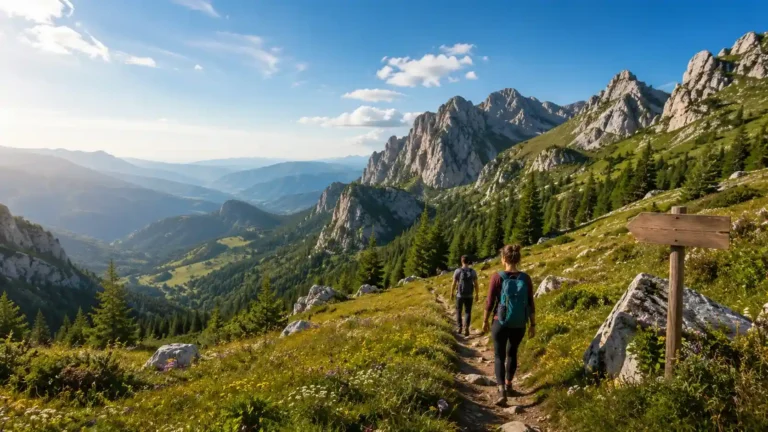
Theth without a car is possible, but it needs more planning than Berat or Saranda. Most travelers reach Theth through Shkoder using a shared shuttle, guesthouse transfer, or arranged transport. Once in Theth, the experience is more about hiking, mountain scenery, waterfalls, stone houses, and guesthouse stays than moving around by public buses.
Theth is best for travelers who can accept early starts, simple transfers, limited flexibility, and mountain weather changes. If you want a smooth first trip to Albania, do not plan Theth as a rushed one-night stop unless you are already comfortable with Balkan mountain travel.
Mountain travel requires more planning than Albania’s main city routes. If you prefer an organized option, you can browse Theth tours and Albanian Alps experiences on GetYourGuide and compare available transfers, guided trips and outdoor experiences before finalizing your mountain itinerary.
Valbona
Valbona is one of the most beautiful mountain areas in Albania, but it is not the easiest destination without a car. Many visitors combine Shkoder, Komani Lake, the ferry route, and onward transfers toward Valbona. This can be an unforgettable journey, but it is not the kind of route where you should improvise at the last minute in high season or winter.
Valbona works best when your accommodation helps with transfers or when you book a combined transport option that links bus, ferry, and onward transport. Keep your luggage light, because mountain travel is much easier when you are not carrying a large suitcase.
Pogradec and Lake Ohrid
Pogradec is a peaceful lake stop that can fit well into a wider Balkans itinerary. It is useful for travelers who want a slower route between Albania and North Macedonia, or for anyone who prefers lake views and relaxed walks over a packed beach schedule.
Lake Ohrid is not usually the first stop for short Albania trips, but it can be a smart addition if you have more time and want to connect Albania with Ohrid in North Macedonia.
Kruje
Kruje is a useful day trip or short overnight stop from Tirana. It is known for its castle area, bazaar, views, and historical importance. Without a car, many travelers visit Kruje by bus, taxi, or organized day tour.
Kruje can be enjoyable, but it is not always necessary on a first Albania itinerary without a car if your schedule is tight. If you have only one week, Berat and Gjirokaster usually give a deeper historic-town experience.
How Public Transport Works in Albania
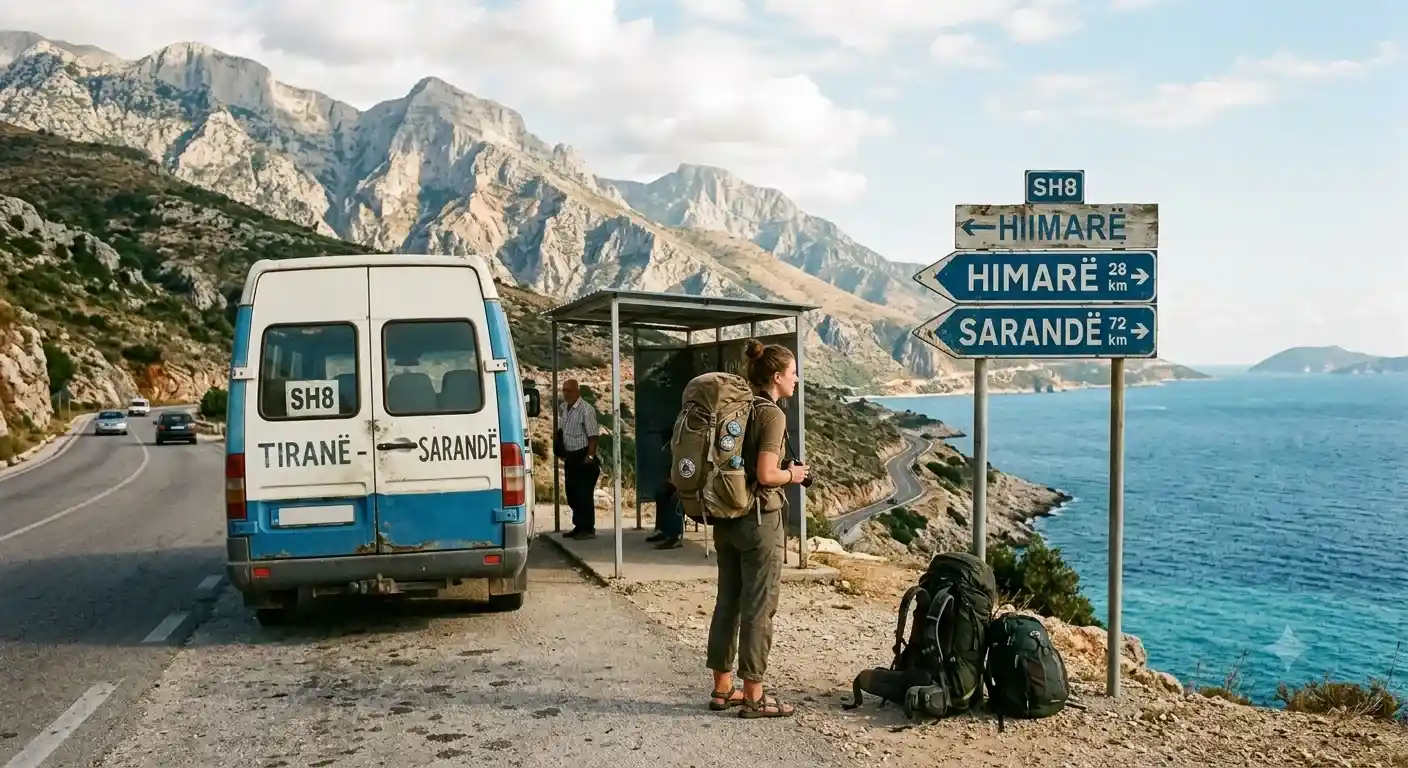
Albania public transport is mostly built around buses, regional coaches, minibuses, shared shuttles, taxis, ferries, and private transfers. There is no useful train network for most tourist routes, so you should plan your trip as an Albania by bus and minibus journey rather than expecting railway-style travel.
Buses
Larger buses usually connect major towns and cities such as Tirana, Shkoder, Berat, Vlore, Saranda, and Gjirokaster. They are normally the best option for longer routes where you want a more straightforward journey. Some buses are comfortable, while others are basic, so keep expectations flexible.
Furgons and Minibuses
A furgon is a minibus or shared van, and it is part of how Albania by minibus works in practice. Furgons may connect smaller towns, leave when full, stop on request, or operate from informal departure points. They are useful, affordable, and common, but they can feel confusing for first-time visitors.
The best strategy is simple: ask your accommodation where to go, what time to arrive, and whether you should buy a ticket in advance or pay the driver. Local knowledge can be more useful than an old timetable you found online.
Regional Buses
Regional buses are helpful for connecting the main cities and larger towns. They are usually better than trying to chain multiple local vans together. If you are building an Albania itinerary without a car, try to design it around direct regional routes whenever possible.
Shuttles and Shared Transfers
Shuttles are especially useful for mountain routes, airport connections, and popular tourist links where normal public transport is inconvenient. A shuttle may cost more than a public bus, but it can save time and reduce stress, especially if you have a fixed check-in time or a ferry connection.
Guesthouse Transfers
Guesthouse transfers are very important in mountain areas such as Theth and Valbona. Many guesthouses can explain the easiest route, arrange pickup, store luggage, or connect you with shared transport. In remote places, choosing the right guesthouse can make the difference between a smooth trip and a stressful one.
Private Drivers
Private drivers are not necessary for every journey, but they are useful when a public route is slow, indirect, seasonal, or difficult with luggage. Couples, families, and short-trip travelers may find that one private transfer is worth the cost if it saves a full day of complicated travel.
Ferries
Ferries are most relevant for two types of travelers: those arriving from Corfu to Saranda, and those traveling through the Komani Lake route toward Valbona. Ferry routes can be scenic and memorable, but they need more planning than a normal city bus.
Organized Tours
Organized tours can be useful for day trips to places that are difficult to reach by public transport. This includes remote beaches, mountain viewpoints, archaeological sites, and countryside stops. The best tours are not just about comfort; they help you visit places that would otherwise take too much time without a car.
Before every travel day, ask your hotel, hostel, or guesthouse: “Where does the bus leave from tomorrow, what time should I arrive, and do I need cash?” This one question solves many problems.
Albania by Bus and Minibus: What First-Timers Should Know
Traveling Albania by bus is practical, but you need the right expectations. It is affordable and connects many major places, but it can also be informal. If you are used to apps, platforms, QR tickets, and precise departure boards, Albania may feel different.
Bus Stations Can Be Outside the Center
In Tirana, many intercity routes use a main bus terminal outside the central tourist area. This means you should allow time to reach the terminal by taxi or city transport. Do not assume you can walk there from Skanderbeg Square with luggage.
Some Departure Points Are Informal
In smaller towns, the departure point may be a roadside stop, a square, a parking area, or a small station. This is why local confirmation matters. If your accommodation gives you a location pin or explains the stop clearly, save it offline before the travel day.
Cash Is Important
Many local buses, minibuses, taxis, and small transfers may prefer cash. Keep small notes with you and do not rely only on cards or online payment. This is especially important for early-morning departures, rural areas, and short local rides.
Luggage Can Make or Break the Trip
If you are visiting Albania without a car, travel with luggage you can carry yourself. A backpack or small rolling bag is much easier than a large suitcase, especially in Berat, Gjirokaster, Theth, Valbona, and old town areas with stairs or cobbled streets.
Early Departures Are Often Better
Early travel days give you more backup options if a route is full, delayed, or changed. This is one of the most important rules for Albania travel by public transport. If you leave late, you may arrive after check-in hours, miss onward connections, or need a taxi.
Seasons Matter
Summer usually brings more demand, more beach movement, and more tourist transport, but also more crowds. Spring and autumn can be excellent, but some routes may be less frequent. Winter requires extra caution for mountain routes, remote villages, and weather-dependent journeys.
Do not book remote accommodation just because it looks beautiful in photos. First check how you will arrive, how you will leave, and whether you can reach food, beaches, or activities without a car.
Best Albania Without a Car Route for First-Time Visitors
A smart first-time route should follow the places that are easiest to connect by public transport. One of the best route ideas is:
Tirana → Berat → Gjirokaster → Saranda → Himare → Vlore → Shkoder → Theth or Valbona → Tirana
This route gives you a strong mix of city life, UNESCO-style old towns, beaches, Riviera scenery, and mountain adventure. But it should be adjusted based on your time, season, budget, and energy level.
| Route Section | Best Option Without a Car | Difficulty | Planning Tip |
|---|---|---|---|
| Tirana to Berat | Bus or minibus | Easy | A good first intercity journey. |
| Berat to Gjirokaster | Bus, minibus, or transfer | Medium | Confirm the best connection locally. |
| Gjirokaster to Saranda | Bus or minibus | Easy to medium | Useful link between culture and coast. |
| Saranda to Ksamil / Butrint | Local bus, taxi, or tour | Easy in season | Stay in Saranda for more options. |
| Saranda to Himare | Bus, shuttle, or transfer | Medium | Check seasonal options before booking. |
| Himare to Vlore | Bus or transfer | Medium | Allow time for coastal road travel. |
| Vlore to Tirana | Bus or minibus | Easy | Good return route to the capital. |
| Shkoder to Theth or Valbona | Shuttle, ferry route, guesthouse transfer | Medium to high | Plan mountain routes separately. |
7-Day Albania Without a Car Itinerary
A one-week Albania itinerary without a car should be realistic. Do not try to include every beach, every mountain village, and every historic town. For most first-time travelers, the best 7-day route is:
Tirana → Berat → Gjirokaster → Saranda or Himare → Tirana
Day 1: Arrive in Tirana
Start in Tirana and stay central. Use this day to recover from travel, walk around Skanderbeg Square, explore Blloku, and confirm your next bus or minibus departure. If your flight arrives late, do not plan an onward intercity trip the same night.
Day 2: Tirana to Berat
Travel from Tirana to Berat by bus or minibus. Once you arrive, stay either in the old town for atmosphere or in the lower town for easier luggage movement. Spend the afternoon exploring the castle area, riverside views, and historic neighborhoods.
Day 3: Berat
Use this as a full day in Berat. This avoids the mistake of rushing the town as a quick stop. If you want a countryside experience, consider an organized tour or transfer instead of trying to reach remote areas independently.
Day 4: Berat to Gjirokaster
Travel toward Gjirokaster. Confirm the best public transport option locally before the travel day, because connections can vary. Once you arrive, consider a taxi if your accommodation is high in the old town. This is especially helpful if you are carrying luggage.
Day 5: Gjirokaster
Spend a full day in Gjirokaster visiting the castle area, bazaar streets, traditional houses, and viewpoints. This is one of the easiest cultural days in Albania without a car because the main experience is inside the historic town itself.
Day 6: Gjirokaster to Saranda or Himare
Choose Saranda if you want easier transport, more hotels, Ksamil access, and a simple beach base. Choose Himare if you prefer a quieter Riviera feel and are comfortable with slightly less transport flexibility. For most first-time travelers, Saranda is the simpler choice.
Day 7: Return to Tirana
Return to Tirana, allowing plenty of time before your flight. Avoid planning a long bus journey and an international flight too close together. If your flight leaves early, spend the final night in Tirana.
- First-time visitors who want culture and one coastal stop.
- Travelers who do not want complicated mountain transfers.
- Couples or solo travelers using public transport.
- Anyone who wants a realistic Albania without a car route.
If you are short on time, skip either Gjirokaster or the beach stop. Do not add Theth, Valbona, Ksamil, Himare, and Berat all into one week unless you are comfortable with rushed travel and early starts.
10-Day Albania Without a Car Itinerary
With 10 days, Albania without a car becomes much easier and more enjoyable. You can add beach time without making the entire trip feel rushed. A balanced 10-day route is:
Tirana → Berat → Gjirokaster → Saranda → Ksamil → Himare → Vlore → Tirana
Days 1–2: Tirana and Berat
Arrive in Tirana, stay one night, then continue to Berat. This gives you time to adjust, withdraw cash, buy essentials, and understand how Albania public transport works before moving deeper into the country.
Days 3–4: Berat to Gjirokaster
Continue from Berat to Gjirokaster and stay two nights if possible. This gives you enough time to enjoy the town without rushing through steep streets with luggage. If the public connection does not suit your schedule, this is one section where a transfer can be considered.
Days 5–6: Saranda and Ksamil
Travel to Saranda and use it as a practical base for the coast. Spend one day in Saranda and one day visiting Ksamil or Butrint. This is one of the easiest ways to enjoy Albania beaches without a car because you are not isolated in a remote beach village.
Days 7–8: Himare
Move north along the Riviera to Himare. Stay near the town center or beach so you can walk to restaurants and swim without needing transport every day. Use taxis or boat trips for nearby beaches only when they make the day easier.
Day 9: Vlore
Vlore is a useful route break between Himare and Tirana. It has a promenade, accommodation, restaurants, and easier onward transport. You can treat it as a relaxed final coastal stop rather than trying to squeeze in another remote beach.
Day 10: Return to Tirana
Return to Tirana for your final night or flight connection. If your flight departs the same day, keep a generous buffer and avoid tight connections.
Use buses and minibuses for the main city-to-city journeys, local buses or taxis around Saranda and Ksamil, and only consider a private transfer for the sections where the public route feels slow, indirect, or badly timed.
This 10-day route gives a good balance of culture and beach time. Berat and Gjirokaster cover the historic side of Albania, while Saranda, Ksamil, Himare, and Vlore give you a practical taste of the coast. It is also a good route for travelers who want to experience the Albanian Riviera without a car but do not want to depend on remote beach accommodation.
If you prefer slower travel, add one extra night in Himare or Saranda and remove Vlore. If you want more culture and less beach time, add an extra night in Berat or Gjirokaster and keep the coast simple.
14-Day Albania Without a Car Itinerary
A 14-day Albania without a car route gives you enough time to include both the mountains and the coast without turning every day into a transport day. This is the best length for travelers who want a fuller Albania experience using buses, minibuses, ferries, shuttles, and guesthouse transfers.
Tirana → Shkoder → Theth or Valbona → Berat → Gjirokaster → Saranda → Ksamil → Himare → Vlore → Tirana
Day 1: Arrive in Tirana
Start with one night in Tirana. Do not rush directly to the mountains or the far south after a long flight. Use this first day to settle in, buy a local SIM or eSIM if needed, withdraw cash, and confirm your next transport step.
Day 2: Tirana to Shkoder
Travel north to Shkoder by bus or minibus. Shkoder is one of the most useful cities for people planning Albania travel by public transport because it acts as the gateway to Theth, Valbona, and Komani Lake. Stay near the center or in a hostel or guesthouse that can help arrange mountain transport.
Day 3: Shkoder to Theth or Valbona
Choose either Theth or Valbona depending on your hiking plans, season, and comfort level. Theth without a car usually works through shared shuttles or guesthouse transfers from Shkoder. Valbona usually requires more coordination because many travelers combine road transport, the Komani Lake ferry, and onward transfers.
If this is your first trip to the Balkans and you want the simplest mountain option, Theth is often easier to understand. If you want the scenic ferry journey and a deeper Alps experience, Valbona can be worth the extra planning.
Day 4: Mountain Day
Use this day for hiking, viewpoints, waterfalls, village walks, or simply enjoying the guesthouse experience. Do not plan a difficult hike and a long transfer on the same day. Mountain weather can change, and local advice is very important.
If you are carrying a large suitcase, leave it in Shkoder if your accommodation offers luggage storage. Take only what you need for the mountains.
Day 5: Return to Shkoder
Return to Shkoder and stay overnight. This buffer night is important because it protects the rest of your itinerary if mountain transfers run late or weather changes your plans. It also gives you time to rest before moving south.
Day 6: Shkoder to Berat via Tirana
Travel from Shkoder toward Berat, usually by connecting through Tirana or using the best available route confirmed locally. This can be a longer travel day, so start early. Arrive in Berat, check in, and keep sightseeing light for the evening.
Day 7: Berat
Spend a full day in Berat. Visit the castle area, walk through the old quarters, enjoy the river views, and keep the day simple. Berat is one of the easiest towns to enjoy without a car because the main attractions are close enough for walking, although some streets are steep.
Day 8: Berat to Gjirokaster
Continue to Gjirokaster. Confirm the best transport option the day before because connections may not always be as direct or frequent as travelers expect. If you have heavy luggage or limited time, this is one of the route sections where a transfer can be useful.
Day 9: Gjirokaster
Use this day for the castle, bazaar, old houses, and viewpoints. Gjirokaster is hilly, so plan your accommodation carefully. Staying too high in the old town can be beautiful, but it may be tiring with luggage or after a long bus journey.
Day 10: Gjirokaster to Saranda
Travel south to Saranda. This is where the trip changes from cultural Albania to coastal Albania. Saranda is a strong base for non-drivers because it gives you access to hotels, restaurants, taxis, local buses, boat trips, Ksamil, and Butrint.
Day 11: Ksamil or Butrint
Use Saranda as your base and take a day trip to Ksamil, Butrint, or both if the timing works. This is one of the easiest ways to experience Albania beaches without a car. In summer, leave early because Ksamil can become very crowded.
Day 12: Saranda to Himare
Move north along the Riviera to Himare. This section is one of the most scenic parts of the trip, but transport can be more seasonal and less flexible than major city routes. Confirm departure details locally and avoid arriving too late.
Day 13: Himare
Spend a relaxed beach day in Himare. Stay near the town beach or central area so you are not dependent on taxis for every meal or swim. If you want to visit harder-to-reach beaches, consider a boat trip or taxi rather than trying to walk along unsafe or uncomfortable roads.
Day 14: Himare to Vlore or Tirana
If your flight is soon, return to Tirana and spend the final night there. If you have more flexibility, break the journey in Vlore. Vlore is easier than many smaller coastal stops because it has more transport, accommodation, and city services.
A 14-day Albania itinerary without a car is enjoyable when you add buffer days. It becomes stressful if you try to include every beach, every mountain hike, every lake town, and every historic stop.
Tirana Without a Car
Tirana is the easiest place to begin your trip because it has the country’s main airport, many hotels, plenty of taxis, urban buses, restaurants, museums, and connections to other parts of Albania. Even if you are not a city traveler, one night in Tirana makes the rest of the route smoother.
Airport Transfer Options
From Tirana International Airport, travelers can use airport buses, taxis, hotel transfers, or private transfers. If you arrive during the day and your hotel is central, the airport bus can be a budget-friendly option. If you arrive late, have children, or carry heavy luggage, a taxi or pre-arranged transfer may be worth it.
Getting Around the City
Central Tirana is fairly easy to explore on foot if you stay near Skanderbeg Square, Blloku, the New Bazaar area, or another central neighborhood. City buses can help with longer local movements, but first-time visitors often use a mix of walking and taxis for simplicity.
Day Trips from Tirana
Tirana can work as a base for day trips to Kruje, Dajti Mountain, Durres, Berat, or nearby nature areas. Some trips are possible by bus, but organized tours are often easier if you want to visit several stops in one day.
Best Areas to Stay in Tirana Without a Car
For a short stay, choose the city center, Blloku, or an area with easy taxi access. Do not choose accommodation far outside the center just to save a small amount of money, especially if you need to reach the bus terminal early in the morning.
Shkoder, Theth and Valbona Without a Car
Northern Albania is one of the most rewarding regions for travelers, but it needs more planning than the main city and beach routes. Shkoder is the key base. If you want to visit Theth without a car or reach Valbona by ferry and transfer, plan everything around Shkoder first.
Tirana to Shkoder
Tirana to Shkoder is one of the more practical northern routes by bus or minibus. Try to travel during the day and stay in central Shkoder. This makes it easier to organize your next step toward the mountains.
Shkoder to Theth
Shkoder to Theth usually works best with a shared shuttle, guesthouse-arranged transfer, or organized transport. This is not a route where you should rely only on guesswork. Ask your accommodation in Shkoder or Theth what is operating during your travel dates.
Shkoder to Komani Lake and Valbona
The Valbona route is more complex because it can involve an early transfer to Komani Lake, a ferry journey, and onward road transport toward Valbona. It is one of the most scenic ways to travel in Albania, but it requires better timing than a normal intercity bus.
Theth to Valbona Hike
The Theth to Valbona hike is one of the famous mountain experiences in Albania, but it is not just a transport connection. It is a real hike that requires suitable footwear, weather awareness, and enough physical ability. If you are not hiking, do not assume it is easy to move between the two valleys without planning.
Luggage Considerations
Mountain travel is much easier with a small backpack. If you are returning to Shkoder, ask whether you can leave your main luggage at your accommodation. This is especially useful if you are hiking between valleys or using shared transfers.
Always confirm seasonal access before booking mountain accommodation. Roads, shuttles, ferries, and hiking conditions can be affected by weather and season.
Berat and Gjirokaster Without a Car
Berat and Gjirokaster are two of the best cultural stops for travelers exploring Albania without a car. They are historic, atmospheric, and rewarding, but they do not require complicated daily transport once you arrive.
How to Reach Berat
Berat is commonly reached from Tirana by bus or minibus. It is a good first intercity trip because it gives you a taste of Albania by bus without throwing you into a difficult mountain or coastal route immediately.
How to Reach Gjirokaster
Gjirokaster can be reached from several southern routes, including connections from Tirana, Berat, or Saranda depending on the route and season. Because connections can vary, ask locally before choosing your travel day.
Walking in the Old Towns
Both towns are beautiful on foot, but they are not flat. Berat has hillside areas and Gjirokaster is famous for steep stone streets. Choose accommodation carefully if you are carrying luggage, traveling with children, or arriving after dark.
When a Taxi May Be Useful
A short taxi ride can be useful from the bus drop-off point to your accommodation, especially in Gjirokaster. This is not a failure of budget travel; it is a smart way to avoid dragging luggage up steep streets.
Albanian Riviera Without a Car
The Albanian Riviera without a car is possible, but it needs realistic expectations. Saranda and Himare are usually the most practical bases for non-drivers. Dhermi, isolated beaches, and small cliffside accommodations can be harder because distances are not always comfortable for walking.
The key is to base yourself somewhere that has food, beaches, taxis, tours, and some transport options nearby. Do not choose a remote hotel unless you already know how you will get there and how you will leave.
Saranda
Saranda is the easiest southern coastal base for people using public transport. It has buses, taxis, ferries from Corfu, accommodation, restaurants, beach access, and day trip options. It is also a practical base for Ksamil and Butrint.
Ksamil
Ksamil is one of the most popular beach areas in Albania. Without a car, it is easiest to visit from Saranda by local bus, taxi, or tour. Staying in Ksamil can be enjoyable in summer, but it may feel crowded and accommodation prices can rise during peak season.
Himare
Himare is a better Riviera base than many smaller beach villages because you can walk to the town beach, restaurants, cafes, and some accommodation. For nearby beaches, you may still need taxis, boat trips, or seasonal transport.
Dhermi
Dhermi can be harder without a car because accommodation, the old village, the beach area, and nightlife spots may not all be close together. It can still work, but you should check the exact location of your hotel before booking.
Vlore
Vlore is easier than many Riviera villages because it is a city with more services and better transport connections. It is a practical place to break the journey between Himare and Tirana, especially if you do not want a very long travel day.
Porto Palermo and Remote Beaches
Porto Palermo and some smaller beaches may be possible by taxi, boat trip, organized tour, or a carefully timed bus route, but they are not always simple for independent travelers without a car. Before going, make sure you have a return plan.
Beach transport is more seasonal than city transport. Outside summer, some routes, boat trips, and tourist services may be limited.
Ksamil, Saranda and Butrint Without a Car
Saranda is usually the best base for visiting Ksamil and Butrint without driving. You get more accommodation choices, better food options, easier taxis, and more flexibility if local buses are crowded or not convenient.
Saranda as a Transport Base
Saranda works well because you can sleep in one place and take short trips to nearby beaches, Ksamil, Butrint, and boat tour departure points. For first-time travelers, this is usually easier than changing hotels every night along the coast.
Ksamil by Bus or Taxi
Ksamil can usually be reached from Saranda by local bus or taxi, especially in the main travel season. If you are traveling with a family, beach bags, or limited time, a taxi may be easier even if it costs more than the bus.
Butrint by Bus, Taxi, or Tour
Butrint is one of the most important cultural day trips from Saranda and Ksamil. Without a car, you can look for a local bus, taxi, or organized tour depending on your budget and schedule. A tour can be useful if you want context and do not want to manage transport yourself.
Summer Crowds
In July and August, Saranda and Ksamil can be busy. Travel early, book accommodation ahead, and avoid planning your beach day around the last possible bus or taxi option. Crowds can also make simple journeys feel slower.
Himare and Dhermi Without a Car
Himare and Dhermi are both popular Riviera stops, but they are not equally easy for travelers without a car. Himare is usually the better base for non-drivers because the town itself is more convenient for walking, eating, swimming, and arranging simple trips.
How to Reach Himare
Himare can be reached by bus, minibus, shuttle, or private transfer depending on your starting point and season. Routes from Saranda, Vlore, and Tirana may be possible, but always confirm locally before your travel day.
Local Beaches
Himare has beaches close enough to town for a simple stay. If you want to visit more remote beaches, boat trips and taxis are usually easier than trying to walk along the coastal road. Always ask how you will return before you leave.
Why Dhermi May Be Harder
Dhermi can be beautiful, but it may be less convenient without a car because the village, beach zone, and accommodation areas can be separated by steep roads or uncomfortable walking distances. Check the exact hotel location, not just the town name.
Lake Ohrid and Pogradec Without a Car
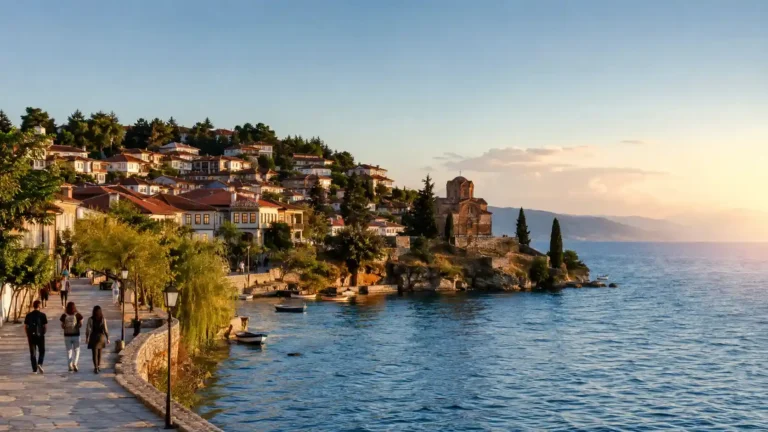
Pogradec, on the Albanian side of Lake Ohrid, is a slower and calmer stop than the Riviera. It can fit well into a wider Balkans itinerary, especially if you are connecting Albania with North Macedonia.
Tirana to Pogradec
Tirana to Pogradec can usually be planned by bus or minibus, but you should confirm departure details before traveling. This route is useful for travelers who want to see a different side of Albania beyond the beaches and mountains.
Pogradec as a Relaxed Lake Stop
Pogradec is best for slower travel, lakeside walks, simple food, and a quieter atmosphere. It is not the top choice for a short first trip, but it can be excellent if you have extra time.
Connections Toward North Macedonia
Lake Ohrid can work well if your wider route includes Ohrid in North Macedonia. Border connections and local transport should be checked carefully because cross-border travel can be less frequent than domestic routes.
When You Might Need a Private Transfer or Tour
Traveling Albania without a car does not mean you must avoid private transfers completely. The smartest approach is to use public transport for the easy routes and pay for transfers only when they solve a real problem. This keeps the trip affordable without making every travel day stressful.
Private transfers, shared shuttles, and organized tours are most useful when public transport is too slow, too indirect, too seasonal, or badly timed for your itinerary. They are also helpful if you are arriving late, traveling with children, carrying heavy luggage, or trying to visit places that are not easy by regular bus.
| Situation | Best Option | Why It Helps |
|---|---|---|
| Remote beaches | Taxi, boat trip, or tour | You avoid being stuck without a return plan. |
| Mountain routes | Guesthouse transfer or shuttle | Road access, weather, and timing can be complicated. |
| Late airport arrival | Taxi or pre-booked transfer | Safer and easier than searching for transport at night. |
| Family travel | Private transfer for hard sections | Reduces waiting time and luggage stress. |
| Short trip | Tour or transfer | Saves time when you cannot afford a lost travel day. |
| Difficult connections | Shared or private transfer | Useful when two buses do not connect smoothly. |
The best places to use tours are usually day trips from Tirana, Saranda, Shkoder, or Berat. These cities have enough traveler demand that tours and transfers are easier to arrange. For example, a tour from Saranda may be useful for Butrint or remote beaches, while a Shkoder guesthouse may help arrange transport to Theth or the Komani Lake route.
Use public transport when the route is direct and simple. Use a transfer when it saves real stress, protects a short itinerary, or makes a difficult place possible.
Where to Stay in Albania Without a Car
Accommodation location matters much more when you are traveling without driving. A beautiful hotel can become frustrating if it is far from the bus station, beach, old town, restaurants, or tour pickup points. Before booking, check not only the city name, but the exact location on the map.
For an Albania itinerary without a car, the best accommodation is usually close to transport, food, and the main reason you are visiting that destination. You do not need luxury. You need a practical base.
Tirana
Stay in the city center, Blloku, near Skanderbeg Square, or in another central area with easy taxi access. This makes it easier to explore the city and reach the bus terminal when leaving for another destination.
Shkoder
Choose central Shkoder, especially if you are using it as a base for Theth, Valbona, or Komani Lake. Hostels and guesthouses that regularly help hikers can be very useful because they understand luggage storage, early pickups, and mountain transfers.
Berat
Berat old town is atmospheric, but the lower town can be easier with luggage. If you want charm, stay in a traditional guesthouse. If you want convenience, stay somewhere that does not require a steep climb after arriving by bus.
Gjirokaster
Gjirokaster’s old town is beautiful but steep. Staying high in the old town gives atmosphere and views, but it can be tiring with luggage. If you are not sure, choose a place that is easy to reach by taxi.
Saranda
Saranda waterfront or central areas are practical for non-drivers. You will be close to restaurants, taxis, boat trips, local buses, and the coast. This is one of the best bases for Albania beaches without a car.
Himare
Stay in Himare town center or near the main beach if you do not have a car. This makes the stay enjoyable even if you decide not to take taxis or boat trips every day.
Theth
In Theth, choose a guesthouse that clearly helps with transfers or can explain how to arrive. In mountain areas, the right accommodation is not just a place to sleep; it is part of your transport plan.
Before booking remote accommodation, message the property and ask: “How do guests usually arrive without a car?” If the answer is vague, think carefully before booking.
How Much Does It Cost to Travel Albania Without a Car?
Albania is generally a budget-friendly country compared with many parts of Europe, but costs vary by season, destination, comfort level, and how often you use private transport. Do not treat any old price online as guaranteed. Always verify current costs before booking buses, ferries, tours, taxis, or transfers.
The cheapest way to travel is to use local buses, intercity buses, minibuses, and simple guesthouses. The cost rises when you add private transfers, beach taxis, boat trips, mountain logistics, and peak-season accommodation.
| Expense | Typical Budget Level | What to Know |
|---|---|---|
| Local buses | Low | Useful in cities and short coastal routes, but carry cash. |
| Intercity buses | Low to moderate | Best value for major routes between towns and cities. |
| Minibuses / furgons | Low to moderate | Flexible and useful, but less predictable for first-timers. |
| Shared shuttles | Moderate | Often worth it for mountain routes and difficult connections. |
| Private transfers | High | Useful for families, late arrivals, remote beaches, and short trips. |
| Taxis | Low for short rides, higher for long routes | Agree on the price or use a trusted local recommendation. |
| Ferry or boat trips | Moderate | Prices depend on route, season, operator, and booking method. |
| Accommodation | Low to high | Cheaper outside peak summer and away from top beach areas. |
| Food | Low to moderate | Local restaurants and bakeries help keep costs down. |
| Tours | Moderate to high | Worth it when they replace complicated transport or add real value. |
A budget traveler can keep costs low by staying in simple guesthouses, using buses, eating local food, and avoiding too many paid transfers. A couple or family may spend more but save stress by using private transport for difficult sections.
Best Time to Travel Albania Without a Car
The best time to explore Albania without driving depends on whether your priority is beaches, mountains, lower prices, fewer crowds, or easier transport. Season matters because beach buses, mountain transfers, ferries, tours, and accommodation availability can change throughout the year.
April to June
Spring and early summer can be excellent for cultural towns, Tirana, Berat, Gjirokaster, Shkoder, and some coastal areas. Temperatures are usually more comfortable than peak summer, and crowds are lighter. However, some mountain and beach services may still be building up for the main season, so confirm transport before relying on it.
July and August
July and August are peak beach months. This can mean more tourist demand, more coastal movement, and more beach services, but also higher prices, crowded buses, busy roads, and full accommodation in popular places like Saranda, Ksamil, Himare, and Dhermi.
If you are traveling in peak summer, book accommodation earlier, travel early in the day, and avoid tight connections. Albania by bus is still possible, but patience matters.
September and October
September is one of the best months for the Albanian coast because the sea can still be pleasant, while crowds often become easier than in August. October can be good for cultural travel, but beach transport and some tourist services may become more limited.
Winter
Winter is the most challenging season for a public transport itinerary. Cities and historic towns are still possible, but mountain access, beach services, ferry plans, and tourist shuttles may be limited. If you travel in winter, keep the route simple and avoid depending on remote areas without confirming access.
Do not assume a route that works in August will work the same way in January. Always check current transport, mountain access, and accommodation before booking.
Albania Without a Car for Solo Travelers
Albania can work very well for solo travelers without a car, especially if you choose simple routes and stay in social accommodation. Hostels and guesthouses can help with bus information, transfers, day trips, and meeting other travelers going in the same direction.
Solo travelers should avoid isolated late-night arrivals. Try to reach new towns during daylight, especially in mountain areas, beach villages, and old towns with steep streets. This makes it easier to find your accommodation, understand the area, and solve transport issues if something changes.
- Stay in central areas rather than isolated accommodation.
- Use hostels or guesthouses that understand public transport routes.
- Travel early and avoid last buses when possible.
- Keep offline maps and your accommodation address saved.
- Ask staff or other travelers before moving to the next destination.
Albania Without a Car for Couples and Families
Couples can travel around Albania without driving quite comfortably if they keep the route realistic. Buses and minibuses are fine for major routes, while one or two private transfers can make difficult sections easier.
Families should be more careful. Public transport can still work, but luggage, heat, waiting times, and late arrivals can be tiring with children. For families, it often makes sense to use buses for simple city-to-city journeys and transfers for mountain routes, remote beaches, or long travel days.
Choose fewer bases and stay longer in each place. Saranda, Himare, Berat, Shkoder, and Tirana are easier family bases than remote villages where every movement needs a taxi.
Common Mistakes to Avoid
Most problems with Albania public transport come from unrealistic expectations. The country is very rewarding, but it is not the place to build a complicated itinerary with tight same-day connections and no backup plan.
- Assuming every place has a fixed online timetable: Many routes are easier to confirm locally than online.
- Booking remote accommodation before checking transport: A beautiful beach hotel can be difficult without a car.
- Arriving too late for mountain transfers: Theth, Valbona, and Komani Lake routes need early planning.
- Trying to see too many places in one week: Albania looks small, but travel days can take longer than expected.
- Carrying too much luggage: Large suitcases are annoying on minibuses, steep streets, and mountain transfers.
- Not keeping cash: Small buses, taxis, and local transfers may not accept cards.
- Visiting remote beaches without a return plan: Always know how you will get back.
- Underestimating travel times: Roads, stops, traffic, and waiting time can make journeys slower.
- Not confirming winter access: Mountain and seasonal routes may be limited outside the main travel season.
- Expecting trains to be useful: For most Albania travel by public transport, buses and minibuses matter much more than trains.
Practical Tips for Traveling Albania Without a Car
If you remember only one thing from this guide, remember this: Albania without a car is easiest when you travel slowly and confirm everything locally. You do not need to plan every minute, but you do need to know your next step.
| Tip | Why It Matters |
|---|---|
| Confirm departures the day before | Schedules and departure points can change. |
| Ask accommodation staff | Local knowledge is often more reliable than old online information. |
| Travel early | You get more backup options if something goes wrong. |
| Carry cash | Useful for buses, taxis, luggage fees, and small local payments. |
| Download offline maps | Helpful for bus stops, old towns, and walking routes. |
| Keep luggage manageable | Makes minibuses, stairs, cobbled streets, and transfers easier. |
| Stay near transport hubs | Saves time, taxi costs, and stress on travel days. |
| Build buffer time | Especially important for ferries, flights, mountains, and long routes. |
| Avoid tight same-day connections | One delay can affect the whole plan. |
| Use transfers selectively | Spend money where it removes real difficulty, not for every journey. |
Final Thoughts: Is Albania Without a Car Worth It?
Yes, Albania without a car is absolutely worth it for first-time travelers who plan around realistic routes. You can visit Tirana, Shkoder, Berat, Gjirokaster, Saranda, Ksamil, Himare, Vlore, Theth, Valbona, and Pogradec using a mix of buses, minibuses, shuttles, ferries, guesthouse transfers, taxis, and tours.
The key is to understand the difference between easy destinations and difficult ones. Major towns and popular coastal bases are very manageable. Remote beaches, mountain valleys, and isolated guesthouses require more flexibility. That does not make the trip impossible. It simply means you should plan carefully and travel slowly.
If you want the smoothest first trip, build your route around Tirana, Berat, Gjirokaster, Saranda, Himare, Vlore, and Shkoder. Add Theth, Valbona, Ksamil, Butrint, or Pogradec when the season, transport, and your schedule make sense.
Plan Your Albania Route the Smart Way
Before booking, choose your main bases, check how you will travel between them, and confirm whether each hotel works without a car. A simple route with good bases is much better than a complicated itinerary that looks perfect on a map but fails in real life.
Travel early, keep luggage light, ask locally, and use private transfers only where they genuinely save time or stress.