Plovdiv Bulgaria Travel Guide (2026): Sights, Costs & Tips

Plovdiv Bulgaria travel guide (2026): If you are visiting this southern Bulgarian city for the first time, spend two nights exploring Roman ruins, Revival-era houses, the Kapana creative quarter and an extraordinary collection of early Christian mosaics. Plovdiv rewards visitors who walk rather than dash between attractions. The historic center is relatively compact, but the Old Town rises steeply over cobblestone streets and paid archaeological sites close at different times.
This practical guide explains what to see, how to arrive from Sofia, where to stay without a car, which tickets actually save money and how much to budget now that Bulgaria uses the euro. It also includes a manageable one-, two- or three-day route, an optional trip into the Rhodope foothills and links to official opening-hour and ticket information. Prices and practical rules were checked for an October 2026 editorial update; confirm any date-specific booking before travel.
Table of Contents
Plovdiv at a Glance: Is It Worth Visiting?
| Question | Practical answer |
|---|---|
| How long? | Two full days / two nights are ideal; one long day can cover the essential outdoor sights. |
| Best time? | April–June and September–October for walking; summer afternoons may be very hot. |
| Currency in 2026? | Euro (€); Bulgaria adopted it on 1 January 2026. |
| Do you need a car? | No for central sightseeing. A car or tour can simplify some rural excursions. |
| Top sights | Ancient Theatre, Old Town houses, Roman Stadium, Kapana, Nebet Tepe, Bishop’s Basilica. |
| Best area to sleep | Pedestrian center or Kapana for convenience; Old Town for historic atmosphere and more steps. |
Key 2026 correction: Bulgaria replaced the lev with the euro on 1 January 2026, at the fixed conversion rate of €1 = 1.95583 lev. The old BGN prices you still see on some official websites are historical reference amounts, not the everyday currency to seek in 2026. See the European Commission’s currency explanation.
Plovdiv is not simply a “hidden gem.” It is a major Bulgarian city with an ancient urban center, an active contemporary arts scene and a distinct character from Sofia. You can see Thracian-era remains, a Roman theatre, Ottoman-era religious architecture and 19th-century Bulgarian National Revival mansions within a relatively small area. That layered history—not a vague claim that there are no crowds—is why it is worth a place on a Bulgarian itinerary.
How Many Days Do You Need in Plovdiv?
One day: Visit the Roman Stadium, climb into the Old Town and see the Ancient Theatre, then return through Kapana. This works as a long day trip from Sofia if your transport arrives early and leaves after dinner. Skip most indoor museums or choose just one.
Two days: This is the best first-visit balance. Spend Day 1 in the pedestrian center, theatre, Old Town and Kapana; devote Day 2 to the Bishop’s Basilica mosaics, your choice of house or history museum, and a relaxed visit to a viewpoint. You will be able to enjoy the city rather than merely photograph it.
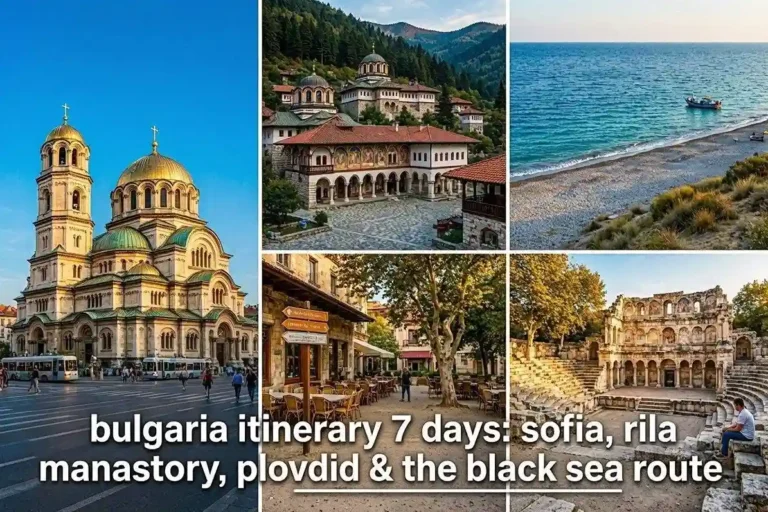
Three days: Keep the two-day plan and use a third day for Asen’s Fortress and Bachkovo Monastery, or additional museums and cafés if you do not want to arrange rural transport. For a wider trip, combine Plovdiv with our seven-day Bulgaria itinerary.
Top Things to Do in Plovdiv: The Practical Shortlist
1. Ancient Theatre of Philippopolis
The open-air Ancient Theatre is one of the most rewarding paid stops in Plovdiv. Archaeological evidence dates its construction to the late first century AD, during the Roman period. Stone seating descends toward an elegant stage backdrop, with views across the modern city; the same theatre still hosts contemporary performances. Do not confuse it with the Roman Stadium or the smaller Odeon, which are separate sites.
Allow 30–60 minutes for an ordinary visit, more if you enjoy interpreting the architectural details. The Ancient Plovdiv municipal operator publishes an adult entry equivalent of approximately €3.58 for a standard site visit. Published visiting hours are generally 9:30–18:00 in April–October and 9:00–17:30 in November–March, with a midday break. Concerts, events or conservation works can affect access, so check the official theatre page on your date.
Good decision: If you are visiting several municipal Old Town attractions, compare the combined-ticket offer before buying a standalone theatre ticket. The same operator advertises a five-site ticket for about €10.74, excluding specified basilicas.
2. The Old Town and Its Revival-Era Houses
Climb from the city center into the cobbled streets of the Architectural and Historical Reserve Ancient Plovdiv. The handsome, colorful mansions reflect the Bulgarian National Revival period, especially the 18th and 19th centuries. This is the part of the city where wandering slowly is more useful than chasing a checklist. Look for Hisar Kapia, stone-paved lanes, courtyard gates and atmospheric intersections.
Balabanov House and Hindliyan House are particularly good options for understanding traditional interiors rather than just admiring exteriors. Their accessibility and opening days are not interchangeable; some house museums close on Mondays and may pause admission for lunch. Check municipal site opening hours and ticket details or ask at the Old Town visitor office, especially on a short visit.
Set aside roughly 90 minutes for an unhurried Old Town walk without museum entries; plan two to three hours if you want to explore houses and the theatre. The streets are steep and irregular. Comfortable shoes with good traction matter more than fancy footwear, and rolling luggage is not pleasant on these slopes.
3. Roman Stadium and Dzhumaya Square
The Roman Stadium once held a very large audience and extended beneath today’s central pedestrian area. Only sections are excavated and visible; do not expect a complete above-ground stadium like the one at an open archaeological park. The northern exposed portion, near Dzhumaya Square, is a convenient stop between the main shopping street and Kapana.
The municipal operator lists free access to the visible northern Roman Stadium section, while the 3D presentation/projection hall is a separate paid experience. Stop here for around 15–30 minutes if you only want the ruins and explanation panels, and budget longer if you book an interpretive presentation. The official Roman Stadium page gives the distinction and opening information.
Near the stadium you can also see the exterior of Dzhumaya Mosque, which reflects another chapter of Plovdiv’s history. Be mindful of worshippers and check whether visiting the interior is appropriate at that moment.
4. Kapana Creative District
A short walk from Dzhumaya Square, Kapana is a cluster of small streets with design shops, galleries, coffee bars and restaurants. It is the easiest neighborhood to use as an evening base after archaeological sightseeing. Some streets get lively at night, especially during events, so central convenience comes with potential noise if you book a room directly above busy bars.
Kapana is best experienced without a rigid schedule: spend an hour trying a café or browse independent shops and then return for dinner. Do not assume that every creative space is open daily or that a specific festival will be running. Check the local official events calendar for the dates of your visit.
5. Nebet Tepe and the Ancient Hilltop
Nebet Tepe rises above the Old Town and contains traces of the city’s long settlement history. The hill offers broad views over Plovdiv, but it is also an archaeological site rather than an unrestricted rooftop terrace. Follow any barriers and restoration notices, stay on permitted paths and avoid climbing fragile masonry for a photo.
This stop works well toward the end of Day 1 or in the early part of Day 2. A sunset visit can be attractive when the hill is accessible, but check local notices rather than assuming every section remains open. Allow time to descend before dark if the cobbles are wet.
6. Bishop’s Basilica of Philippopolis: The Mosaics
One of Plovdiv’s most important cultural experiences is the Bishop’s Basilica of Philippopolis, a large early Christian complex with richly decorated floor mosaics. It often gets skipped in shallow city guides even though it shows a different historical period from the Roman Theatre. The protected interior makes it an especially useful choice in hot or rainy weather.
The complex is at 2 Knyaginya Maria Luiza Boulevard, with published opening hours of 09:00–18:00 daily and last entry at 17:15. The adult standard ticket is listed as 15 former lev, approximately €7.67. Its ticket is not included in the basic five-site Old Town pass. Confirm current admission and special events through the Basilica’s official visiting information and its admission page.
Give yourself around 60–90 minutes for the mosaics and exhibition. If you are especially interested in late Roman and early Christian history, you can compare the separate multi-site mosaic package that combines the Bishop’s Basilica, Small Basilica and Late Antique Irene building. This is a different product from the Old Town five-site combined ticket.
7. The Regional Ethnographic Museum
Inside a striking historic house in the Old Town, the Regional Ethnographic Museum explores the traditions, crafts, clothing and domestic life of the Plovdiv region. It is a good follow-up to the exterior architectural walk because the collections help explain what life looked like beyond the facade. For visitors with little interest in artifacts, the setting alone makes the choice understandable.
The museum is normally closed on Mondays. Its official published hours are 09:00–18:00 in summer and 09:00–17:00 in winter on its operating days. It also provides guidance for visitors with reduced mobility, including accessible museum spaces and a city-supported transport arrangement that must be organized in advance. Check the museum’s official Visit page before locking it into your schedule.
8. Archaeological Museum, Regional History Museum and Smaller Sites
For another indoor stop, choose based on your interests rather than visiting every museum by default. The Regional Archaeological Museum focuses on ancient material culture and artifacts found around Plovdiv, whereas the Regional History Museum has several exhibitions that illuminate later periods. Opening calendars may vary by exhibition building; for example, the Archaeological Museum has different summer and winter opening days.
The municipal museum directory is more reliable for current locations than older travel posts. Visitors with only one full day should generally choose the theatre plus either a historical house or the Basilica rather than stacking multiple museums and then having no time for the city streets.
9. Tsar Simeon’s Garden, Singing Fountains and Riverside Walks
The garden is a convenient, mostly level green space near the central pedestrian area. It is good for a break with children or anyone who needs a pause from steep cobblestones. The Singing Fountains may have scheduled displays, but operating patterns are seasonal and weather-dependent. Do not make a short trip depend on a specific show unless the municipal calendar confirms it.
For a less structured afternoon, walk along an accessible portion of the Maritsa River instead of adding another admission stop. These everyday experiences provide the counterpoint to Plovdiv’s concentrated archaeological center.
Plovdiv Attraction Tickets and Museum Passes in 2026
Attractions in the historic core are managed by different operators, so avoid assuming one pass covers everything. The following figures are based on publicly displayed official tariffs checked during the October 2026 update. Several official pages retain the previous lev equivalent alongside euro values; websites also contain minor rounding discrepancies, so the checkout amount is definitive.
| Attraction or fare | Published adult cost (approx.) | Important condition |
|---|---|---|
| Ancient Theatre | €3.58 | Usual standard municipal site ticket; events may affect access. |
| Exposed northern Roman Stadium section | Free | 3D show / projection hall costs extra. |
| Five-site Old Town combined ticket | €10.74 | Up to 5 eligible municipal sites; excludes the Bishop’s and Small Basilicas. |
| Bishop’s Basilica | €7.67 | Separate admission; check current online tariff and last entry. |
| Bishop’s + Small Basilica + Late Antique Irene pass | €12.78 | Different three-site archaeology/mosaic pass. |
| City bus single paper ride | €0.50 | No-transfer paper ticket listed by the municipality since February 2026. |
If you plan to enter the theatre, several historic houses and other eligible sites, the five-site ticket may offer meaningful savings. If you only want the theatre and the free visible Roman Stadium, buying a pass may cost more. Always ask which exact venues are included and whether the pass is valid for the day or days you will be in town. Official tariff: Old Plovdiv tickets.
How to Get to Plovdiv from Sofia and Other Cities
Sofia to Plovdiv by Train
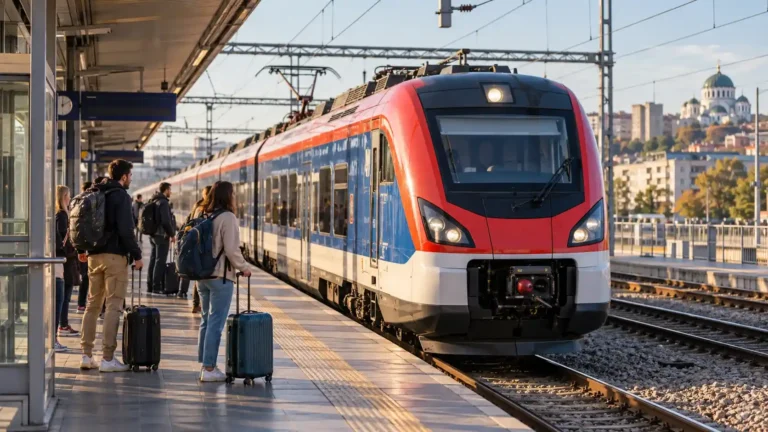
Sofia is roughly 150 kilometers west of Plovdiv. Trains run on the main corridor between the two cities and are a good option if you value an established rail link over navigating bus operators. The trip commonly takes around two to three hours depending on service and rail works, but that is only a planning band—not a departure guarantee. Check both departure and arrival stations and remember that Plovdiv railway station is outside the Old Town’s pedestrian core.
Use the official Bulgarian State Railways (BDZ) journey planner for the train on your actual date. The timetable and ticketing system display availability and price according to the chosen train; do not rely on a fixed fare quoted in an old article. Leave margin for platform changes, disruptions and your transfer from the station to accommodation.
Sofia to Plovdiv by Bus
Intercity buses can be competitive with trains, but departure and arrival terminals depend on the company. Sofia’s main bus station is a common departure point, while Plovdiv has more than one bus terminal. Before buying, check the specific terminal address, the stop on your ticket and whether the bus makes intermediate stops. Avoid assuming that “Plovdiv bus station” is always a single unambiguous destination.
For a stand-alone one-day excursion, allow a full day including the bus or train journey in each direction. If you need help weighing both choices, see our Sofia to Plovdiv day-trip guide alongside current operator schedules.
Flying to Bulgaria
Many international visitors land at Sofia Airport and then head east by surface transport. Arriving at Plovdiv Airport can also be possible depending on current routes and season, but do not assume any particular international connection operates year-round. Account for the transfer between Sofia Airport and the railway or bus station rather than comparing only flight time and the intercity train duration.
If comparing flights into Bulgaria, search current Sofia flight options on Trip.com is an optional planning tool; local transport to Plovdiv should still be verified independently.
Driving from Sofia or Arriving from Another Balkan Country
The Sofia–Plovdiv road journey can be convenient if you are already doing a wider Bulgarian road trip, but a rental car is not an advantage inside Plovdiv’s steep historic core. Plan motorway charges or vignette requirements, hotel parking and restricted streets before committing. Do not drive into a pedestrian zone because a map app shows your accommodation in the Old Town.
An international route from Istanbul, Skopje or Burgas requires separate checks for border procedures, operator service and arrival terminals; generic road distances do not establish a realistic bus schedule. If combining countries by car, our Serbia–Bulgaria road-trip guide provides a regional planning framework.
Getting Around Plovdiv Without a Car
For a first visit, the pedestrian center, Kapana and most of the Old Town form a walkable sightseeing circuit. The harder part is elevation and pavement rather than long distances. From the main train station to the center, use a local bus or licensed taxi if carrying heavy luggage. Most visitors need only a few city bus trips rather than a complicated transit pass. If your journey is part of a longer regional trip, see our Balkans itinerary without a car for cross-border route planning beyond this walkable city.
Plovdiv municipality publishes a €0.50 single paper fare without transfer, a €0.77 one-hour transfer fare and day-ticket options. A calendar-day pass is listed at €2.05 and a 24-hour pass at €2.56; check sales and validation instructions for the chosen product before boarding. Details: municipal transport and ticket information.
A taxi can make sense for luggage or an evening return to an outlying hotel. Use a licensed cab with clearly displayed rates and confirm any airport or intercity quote before starting. Rideshare-platform coverage is not something to assume from marketing for another city. For wheelchairs, strollers or walking difficulties, request accessible transport in advance and confirm step-free admission with each museum.
Where to Stay in Plovdiv: Best Areas Compared
| Area | Best for | Watch out for |
|---|---|---|
| Central pedestrian area | First-time visitors, transport access, easy meals | Some streets are lively; exact hotel location matters. |
| Kapana | Cafés, restaurants, evening atmosphere | Music and late-night noise can affect rooms. |
| Old Town | Historic buildings and quiet early mornings | Hills, uneven cobbles, limited car access and luggage difficulty. |
| Near railway station | Early onward trains, potentially simpler transfers | Less immediate historic atmosphere; expect a walk or short ride. |
| Residential streets outside core | Longer stays and more space | Check last public transport and walking distance at night. |
For a first two-night visit, choose the central pedestrian area or Kapana if ease matters most. The Old Town makes sense if you deliberately want a historic guesthouse and do not mind carrying a small bag uphill. Do not choose a property solely because the booking site says “Plovdiv center”; inspect the street location and walking route.
To see current room inventory, compare Plovdiv hotels and guesthouses on Agoda. Check cancellation, noise, steps, parking and local tourism taxes before checkout. Expect festival and concert dates to be less predictable than ordinary weekdays for prices and availability.
How Much Does Plovdiv Cost in 2026?
Published attraction tariffs and bus fares can be stated with much more confidence than hotel or meal averages, which change significantly with season, events and personal preference. These are illustrative budgeting assumptions, not live hotel quotes or guarantees. Exclude travel to Bulgaria, major tours and international flights when comparing a daily city budget.
| Expense | Budget traveler | Mid-range traveler | How to verify |
|---|---|---|---|
| Bed per person/night | €20–40 illustration | €40–85 illustration | Check dates, taxes and whether prices are per room or person. |
| Food per day | €15–25 illustration | €25–45 illustration | Compare posted menus and drink costs. |
| Local transport | €0–3 normally | €0–10 with occasional taxi | Walking is free; public bus €0.50 single fare. |
| Paid sights per day | €4–15 | €10–25 | Official theatre, Basilica and museum tariffs. |
| Total per person/day | €39–83 illustration | €75–165 illustration | Accommodation choice and number of paid museums drive variance. |
A realistic two-night example for someone sleeping in an affordable private room might be: two nights at €35 each, food at €25 per day for two days, €15 for museums and €3 for buses: €138 before the Sofia transfer. That is an arithmetic example, not a sampled 2026 booking quote. A couple sharing a room will calculate their per-person lodging cost differently.
Travelers trying to reduce costs can use the free exposed Roman Stadium, Old Town street walks, pedestrian districts and viewpoints where public access is permitted. Our Balkans cost comparison adds broader context for budgeting across countries.
Suggested 1-Day Plovdiv Walking Itinerary
| Time window | Stop | Why it works |
|---|---|---|
| 09:30–10:00 | Dzhumaya Square and visible Roman Stadium | Easy orientation; free outdoor archaeology. |
| 10:00–12:30 | Old Town lanes, Ancient Theatre and one house | Concentrate uphill sights before afternoon heat. |
| 12:30–14:00 | Lunch near Kapana or pedestrian streets | Stay central rather than cross the city. |
| 14:00–15:30 | Bishop’s Basilica or Ethnographic Museum | Choose one substantial indoor visit. |
| 16:00–evening | Kapana cafés, relaxed central walk | Finish near transport and restaurants. |
This is a suggested order, not a promise that every indoor attraction is open. Swap the Ethnographic Museum on Mondays, and check the theatre’s lunch break and any event restrictions. If arriving from Sofia at midday, drop one museum rather than compress every stop.
A Better 2-Day Plovdiv Itinerary
Day 1: Roman City, Old Town and Kapana
Begin at Dzhumaya Square for the visible Roman Stadium. Walk through central streets into the Old Town, see Hisar Kapia and pick one Revival-era house before visiting the Ancient Theatre. Spend time with the theatre’s view rather than rushing down immediately. If Nebet Tepe is accessible and conditions are good, take the short uphill extension for city panoramas.
Return toward the pedestrian center for lunch or an afternoon café, then enjoy Kapana after dark. If you want a guided introduction rather than reading plaques throughout the day, browse Plovdiv historical walking tours; confirm exactly what entry tickets, if any, the selected tour includes.
Day 2: Mosaics, Museums and a Relaxed Afternoon
Start at the Bishop’s Basilica to understand the city’s early Christian layers, then choose either the Regional Ethnographic Museum or the Archaeological Museum based on your interests and their opening days. If you have a particular passion for mosaics, use the separate mosaic-sites combined ticket and visit the Small Basilica as well.
Leave an unstructured afternoon for Tsar Simeon’s Garden, coffee, a contemporary art exhibition or shopping. The advantage of two days is that rain, unexpected museum queues or an appealing restaurant does not destroy your schedule. You do not need a car for either day.
Optional Day 3: Bachkovo Monastery and Asen’s Fortress
These two sites are among the clearest additions for travelers wanting more than the city. They are quite different from Rila Monastery, which is better planned separately from Sofia; see our Rila Monastery and beginner walks guide for that alternative. Asen’s Fortress sits above the Asenovgrad area on the way toward Bachkovo; it preserves part of a medieval stronghold and a dramatic historic church. Bachkovo Monastery is a major working Orthodox monastery in the Rhodope foothills, reached farther along the same general corridor.
By rental car or prearranged driver, combining the two in one trip is reasonable. By public transport, reaching Asenovgrad is not the same as having a guaranteed connection to the fortress entrance, and the onward journey to Bachkovo requires an up-to-date bus check or local taxi. Do not promise an easy walk on a mountain road without checking the route, traffic and weather. For context consult the official Asen’s Fortress description.
Plan the day with an early start, enough time at the monastery, modest clothing suitable for an active religious site, and a return journey arranged before you enter a rural area. Some interiors may restrict photographs; ask permission. A visit to a nearby winery is better as a separate experience if tasting is your priority. Tipping local guides and drivers is optional, not required.
If you plan rural excursions after leaving the city, comparing Plovdiv rental cars through DiscoverCars may help, but check deposit requirements, insurance excess, permitted roads and parking. For a purely urban visit, a car is unnecessary.
Best Time to Visit Plovdiv: Seasonal Trade-Offs
| Season | What to expect | Planning adjustment |
|---|---|---|
| Spring (April–June) | Pleasant walking periods, occasional rain, cultural activity | Bring layers and keep an indoor museum alternative. |
| Summer (July–August) | Long days and potentially intense afternoon heat | See exposed ruins in the morning; museums at midday. |
| Autumn (September–October) | Often good walking weather and active cultural calendar | Check event-night accommodation prices and gallery hours. |
| Winter (November–March) | Shorter daylight and cooler, sometimes damp conditions | Use current winter opening times and plan indoor stops. |
Cultural events such as Opera Open performances and Kapana creative festivals can be a reason to time a trip, but individual dates change annually. A concert at the Ancient Theatre may alter ordinary access and museum-style admission. Use Plovdiv municipality’s cultural news or the tourism event listings instead of assuming last year’s program repeats unchanged.
What to Eat in Plovdiv: A Useful Food Checklist
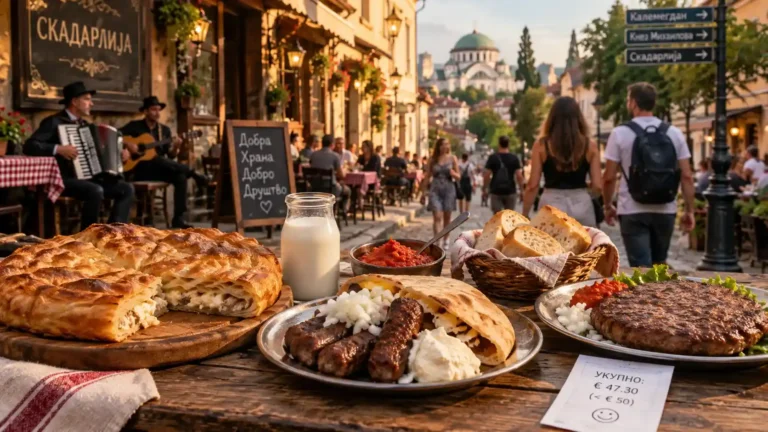
Plovdiv is a good place to try everyday Bulgarian dishes without organizing a dedicated food tour. In the morning, look for banitsa, flaky pastry usually filled with cheese and eggs, from a bakery. At lunch, Shopska salad and tarator are common choices, but both generally contain dairy. For a more substantial meal, menus may feature kebapche, grilled minced meat, or kavarma, a cooked dish that varies by kitchen.
Vegetarians can find salad, pepper and bean dishes, but check ingredients: traditional preparations may include meat stock, dairy or eggs. Tell the server clearly about allergies and cross-contact concerns rather than assuming a dish is safe from its name. You may also see kashkaval cheese, roasted vegetables, pastries and seasonal desserts on menus.
Kapana has numerous modern cafés and dining places; the center offers both casual bakeries and sit-down restaurants, while the Old Town setting may be quieter. Compare menus before you order rather than relying on a generic “meal costs €8” promise. See our traditional Balkan food guide for a region-wide introduction.
Plovdiv With Children, Limited Mobility or Remote-Work Needs
Families often appreciate a simple combination of the Roman Stadium, a brief Old Town visit, the mosaics at the Bishop’s Basilica and time in Tsar Simeon’s Garden. Avoid making younger children spend every hour in museums. Carry water in summer and choose accommodation where you can easily return for breaks.
For people with mobility limitations, Plovdiv’s steep Old Town paving is a genuine obstacle. The flatter central area and some newer museum interiors may be easier; check lifts and accessible entrances with operators rather than assuming the whole historic district is step-free. The Ethnographic Museum accessibility page specifically describes assistance options.
For remote workers staying longer, the central and Kapana areas can be convenient for cafés and errands, but Wi-Fi speed, power outlets and the ability to take calls vary by individual venue. Book accommodation with verified workstation and internet details if working is essential; do not treat every café as a coworking office.
Safety, Payments and Common Mistakes
- Using outdated money information. Bring or withdraw euros, not lev, for ordinary 2026 spending. Some older site pages still show BGN comparisons.
- Confusing the Roman Theatre with the Roman Stadium. They are different archaeological attractions with different admission rules.
- Buying the wrong museum pass. The five-site Old Town ticket excludes the Bishop’s and Small Basilicas; their mosaic pass is separate.
- Assuming house museums open every Monday. The Ethnographic Museum and some other collections close then; build a backup.
- Booking an Old Town room without checking the hill. Stone streets and steps can be awkward with wheeled luggage or reduced mobility.
- Expecting one bus to stop at every rural attraction. Reach Asenovgrad first if traveling independently, then verify the onward leg.
- Scheduling outdoor sights at midday in August. Use early morning and evening, with an indoor venue for the hottest hours.
- Assuming all Roman-site and festival tickets share a tariff. Concert tickets, projection halls and archaeological admission can be separate.
- Skipping basic precautions. Watch bags on busy streets, use licensed taxis, heed local road safety and follow archaeological barriers.
Plovdiv is generally approachable for independent visitors, but no travel destination is risk-free. Keep the address of your accommodation available offline, watch personal belongings in busy places and have travel insurance appropriate to your intended activities. Tipping is optional; ask about any service charges before leaving an additional amount.
Frequently Asked Questions About Plovdiv in 2026
Is Plovdiv worth a visit from Sofia?
Yes. It offers a different urban experience from Sofia: a concentrated ancient theatre and stadium, distinctive National Revival houses, early Christian mosaics and Kapana. A long day trip is possible with the right departure times, but two nights allow a less hurried visit.
Is the currency in Plovdiv still Bulgarian lev?
No. Bulgaria adopted the euro on 1 January 2026. The fixed historical conversion is €1 = 1.95583 lev. Older BGN signs or dual-currency tariff lists should not be mistaken for the current ordinary payment currency.
How much is entry to the Ancient Theatre?
The municipal tourist site tariff publishes a standard adult entry equivalent of about €3.58. Opening times and availability can vary for events; verify with the Ancient Plovdiv municipal operator before visiting.
Is the Roman Stadium free?
The exposed northern portion at Roman Stadium Square is listed as free to visit. Other associated experiences, including an interpretive projection hall, have separate paid tickets.
Does the Old Town combined pass cover the Bishop’s Basilica?
No. The basic five-site municipal pass excludes the Bishop’s and Small Basilicas. If you want the mosaics, compare a standalone Basilica ticket with the separate three-site mosaic offer.
Can I visit Plovdiv without renting a car?
Yes. The historic center, Kapana and major Roman sites can be visited on foot, with public buses and taxis for longer hops. A car is mainly worth considering for regional excursions rather than the city center.
Which neighborhood is best for first-time visitors?
The pedestrian center or Kapana is usually the easiest choice for a two-night stay. The Old Town is atmospheric but can involve steep, irregular cobbled streets and restricted vehicle access.
Is a weekend enough for Plovdiv?
Yes. Two days cover the major sites without constant backtracking. Choose one or two museum interiors, prioritize the Ancient Theatre and mosaics, and keep one evening free for Kapana.
Can I see Asen’s Fortress and Bachkovo Monastery on the same day?
Usually yes with a car, prearranged transport or a tour. Without driving, check buses and possible taxi connections carefully, since arrival in Asenovgrad does not automatically take you to the fortress or monastery gates.
Is the city practical for wheelchair users?
Some central streets and museum buildings have accessible features, but the Old Town’s steep cobbles pose difficulties. Contact specific museums and accommodation providers to confirm entrances, lifts and accessible transport before the trip.
How do I verify train schedules and museum prices?
Use the official BDZ train planner, Old Plovdiv municipal ticket list, Bishop’s Basilica price page and Plovdiv public transport information. Commercial summaries may lag behind official changes.
Planning Sources and Editorial Method
This article is researched and compiled from Plovdiv municipal tourism and transport information, the Ancient Plovdiv municipal operator, the Bishop’s Basilica, the Regional Ethnographic Museum, BDZ and the European Commission. Route windows and daily expense scenarios are planning guidance rather than guarantees, and no firsthand visit or independently purchased ticket is claimed. For help on arrival, the city Tourist Information offices provide maps and current attractions advice. Check prices, train schedules and site opening times again before travel.
Final Thoughts: Planning a Better Plovdiv Trip
The best way to use a Plovdiv Bulgaria travel guide is to group attractions by geography and historical layer: Roman Stadium and the pedestrian center, Ancient Theatre and Old Town, then the early Christian mosaics and a slower afternoon. This makes Plovdiv feel like a real city instead of a row of disconnected attractions.
For a first visit, budget two days and two nights, wear shoes suitable for hills and cobbles, use euros, and check any museum pass against the specific places you plan to enter. Add Bachkovo and Asen’s Fortress only when you have a full third day and a dependable transport plan. That small amount of planning leaves more time for what makes Plovdiv rewarding: discovering a long history at an unhurried pace.