Cheapest Balkan Countries to Visit: Costs & Ranking (2026)

The cheapest Balkan countries to visit are not necessarily the countries with the cheapest hotels on one particular night. For a one-week trip, the better question is where you can afford a room, eat well, reach the places you want to see and avoid expensive transfers. North Macedonia and Bosnia and Herzegovina are especially strong choices for low-cost cultural travel; Kosovo is another affordable option, while Bulgaria, Serbia and inland Albania can provide excellent value. The Adriatic coast needs a different budget calculation, especially in July and August.
This 2026 comparison looks at nine destinations frequently included in Balkan travel itineraries: Albania, Bosnia and Herzegovina, North Macedonia, Kosovo, Bulgaria, Serbia, Montenegro, Croatia and Slovenia. It uses published comparative price-level data where available, then adds transparent illustrative traveler budgets, cheaper cities, seasonal pitfalls and realistic trip ideas. These are not hotel quotes or a statistically proven ranking of tourist prices.
If you already know where you want to go and need an item-by-item spending plan instead, start with our Balkans travel budget guide. Here the focus is choosing a destination and understanding the trade-offs.
Quick answer: For a budget city-and-culture trip, shortlist North Macedonia, Bosnia and Herzegovina and Kosovo. For value plus accessible urban transport, compare Bulgaria and Serbia. For inexpensive beaches, consider Albania or Montenegro outside peak season rather than assuming the July Adriatic coast will be cheap. Check the actual flight and room cost before deciding.
Table of Contents
Cheapest Balkan Countries to Visit: Quick Comparison
| Country | Illustrative solo budget / day | Illustrative comfortable budget / person / day | Best-value base | Main price trap |
|---|---|---|---|---|
| North Macedonia | €30–50 | €55–90 | Skopje, Bitola | Ohrid waterfront in peak summer |
| Bosnia & Herzegovina | €35–55 | €60–100 | Sarajevo, Travnik | Mostar Old Town / private tours |
| Kosovo | €30–50 | €55–90 | Pristina, Prizren | Private mountain transfers |
| Bulgaria | €35–60 | €60–105 | Sofia, Plovdiv | High-season Black Sea resorts |
| Serbia | €35–65 | €65–110 | Niš, Novi Sad | Central Belgrade event weekends |
| Albania | €35–65 | €60–110 | Tirana, Berat, Shkodër | Riviera beach accommodation in August |
| Montenegro | €45–75 | €75–125 | Žabljak, inland towns | Kotor/Budva coastal summer |
| Croatia | €55–90 | €95–155 | Zagreb, inland towns | Dubrovnik, islands, peak coast |
| Slovenia | €70–110 | €110–180 | Less central Ljubljana stays | Lake Bled/Alpine summer demand |
How to use this table: These figures are editorial planning envelopes for 2026, not observed averages or live accommodation prices. The solo budget column assumes a hostel or basic guesthouse, inexpensive food, modest local transport and light sightseeing. The comfortable column is per person, assuming two adults share a private room, eat at a mix of ordinary restaurants and cafés, and take some paid local transport and attractions. Both exclude international flights, travel insurance, large intercity transfers and expensive private tours. High-season coastal stays can exceed these ranges significantly.
The apparent precision is only a budgeting aid: €40 spent in a city hostel does not buy the same experience as €40 in a coastal resort. Always price the specific dates and location; an affordable country can contain an expensive holiday town.
What the Best Comparable Price Data Actually Say
A country-wide benchmark is useful before comparing tourist itineraries. Eurostat measures the price level of household final consumption relative to an EU average of 100. Its 2025 figures, published in 2026, provide a consistent cross-country snapshot covering much of the region. They are not a tourism expenditure index: the basket includes what households consume, not just visitor hotels, restaurant bills or excursion prices.
| Country | 2025 household price index (EU = 100) | How to interpret it |
|---|---|---|
| North Macedonia | 54.8 | Lowest general price level among countries in this table |
| Bosnia & Herzegovina | 59.2 | Low general consumer price level |
| Bulgaria | 62.5 | Low relative price level even as an EU member |
| Montenegro | 66.1 | Does not capture summer Kotor hotel premiums |
| Serbia | 68.0 | Generally lower than EU average |
| Albania | 72.6 | Not necessarily cheaper than every Balkan neighbor |
| Croatia | 78.4 | Higher than several non-EU neighbors |
| Slovenia | 89.3 | Highest among the eight compared here |
Source: Statistics Norway’s Eurostat-based price comparison and the Eurostat price-level index dataset. Kosovo does not appear in this comparable set, so it is not assigned a fabricated index or statistical rank. The published figures are preliminary and may be revised.
This is why a claim that Albania is categorically the cheapest Balkan country is too strong. Albania can be excellent value for a trip through Tirana, Berat and Shkodër, but a Riviera holiday may cost substantially more than a Skopje or Sarajevo city break. Montenegro also illustrates the problem: a modest national price index can coexist with very expensive short-season tourism hotspots.
How We Built the Traveler Budget Examples
- Lodging: compare dorms or simple guesthouses for solo travelers; for couples, divide the entire private-room price by two, not the room price twice.
- Food: allow for bakery breakfasts, supermarket basics and normal local restaurants; premium waterfront dining is a separate choice.
- Local movement: include urban transport or occasional short taxi rides, but account for intercity journeys separately.
- Activities: include free historic centers and viewpoints; museums, boat rides and guided adventures add extra cost.
- Season and route: keep city breaks and summer coasts distinct; avoid comparing a winter capital to an August beach resort.
- Quality check: compare the total trip cost for your actual dates, not only the country label or an average from another year.
These ranges are planning assumptions, not a scraped set of bookable hotel listings. To make the process reproducible, here is one fully itemized example rather than a vague daily-budget adjective.
Worked example: seven days in North Macedonia
| Expense | Assumption | Total |
|---|---|---|
| Hostel / simple room | 6 nights × €22 | €132 |
| Food and drinks | 7 days × €18 | €126 |
| Local transport and small incidentals | 7 days × €5 | €35 |
| Intercity tickets | Two journeys × €20 | €40 |
| Admission / boat / one activity | Illustrative allowance | €35 |
| Total for one traveler | 7 days / 6 nights | €368 |
The result is €368 for seven days, or roughly €53 per calendar day once intercity journeys and an activity are included. A particular booking can easily be higher or lower. Six nights are used because Day 7 is the departure day. Flights and insurance are excluded; staying seven nights adds another accommodation night.
The example intentionally uses assumed unit prices so a reader can replace each one. A higher room rate of €35 instead of €22 would add €78 to the seven-day total. The goal is not to publish a perfect 2026 average; it is to show how to calculate a real trip without hiding costs.
1. North Macedonia: Strong Value for Cities, Lakes and History
North Macedonia is a good first option when the goal is inexpensive culture rather than expensive resorts. Skopje has a walkable old bazaar and city center, while Bitola offers cafés, architecture and access to historic sites. Ohrid is a compelling lakeside destination, but Old Town and waterfront rooms during July and August can be noticeably more expensive than the same room outside high season.
Where the money goes furthest
- Skopje: central walking, historic markets and a range of basic accommodation; a taxi is not required for most old-center sights.
- Bitola: a relaxed city base with traditional restaurants and a historic pedestrian boulevard.
- Ohrid outside peak summer: beautiful lake views without insisting on a premium waterfront room.
- Matka Canyon: a manageable outing if bus schedules work; boat trips and private taxis change the final price.
The principal transport trap is assuming a cheap bus can conveniently visit every national-park trailhead. Mavrovo, some lakeside places and remote hiking access may require a car or hired driver. A focused Skopje–Ohrid–Bitola trip is usually cheaper to execute than an ambitious loop of villages and mountain passes.
For detailed overnights and route choices, use our North Macedonia 10-day itinerary. It explains how the full country route differs from a simplified trip by bus.
Money-saving choice: Sleep three or four nights in the same city instead of changing properties every evening. For an Ohrid visit, compare a room a short walk from the lake with premium waterfront addresses before spending extra on scenery you can also enjoy for free.
2. Bosnia and Herzegovina: Budget History, Food and Mountain Scenery
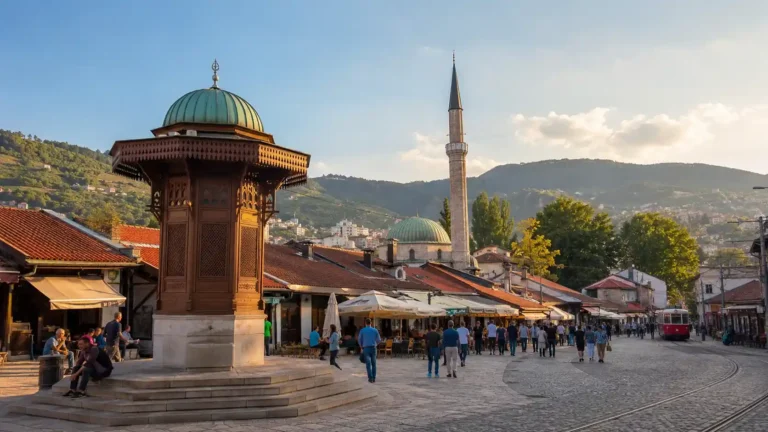
Bosnia and Herzegovina can be one of the easiest countries in the region for a history-centered trip with modest daily spending. Sarajevo mixes Ottoman and Austro-Hungarian architecture, museums, cafés and markets within a relatively compact central area. Mostar offers the Old Bridge and beautiful riverside views, though sleeping beside its most photographed streets is not always the cheapest option.
Best-value stops
- Sarajevo: a strong base for walking, neighborhood food and urban sightseeing.
- Travnik: often works as a quieter cultural stop if it fits your route.
- Mostar: good value when staying outside the busiest Old Town blocks and choosing restaurants away from the most crowded viewpoints.
- Konjic: an appealing extra stop for river scenery and small-town atmosphere, if transport schedules fit.
Bosnia is particularly rewarding when you choose one or two bases. Intercity journeys can be slower than map distances suggest, and frequent private transfers will erode a low daily accommodation budget. Compare Sarajevo–Mostar bus and rail options for your exact date, and check the departure terminal before buying.
For a manageable example of combining Bosnia with one neighboring country, see our 7-day budget Balkans itinerary. That guide provides a specific route rather than another list of cheap places.
Safety and value: Urban tourism and established recreational routes are different from unverified rural shortcuts. Some remote parts of Bosnia remain mine-suspected; stay on established routes and follow local warnings. Do not choose a cheaper off-path hike on the assumption that every open field is safe.
3. Kosovo: Excellent Value for Compact City Trips
Kosovo is a practical contender for a low-cost city-focused trip. Pristina has a lively café culture, while Prizren offers one of the region’s most pleasant historic centers. Peja can be a gateway to mountain landscapes, but the countryside part of a trip is not automatically cheap once transport to remote trailheads is included.
Kosovo is omitted from the Eurostat household-price table above because a comparable 2025 index was not available in that set. Its inclusion here reflects the range of lower-cost guesthouses, food choices and compact city travel options—not a numerical claim that it is definitively number one.
Keep the route simple
An effective inexpensive trip is Pristina → Prizren → Peja, with buses between city stops and mountain excursions only where the timetable or tour price works. If you are combining Kosovo with Serbia, research border entry and onward travel requirements carefully before committing to a one-way routing; that logistical decision can matter more than saving a few euros on accommodation.
Our Kosovo 5-day itinerary gives a starting structure for a first visit, but verify any rural excursions and bus departures independently before booking.
4. Bulgaria: Affordable Cities With Useful Rail Connections
Bulgaria offers a rare combination for budget visitors: comparatively low household prices, established rail connections between important cities and some excellent historic destinations. Sofia, Plovdiv and Veliko Tarnovo are attractive for travelers who would rather spend on experiences than on private transfers. Rila Monastery is worthwhile, but a day tour or car arrangement may be simpler than stitching together limited public transport.
Why the currency matters in 2026
Bulgaria adopted the euro on 1 January 2026. Any older guide telling you to withdraw Bulgarian lev for ordinary 2026 spending is outdated. The European Commission confirms the adoption date and historic conversion rate. Check the European Commission’s Bulgaria euro guidance.
For inland travel, base yourself in Sofia and Plovdiv and check the exact connection to Veliko Tarnovo before booking a rigid final night. On the coast, Varna, Burgas and the resort towns can have quite different accommodation prices; July and August rates are not representative of the rest of the year.
Follow our Bulgaria itinerary for seven days if you want a practical city route with a separate Black Sea alternative. The two versions should not be squeezed together without extra nights.
5. Serbia: Very Good City Value, With a Few Price Surprises
Serbia can suit budget travelers who want city life, food and festivals. Niš is worth considering for a lower-key stay, while Novi Sad combines a compact center with Petrovaradin Fortress. Belgrade offers the widest range of nightlife and restaurants, but accommodation around major events or busy central weekends can cost more than its general reputation suggests.
A genuine budget benefit in Belgrade
Regular public transport within Belgrade’s integrated city tariff system has been free since 1 January 2025, according to the city transport secretariat. This does not mean every airport or special minibus service is free. Check the specific route rather than assuming all vehicles have the same fare conditions. Belgrade city transport notice.
For a city break, walking and using public transport may save money compared with renting a car. For Tara National Park or remote western Serbian attractions, a car is more helpful—but renting it only for the countryside days can still reduce costs. See our seven-day Serbia road trip for a specific example.
6. Albania: Excellent Value Inland, Variable Costs on the Riviera
Albania is a favorite budget destination because it combines mountains, Ottoman-era towns and Adriatic/Ionian beaches. The most consistent savings, however, are often found in inland or northern towns rather than on the busiest summer Riviera waterfront. Tirana provides a broad lodging market, Berat and Gjirokastër are compelling for culture, and Shkodër makes a practical base before mountain travel.
The Albania price trap
An apartment near Ksamil or a popular southern beach in August can be far more expensive than a guesthouse in Shkodër or Berat. Even when beach access is free, loungers, parking, taxis, boat trips and eating exclusively in waterfront restaurants can raise spending. The sensible comparison is a specific coastal town and week against another location on exactly those dates.
Road trips can be rewarding, but rental prices, fuel, one-way fees and difficult parking should not be ignored. Before deciding to rent a vehicle for the whole holiday, price domestic buses and the time needed for transfers. In mountain regions, a tour or guesthouse transfer may still be needed after the intercity bus arrives.
For trip planning, use our Shkodër travel guide or start with a small number of bases rather than trying to see every beach and mountain valley in one week.
7. Montenegro: Budget Mountains, Seasonal Bay of Kotor Premiums
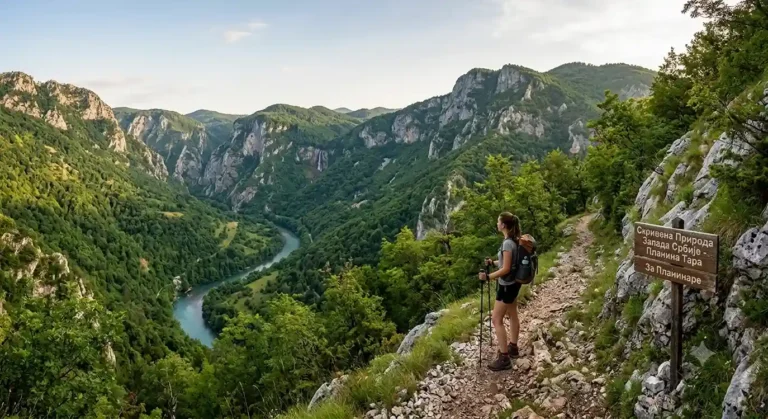
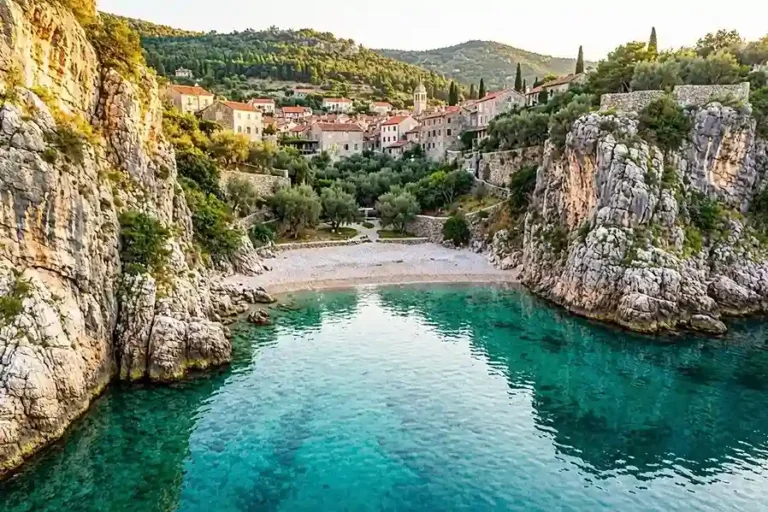
Montenegro demonstrates why a single national average cannot predict holiday spending. Inland mountain bases such as Žabljak can be more affordable than Kotor or Budva in midsummer, though park activities and car hire add costs. The Bay of Kotor is beautiful but often priced for a short high-demand season with cruise traffic and limited historic-center accommodation.
If you want the coast, compare Kotor with Herceg Novi and Ulcinj, as well as the option of sleeping outside the most famous Old Town. If you prefer hiking, plan around Durmitor or another mountain base while checking weather and park fees. For an affordable beach holiday, consider late May, June or September rather than assuming the cheapest season is peak August.
A low-price guesthouse far from a bus route is not automatically a bargain: two daily taxis can wipe out the difference. Choose a location you can reach without constant paid transfers.
8. Croatia: Best Value Away From the Most Famous Coast
Croatia belongs in this comparison because the country has much more to offer than Dubrovnik and summer islands. Zagreb and various inland towns can be substantially easier on the budget than top coastal destinations. Split offers a broad range of accommodation but becomes expensive when many visitors travel at the same time; Dubrovnik and heavily visited islands often need the largest reserve for hotels and activities.
Do not label Croatia universally unaffordable. Compare Zagreb in October with a coastal island in August and you are effectively comparing different markets. If the itinerary requires ferries, include passenger or vehicle fares, port transfers and possible luggage fees. Budget airline flights may also cost less than an awkward sequence of international bus connections—check the total, not only a headline ticket.
The euro is Croatia’s currency. Travelers entering from non-euro destinations should include possible conversion and ATM fees in their personal budget.
9. Slovenia: Higher Daily Costs, But Easy to Organize Without a Car
Slovenia is generally the most expensive destination in this nine-country selection according to the comparative price index, but it also offers efficient transport networks, attractive compact cities and exceptional scenery. Ljubljana is manageable on foot, while Lake Bled and the Julian Alps are the better-known outdoor draws.
Budget-conscious visitors can lower their total by staying outside the lakefront, walking or using scheduled transport instead of private transfers, and prioritizing free natural experiences where access is allowed. Higher per-night room rates do not automatically mean the entire holiday is bad value; a well-connected base can save on taxis, car rental and wasted transfer days.
If Slovenia is part of a multi-country trip, make it a deliberate stop for the scenery rather than rushing across it solely because it is geographically nearby.
Which Balkan Country Is Cheapest for Your Travel Style?
| Traveler | Strong shortlist | Why | Check before booking |
|---|---|---|---|
| Solo backpacker | North Macedonia, Bosnia, Kosovo | City bases, local food and low-cost sightseeing | Hostel choice and intercity buses |
| Couple sharing rooms | Albania inland, Bulgaria, Bosnia | Private rooms can be split two ways | Actual double-room cost |
| Family with children | Bulgaria, Albania, North Macedonia | Apartments and low-cost city activities | Apartment location; transport for four |
| Beach traveler | Albania, Montenegro, Bulgaria | Good off-peak coastal options | July/August room prices and beach extras |
| Car-free city trip | Bulgaria, Serbia, Bosnia | Walkable cores and selected rail/bus links | Transfers beyond the main cities |
| Hiking trip | North Macedonia, Montenegro, Albania | Dramatic scenery and mountain bases | Access roads, guides, park permits |
This is a practical shortlist rather than a claim that each country is cheapest for every member of a group. A four-person family may save with a central apartment even in a generally pricier country; a solo traveler may prefer a city with more hostel beds.
Travel Currencies in the Balkans in 2026
| Country | Currency used for normal payments | Planning note |
|---|---|---|
| Albania | Albanian lek (ALL) | Pay in local currency when possible; compare exchange fees |
| Bosnia & Herzegovina | Convertible mark (BAM / KM) | Officially pegged to euro, €1 = 1.95583 BAM |
| North Macedonia | Macedonian denar (MKD) | Carry some cash for small businesses |
| Serbia | Serbian dinar (RSD) | Use local-currency prices and avoid poor exchange options |
| Bulgaria | Euro (EUR) | Adopted on 1 January 2026 |
| Kosovo | Euro (EUR) | Used as the local monetary currency |
| Montenegro | Euro (EUR) | Used as the official means of payment |
| Croatia | Euro (EUR) | Euro-area member |
| Slovenia | Euro (EUR) | Euro-area member |
Currency references: European Commission for Bulgaria, Central Bank of Bosnia and Herzegovina for the fixed BAM rate, Central Bank of Kosovo and Montenegro tourism authority. Do not assume euro usage means that a country is a eurozone member.
ATM tip: When a card terminal or ATM offers to convert a local-currency amount into your home currency, compare the quoted conversion. Dynamic currency conversion can cost more than paying in the local currency through your card issuer. Your bank’s foreign-exchange and withdrawal fees still apply.
The Hidden Costs That Change the Country Ranking
- Flights: one cheaper hotel market cannot compensate for a much more expensive flight if your stay is short.
- Intercity travel: bus fares, station fees, extra luggage and overnight transfers can add up over a multi-country trip.
- Coastal transport: ferry tickets, boats, taxi connections and beach shuttles matter more than city tram fares.
- Rental cars: deposits, additional-driver fees, border permission, tolls, parking and fuel change the comparison.
- Tourist taxes: some properties collect local accommodation charges separately; verify the booking total.
- Paid attractions: national parks, museums, caves and boat excursions can outweigh restaurant savings.
- Cancellation flexibility: a cheap non-refundable hotel may be risky when bus routes or mountain conditions are uncertain.
- Time: a very slow connection can cost a holiday day or force a second overnight.
For transport-heavy trips, start by identifying the exact city pair, then compare the operator’s direct timetable and ticket office with a booking platform. Not every bus or rail route is represented by every aggregator, and international connections change.
Checking regional buses: For supported routes, you can compare available bus tickets with Busbud.
Three Realistic Cheap Balkan Trip Ideas
Seven days in North Macedonia: one country, three bases
Days 1–2: Skopje, including central landmarks and a flexible Matka outing if your transport is confirmed. Days 3–5: Ohrid, with one full Old Town day and a St. Naum outing if the boat or road plan makes sense. Day 6: Bitola for architecture and a slower evening. Day 7: depart via the appropriate airport or return to Skopje with enough buffer. This is a six-night plan, not a guaranteed fit for every early flight.
Seven days in Bosnia: culture with fewer transfers
Three nights Sarajevo → two nights Mostar → one final night Sarajevo, with departure on Day 7. This plan emphasizes affordable accommodation and simple sightseeing instead of paying for a new transfer every day. It also protects the last day if flying from Sarajevo. Check your arrival city and the operating bus or rail service before booking all six nights.
Seven days in Albania: inland value instead of August beach premiums
Two nights Tirana → two nights Berat → two nights Shkodër → departure day. This route prioritizes guesthouses, traditional food, city walking and reachable attractions. Confirm connections between each pair; on an early Day 7 departure from Tirana, change the final night back to the capital. It is an inexpensive cultural itinerary concept, not a claim that all bus departure times line up automatically.
A longer trip does not need to cross multiple borders. In fact, many first-time visitors would get better value from seven nights split between two places in one country than from seven nights in five countries. If you want to compare transport modes for a wider route, see our Balkans itineraries without a car.
When to Go for the Best Value
April to early June
Spring often gives a good balance for cities and lower-elevation nature walks. Coastal swimming may not suit everyone yet, and mountain trails can still have snow. Use the saving for a better location instead of assuming every outdoor activity is ready.
July and August
Peak summer is usually the hardest season for controlling costs in Kotor, Budva, Dubrovnik, well-known Croatian islands and parts of the Albanian Riviera. Inland capitals, museums and smaller cities can be a better budget alternative. Mountain destinations may also fill up during weekends and holidays.
September and October
Shoulder season can be excellent for combining historic cities and coastline with less accommodation pressure. Some beach-season transport and attractions begin reducing services later in autumn; do not count on the full July timetable.
Winter
Some cities become cheaper, while ski resorts can become more expensive. Mountain roads, shorter daylight and closed seasonal accommodation can change both safety and travel cost. Choose the destination based on what is open, not simply on a low room rate.
Booking Strategy: Save Money Without Buying the Wrong Trip
- Start with a flight comparison: price several arrival cities rather than picking the nominally cheapest country first.
- Check whole-stay hotel totals: include taxes and cancellation conditions, not only the per-night figure.
- Confirm two or three major transfers: use route-specific operators or station information before paying for non-refundable accommodation.
- Choose a sensible number of bases: stay longer where the city or region supports several day trips.
- Decide if you need a car: it may be unnecessary in walkable capitals but useful for rural parks; check total cost.
- Add a reserve: keep room for one unexpected taxi, delayed arrival or paid activity that is truly worthwhile.
Compare accommodation by exact date: Shortlist two cities and evaluate the total stay price and refund terms when you check hotels and apartments on Agoda.
Rental cars for remote stops: Only if your itinerary needs one, compare the full rental terms on DiscoverCars.
Activities worth paying for: For Lake Ohrid or guided experiences, compare activity durations and inclusions on GetYourGuide.
Compare entry flights: Before deciding the cheapest destination overall, compare available flights on Trip.com.
Affiliate disclosure: Some booking links above are affiliate links. BalkanTripGuide may receive a commission if you book through them at no extra cost to you. The country recommendations are based on the route and budget trade-offs discussed here, not on which provider offers a commission.
Frequently Asked Questions About Cheap Balkan Countries
Which Balkan country is cheapest in 2026?
There is no universal cheapest country for tourists. Among countries with comparable 2025 Eurostat household price-level data, North Macedonia is lowest in this selection, followed by Bosnia and Herzegovina. For an actual holiday, accommodation date, destination within the country, flights and transport can change the result. Kosovo is not in that particular index comparison.
Is Albania cheaper than Montenegro?
Albania can be much cheaper for an inland trip, but it is not guaranteed to beat every Montenegro destination. A popular Albanian Riviera beach in August may cost more than an inland Montenegro mountain stay. Compare the same dates, accommodation type and transport needs.
Can I travel the Balkans on €40 a day?
It may be possible with a basic room or hostel in a lower-cost city, inexpensive food and limited paid activities. It is a poor assumption for a peak-summer coastal holiday or repeated international transfers. Build a trip total rather than treating €40 as a universal price ceiling.
Is Croatia too expensive for backpackers?
No. Zagreb, inland areas and shoulder-season stays can work for budget travelers. Dubrovnik, popular islands, ferries and summer accommodation typically demand more planning and a larger reserve.
What is the cheapest Balkan country for a beach holiday?
Albania, Montenegro and Bulgaria all offer opportunities, especially outside the highest-demand weeks. The best-value coastal town depends on airfare, room availability, transport from the airport and any paid beach facilities. No one coast is always cheapest.
Which Balkan destinations are easiest without a car?
Sofia and Plovdiv, central Belgrade, Sarajevo, Skopje and other main city bases can be manageable using walking, public transport and intercity services. Reaching national parks, isolated beaches or villages can require a separate taxi, transfer or guided tour.
What currency should I bring to Bulgaria in 2026?
Euros. Bulgaria introduced the euro on 1 January 2026. Older material telling visitors to exchange money into lev is outdated for normal new travel transactions.
Should I choose one Balkan country or visit several?
For a trip of seven to ten days, staying in one or two countries often minimizes transfers and gives better value. A longer itinerary can justify crossing more borders, but include time and cost for each international journey.
Final Verdict: Where Does Your Money Go Furthest?
The strongest starting shortlist for the cheapest Balkan countries to visit in 2026 is North Macedonia, Bosnia and Herzegovina and Kosovo for affordable cities and culture; Bulgaria and Serbia are particularly attractive when useful urban transport matters. Inland Albania offers excellent value, while the best budget beach opportunities in Albania, Montenegro and Bulgaria often come outside peak summer. Croatia and Slovenia may cost more on average, but remain worthwhile when chosen for specific experiences rather than a country-wide price ranking.
Use the 2025 Eurostat indices for economic context, the sample budgets for planning structure, and live hotel, flight and transport prices for your own dates. That combination is more useful than calling one country “the cheapest” without explaining what is included. If you want to move from comparison to a complete cost worksheet, continue with our detailed Balkans travel budget breakdown.