Croatia in December: Weather, Costs & Best Places to Visit

Visiting Croatia in December offers a very different experience from the country’s famous summer holidays. Instead of crowded beaches, busy marinas and island-hopping adventures, December brings quieter Adriatic cities, atmospheric historic neighborhoods, festive streets and the possibility of snowy landscapes in continental Croatia.
The experience depends considerably on where you travel. Zagreb can be cold and occasionally snowy, Dubrovnik and Split generally enjoy milder coastal temperatures, while Plitvice Lakes National Park may experience freezing conditions and restricted trail access.
December can be an excellent month for cultural sightseeing, photography, regional food and relaxing city breaks. However, reduced transportation services, seasonal closures and shorter daylight hours mean that planning a December trip requires a different approach from visiting Croatia in summer.
Quick Answer: Is Croatia Worth Visiting in December?
Yes. Croatia in December is worth visiting if you enjoy historic cities, cultural attractions, seasonal festivals, winter landscapes and quieter sightseeing rather than traditional beach holidays.
- Best overall city break: Zagreb.
- Best coastal destinations: Dubrovnik and Split.
- Mildest region: Southern Dalmatia.
- Best for winter nature: Plitvice Lakes, when access conditions permit.
- Typical inland temperatures: -2°C to 6°C (28°F to 43°F).
- Typical coastal temperatures: 3°C to 14°C (37°F to 57°F).
- Snow: Possible inland and in mountain areas, uncommon on the southern coast.
- Swimming: Generally unsuitable for conventional beach holidays.
- Crowds: Usually limited outside major festive events.
- Recommended duration: 3–7 days.
- Estimated daily budget: €60–€100 for budget travelers or €110–€185 for mid-range travelers.
- Rental car: Unnecessary for most city breaks.
Expect seasonal closures, check winter transportation schedules and keep your itinerary flexible.
Table of Contents
Croatia in December: Quick Travel Overview
| Travel Detail | What Visitors Should Know |
|---|---|
| Tourist season | Winter and coastal off-season |
| Continental Croatia | Cold, with frost and possible snow |
| Adriatic coast | Milder but frequently wet or windy |
| Mountain regions | Snow, ice and freezing conditions possible |
| Sea temperature | Approximately 14–16°C (57–61°F) in selected coastal cities |
| Swimming | Not recommended for a typical beach holiday |
| Daylight | Approximately 8.5–9 hours around the winter solstice |
| Accommodation | Potential coastal savings, but fewer properties operating |
| Tourist crowds | Generally low, except around popular festive events |
| Transportation | Reduced seasonal services and possible disruptions |
| National parks | Seasonal routes and weather-dependent accessibility |
| Currency | Euro (€) |
| December public holidays | December 25 and 26 |
| Recommended stay | 3–7 days |
| Daily budget | Approximately €60–€185 per person, depending on travel style |
Is December a Good Time to Visit Croatia?
December is a good time to visit Croatia for travelers who prioritize cultural experiences over outdoor summer activities. Zagreb, Split and Dubrovnik provide enough sightseeing opportunities to justify a dedicated city break, even when the weather is unfavorable.
Advantages of Visiting Croatia in December
- Fewer visitors at many historic attractions.
- More opportunities to explore coastal cities without summer heat.
- Potential savings on accommodation outside festive periods.
- Museums, cafés and regional culinary experiences.
- Seasonal festivals and attractive evening cityscapes.
- Possible snowy scenery in inland and mountain regions.
Disadvantages of Visiting Croatia in December
- Shorter days and colder nights.
- Rain, fog, frost and strong coastal winds.
- Reduced ferry services and fewer boat excursions.
- Seasonal restaurant and hotel closures.
- Possible disruption to mountain roads and national park visits.
- Higher accommodation demand during certain festive weekends.
Choose December for a slower cultural holiday. If swimming, sailing or extensive island hopping is your main priority, late spring or early autumn will usually be more suitable.
Croatia Weather in December
Croatia’s December weather varies considerably because the country combines continental plains, mountainous terrain and an extensive Mediterranean-influenced coastline. A mild afternoon in Dubrovnik can coincide with freezing temperatures in the inland Lika region.
Northern and Continental Croatia
Zagreb, Varaždin and Osijek experience cold December conditions, with average daytime highs around 4–6°C (39–43°F). Overnight temperatures frequently approach or fall below freezing.
Long-term observations at Zagreb-Maksimir published by the Croatian Meteorological and Hydrological Service (DHMZ) indicate a December mean temperature of 1.7°C (35°F), approximately 64 mm of precipitation and an average of four days with snowfall.
Fog and cloudy conditions can also reduce visibility, making flexible indoor sightseeing plans particularly useful.
Adriatic Coast and Southern Croatia
Dubrovnik, Split and Zadar generally experience milder conditions. Afternoon temperatures around 11–14°C (52–57°F) make coastal sightseeing more comfortable than in continental Croatia, although rain and strong winds can significantly affect outdoor plans.
Southern Dalmatia is particularly attractive for travelers seeking milder winter temperatures without expecting summer beach weather.
Istria and Kvarner
Pula, Rovinj, Rijeka and Opatija experience a mixture of maritime and cooler northern Adriatic conditions. Rainfall can be substantial, particularly around Rijeka, while exposed waterfronts may feel considerably colder during strong winds.
Mountains and National Parks
The mountainous interior experiences colder conditions than the coast. Around Plitvice Lakes and Lika, freezing temperatures, icy surfaces and snowfall are realistic possibilities throughout December.
Travelers should prepare for winter road conditions even when their coastal starting point is relatively mild.
| Destination | Average High | Average Low | Rain/Snow Considerations | Best For |
|---|---|---|---|---|
| Zagreb | 5°C / 41°F | -1°C / 30°F | Frost, fog, possible snow | City breaks |
| Dubrovnik | 14°C / 57°F | 8°C / 46°F | Rain and coastal winds | Historic sightseeing |
| Split | 12°C / 54°F | 7°C / 45°F | Rain and wind | Coastal culture |
| Zadar | 12°C / 54°F | 6°C / 43°F | Rain and exposed waterfronts | Relaxed sightseeing |
| Pula | 11°C / 52°F | 2°C / 36°F | Cool nights and rain | Roman heritage |
| Rijeka | 11°C / 52°F | 4°C / 39°F | Relatively wet and windy | Culture and regional trips |
| Osijek | 5°C / 41°F | -1°C / 30°F | Frost and possible snow | Inland culture |
| Gospić (Lika) | 5°C / 41°F | -3°C / 27°F | Snow and ice possible | Regional winter nature |
Climate figures are rounded historical averages from Climates to Travel, using the 1991–2020 reference period where available. Gospić is included as a regional inland climate reference, not as an exact measurement of Plitvice Lakes National Park. These figures are not December weather forecasts.
Does It Snow in Croatia in December?
Yes, snow is possible in Croatia during December, particularly in continental and mountainous regions. Zagreb and Osijek may experience snowfall, while higher elevations in Lika and Gorski Kotar can develop more substantial winter conditions.
Snow is much less common in Dubrovnik, Split and the southern Adriatic islands.
Travelers hoping to photograph snowy landscapes should avoid non-refundable bookings based solely on expected snowfall. Snow can also restrict access to national parks and delay road transportation.
What Is the Warmest Place in Croatia in December?
Southern Dalmatia is among the mildest parts of Croatia during December. Dubrovnik, Hvar and Makarska typically record average daytime temperatures close to 14°C (57°F), while Split generally averages around 12°C (54°F).
Dubrovnik is a particularly practical choice for visitors seeking relatively mild weather, historic sightseeing and mainland transportation connections.
However, mild does not mean warm enough for a summer-style holiday. Rain and wind remain important considerations.
Can You Swim in Croatia in December?
December is generally unsuitable for a conventional Croatian beach holiday. Historical sea-temperature estimates are approximately 16°C (61°F) around Split and Dubrovnik, 15°C (59°F) near Zadar and 14°C (57°F) around Rijeka and Pula.
Cold-water exposure, waves, wind and limited seasonal lifeguard coverage can make swimming hazardous for inexperienced visitors.
Enjoy coastal promenades and sea views instead, or select accommodation with a heated indoor swimming pool. Confirm that the pool and wellness facilities operate during your travel dates.
Best Places to Visit in Croatia in December
1. Zagreb — Best for a Winter City Break
Zagreb is one of the easiest Croatian destinations to visit in December without renting a car. Its tram network, compact central neighborhoods and indoor cultural attractions make sightseeing manageable even during cold or rainy weather.
Explore the Upper Town, St. Mark’s Square, the Lower Town, galleries, cafés and museums such as the Museum of Broken Relationships, subject to their individual opening arrangements.
Advent Zagreb adds another dimension to the city, but visitors do not need to base their entire holiday around festive events. For dedicated locations and dates, read our Zagreb Christmas Market guide.
Recommended stay: 2–3 nights. Best for first-time visitors, families and travelers without a car.
2. Dubrovnik — Best for Historic Sightseeing
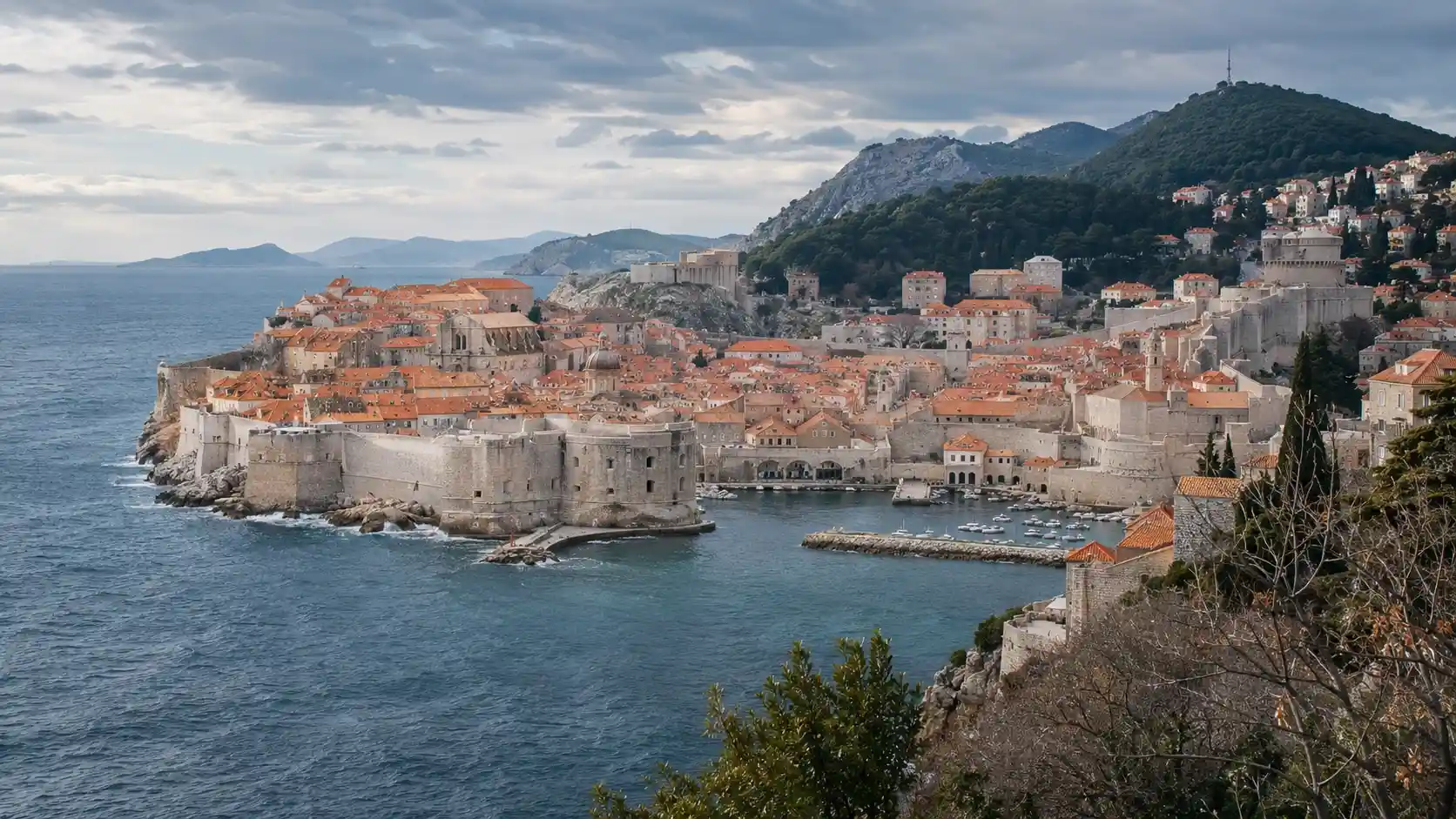
Dubrovnik in December appeals to travelers who want to explore its medieval streets without peak-season crowds. Walk along Stradun, discover the historic harbor and visit cultural attractions when they are open.
The City Walls remain a major attraction, although winter opening hours are shorter. The official City Walls operator identifies December 25 as its annual closure date.
Schedule the walls for a dry morning or early afternoon. Keep museums and cafés as alternatives during heavy rain, and confirm airport transfers and restaurant availability before arrival.
Recommended stay: 2–3 nights. Best for couples, photographers and architecture enthusiasts.
3. Split — Best for Coastal Culture
Split combines historic architecture with the everyday atmosphere of a functioning coastal city. Diocletian’s Palace, the Peristyle, historic streets and the Riva waterfront provide enjoyable sightseeing without requiring summer excursion services.
Spend rainy periods in museums, cafés or restaurants. On clearer days, consider a waterfront walk or a short visit to the lower slopes of Marjan, depending on conditions.
Recommended stay: 2–3 nights. Best for independent travelers, cultural sightseeing and mainland bus connections.
4. Plitvice Lakes National Park — Best for Winter Nature
Plitvice Lakes offers a contrasting December experience, with waterfalls, limestone landscapes, quiet woodland and the possibility of frost or snow. The scenery can be particularly atmospheric, but winter access requires careful planning.
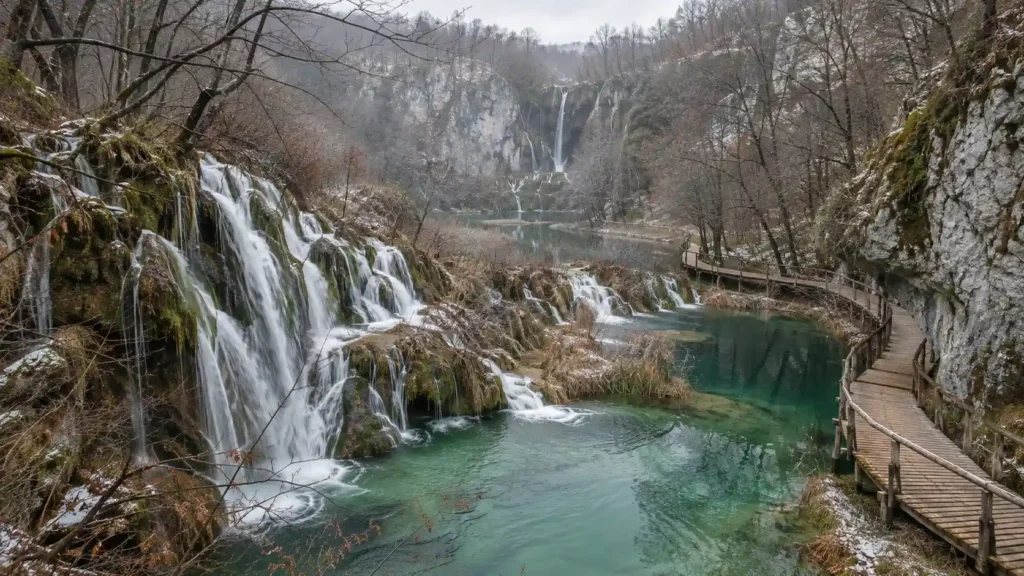
The park’s official opening information confirms that it operates throughout the year, with seasonal opening hours and reduced hospitality facilities during colder months.
The Lower Lakes are normally the main winter visiting area. The Upper Lakes are usually closed during winter, while boats, panoramic vehicles and individual paths may operate differently depending on current conditions.
The official 2026 price list sets December adult admission at €10, considerably below the main summer tariff.
Recommended stay: One full sightseeing day, with an overnight stay nearby when transport arrangements require it.
5. Zadar — Best for a Relaxed Coastal Break
Zadar’s historic peninsula, Roman Forum, Sea Organ and Greeting to the Sun offer a rewarding short December visit. The central area is walkable, but strong winds can make the waterfront uncomfortable.
Combine outdoor sightseeing with museums and cafés. Check seasonal opening times and onward bus connections rather than relying on summer excursion schedules.
Recommended stay: 1–2 nights. Best for slower sightseeing and quieter coastal experiences.
6. Istria — Best for Regional Food and Historic Towns
Pula’s Roman amphitheater and historic center provide an excellent cultural starting point, while Rovinj offers attractive narrow streets and coastal views.
December favors regional cuisine, architecture and short sightseeing trips over resort activities. Some restaurants and accommodation properties in smaller coastal communities close seasonally.
Pula is generally a more practical transportation base than moving between several small Istrian towns.
Recommended stay: 2–3 nights. Best for food enthusiasts, couples and travelers interested in Roman heritage.
7. Opatija and Rijeka — Best for Coastal Relaxation
Opatija’s historic villas and Lungomare promenade suit relaxed coastal holidays, particularly for couples. Choose a hotel with operating indoor wellness facilities if outdoor conditions deteriorate.
Nearby Rijeka offers a more urban experience, including cultural attractions, local cafés and regional transportation connections.
Recommended stay: 2–3 nights. Best for couples and slow-paced travel.
8. Osijek and Varaždin — Best for Inland Culture
Varaždin’s historic streets and Baroque architecture offer a manageable extension to a Zagreb holiday. Osijek provides a different perspective on Croatia through its Slavonian cuisine, historic Tvrđa district and Drava River surroundings.
Both destinations require warm clothing and realistic expectations regarding winter daylight and opening hours.
Recommended stay: 1–2 nights in each destination you select.
Best Croatian Destinations in December Compared
| Destination | Best For | Weather | Stay | Main Limitation |
|---|---|---|---|---|
| Zagreb | Families and first-time visitors | Cold | 2–3 nights | Frost and festive crowds |
| Dubrovnik | Couples and photographers | Mild, sometimes wet | 2–3 nights | Seasonal closures |
| Split | Culture and car-free travel | Mild and windy | 2–3 nights | Reduced excursions |
| Plitvice Lakes | Nature enthusiasts | Cold, possible snow | 1–2 nights | Restricted trails |
| Zadar | Relaxed coastal breaks | Cool and windy | 1–2 nights | Reduced tourist services |
| Istria | Regional cuisine and heritage | Cool and wet | 2–3 nights | Regional transport limitations |
| Opatija/Rijeka | Wellness and couples | Cool, relatively wet | 2–3 nights | Rain and wind |
| Osijek/Varaždin | Inland culture and value | Cold | 1–2 nights each | Short daylight |
For a first December trip, Zagreb is the most versatile city-break option. Split provides a good balance between coastal weather and transportation practicality, while Dubrovnik is particularly appealing to travelers seeking relatively mild temperatures.
Best Things to Do in Croatia in December
Focus on experiences that do not depend entirely on sunny weather or summer tourism services.
- Explore historic city centers and UNESCO-listed architecture.
- Visit museums, galleries and cultural exhibitions.
- Enjoy Croatian regional cuisine and local cafés.
- Photograph historic streets and winter coastal landscapes.
- Choose hotels offering operating indoor wellness facilities.
- Visit national parks when weather and access conditions permit.
- Enjoy seasonal festivals and guided cultural experiences.
In Split, travelers interested in Roman heritage can compare this guided Diocletian’s Palace walking tour with independent sightseeing. Check December availability and cancellation conditions before booking.
Are Croatia’s Islands Worth Visiting in December?
Croatia’s inhabited islands remain accessible in December, but they are generally better suited to slow travelers than visitors attempting an extensive island-hopping itinerary.
Jadrolinija publishes year-round schedules for several important routes, including:
- Split–Supetar (Brač), approximately 50 minutes.
- Split–Stari Grad (Hvar), approximately two hours.
- Orebić–Dominče (Korčula).
Car ferries and passenger-only catamarans have different schedules. Winter frequencies can be lower, particularly on services designed around summer demand.
For trips lasting less than a week, mainland bases are usually simpler and offer more flexibility.
Christmas and New Year in Croatia During December
December is an attractive month for combining regular sightseeing with Croatia’s seasonal celebrations. Zagreb, Split, Dubrovnik, Zadar and several other cities organize Advent events, festive markets and cultural entertainment.
Christmas Eve may bring shorter business hours, while December 25 and 26 are official public holidays. The Croatian National Tourist Board’s holiday calendar is useful when planning your stay.
Reserve Christmas meals in advance, especially in coastal destinations where fewer restaurants may be operating. Public transportation and attractions can follow special holiday schedules.
New Year’s Eve can bring increased demand for accommodation and entertainment, particularly in larger cities. Travelers visiting during the final week of December should check event announcements and booking conditions before arrival.
For confirmed festival dates, Croatian traditions, festive destinations and holiday-specific travel advice, read our dedicated guide to Christmas in Croatia.
Is Croatia Cheap in December?
December can be less expensive than summer, particularly for accommodation in coastal cities and seasonal national park admission. However, lower demand does not guarantee cheaper flights, meals or transportation.
Zagreb during Advent weekends and popular destinations around New Year’s Eve may experience higher accommodation prices. Reduced service frequency can also increase the cost of airport transfers and regional travel.
How Much Does a Trip to Croatia in December Cost?
The following figures are general planning allowances in euros, not guaranteed booking quotations. They assume a budget traveler using hostels or sharing basic accommodation, and a mid-range traveler sharing a comfortable double room.
| Daily Expense per Person | Budget | Mid-Range |
|---|---|---|
| Accommodation allowance | €25–€40 | €50–€80 |
| Meals, coffee and snacks | €20–€30 | €30–€45 |
| Local and intercity transportation allowance | €10–€20 | €15–€30 |
| Attractions and activities allowance | €5–€10 | €15–€30 |
| Daily total | €60–€100 | €110–€185 |
Intercity transportation and attraction expenses are averaged across the trip. Individual travel days may cost more. For additional context, the official Plitvice Lakes adult admission price for December 2026 is €10.
Estimated Total Trip Costs
| Trip Duration | Budget Traveler | Mid-Range Traveler |
|---|---|---|
| 3 days | €180–€300 | €330–€555 |
| 5 days | €300–€500 | €550–€925 |
| 7 days | €420–€700 | €770–€1,295 |
These conservative daily-envelope estimates include accommodation allowances, food, ordinary transportation and sightseeing. They exclude international flights, rental cars, insurance, shopping and expensive private tours. Solo travelers using private rooms should budget more.
Croatia in December Itinerary: 3, 5 or 7 Days
December itineraries should prioritize fewer accommodation changes, indoor alternatives and flexible transportation. These routes are suggested plans rather than confirmed date-specific transport reservations.
3 Days — Zagreb and Continental Croatia
| Day | Main Plan | Overnight | Transportation |
|---|---|---|---|
| 1 | Arrival, Lower Town and evening sightseeing | Zagreb | Airport transfer and walking |
| 2 | Upper Town, museums and cafés; optional Varaždin trip instead | Zagreb | Walking, tram or regional transport |
| 3 | Short morning visit and departure | Departure | Airport transfer |
This itinerary is especially practical for families, short holidays and travelers who prefer not to drive.
5 Days — Split and Dubrovnik
| Day | Main Plan | Overnight | Transportation |
|---|---|---|---|
| 1 | Arrive in Split and explore the waterfront | Split | Airport transfer |
| 2 | Diocletian’s Palace and cultural attractions | Split | Walking |
| 3 | Travel to Dubrovnik | Dubrovnik | Intercity bus |
| 4 | Old Town, City Walls or indoor alternatives | Dubrovnik | Walking and local bus |
| 5 | Departure | Departure | Airport transfer |
Arriva Croatia lists a direct Split–Dubrovnik bus connection. Confirm the actual winter departure for your travel date. This route works best when arriving through Split and departing through Dubrovnik.
7 Days — Zagreb, Plitvice Lakes and Split
| Day | Main Plan | Overnight | Transportation |
|---|---|---|---|
| 1 | Arrive and explore central Zagreb | Zagreb | Airport transfer |
| 2 | Zagreb museums and historic neighborhoods | Zagreb | Walking and tram |
| 3 | Travel to the Plitvice Lakes area | Plitvice area | Bus or suitably equipped car |
| 4 | Visit accessible park routes | Plitvice area | Walking and arranged local transfer |
| 5 | Travel to Split | Split | Confirmed bus or road connection |
| 6 | Explore Split’s historic center | Split | Walking |
| 7 | Departure | Departure | Airport transfer |
Arriva lists a Zagreb–Plitvice Lakes route, but the park’s onward winter connections must be checked separately. Reserve heated accommodation with practical access to an operating park entrance.
Weather alternative: If park access, road conditions or onward transportation are unsuitable, spend three nights in Zagreb and three nights in Split instead. This avoids a potentially complicated mountain stop while preserving a combination of continental and coastal Croatia.
Where to Stay in Croatia in December
Accommodation location matters more during December because daylight is limited and seasonal restaurants may be closed. Choose properties with reliable heating and convenient access to public transportation and operating dining facilities.
| Destination | Recommended Area | December Advantage |
|---|---|---|
| Zagreb | Lower Town or central Zagreb | Trams, museums and restaurants |
| Split | Old Town or nearby central neighborhoods | Walkable sightseeing |
| Dubrovnik | Pile, Old Town or well-connected Gruž | Historic attractions or transport access |
| Zadar | Historic peninsula or nearby mainland | Compact sightseeing |
| Opatija | Central waterfront | Promenades and wellness hotels |
| Rijeka | City center near Korzo | Restaurants and regional connections |
| Plitvice Lakes | Near an operating park entrance | Reduced winter transfer requirements |
Compare accommodation in Zagreb if you prefer museums, city life and convenient public transportation.
For a coastal holiday, browse places to stay in Split or compare Dubrovnik hotels and apartments for your specific December dates.
Getting Around Croatia in December
Traveling by Bus
Intercity buses are generally the most practical public transportation option for mainland journeys between major Croatian destinations. Check date-specific services, particularly on December 24–26 and 31.
Traveling by Train
Rail services are useful around Zagreb and on selected inland and coastal routes, but Croatia’s railway network does not connect every Adriatic destination. Dubrovnik has no passenger railway service.
Consult Croatian Railways’ official timetable. The published 2025/2026 timetable ends on December 12, 2026, so travelers departing later in December must use the applicable new timetable.
Traveling by Ferry
Year-round island services operate on important local routes. However, passenger catamaran frequency and seasonal tourist connections may differ substantially from summer schedules.
Domestic Flights
Consider domestic flights only when the airline’s booking system confirms a suitable service for your exact December date. Do not assume summer frequencies continue throughout winter.
Visiting Croatia Without a Car
Zagreb city breaks and mainland trips combining Split and Dubrovnik are realistic without renting a vehicle. National parks, remote accommodation and multi-island journeys require more planning.
Our guide to exploring Croatia without a car explains the general transportation network, but winter departures and attraction access should always be verified separately.
Driving in Croatia in December
Driving provides flexibility for inland destinations and national parks, but December introduces additional legal and practical requirements.
According to the Croatian Automobile Club, winter equipment is compulsory on designated winter sections of public roads from November 15 to April 15, regardless of current weather conditions.
For ordinary passenger vehicles up to 3.5 tonnes, HAK describes qualifying equipment options that include four appropriate winter tires, or four summer tires with at least 4 mm tread depth together with snow chains ready for installation on the driven wheels.
Additional requirements can apply when actual winter conditions or temporary traffic restrictions occur. Consult the official HAK winter-equipment guidance before renting a vehicle.
Daytime running lights or dipped headlights are also required for motor vehicles during the applicable November-to-March period.
Strong bora winds can restrict traffic on exposed roads, bridges and motorway sections. Mountain routes may experience ice, snowfall or reduced visibility.
For travelers spending December primarily in Zagreb, Split or Dubrovnik, a rental car is generally unnecessary and may create additional parking expenses.
What to Pack for Croatia in December
- Warm coat and waterproof outer layer.
- Thermal clothing and removable layers.
- Waterproof walking shoes with reliable grip.
- Warm socks, gloves, scarf and hat.
- Compact umbrella for urban sightseeing.
- Portable phone charger and European plug adapter if needed.
- Comfortable clothing for heated indoor environments.
- Winter-appropriate footwear for permitted national park trails.
Inland destinations require greater insulation, while windproof and waterproof clothing is especially useful along the Adriatic coast.
Croatia in December with Children
Zagreb is a practical family base because it offers public transportation, museums and numerous indoor alternatives. Split is another option for families seeking milder temperatures and compact sightseeing.
Plan shorter walking routes, frequent warm breaks and flexible meal arrangements. Check whether family attractions operate on holidays. Plitvice Lakes may be unsuitable for young children when trails are icy or access is significantly restricted.
Croatia in December for Couples and Solo Travelers
Couples may prefer Dubrovnik, Split or Opatija for historic accommodation, regional dining, waterfront walks and wellness facilities.
Solo travelers benefit from choosing larger mainland cities with reliable transportation and centrally located accommodation. Seasonal nightlife can be limited in resort communities, so confirm evening transportation and avoid isolated, poorly lit routes when returning to your accommodation.
Croatia in November vs December vs January
| Month | Weather | Main Advantage | Main Limitation |
|---|---|---|---|
| November | Cooler autumn conditions | Quiet cultural sightseeing | Rain and seasonal closures |
| December | Cold inland, milder coast | City breaks and seasonal festivities | Holiday schedules and short daylight |
| January | Generally colder inland | Quiet post-holiday travel | Fewer festive activities after early January |
December provides a particularly appealing combination of seasonal events and cultural sightseeing. November may suit visitors seeking quieter autumn travel, while January can appeal to travelers interested in a more traditional winter atmosphere.
For wider regional comparisons, explore our guide to the best time to visit the Balkans.
Common Mistakes When Visiting Croatia in December
| Mistake | Better Approach |
|---|---|
| Expecting summer beach weather | Plan cultural sightseeing and coastal walks. |
| Assuming mild coastal weather means sunshine | Prepare for rain and strong winds. |
| Expecting guaranteed snowfall | Keep nature plans flexible. |
| Planning extensive island hopping | Prioritize mainland bases. |
| Using summer ferry schedules | Check the applicable winter timetable. |
| Assuming all national park trails are open | Follow current park access instructions. |
| Ignoring winter driving regulations | Confirm legal equipment and check HAK. |
| Booking accommodation without heating | Verify heating before reserving. |
| Underestimating short daylight | Schedule major outdoor visits early. |
| Changing hotels too frequently | Choose fewer, well-connected bases. |
| Assuming every restaurant remains open | Confirm winter and holiday hours. |
| Ignoring public holidays | Plan December 25–26 in advance. |
| Packing unsuitable footwear | Bring waterproof shoes with good grip. |
| Assuming December is always inexpensive | Compare complete trip costs. |
Practical Travel Tips for Croatia in December
- Match your destination to your preferred weather and activities.
- Check official forecasts, road reports and park notices.
- Confirm accommodation heating and holiday restaurant arrangements.
- Download offline maps and keep electronic ticket copies.
- Carry a suitable payment card and a modest amount of euro cash.
- Allow flexibility for ferry cancellations and road delays.
- Consider travel insurance covering your planned activities.
- Avoid tightly scheduled connections involving winter ferries.
- Prioritize quality sightseeing over visiting too many destinations.
Who Should Visit Croatia in December?
December is particularly suitable for cultural travelers, photographers, couples, city-break visitors, food enthusiasts and travelers interested in quieter historic destinations.
Winter nature enthusiasts may also enjoy the inland regions, provided they accept weather-dependent access restrictions.
Travelers seeking beaches, warm seawater, extensive island hopping, summer nightlife or long outdoor sightseeing days should consider another season.
Final Thoughts — Croatia in December
Croatia in December is a rewarding destination when your expectations match the season. Zagreb offers an excellent winter city break, Split combines coastal culture with practical transportation, and Dubrovnik provides relatively mild conditions for historic sightseeing.
Plitvice Lakes can add a memorable nature experience when access and weather permit. Allow three to seven days, budget realistically and avoid relying on summer transportation schedules or guaranteed snowfall.
Compare accommodation, transportation options and relevant cultural activities for your preferred destinations before finalizing your December itinerary. A flexible, well-planned route will generally provide a more enjoyable experience than attempting to see the entire country in one short winter holiday.