Is the Balkans Safe for Tourists? 2026 Safety Guide

Is the Balkans safe for tourists? For many typical holidays, yes—but the useful answer depends on where you go and what you plan to do. A week exploring Dubrovnik, Split or Plovdiv presents different risks from a self-drive mountain trip, an overnight border crossing, or an unmarked hike in the Dinaric Alps. No region-wide label can capture those differences.
This practical Balkans safety guide for 2026 separates everyday visitor precautions from specific issues that deserve additional planning: old landmines and unexploded ordnance in certain areas, demonstrations, road conditions, isolated trails, sea safety, and entry complications around Kosovo and Serbia. It covers Albania, Bosnia and Herzegovina, Bulgaria, Croatia, Greece, Kosovo, Montenegro, North Macedonia, Romania, Serbia and Slovenia; the geographical definition of the Balkans varies.
The aim is not to rank nationalities or claim that every part of a country is equally safe. It is to help you decide whether a route suits your situation, recognize when to change plans, and know where to verify official guidance before booking. Research checkpoint: 17 October 2026. Travel advisories are live documents, so recheck them shortly before departure and during your trip.
Table of Contents
Quick Answer: Is the Balkans Safe for Tourists?
For a first trip focused on well-established cities, historic towns and popular coastal resorts, most visitors can travel using the ordinary precautions they would take elsewhere in Europe. But “generally manageable” does not mean risk-free. The most important variables are your exact location, current events, transport choice, season and planned activities.
| Travel situation | Main issue to consider | Practical decision |
|---|---|---|
| City breaks in established tourist centers | Petty theft, traffic, demonstrations and late-night transport | Choose central accommodation, keep valuables secure and check local news |
| Bosnian countryside and some war-affected Croatian areas | Residual mines or unexploded ordnance | Stay on established roads and approved trails; follow official mine-action guidance |
| North Kosovo | Political tensions and possible sudden incidents | Check national advisories; reconsider nonessential plans when warnings apply |
| Mountain hiking anywhere in the region | Weather, navigation, falls, limited rescue access | Use suitable routes, local guidance, offline maps and a return-time plan |
| Independent road trip | Mountain roads, local driving rules and cross-border permission | Avoid rushed night drives; check vehicle papers and road conditions |
| Multi-country trip | Different entry, insurance and roaming rules | Verify each destination separately—not only the first country |
Important distinction: A travel advisory is not a score of how friendly local people are. Advisories flag a range of risks, and may differ by issuing government, nationality and specific district. Check your own government’s advice first; compare with other official sources if useful.
How to Check Current Balkan Travel Advisories
Start with an official advisory for every country and every sensitive region on your route. The UK Foreign, Commonwealth & Development Office (FCDO) and the U.S. Department of State travel advisory directory publish country-level guidance and specific regional warnings. Other governments may issue different assessments and insurance rules; the right advisory for your passport and insurer matters most.
As of the research checkpoint, the U.S. advisory places Albania at Level 2 due to crime, Bosnia and Herzegovina at Level 2 with risks including landmines, and Kosovo at Level 2 with a separate “reconsider travel” recommendation for North Kosovo. These are dated examples, not a permanent national ranking. See the Albania advisory, Bosnia advisory and Kosovo advisory.
- Read the date of the latest update as well as the advisory headline.
- Open regional risks and entry requirements; the broad country summary may not name the risk you will encounter.
- Look at the route on a map. Advice for the north of a country may not apply to its southern tourist towns, and vice versa.
- Check your insurance wording about travel against official advice, mountain rescue, driving, adventure activities and emergency evacuation.
- Review advisories again within a few days of departure, and after any major event or disruption.
Country-by-Country Balkan Safety Overview
The table is a planning matrix, not a statistical safety ranking. It identifies a practical question worth checking for each destination. Avoid comparing countries as “safe” or “unsafe” solely on the basis of tourist impressions or internet anecdotes.
| Country | Common first-time visitor context | Extra issue to verify |
|---|---|---|
| Albania | Tirana, Berat, Gjirokastër, Riviera, Theth | Driving conditions, demonstrations, remote mountain transport |
| Bosnia and Herzegovina | Sarajevo, Mostar, Jajce, national parks | Landmines/UXO outside known safe routes, demonstrations |
| Bulgaria | Sofia, Plovdiv, Rila, Black Sea | Mountain weather, busy urban transport and resort precautions |
| Croatia | Dubrovnik, Split, islands, Plitvice | Coastal crowds, sea/weather conditions; residual ordnance in some inland areas |
| Greece | Athens, Thessaloniki, northern Greece | Summer wildfire and heat conditions, demonstrations and ferry/weather changes |
| Kosovo | Pristina, Prizren, mountain regions | North Kosovo tensions, Serbia crossing sequence, residual UXO in remote areas |
| Montenegro | Kotor, Budva, Žabljak, Durmitor | Summer road congestion, mountain and boating safety |
| North Macedonia | Skopje, Ohrid, Matka Canyon | Road and lake safety, outdoor weather and occasional demonstrations |
| Romania | Bucharest, Transylvania, Carpathians | Mountain navigation, wildlife protocols and road travel |
| Serbia | Belgrade, Novi Sad, Niš, Tara | Demonstrations, nightlife, cross-border entry rules |
| Slovenia | Ljubljana, Lake Bled, Triglav | Alpine terrain, trail closures, storms and technical routes |
Albania: Enjoy the Cities, but Take Driving and Mountains Seriously
Tirana, Berat, Gjirokastër and the Riviera are major tourism destinations. Usual city precautions—well-reviewed accommodation, licensed transport, awareness of valuables—remain sensible. The UK advisory updated in October 2026 also reports demonstrations in central Tirana, some with incidents of violence or property damage. If you encounter a gathering, leave calmly rather than trying to cross it for sightseeing.
Albania’s road risks deserve more attention than generic “friendly locals” reassurance. The FCDO specifically warns about aggressive or erratic driving, poor rural road surfaces, night-driving hazards and limited lighting. If you are planning the mountains or coast, allow larger margins than a mapping app suggests and avoid driving unfamiliar mountain roads in darkness.
In the Albanian Alps, assess the route and weather independently of the season. The Valbona–Theth pass can retain dangerous snow even when Tirana is hot; local advice can override the travel-blog calendar. Our 14-day Albania itinerary explains how to plan the north-to-south journey, while the Valbona Valley hiking guide covers the mountain-specific planning.
Bosnia and Herzegovina: Urban Tourism and Rural Mine Risk Are Different
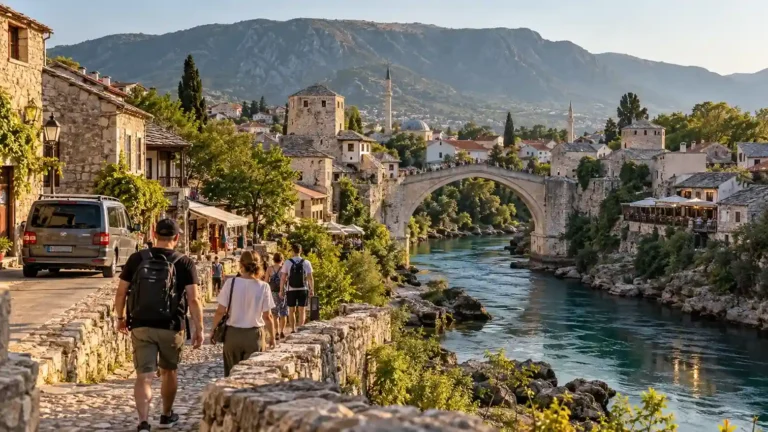
Sarajevo and Mostar are established city-break destinations with museums, walking areas, restaurants and regular tourist services. Watch bags in busy pedestrian zones, on crowded transport and around vehicle parking. Political rallies and events may cause short-notice diversions, as elsewhere in the region.
The major distinction is residual landmines and unexploded ordnance from the 1992–1995 war. Official guidance warns that less populated areas, woodland, abandoned buildings, fields, shoulders beside roads and old conflict zones may remain hazardous. Do not wander into neglected land, enter ruined structures or follow improvised shortcuts. Mine signs can be missing or damaged; their absence is not a guarantee of safety.
Stick to roads and established, locally cleared routes. For remote hikes, consult local authorities, reputable guides and the Bosnia and Herzegovina Mine Action Centre (BHMAC) for the latest information. A hiking app or satellite map does not certify land as mine-free. For a first city-focused journey, use our Sarajevo and Mostar itinerary rather than improvising off-road detours.
Do not minimize mine risk: “Just stay on any trail” is not sufficiently specific. Prefer established routes confirmed as safe by park management or responsible local authorities. Never touch an unknown metal object, unexploded ammunition or suspicious military debris.
Croatia: Busy Coastlines and Specific Inland Precautions
Dubrovnik, Split and popular islands attract large visitor numbers and have extensive tourism services. More common problems for visitors are losing belongings in crowds, sun and heat exposure, risky swimming decisions and transport interruptions when weather affects ferries. Read beach warning flags, follow lifeguards where present and do not jump from rocks into unfamiliar water.
Some inland places outside regular tourist resorts also carry residual ordnance warnings. The UK travel guidance names previously affected areas including parts of eastern Slavonia, Karlovac and Zadar counties and more remote parts of the Plitvice region. Follow signed paths and local civil-protection advice rather than extrapolating from the safety of coastal tourist promenades. See official Croatia safety advice for the detailed wording.
Montenegro: Road and Mountain Safety Matter More Than the Postcard
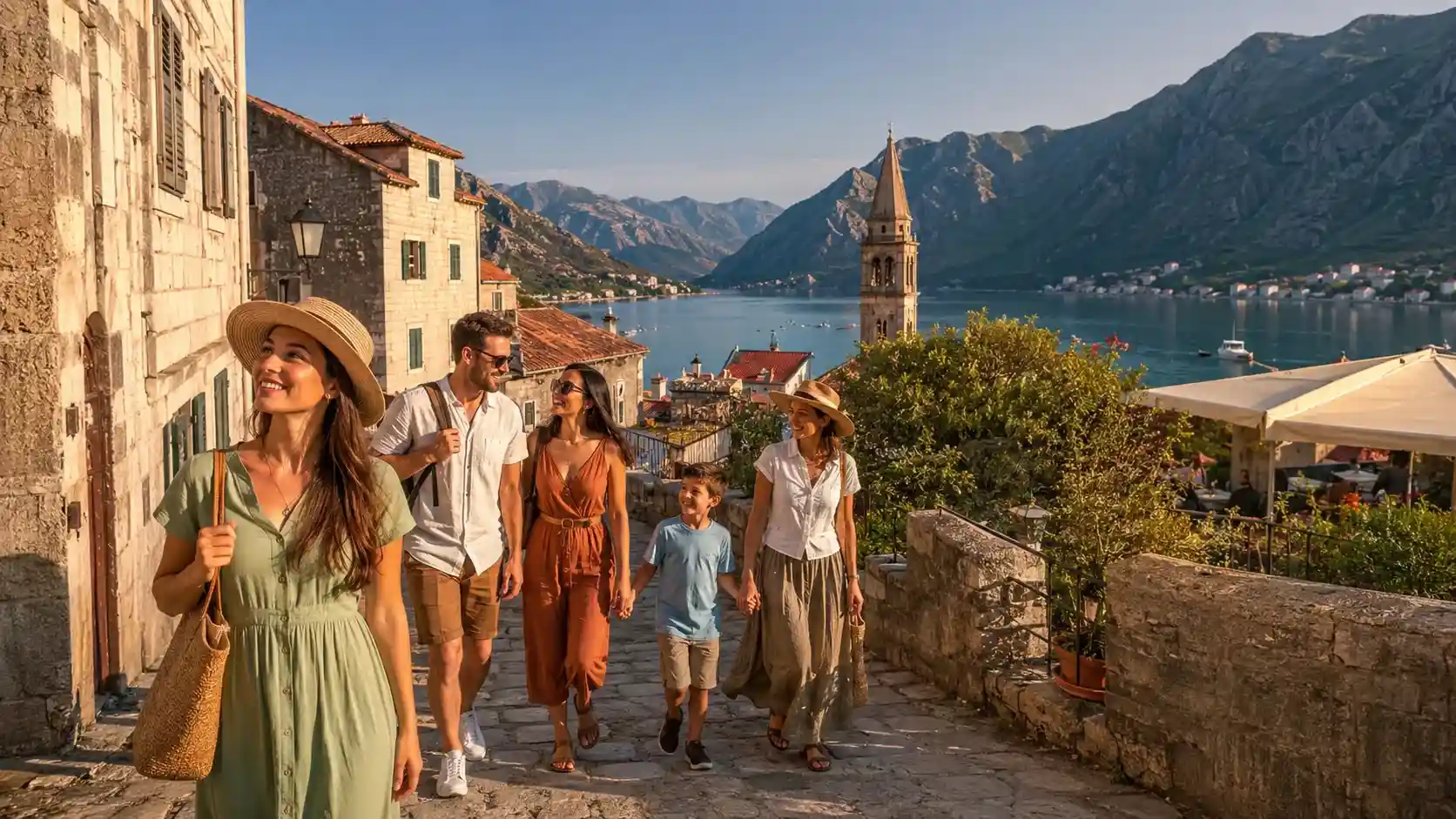
Kotor and Budva are established tourist bases, but steep paths, packed summer roads, crowded beaches and unpredictable mountain weather change the nature of a trip. The FCDO notes difficult conditions on the Morača Canyon road during poor weather or congestion, and warns hikers not to underestimate distances, elevation or navigation. A quick-looking drive can take far longer during holiday traffic.
In Durmitor or Prokletije, select routes according to ability, carry sufficient supplies and tell someone when you expect to return. For watersports, choose appropriately licensed operators and use the required equipment. Avoid leaving luggage visible in parked cars. Our Montenegro without a car guide helps reduce the need for unfamiliar mountain driving when public transport suits the route.
Serbia: Demonstrations, Nightlife and Border Preparation
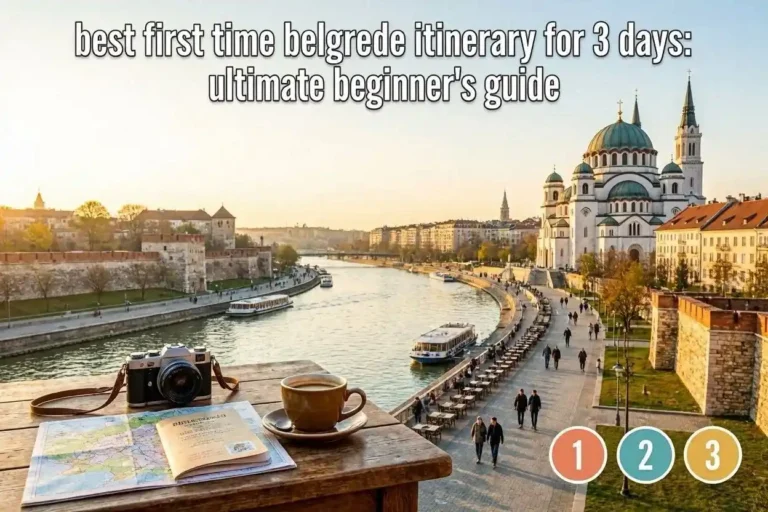
Belgrade, Novi Sad and Niš are realistic first-trip destinations. Crowded transport hubs, late-night drinking venues and busy events deserve normal city-level caution. However, Serbia-specific advice in 2026 also notes frequent large gatherings and demonstrations in Belgrade and elsewhere. These may disrupt roads, mobile connectivity and public transport, sometimes at short notice; some have turned violent. Avoid crowds associated with political events and check the day’s route before leaving your accommodation.
At night, arrange a reliable way home before drinking, check that taxi pricing is clear and avoid confrontations around sports or demonstrations. If your goal is a short city break rather than a road trip, our three-day Belgrade itinerary groups sights by area so you do not need to drive.
Kosovo: Distinguish Pristina and Prizren from the North
Pristina and Prizren offer a different travel experience from areas subject to specific security warnings. The U.S. advisory of August 2026 says to reconsider travel to North Mitrovica, Zvečan, Zubin Potok and Leposavić because of unrest risk. UK guidance also discusses local political sensitivities. Large gatherings can disrupt journeys even in other cities, so continue checking local conditions.
Residual unexploded ordnance is also a concern in some remote Kosovo areas, especially parts of the mountainous borders with Albania and Montenegro and around Dulje Pass. Follow established routes and local advice; do not explore abandoned terrain or handle suspicious metal objects. Consult the current Kosovo regional-risk guidance before planning northern or remote travel.
Crossing between Kosovo and Serbia is a separate documentation issue, not just a security question. Serbia may refuse entry from Kosovo to visitors who do not hold an appropriate prior Serbian entry stamp. The sequence of countries on your route matters, and nationality can add requirements. Review official Kosovo–Serbia entry advice before buying a bus ticket. If your documents do not meet the requirements, you may need to travel through a third country.
North Macedonia: Cities, Lakes and Canyons
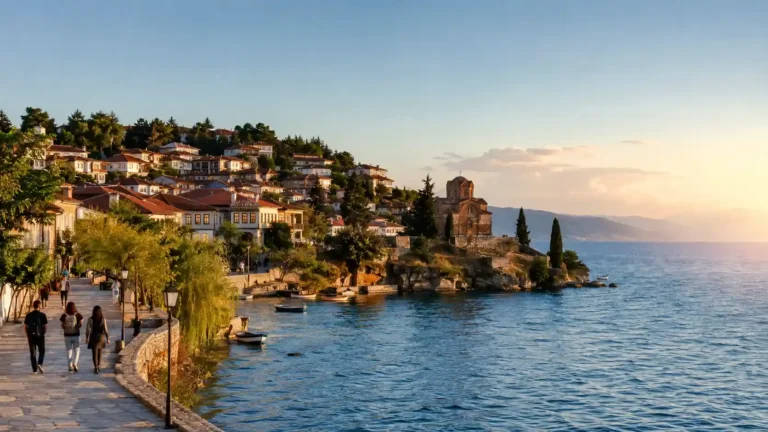
Skopje and Ohrid can be straightforward destinations with central accommodation and established visitor services. Watch valuables in transport hubs, use reputable taxis and treat late-night outings with the same care as in any unfamiliar city. Around Lake Ohrid, conditions can differ greatly between supervised swimming spots, boat trips and isolated shoreline access.
At Matka Canyon, inspect the weather before setting out and use licensed operators for boating or kayaking. Wet stone, steep steps and changing water levels are more immediate concerns than sensational claims about the destination. Travelers continuing to another Balkan country should verify border operating arrangements and travel-document conditions in advance.
Bulgaria: Urban Trips and Mountain Conditions
Sofia and Plovdiv are practical introductions to Bulgaria by public transport. Keep valuables protected in crowds and use official taxi channels rather than accepting unsolicited rides. When hiking in Rila or Pirin, do not treat summer conditions in the city as a reliable indicator of mountain weather; storms, cold temperatures and poor visibility can occur in higher terrain.
If your trip includes Plovdiv, our Plovdiv travel guide groups its Old Town, Roman sites and museums into manageable walking routes. Bulgaria uses the euro in 2026, so older advice about paying in Bulgarian lev is outdated. See the local authorities for current public transport, driving and trail rules.
Slovenia: Mountain Difficulty Is the Key Variable
Ljubljana and Lake Bled have extensive visitor infrastructure, but Triglav and the Julian Alps can involve exposed sections, rapidly changing weather and technically demanding routes. Some marked trails contain via ferrata or other protected climbing sections: the existence of waymarks does not make a route suitable for every walker.
Use the official Slovenia safety advice alongside mountain-weather and trail-closure notices. Check whether mountain huts are open, carry appropriate equipment and do not enter closed paths. If a trail calls for technical gear or alpine experience you do not possess, pick an easier valley route or hire a qualified guide.
Greece and Romania: Different Risks within the Wider Balkan Region
For visitors including northern Greece, Thessaloniki or the Greek islands in a broader itinerary, summer heat, wildfire-related closures, ferry cancellations in strong winds and public demonstrations can affect travel plans. Do not assume every beach or excursion runs in poor weather; follow official fire and civil-protection notices and the local operator’s instructions.
In Romania, city breaks require ordinary urban precautions while hiking in the Carpathians introduces different challenges: weather, navigation, remoteness and wildlife. Avoid approaching or feeding bears, keep food secured as instructed locally, and follow national-park guidance rather than trying to take wildlife photographs at close range. The original nine-country article omitted both Greece and Romania; they are included here to make the guide more useful for wider Southeast Europe routes.
Mines and Unexploded Ordnance: What Travelers Actually Need to Know
Residual explosive hazards cannot be judged by whether a landscape looks peaceful. Bosnia and Herzegovina presents the most consequential routine travel-planning issue in this guide, while official notices also identify some affected areas in Croatia and Kosovo. This does not mean historic city centers or established tourist routes should be treated as uniformly dangerous; it means choosing safe paths is essential.
- Do not enter abandoned military installations, ruined buildings, uncultivated fields or off-road woodland in areas with a conflict history.
- Do not rely on a single map app, online hiking track or the absence of warning signs as evidence that a route is cleared.
- Ask park staff, trained local guides or responsible authorities about the exact trail you want to use.
- If a path becomes unclear, turn around rather than creating a shortcut over unknown ground.
- Never touch, pick up or photograph at close range an item that looks like ammunition, a grenade or an unexploded shell. Retreat the way you came and alert authorities from a safe location.
BHMAC, national civil-protection bodies and current national foreign-travel advisories provide more authoritative information than an informal social-media comment. For serious hiking routes, current local expertise is essential.
Demonstrations, Public Events and Local Tensions
Peaceful demonstrations may be part of normal public life, but visitors can be caught in road closures, police cordons or a rapid change in crowd behavior. This was a notable travel-planning topic in 2026 for Serbia, Albania and Kosovo. Events are dynamic: a city can be calm in the morning and have unexpected transport restrictions in the evening.
- Read local news or hotel updates on days with planned rallies, sporting fixtures or high-profile events.
- Do not join an unfamiliar crowd out of curiosity or walk through police lines to reach an attraction.
- Leave room in a travel day for rerouting; avoid narrow connections to a flight or international bus.
- If an incident starts nearby, move away calmly and follow local emergency instructions.
- Do not film confrontations from close range or block emergency vehicles.
Tourist Scams, Theft and Everyday Urban Precautions
The ordinary travel problems deserve practical attention without creating the impression that every encounter is a scam. Taxi overcharging, crowded-area theft, accommodation misunderstandings and unexpectedly expensive services can occur anywhere. The best response is to establish prices, operators and meeting points before committing money.
| Situation | Useful action | Avoid |
|---|---|---|
| Taxi or airport ride | Use licensed taxis, dispatch services or a pre-arranged transfer; confirm approximate cost | Entering an unmarked car after a persistent approach |
| Busy street or bus station | Keep phone, wallet and travel documents controlled and close | Leaving valuables exposed while distracted |
| ATM withdrawal | Prefer machines at recognized banks; review fees on screen | Accepting help from strangers at an ATM |
| Restaurant or beach service | Check menu, minimum spend, sunbed price and bill before agreeing | Assuming every item or table is included |
| Tour or activity | Check operator, conditions, meeting point and insurance | Paying an unverified individual with no receipt or contact |
| Guesthouse check-in | Confirm exact address, arrival process and local registration if applicable | Relying on an incomplete location pin for late-night arrival |
It can make sense to choose a centrally located, well-reviewed stay when arriving in a new city after dark. Compare neighborhoods and recent reviews rather than choosing solely by headline price; Agoda hotel and guesthouse listings may be useful for checking location and cancellation policies.
Is Solo Travel in the Balkans Safe?
Independent travel is feasible across much of the region, and hostels, intercity buses and walking tours make popular cities easy to navigate. The best safety practices are concrete: choose sensible arrival times, research where bus stations are, save the address of your accommodation offline and keep a trusted person informed when going to remote places.
Solo female travelers may face unwanted attention or harassment in nightlife areas as they could elsewhere in Europe. The response should never be to imply that a destination is automatically safe for every person: read recent accommodation reviews, plan late-night transport, retain the option to leave an uncomfortable situation and contact local authorities when necessary. LGBTQ+ travelers should also check destination-specific laws and current community guidance, as social attitudes and legal protections vary among countries and within cities.
- Arrive in an unfamiliar town during daylight when practical, especially if the bus station is outside the center.
- Use a personal backup plan for late arrivals: a hotel contact, an authorized taxi provider and a working data connection.
- Keep one offline copy of your identification and emergency contact information separate from your phone.
- For hiking alone, choose well-used trails, share your route and return time, and avoid demanding remote terrain without suitable experience.
- If you feel unsafe, enter a staffed hotel, shop or other public place and ask for assistance.
Is the Balkans Safe for Families and Older Travelers?
The biggest differences for families often concern road crossings, accommodation stairs, access to healthcare and whether an activity is appropriate for children. Old towns can have steep polished stone steps; beaches may be rocky or lack lifeguards; mountain attractions may be less accessible than photographs imply. Choose a location and pace that work for everyone in your group.
For parents, check car-seat availability in booked transfers, especially across borders. For travelers with mobility limitations, ask accommodation providers about elevators, step-free access and the distance from parking or public transport. A highly rated historic house may still have many steps. In remote places, research how quickly medical assistance could reach the location.
If medication needs refrigeration, accessible storage or a prescription refill, confirm arrangements in advance. Do not assume an international insurance policy covers every specialist treatment or evacuation scenario automatically.
Driving Safely on Balkan Roads
A cross-border road trip can be rewarding, but the distances on maps hide mountain gradients, traffic, seasonal delays and the time spent at checkpoints. Driving is a choice, not a requirement: public transport and reputable local excursions may suit a short trip better.
Before Booking a Rental Car
- Ask the supplier which countries are authorized, and obtain written cross-border permission when required.
- Check the insurance excess, exclusions, roadside assistance and whether glass, tires and underbody damage are covered.
- Verify that your driving licence, any required international driving permit and vehicle documents meet each country’s rules.
- Plan fuel and charging stops for remote areas; do not rely on uninterrupted phone coverage.
- Check seasonal tires, snow chains, local alcohol limits and toll/vignette requirements for your route.
On the Road
Drive for the road you actually see, not the speed suggested by a navigation app. Mountain roads can have sharp bends, fog, animals, rockfall and little lighting. In summer, roads approaching Kotor, Dubrovnik and popular crossings may have substantial queues. Avoid overtaking on blind bends and leave time to pull off safely for a rest.
If you do not want the responsibility of navigating unfamiliar routes, use intercity buses and short local transfers where practical. For travelers who do prefer driving, car rental comparisons can help compare offers, but the individual supplier’s insurance and cross-border conditions control what is actually permitted.
Mountain Hiking and Outdoor Safety
Hiking creates some of the region’s most memorable experiences, but the difficulty is determined by weather, ascent, trail conditions, exposure and your equipment—not by whether a route is widely shared online. The same applies to rafting, canyoning and kayaking: operators, river levels and weather can matter more than a destination’s reputation.
- Choose a route appropriate for your group’s least experienced member, including its total ascent and expected return time.
- Check the latest weather forecast, thunderstorm risk, snowpack and official trail closures.
- Carry reliable footwear, water, food, insulation, a charged phone and offline navigation; maps may show disused paths.
- Tell a trusted person your starting point, intended trail and expected finish time.
- Turn back when conditions change; summit photos or a waterfall stop are never worth losing a safe exit window.
- Use a qualified guide for unfamiliar high passes, technical terrain or sections requiring specialist equipment.
- At mines-risk locations, a marked trekking line must also be confirmed suitable by local authorities or park management.
When comparing organized hikes or other adventure activities, check operator licensing, route grade, cancellation policy and rescue coverage. You can browse organized outdoor experiences as a starting point, but reviews do not replace safety qualifications or official access information.
Beaches, Swimming, Boat Trips and Summer Heat
Coastal trips introduce a different set of risks from city breaks. A calm-looking cove can have unexpected current, deep water, boat traffic or slippery rock. Not all beaches have lifeguards or consistent signage. During heatwaves, dehydration and prolonged sun exposure are also concerns, especially for children and older travelers.
- Swim where permitted, favor supervised areas when available and take warning flags seriously.
- Do not jump from cliffs or piers into unfamiliar water; submerged obstacles and currents are difficult to assess.
- For a boat trip, confirm life jackets, operator standards, weather cancellation arrangements and boarding instructions.
- Do not leave phones and passports unattended while swimming.
- Move demanding outdoor activity to cooler hours during heat alerts; carry sufficient drinking water.
- Follow national wildfire and protected-area closures. Do not enter a restricted forest trail just because an old guide recommends it.
Border Crossings, Visas and Insurance: Avoid Expensive Surprises
Balkan travel is not governed by one visa, border or vehicle system. Some countries are in the EU and Schengen, while others are outside both. Bulgaria and Romania joined the Schengen area fully for land travel in 2025; by 2026 Bulgaria also adopted the euro. Do not assume the rules for Croatia apply automatically to Bosnia, Serbia, Albania, Montenegro, North Macedonia or Kosovo.
Check your passport’s validity requirements, residence status, visa or visa-free duration, any transit restrictions and documentation for children. If a rental vehicle is involved, confirm cross-border permission, insurance and any required green card or equivalent proof. For Serbia and Kosovo, the sequence of entry stamps deserves its own check with official guidance.
The European Entry/Exit System (EES) can affect processing times for eligible non-EU travelers at Schengen external borders in 2026. Factor immigration time into flights and buses, especially on a busy summer crossing. A border rule may differ according to the passport you travel on; advice written for UK nationals is not automatically your own entry entitlement.
Travel insurance should be chosen for the itinerary you will actually undertake: all countries, mountain hiking if applicable, private medical treatment where covered, rescue and evacuation, vehicle activities and interruptions. Check coverage limits and exclusions, especially where official advice discourages travel. If comparing policies, travel insurance listings is one option; eligibility and coverage depend on the specific policy and traveler.
Healthcare, Medicines, Emergency Numbers and Roaming
In a serious emergency, contact local emergency services first and give the most precise location you can. 112 is the common emergency number throughout EU countries, including Bulgaria, Croatia, Greece, Romania and Slovenia. It also operates in some non-EU countries, but service arrangements vary. Check and save the current emergency number for each non-EU destination from its government or official advisory rather than assuming one number covers every country and every service.
A European Health Insurance Card (EHIC) or equivalent arrangement, where eligible, is not a substitute for comprehensive travel insurance and does not mean every Balkan destination offers free care. Bring a reasonable supply of prescribed medication in original packaging and check any controlled-medicine rules with the relevant embassy. A translator app and a written list of allergies or medical conditions may help during an unexpected appointment.
Mobile coverage can disappear in mountain valleys, and the Europe eSIM on your phone may not cover all Western Balkan countries. Check exact national coverage and whether your plan includes Kosovo. Our Balkans eSIM comparison explains why regional plans can differ. Download route maps, accommodation addresses and emergency details before leaving reliable Wi-Fi.
A Practical Safety Checklist Before You Leave
| When | What to do | Why it matters |
|---|---|---|
| One to two weeks before | Review every country’s official advisory, entry rules and insurance coverage | Finds location-specific warnings and document issues |
| After booking transport | Save correct station, airport terminal, operator contact and arrival address | Reduces confusion after dark or during rerouting |
| The evening before a border crossing | Check documents, weather, road closures and potential queues | Protects connections and avoids preventable refusals |
| The evening before a hike | Check route and weather with a trusted local source; share return time | Reduces navigation and rescue risks |
| Each day in a large city | Check local news for demonstrations or major events | Avoids preventable delays and crowd-related risks |
| At check-in | Ask how to reach emergency help and where the nearest medical service is | Saves time if a problem arises |
| On a beach or activity | Confirm water conditions, operator, safety gear and emergency plan | Prevents an ordinary excursion becoming avoidably hazardous |
What to Do if Something Goes Wrong
If Your Passport or Wallet Is Stolen
Move to a safe staffed location, contact local police as appropriate, notify your bank and card issuer, and contact your embassy or consulate about documentation. Obtain a police report or reference when required for travel documents or insurance. Keep copies separate from originals, but do not post images of your identity documents publicly.
If You Are Caught Near a Demonstration
Do not try to push through, photograph confrontations at close range or debate with aggressive people. Move calmly away from the crowd using an open street and ask your accommodation or transport operator for a revised route. Follow police instructions and official alerts.
If You Are Lost or Injured on a Trail
Stop before fatigue or low light makes navigation worse. Contact local emergency services if needed, provide coordinates or an identifiable landmark, explain your condition and follow dispatcher instructions. Preserve phone battery. Do not blindly descend a steep valley or attempt shortcuts, particularly in areas with potential unexploded ordnance.
If You Suspect an Unexploded Device
Do not approach, touch, move or photograph it close up. Withdraw by retracing your known route if safe, keep others away and alert the responsible authorities from a secure location.
FAQ: Is the Balkans Safe for Tourists?
Are the Balkans safe for first-time travelers?
Many popular city and coastal trips can be undertaken with ordinary precautions, but risks differ substantially by location and activity. Read official advisories for each country and any specific district on your route.
Which Balkan country is the safest?
There is no single reliable ranking for all types of visitors. A well-serviced city break and a difficult mountain expedition involve different hazards. Choose based on your travel style, accessibility, transport and current official advice.
Is Bosnia and Herzegovina safe to visit with the landmine problem?
Sarajevo, Mostar and established tourist routes are different from remote, potentially contaminated ground. Avoid unmarked or unverified off-road routes and consult local authorities and mine-action guidance before countryside hikes.
Is Kosovo safe for tourists in 2026?
Pristina and Prizren should not be conflated with North Kosovo. U.S. guidance issued in August 2026 advises reconsidering travel to North Mitrovica, Zvečan, Zubin Potok and Leposavić. Recheck advice before departure.
Can I go directly from Kosovo into Serbia?
Not always. Serbia may refuse entry if you lack a prior qualifying Serbian entry stamp. Confirm the entry sequence and applicable rules for your passport and consider a third-country routing where necessary.
Is it safe to travel alone in the Balkans?
Solo travel is practical in many established destinations. Plan arrivals, use reputable accommodation and transport, store backup contact details and share remote hiking plans. Individual experiences can vary.
Is it safe to drive through the Balkans?
It can be, with preparation. Mountain roads, night visibility, summer queues, documentation and country-specific insurance rules need attention. Driving is not necessary for every trip.
Are Balkan mountain hikes safe without a guide?
Some established and easy walks are suitable for independent hikers, but challenging passes and remote routes require experience, current weather checks and sometimes qualified local assistance. Never rely on a travel blog alone to determine trail safety.
Does 112 work everywhere in the Balkans?
112 is available throughout the European Union and in some non-EU states, but emergency arrangements vary. Save the verified local numbers for each non-EU destination before your trip.
Do I need travel insurance for the Balkans?
Coverage is advisable for medical expenses, interruption and the activities you intend to do. Check which countries are covered, rescue and evacuation limits, exclusions and the effect of any official travel warning.
Reliable Sources and Editorial Method
This article draws on government travel advisories and European emergency guidance rather than unpublished crime rankings or claims of first-hand inspection. Country-specific alerts may be revised without notice. Sources checked include the FCDO country advisories, U.S. State Department advisories, Bosnia and Herzegovina Mine Action Centre and the European Union guidance on 112. The date of editorial review is 17 October 2026; country-specific rules and conditions take priority over a general guide.
Final Verdict: Should You Travel to the Balkans?
Yes, the Balkans can be an excellent destination for first-time travelers who choose a route suited to their needs and check current conditions. The most useful question is not whether an entire region is “safe” in the abstract, but whether your precise itinerary is appropriate: which districts, which roads, which trails, which borders and which season.
Start with established destinations, give yourself time between cities, avoid demonstrations, keep to verified routes where unexploded ordnance is a concern, and treat mountains and roads with the respect they deserve. That approach offers better protection—and a more enjoyable trip—than either unnecessary fear or sweeping reassurance.