Hidden Monasteries in Serbia for Culture Lovers: A Deep Journey into Sacred Heritage
Table of Contents
1. Introduction: Why Hidden Monasteries in Serbia Fascinate Culture Lovers
For travelers who seek more than famous landmarks and crowded attractions, hidden monasteries in Serbia for culture lovers offer an unforgettable journey into spirituality, history, and authentic Balkan identity. Tucked away in forested valleys, river canyons, and remote mountain slopes, Serbian monasteries are not only religious centers but also living museums of medieval art, architecture, and national memory.
Unlike the well-known European cathedrals, many Serbian monasteries remain quiet, uncrowded, and deeply atmospheric. Fresco-covered walls, stone courtyards scented with incense, and monks preserving centuries-old traditions create a powerful cultural experience that resonates with travelers interested in history, art, and spirituality.
This guide is designed for culture-focused travelers visiting Serbia for the first time or returning to explore deeper layers of its heritage. It highlights UNESCO-listed masterpieces, lesser-known monastic complexes, practical day-trip ideas, and respectful travel etiquette—all optimized around the main keyword hidden monasteries in Serbia for culture lovers to help you plan an enriching cultural itinerary.
2. The Cultural Importance of Serbian Monasteries
2.1 Monasteries as Guardians of Serbian Identity
Throughout history, monasteries played a crucial role in preserving Serbian language, faith, and culture—especially during centuries of Ottoman rule. While cities changed and borders shifted, monasteries remained cultural anchors where manuscripts were copied, fresco techniques perfected, and oral traditions passed down.
For culture lovers, visiting these monasteries is not just sightseeing—it is direct engagement with Serbia’s historical soul.
Key cultural roles of Serbian monasteries include:
- Preservation of medieval Serbian art and fresco painting.
- Protection of Orthodox Christian traditions.
- Centers of education, literacy, and manuscript production.
- Symbols of national resilience and continuity.
3. Studenica Monastery: UNESCO World Heritage Masterpiece
3.1 Why Studenica Is Essential for Culture Lovers
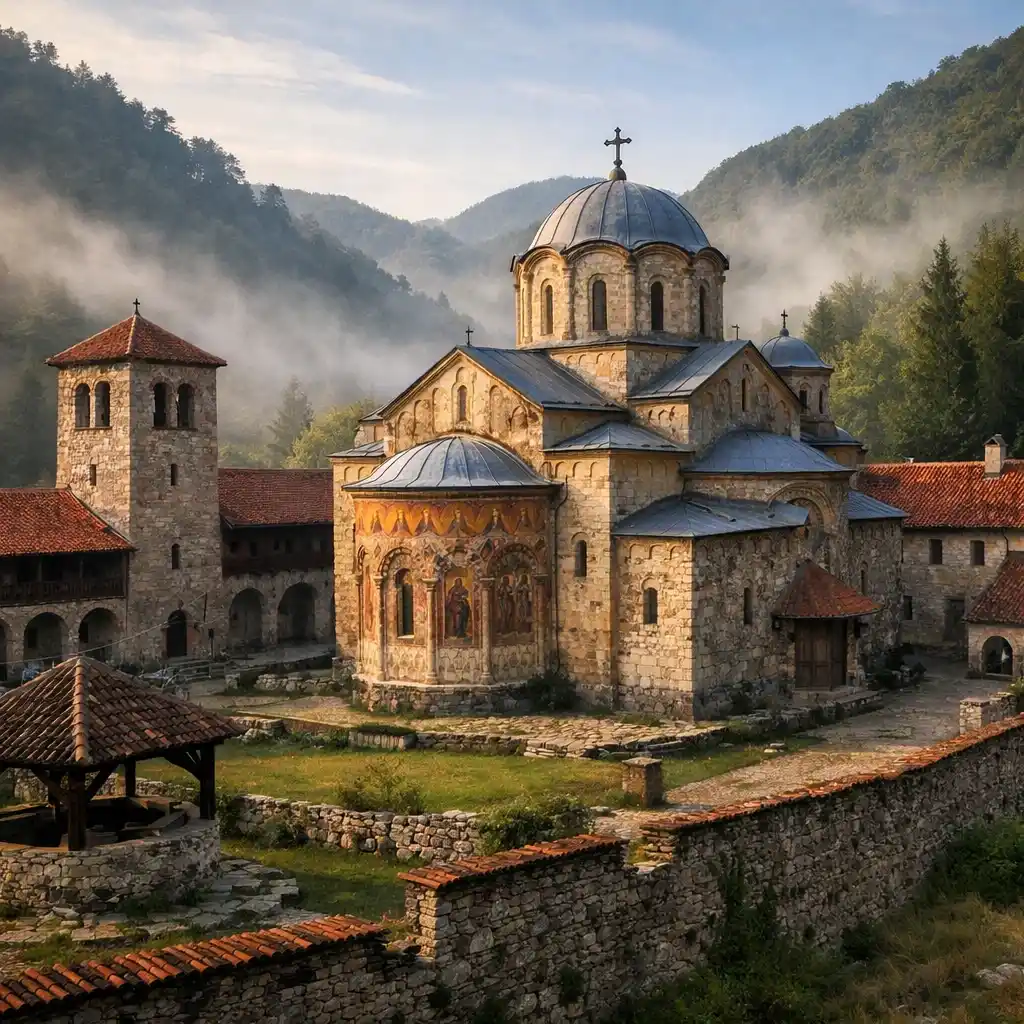
Among all hidden monasteries in Serbia for culture lovers, Studenica Monastery stands as the most influential and artistically significant. Located in a remote valley near Kraljevo, Studenica represents the birthplace of medieval Serbian culture and Orthodox spirituality.
Founded in the late 12th century by Stefan Nemanja, the founder of the Serbian state, Studenica became a model for later monasteries across the Balkans.
3.2 Architectural Significance of Studenica
Studenica is renowned for its distinctive Raška architectural style, which combines:
- Romanesque stone craftsmanship from the Adriatic coast.
- Byzantine spatial layout and religious symbolism.
Key architectural highlights:
- White marble exterior carved with refined medieval details.
- Harmonious proportions reflecting both Western and Eastern influences.
- Natural integration into a river valley landscape.
This architectural fusion makes Studenica particularly fascinating for travelers interested in cross-cultural artistic exchange.
3.3 Studenica Frescoes: A Cultural Treasure
The frescoes inside Studenica are considered among the finest examples of medieval Byzantine painting in Europe. Dating mainly from the 13th century, they display:
- Emotional depth in facial expressions.
- Sophisticated color palettes.
- Narrative clarity in biblical scenes.
For art-focused visitors, Studenica offers a rare opportunity to study early Serbian fresco techniques in an authentic setting, far from museum glass cases.
3.4 Why Studenica Is UNESCO-Protected
Studenica was inscribed on the UNESCO World Heritage List due to:
- Its outstanding artistic value.
- Its role in shaping Serbian religious architecture.
- Its exceptional preservation.
Despite its global importance, Studenica remains peaceful and relatively uncrowded—making it ideal for culture lovers seeking depth rather than mass tourism.
4. Visiting Studenica: Practical Cultural Travel Tips
4.1 How to Reach Studenica Monastery
Studenica is best visited as a day trip from Kraljevo, making it accessible yet still off the mainstream tourist path.
Recommended options:
- Car rental from Kraljevo for maximum flexibility.
- Organized cultural tours focused on medieval Serbia.
- Taxi services for short visits.
The scenic drive through forested hills enhances the sense of discovering one of Serbia’s most meaningful hidden monasteries.
4.2 Best Time to Visit Studenica
For culture lovers prioritizing atmosphere:
- Spring and early autumn offer mild weather and quiet surroundings.
- Morning visits provide better light for fresco appreciation.
- Weekdays are calmer than weekends.
5. Why Hidden Monasteries in Serbia Appeal to Culture Lovers
What distinguishes hidden monasteries in Serbia for culture lovers from similar sites in other European countries is their authenticity. These are not staged heritage attractions—they are active spiritual communities where history is lived daily.
Cultural benefits of visiting Serbian monasteries include:
- Deeper understanding of Balkan medieval history.
- Exposure to living Orthodox traditions.
- Insight into Serbian art beyond urban museums.
- A slower, reflective travel experience.
Studenica sets the foundation for understanding Serbia’s monastic heritage, but it is only the beginning of a much richer cultural journey.
6. What Comes Next in This Guide
In the next section, we will explore Manasija Monastery, one of Serbia’s most visually dramatic fortified monasteries, known for its defensive walls and the famous Resava School of fresco painting.
This continuation will further expand your understanding of why hidden monasteries in Serbia for culture lovers are among the most rewarding cultural experiences in the Balkans.
7. Manasija Monastery: A Fortress of Culture and Spiritual Power
Among the most visually striking hidden monasteries in Serbia for culture lovers, Manasija Monastery stands apart as a rare fusion of sacred space and medieval military architecture. Located near the town of Despotovac in eastern Serbia, Manasija is both a spiritual sanctuary and a fortified stronghold—reflecting the turbulent historical era in which it was built.
Founded in the early 15th century by Despot Stefan Lazarević, one of medieval Serbia’s most educated and influential rulers, Manasija represents the final artistic and cultural peak of medieval Serbian civilization before Ottoman conquest.
8. Historical Context: Why Manasija Was Built as a Fortress
8.1 The Political Climate of Medieval Serbia
During the early 1400s, Serbia stood at the crossroads between Eastern Europe and the expanding Ottoman Empire. Monasteries were no longer just religious centers—they became safe havens for knowledge, art, and manuscripts.
Manasija was designed with defense in mind, featuring:
- Massive stone walls.
- Eleven fortified towers.
- Narrow gateways and battlements.
For culture lovers, this dual identity transforms Manasija into a living lesson on how faith and survival intertwined in medieval Balkan history.
Planning a cultural journey to explore hidden monasteries in Serbia for culture lovers is easier when accommodation is well-organized in advance. Platforms like Booking.com, Agoda, and Hotels.com offer a wide range of options, from boutique hotels in historic towns to countryside guesthouses near monasteries. Travelers looking for longer stays or family-friendly lodging may also prefer apartments and vacation homes available on Vrbo or premium hotel experiences through Marriott.
9. The Resava School: Intellectual Heart of Manasija
9.1 A Forgotten Center of Learning
One of Manasija’s greatest cultural contributions lies beyond its architecture. It was home to the Resava School, one of the most important medieval Serbian centers for literature, translation, and manuscript copying.
Monks at Manasija:
- Translated Greek theological texts into Church Slavonic.
- Standardized Serbian medieval literary language.
- Preserved Orthodox theology during periods of political instability.
This intellectual legacy makes Manasija especially appealing to travelers interested in cultural history, literature, and linguistic heritage.
10. Frescoes of Manasija: Artistic Innovation and Expression
10.1 Visual Characteristics of Manasija Frescoes
Although partially damaged over centuries, the frescoes of Manasija remain a powerful example of late medieval Serbian painting.
Key artistic traits include:
- Strong emotional expression in saints’ faces.
- Dynamic movement compared to earlier Byzantine styles.
- Rich color contrasts emphasizing narrative drama.
For culture lovers exploring hidden monasteries in Serbia, Manasija offers insight into how Serbian art evolved during times of uncertainty and defense.
11. Architectural Highlights of Manasija Monastery
11.1 A Masterpiece of Morava Style
Manasija belongs to the Morava architectural school, characterized by:
- Decorative stone and brick patterns.
- Elaborate church façades.
- Vertical elegance and refined ornamentation.
Notable features for visitors:
- Circular defensive towers framing the monastery complex.
- Central Church of the Holy Trinity with sculpted stone details.
- Harmonious integration of sacred and military design.
This architectural complexity sets Manasija apart from other hidden monasteries in Serbia for culture lovers seeking both visual impact and historical depth.
12. Visiting Manasija Monastery: Practical Travel Advice
12.1 How to Get to Manasija
Manasija is best accessed as a day trip from Belgrade or Niš, making it ideal for travelers planning cultural excursions beyond major cities.
Transportation options:
- Car rental for flexible exploration.
- Guided cultural tours focusing on medieval Serbia.
- Regional buses combined with short taxi rides.
Getting around Serbia efficiently is essential when visiting remote monasteries. Many culture-focused travelers choose car rentals via Discover Cars, RentalCars.com, or AutoEurope to reach secluded valleys and mountain regions independently. For those seeking budget-friendly or locally sourced rentals, platforms like Localrent.com and EconomyBookings provide flexible options well-suited for cultural itineraries.
12.2 Best Time to Visit Manasija
To fully appreciate Manasija’s atmosphere:
- Visit during late spring or early autumn.
- Arrive early morning to avoid group tours.
- Allocate enough time to walk the defensive walls and towers.
13. Why Manasija Is Essential for Culture Lovers
For travelers searching for hidden monasteries in Serbia for culture lovers, Manasija offers a rare blend of:
- Military history.
- Sacred architecture.
- Artistic innovation.
- Intellectual heritage.
Unlike isolated church complexes, Manasija tells a complete story of medieval life—where prayer, scholarship, and defense coexisted.
14. Preparing for the Next Cultural Discovery
While Manasija showcases fortified spirituality, Serbia’s monastic landscape also includes monasteries celebrated primarily for their artistic brilliance. In the next section, we will explore Sopoćani Monastery, famous for its luminous frescoes and profound UNESCO-listed artistic value.
15. Sopoćani Monastery: A Jewel of Medieval European Art
Among all hidden monasteries in Serbia for culture lovers, Sopoćani Monastery is celebrated primarily for its extraordinary artistic value. Located near Novi Pazar in southwestern Serbia, this serene monastic complex is often described by art historians as one of the finest achievements of medieval fresco painting in Europe.
Founded in the 13th century by King Stefan Uroš I, Sopoćani reflects a period of political stability and cultural confidence, allowing Serbian artists to reach remarkable levels of technical and emotional sophistication.
16. Why Sopoćani Holds UNESCO World Heritage Status
16.1 Universal Artistic Significance
Sopoćani is listed as a UNESCO World Heritage Site due to its exceptional frescoes, which transcend regional styles and stand alongside the greatest Byzantine works.
UNESCO recognition is based on:
- Masterful use of light and volume.
- Classical proportions influenced by ancient Roman art.
- Emotional realism rarely seen in medieval religious painting.
Despite this global importance, Sopoćani remains one of the quieter hidden monasteries in Serbia for culture lovers, particularly compared to similar sites elsewhere in Europe.
17. The Frescoes of Sopoćani: A Cultural Masterclass
17.1 Artistic Style and Visual Impact
The frescoes at Sopoćani are renowned for their:
- Soft modeling of faces and bodies.
- Harmonious color transitions.
- Balanced compositions filled with natural movement.
Scenes such as the Dormition of the Virgin demonstrate a rare emotional depth that resonates with both religious and secular art lovers.
17.2 Why Art Historians Value Sopoćani
Sopoćani’s frescoes stand out because they:
- Integrate Byzantine spiritual themes with classical realism.
- Show advanced understanding of anatomy and space.
- Anticipate artistic developments seen later in Western Europe.
For culture lovers exploring hidden monasteries in Serbia, Sopoćani offers an unparalleled visual education in medieval art history.
18. Architectural Simplicity and Spiritual Atmosphere
18.1 Harmony Between Space and Art
Unlike heavily fortified monasteries, Sopoćani is architecturally modest. This simplicity directs attention inward—toward the frescoes and spiritual ambiance.
Key architectural elements include:
- Clean stone walls framing the interior paintings.
- Balanced proportions enhancing visual calm.
- A natural setting that reinforces contemplation.
This restrained design enhances Sopoćani’s appeal to travelers seeking depth rather than spectacle.
19. Cultural Context: Sopoćani and Medieval Serbia
19.1 A Reflection of Royal Patronage
Sopoćani reflects the ambitions of medieval Serbian rulers who viewed art as a symbol of legitimacy, power, and cultural alignment with Byzantium.
Cultural insights gained from visiting Sopoćani:
- Understanding medieval royal ideology.
- Recognizing Serbia’s role in European art networks.
- Appreciating how faith influenced artistic innovation.
20. Visiting Sopoćani: Travel Tips for Culture Lovers
20.1 How to Reach Sopoćani Monastery
Sopoćani is commonly visited as a day trip from Novi Pazar, which also offers access to other medieval sites and Ottoman-era heritage.
Travel options:
- Rental car for independent exploration.
- Local guides specializing in cultural history.
- Combined itineraries with nearby monasteries.
20.2 Best Time to Visit Sopoćani
For optimal experience:
- Visit in late spring or early autumn.
- Choose mid-morning for ideal interior lighting.
- Avoid peak summer afternoons when temperatures rise.
21. Why Sopoćani Complements Studenica and Manasija
When combined, Studenica, Manasija, and Sopoćani form a complete narrative of Serbian medieval culture:
- Studenica – foundations of spiritual and artistic identity.
- Manasija – defense, scholarship, and resilience.
- Sopoćani – artistic maturity and emotional expression.
Together, they define the core experience of hidden monasteries in Serbia for culture lovers.
22. What Comes Next
While UNESCO-listed monasteries reveal Serbia’s global cultural value, many lesser-known sites offer equally rewarding experiences through accessibility and atmosphere. In the next section, we will focus on day trips from Kraljevo and Niš, highlighting secluded monasteries perfect for culturally curious travelers.
23. Exploring Hidden Monasteries Through Cultural Day Trips
One of the greatest advantages of discovering hidden monasteries in Serbia for culture lovers is how easily they can be integrated into short, meaningful excursions. From regional centers like Kraljevo and Niš, travelers can reach secluded monasteries that combine historical importance with peaceful natural surroundings.
These day trips allow culture-focused visitors to experience authentic Serbian heritage without long travel times or complex logistics.
24. Day Trips from Kraljevo: Heartland of Medieval Monastic Serbia
24.1 Why Kraljevo Is a Strategic Base
Kraljevo lies close to several of Serbia’s most important medieval monasteries, making it an ideal hub for cultural exploration. The surrounding valleys and mountains hide religious complexes that played a key role in shaping Serbian identity.
24.2 Žiča Monastery: Royal Coronation Church
Although better known than some secluded sites, Žiča Monastery still retains a tranquil atmosphere and strong cultural relevance.
Cultural highlights include:
- Site of coronation for medieval Serbian kings.
- Striking red façade symbolizing royal authority.
- Foundational influence on Serbian ecclesiastical architecture.
Žiča is often combined with visits to Studenica, offering a deeper understanding of royal and spiritual power in medieval Serbia.
24.3 Gradac Monastery: A Hidden Artistic Gem
Less visited and deeply atmospheric, Gradac Monastery is one of the most underrated hidden monasteries in Serbia for culture lovers.
Why culture lovers appreciate Gradac:
- Unique blend of Romanesque, Gothic, and Byzantine styles.
- Peaceful forested setting ideal for reflection.
- Historical association with Queen Helen of Anjou.
Gradac rewards visitors seeking elegance, silence, and artistic nuance.
25. Day Trips from Niš: Sacred Heritage in Southern Serbia
25.1 Niš as a Cultural Gateway
Niš, one of Europe’s oldest continuously inhabited cities, serves as a perfect base for exploring southern Serbia’s monastic traditions. The region features monasteries that reflect spiritual endurance during centuries of foreign rule.
25.2 Poganovo Monastery: Art in a Remote Valley
Located near the Bulgarian border, Poganovo Monastery is a prime example of secluded cultural heritage.
Key features:
- Exceptional frescoes with expressive detail.
- Dramatic canyon landscape enhancing spiritual atmosphere.
- Rare example of medieval art preserved in isolation.
For travelers seeking hidden monasteries in Serbia for culture lovers, Poganovo offers authenticity and visual richness far from tourist crowds.
25.3 Sukovo Monastery: Spiritual Continuity
Often overlooked, Sukovo Monastery provides insight into the continuity of Orthodox tradition in southern Serbia.
Cultural appeal includes:
- Intimate scale and welcoming environment.
- Strong local religious traditions.
- Minimal restoration, preserving original character.
26. Designing a Cultural Monastery Itinerary
26.1 Suggested One-Day Cultural Routes
For efficient cultural exploration:
- Kraljevo Route: Žiča – Studenica – Gradac.
- Niš Route: Poganovo – Sukovo – Niška Banja.
These itineraries allow culture lovers to balance travel time with meaningful engagement at each site.
27. Why Regional Day Trips Enhance Cultural Understanding
Visiting monasteries as part of regional day trips helps travelers:
- Understand how monasteries shaped rural life.
- Observe regional variations in fresco styles.
- Experience landscapes that influenced spiritual practices.
This regional approach deepens appreciation for hidden monasteries in Serbia for culture lovers beyond isolated landmark visits.
28. Preparing for Respectful and Informed Visits
As living spiritual communities, Serbian monasteries require cultural sensitivity. Understanding local customs enhances the experience for both visitors and monastic residents.
29. Understanding Monastery Etiquette in Serbia
When exploring hidden monasteries in Serbia for culture lovers, cultural awareness is just as important as historical knowledge. These monasteries are not only heritage sites but also active spiritual communities where daily religious life continues.
Respectful behavior ensures meaningful interactions and preserves the authentic atmosphere that makes these monasteries so valuable to culture-focused travelers.
30. Dress Code: Respecting Sacred Spaces
30.1 What Culture Lovers Should Wear
Serbian Orthodox monasteries follow traditional dress expectations, especially within church interiors.
Recommended attire includes:
- Covered shoulders for both men and women.
- Long trousers or skirts below the knee.
- Avoidance of sleeveless tops or shorts.
Some monasteries provide shawls or wrap-around skirts at entrances, but arriving prepared reflects cultural sensitivity.
31. Behavior Inside Monastery Complexes
31.1 Conduct That Shows Cultural Respect
To maintain a respectful environment:
- Speak quietly and avoid loud conversations.
- Silence mobile phones.
- Follow posted rules regarding movement and access.
Culture lovers who observe these practices often report deeper, more reflective experiences within Serbia’s monastic spaces.
For transportation between cities such as Belgrade, Niš, Kraljevo, and Novi Pazar, travelers often rely on booking platforms like Omio, 12Go, and Trip.com. These services help compare buses, trains, and regional transport, while flight-focused travelers can use Kiwi.com or WayAway to plan multi-city Balkan routes efficiently.
32. Photography Rules and Artistic Respect
32.1 When Photography Is Allowed
Many hidden monasteries in Serbia for culture lovers restrict photography, particularly inside churches with frescoes.
General guidelines:
- Always look for posted signs.
- Ask permission when in doubt.
- Avoid flash photography, which damages fresco pigments.
Respecting these rules helps preserve fragile artworks for future generations.
33. Interacting with Monks and Nuns
33.1 Cultural Sensitivity in Communication
Monastic residents often welcome respectful visitors, especially those interested in history and culture.
Best practices include:
- Greeting politely.
- Asking questions with humility.
- Accepting silence as part of monastic life.
Meaningful conversations, when they occur, often provide unique cultural insights unavailable through guidebooks.
34. Donations and Supporting Monasteries
34.1 Ethical Cultural Tourism
Most monasteries rely on donations to maintain buildings and preserve art.
Ways to contribute respectfully:
- Modest financial donations.
- Purchasing monastery-made products such as honey or herbal teas.
- Supporting local guides who promote cultural education.
This form of responsible tourism sustains hidden monasteries in Serbia for culture lovers while benefiting local communities.
35. Cultural Events and Religious Festivals
35.1 Experiencing Living Tradition
Some monasteries host religious celebrations open to visitors, offering insight into Orthodox rituals.
Culture lovers attending festivals should:
- Observe rather than participate unless invited.
- Dress conservatively.
- Follow local guidance on movement and photography.
Such experiences reveal Serbian monasteries as living cultural institutions, not static monuments.
36. Common Cultural Mistakes to Avoid
To ensure respectful visits:
- Do not enter restricted areas.
- Avoid touching frescoes or religious objects.
- Refrain from casual behavior inappropriate for sacred spaces.
Avoiding these mistakes enhances both personal experience and cultural preservation.
37. Why Etiquette Enhances Cultural Travel
Understanding monastery etiquette transforms visits from casual sightseeing into immersive cultural experiences. For travelers seeking hidden monasteries in Serbia for culture lovers, respect opens doors to deeper understanding and emotional connection.
38. Preparing for the Final Section
With historical context, artistic appreciation, practical itineraries, and cultural etiquette covered, the final section will bring everything together. In the conclusion, we will summarize why Serbia’s monastic heritage is one of the most rewarding cultural journeys in the Balkans and how to integrate these sites into a well-rounded travel plan.
39. Why Serbia Is a Top Destination for Cultural Travelers
For travelers seeking depth, authenticity, and historical continuity, hidden monasteries in Serbia for culture lovers represent one of Europe’s most rewarding cultural experiences. Unlike heavily commercialized heritage sites, Serbian monasteries preserve a living connection between art, faith, and national identity.
These sacred spaces are woven into landscapes that remain largely unchanged, allowing visitors to experience medieval culture within its original natural context.
To enrich the cultural experience, guided tours and skip-the-line attractions can be booked through Viator, GetYourGuide, Klook, or Tiqets. Many travelers also consult reviews and cultural insights on Tripadvisor when selecting monastery tours. For peace of mind during travel, insurance and connectivity services such as VisitorsCoverage, Insubuy, Airalo, or Saily are commonly used by international visitors exploring Serbia and the wider Balkans.
40. Cultural Value Beyond Architecture and Art
Serbia’s monasteries offer more than visual beauty. They reveal how culture survives through adaptation, resilience, and community.
Key cultural lessons include:
- The role of monasteries in preserving literacy and art.
- The balance between spiritual devotion and artistic innovation.
- The connection between landscape and religious expression.
For culture lovers, this multidimensional heritage sets Serbia apart from more conventional cultural destinations.
41. How to Plan a Monastery-Focused Cultural Itinerary
41.1 Suggested Multi-Day Cultural Route
A well-structured itinerary allows travelers to experience multiple layers of Serbian heritage:
- Day 1–2: Central Serbia
- Studenica Monastery (UNESCO)
- Žiča Monastery
- Gradac Monastery
- Day 3: Eastern Serbia
- Manasija Monastery
- Despotovac cultural sites
- Day 4–5: Southwestern Serbia
- Sopoćani Monastery (UNESCO)
- Novi Pazar cultural exploration
- Day 6: Southern Serbia
- Poganovo Monastery
- Sukovo Monastery
This itinerary balances iconic UNESCO sites with lesser-known hidden monasteries in Serbia for culture lovers.
42. Competitive Advantage: Why Serbia Stands Out
Compared to neighboring Balkan countries, Serbia offers:
- Fewer crowds at world-class heritage sites.
- Exceptional value for culture-focused travelers.
- Deeply preserved monastic traditions.
From an SEO perspective, Serbia’s monastery tourism remains underrepresented online, creating opportunities for travelers and content creators to explore less competitive cultural niches.
43. Best Time of Year for Cultural Monastery Travel
For optimal experience:
- April to June: Mild weather and fresh landscapes.
- September to October: Fewer tourists and ideal lighting for photography.
- Winter: Atmospheric visits for experienced travelers, with limited access in remote areas.
Timing visits strategically enhances engagement with hidden monasteries in Serbia for culture lovers.
44. Practical Travel Tips for Culture Lovers
To ensure a smooth journey:
- Rent a car for flexibility.
- Allocate sufficient time for each monastery.
- Combine monastery visits with local cuisine and rural stays.
These practical steps help transform monastery visits into a holistic cultural experience.
45. Why Hidden Monasteries in Serbia Belong on Your Travel List
For culture lovers seeking authenticity, Serbia’s monasteries offer:
- World-class art without mass tourism.
- Living spiritual traditions.
- Profound historical narratives embedded in landscape.
The combination of accessibility, depth, and preservation makes hidden monasteries in Serbia for culture lovers a standout theme for meaningful travel in the Balkans.
46. Final Thoughts
Serbia’s monastic heritage is not just a collection of historic buildings—it is a living archive of Balkan civilization. By approaching these sites with curiosity and respect, travelers gain rare insight into Europe’s medieval past and contemporary spiritual life.
For those drawn to culture, history, and quiet beauty, exploring hidden monasteries in Serbia for culture lovers is a journey that rewards far beyond expectations.
Frequently Asked Questions (FAQ)
What are the best hidden monasteries in Serbia for culture lovers?
Some of the most impressive hidden monasteries in Serbia for culture lovers include Studenica Monastery (UNESCO-listed), Manasija Monastery, Sopoćani Monastery, as well as lesser-known gems such as Gradac and Poganovo, which offer artistic depth and peaceful surroundings.
Can Serbian monasteries be visited as day trips?
Yes, many monasteries can be easily visited on day trips from cities like Kraljevo, Niš, and Novi Pazar, making them ideal for short cultural excursions without long travel times.
What is the best time of year to visit monasteries in Serbia?
The best time to explore hidden monasteries in Serbia for culture lovers is during spring (April to June) and autumn (September to October), when the weather is mild and tourist crowds are minimal.
Are Serbian monasteries suitable for non-religious visitors?
Absolutely. Serbian monasteries are important cultural, historical, and artistic landmarks, appealing to travelers interested in history, architecture, medieval art, and Balkan heritage, regardless of religious background.
Is photography allowed inside Serbian monasteries?
Photography policies vary by monastery. In many cases, photography inside churches is restricted, especially with flash. Visitors are advised to check posted signs or ask for permission before taking photos.
What should visitors wear when visiting monasteries in Serbia?
Modest clothing is recommended. Visitors should cover shoulders and knees, and avoid sleeveless tops or shorts, especially when entering church interiors.
Do monasteries in Serbia charge an entrance fee?
Most monasteries do not charge an entrance fee, but donations are welcome and help support preservation and daily monastic life.
How can travelers support monastery preservation responsibly?
Visitors can support monasteries by making small donations, purchasing locally made products, respecting site rules, and choosing local guides who focus on cultural and educational tourism.