
Family-friendly 10-day Albania North Macedonia route

The Ultimate Guide for Traveling Families in the Western Balkans
Planning a family vacation that balances adventure, culture, history, and relaxation is no small feat — especially when you’re venturing into lesser-explored territory. A family-friendly 10-day Albania North Macedonia route offers exactly the kind of raw, authentic experience that both parents and children will remember for years to come. These two neighboring Balkan nations pack an extraordinary variety of landscapes, ancient ruins, crystalline lakes, and welcoming local culture into a compact geographic area, making them ideal for families who want to explore without exhausting travel days between destinations.
Unlike the crowded trails of Western Europe, Albania and North Macedonia remain refreshingly uncrowded, affordable, and genuinely off the beaten path. Children can wade in glacier-fed lakes, explore Byzantine churches, taste fresh grilled meats at village markets, and hike gentle mountain trails — all within a single trip. Parents, meanwhile, will appreciate the low costs, the safety of both countries, and the sheer variety of experiences available.
This guide walks you through a carefully crafted 10-day itinerary designed with families in mind. Every stop has been chosen to balance sightseeing with downtime, cultural enrichment with outdoor fun, and comfort with adventure. Whether you are traveling with toddlers, school-age children, or teenagers, this family-friendly Albania North Macedonia trip delivers memories that no theme park ever could.
Table of Contents
Why Choose Albania and North Macedonia for a Family Trip?
Before diving into the day-by-day itinerary, it is worth understanding why this particular family-friendly 10-day Albania North Macedonia route stands out among European travel options.
Safety and Accessibility
Both Albania and North Macedonia rank among the safest countries for tourists in the Balkans. Crime rates targeting visitors are extremely low, and locals are famously hospitable — especially toward children. Families traveling with young kids often remark how warmly they are received in restaurants, guesthouses, and village homes throughout both countries.
Budget-Friendly Travel
A family trip to Western Europe can drain a budget within days. Albania and North Macedonia, by contrast, are among the most affordable destinations on the continent. Accommodation, food, and activities cost a fraction of what you would pay in Italy, France, or Germany. A family of four can eat well, stay comfortably, and enjoy guided tours for well under 150 USD per day.
Natural Diversity in a Small Area
Within just ten days, families can experience Alpine mountain scenery in the Albanian Alps, the turquoise depths of Lake Ohrid, the ancient streets of Berat’s UNESCO-listed old city, and the vibrant café culture of Skopje. The geographic diversity packed into this relatively small region means that children never experience travel fatigue — there is always something visually spectacular around the next corner.
Family-Friendly Infrastructure
Both countries have invested significantly in tourism infrastructure over the past decade. Family rooms are widely available in guesthouses and hotels, restaurants can easily accommodate children, and major attractions are increasingly accessible. Road conditions on the main routes of this itinerary are generally good, and driving between destinations is straightforward.
Best Time to Travel on This Family-Friendly Albania North Macedonia Route
Timing your trip correctly makes a significant difference in the quality of your family experience.
Late spring (May to early June) is arguably the best time for this itinerary. Temperatures are warm but not scorching, wildflowers blanket the mountain meadows, and crowds are minimal. Lakes are fresh and inviting, and outdoor activities are at their most enjoyable.
Early autumn (September to October) is an equally excellent option. Summer heat has subsided, school holiday crowds have thinned, and the landscapes take on beautiful golden tones. Lake swimming is still possible in September, and hiking conditions are superb.
Summer (July to August) is peak season, particularly around Lake Ohrid, which becomes crowded with regional tourists. Temperatures can reach 38°C (100°F) in lowland areas, which may be challenging for young children. That said, the lake beaches and mountain retreats remain enjoyable even in summer if you plan outdoor activities for early mornings.
Winter travel is not recommended for this specific route, as mountain passes can be snow-covered and many family-friendly outdoor activities are unavailable.
Planning and booking this family-friendly 10-day Albania North Macedonia route has never been more straightforward, thanks to a range of reliable travel platforms that cover every aspect of your trip. For accommodation across Tirana, Shkodër, Ohrid, and Skopje, families will find excellent options on Booking.com, Agoda, and Hotels.com, all of which offer free cancellation policies that provide essential flexibility when traveling with children. For villa-style stays or apartment rentals — particularly useful for families who prefer kitchen facilities and extra space — Vrbo and Expedia list well-reviewed family properties in Ohrid and Skopje at competitive rates. Loyalty program members traveling frequently may also find value in checking Marriott properties available in Skopje, which offers reliable family amenities and consistent service standards for those who prefer branded hotel comfort after days of adventurous mountain travel.
Practical Tips Before You Start
Documents and Visas
Citizens of the European Union, United States, United Kingdom, Canada, and Australia do not require visas to enter either Albania or North Macedonia. Passports should be valid for at least six months beyond your travel dates. Children traveling with one parent should carry a notarized letter of consent from the absent parent, particularly when crossing international borders.
Getting Around
Renting a car is strongly recommended for this family-friendly 10-day Albania North Macedonia route. Public transportation between smaller towns is infrequent and not well-suited for families with luggage and young children. A standard SUV or minivan provides the space and flexibility needed to enjoy the itinerary comfortably. International driving licenses are not strictly required from EU or US license holders, but carrying one is advisable.
Securing the right vehicle is arguably the single most important logistical decision for this itinerary, given the mountain roads, border crossings, and varied terrain your family will encounter. Discover Cars, RentalCars.com, AutoEurope, EconomyBookings, and Localrent.com all allow side-by-side comparison of local and international rental agencies operating in Tirana and Skopje, with filtering options for SUVs, automatic transmission, and full insurance coverage that families specifically need. For airport transfers and city transportation on days when driving yourself is impractical — particularly arrival day in Tirana or the final morning in Skopje — InDrive operates reliably in both capitals and offers transparent, negotiable pricing that consistently undercuts standard taxi fares. Whichever platform you use to book, always confirm explicitly that your rental agreement permits cross-border travel between Albania and North Macedonia, as some budget agencies restrict international movement without prior written authorization.
Health and Vaccinations
No specific vaccinations are required for travel to Albania or North Macedonia. Standard European travel health precautions apply. Pack a basic first-aid kit, sunscreen, insect repellent, and any prescription medications your family requires. Travel health insurance is strongly recommended.
Currency
Albania uses the Albanian Lek (ALL), while North Macedonia uses the Macedonian Denar (MKD). Neither country uses the Euro as legal tender, though some tourist businesses accept Euros informally. ATMs are widely available in cities and larger towns. Carry some local currency for village markets, small guesthouses, and rural restaurants.
Days 1–3: Tirana and the Albanian Alps Gateway
Day 1 — Arrival in Tirana: Albania’s Colorful Capital
Most international families begin this family-friendly 10-day Albania North Macedonia route by flying into Tirana International Airport Nënë Tereza, which receives direct flights from most major European hubs including London, Rome, Vienna, and Istanbul. Budget airlines including Wizz Air and Ryanair operate affordable routes that make the entry point accessible for cost-conscious families.
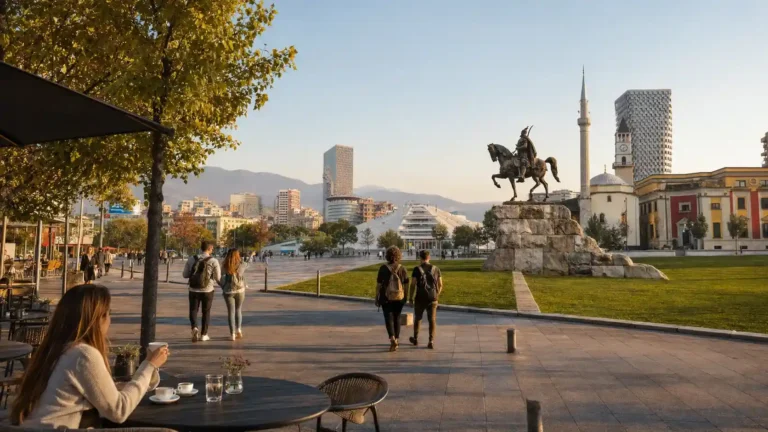
After collecting your rental car and settling into your accommodation, spend your first afternoon exploring central Tirana at a relaxed pace. The city’s energy is immediately infectious — colorful apartment blocks painted in vivid geometric patterns line the boulevards, street food vendors offer fresh byrek (savory pastry filled with cheese or spinach) for mere cents, and Skanderbeg Square provides a vast, traffic-free plaza where children can run freely while parents absorb the Albanian national monuments surrounding them.
Family highlights in Tirana on Day 1 include:
- Skanderbeg Square — The heart of the city, flanked by the National History Museum with its enormous mosaic facade. Even young children are captivated by the sheer scale and color of the space.
- Blloku District — Once exclusively reserved for Communist Party elite, this neighborhood is now Tirana’s trendiest area, packed with ice cream parlors, cafés, and pedestrian-friendly streets ideal for an evening stroll.
- Byrek from a local bakery — Introduce your children to Albanian cuisine early. Warm byrek straight from the oven is universally loved by kids and costs less than a dollar per slice.
- Et’hem Bey Mosque — A beautifully decorated 19th-century mosque at the edge of Skanderbeg Square. Respectful visits are welcome, and the intricate painted interior offers a fascinating cultural introduction for older children.
For accommodation in Tirana, family rooms are plentiful across all budget ranges. The area around Blloku and the city center offers the best access to restaurants and evening entertainment. Most hotels include breakfast, which simplifies morning logistics considerably when traveling with children.
Day 2 — Tirana’s Hidden Gems and Preparing for the Mountains
Your second day on this Albania North Macedonia family itinerary is best spent balancing a morning of cultural exploration with an afternoon of preparation and rest before heading north.
Morning: Bunk’Art and the Communist Bunker Experience
One of Albania’s most unique family-friendly attractions is Bunk’Art, a massive Cold War-era bunker complex converted into an immersive museum. Located just outside the city center, Bunk’Art 1 sits inside a 5-story underground facility built to shelter Albania’s Communist leadership and military command in the event of nuclear attack. Older children and teenagers find the labyrinthine tunnels, authentic period furnishings, and audiovisual exhibits genuinely fascinating. The museum tells Albania’s complex 20th-century history in an engaging, accessible format.
Bunk’Art 2, located in the city center near Skanderbeg Square, focuses on the history of Albania’s feared secret police (the Sigurimi) and is better suited for children aged ten and above given its more sobering content.
Afternoon: National Zoo and Artificial Lake Park
For younger children who need outdoor time after the morning’s museum visit, Tirana’s Artificial Lake Park (Liqeni Artificial) offers a beautiful green escape. Paddle boats are available for rent on the lake, and the surrounding parkland has cycling paths, playgrounds, and casual restaurants with terrace seating. The adjacent National Zoo, while modest by Western standards, provides a relaxed hour of entertainment for the youngest travelers.
Evening: Dinner at a Traditional Qofte Restaurant
Introduce your family to Albanian grilled meat culture with dinner at one of Tirana’s many traditional restaurants specializing in qofte (grilled minced meat patties), tavë kosi (baked lamb with yogurt), and fresh village salads. These dishes are universally approachable for children, and portions are generous. Budget roughly 25–35 USD for a full family dinner including drinks.
Day 3 — Drive North to Shkodër and the Albanian Alps
Day 3 marks a significant shift in your family-friendly 10-day Albania North Macedonia route as you leave the urban energy of Tirana behind and head north toward some of the most dramatic mountain scenery in all of Europe.
Morning: The Drive to Shkodër (approximately 1.5 hours)
The drive north along the SH1 highway from Tirana to Shkodër is smooth and straightforward, passing through the Adriatic coastal plain with views of distant mountains building on the eastern horizon. Shkodër, Albania’s fourth-largest city, is one of the country’s oldest continuously inhabited settlements and serves as the primary gateway to the Albanian Alps — locally known as the Accursed Mountains or Bjeshkët e Namuna.
Shkodër Old Town and Rozafa Castle
Arriving in Shkodër by mid-morning gives your family time to explore two of the city’s most compelling attractions before lunch.
Rozafa Castle, perched dramatically on a rocky hill above the confluence of three rivers, is an absolute must-visit on any family trip through northern Albania. The castle dates back to Illyrian times and offers panoramic views across the surrounding lakes and mountains that will leave the entire family breathless. The castle grounds are spacious and well-maintained, with enough ruins to explore that children can scramble and discover while parents absorb the historical context. Carry water and sunscreen, as shade within the castle walls is limited.
The old bazaar district of Shkodër, known as the Pazari i Ri (New Bazaar), has been beautifully restored and now hosts a pedestrian shopping and dining precinct where local craftspeople sell handmade goods alongside fresh produce stalls and casual eateries.
Afternoon: Journey into the Valbona Valley
After lunch in Shkodër, the most adventurous portion of your northern Albania experience begins. The standard route into the Albanian Alps involves a combination of driving to the Komani Lake ferry terminal (approximately 1 hour from Shkodër) and then boarding the famous Komani Lake ferry — a two-and-a-half-hour boat journey through one of Europe’s most spectacular canyon landscapes.
However, families with very young children or those pressed for time may prefer to drive directly to Valbona via Bajram Curri, a route that takes approximately 3–3.5 hours on improving mountain roads. The drive itself is scenically extraordinary, winding through river gorges and small mountain villages where traditional stone-roofed farmhouses cling to steep hillsides.
Valbona Valley National Park
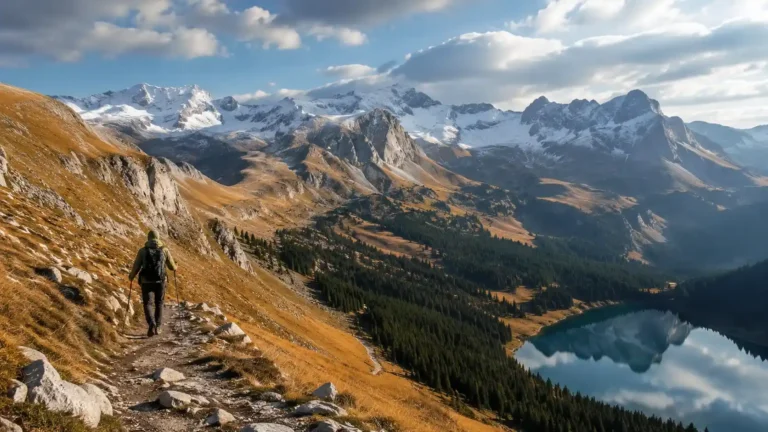
Arriving in the Valbona Valley by late afternoon, your family will immediately understand why this remote corner of the Albanian Alps has earned a global reputation among outdoor enthusiasts. The valley floor is carpeted with wildflower meadows flanked by towering limestone peaks that rise nearly 2,700 meters above sea level. The Valbona River runs crystal-clear and ice-cold through the center of the valley, and small family-run guesthouses (locally called bujtina) line the single village road.
Accommodation in Valbona is simple but genuinely warm and welcoming. Family rooms are available at several guesthouses, and hosts typically prepare enormous home-cooked dinners featuring locally caught trout, fresh bread baked in traditional clay ovens, and organic vegetables from kitchen gardens. These dinners are included in the room rate at most guesthouses and represent exceptional value. Expect to pay approximately 35–50 USD per night for a family room including dinner and breakfast.
Family activities in Valbona Valley:
- Easy valley floor walk along the Valbona River — A flat, well-marked trail follows the river through the valley and is accessible to children of all ages. The trail passes through woodland, meadow, and alongside rushing rapids, offering constant natural entertainment for young explorers.
- Swimming in the Valbona River — During warmer months, shallow pools along the river are perfect for children to splash and paddle in the remarkably clear glacial water.
- Stargazing — With virtually zero light pollution, the night sky above Valbona is extraordinary. Children who have never seen the Milky Way with the naked eye will be genuinely awestruck.
Days 4–5: Theth, Mountain Trails, and Crossing into North Macedonia
Day 4 — Exploring Theth: Albania’s Most Spectacular Mountain Village
Day 4 of your family-friendly 10-day Albania North Macedonia route takes you deeper into the Albanian Alps with a journey to Theth, arguably the most visually stunning village in the entire Western Balkans. The drive from Valbona to Theth is not possible by direct road — the famous Valbona to Theth hiking trail crosses a high mountain pass and is a full-day undertaking suited only for older children and fit families. For most families, the practical approach is to drive back toward Shkodër and then take the road east toward Theth via the Shkodër-Theth road, a journey of approximately 2.5 to 3 hours on a mountain track that is rough in sections but passable in a standard 4WD vehicle.
Alternatively, families can arrange a local driver from Valbona or Shkodër to navigate the mountain road while parents focus on keeping children entertained during the winding ascent. Many guesthouse owners in both Valbona and Theth offer this transfer service at very reasonable rates.
Arriving in Theth
The moment Theth valley opens up before you after the final mountain pass, the collective intake of breath inside the vehicle is unavoidable. A cluster of traditional stone-roofed houses sits in a bowl of impossibly green meadows, surrounded on all sides by vertical limestone peaks that seem to scrape the clouds. A small stone church at the center of the village has stood since the 19th century, and the sound of the Shala River rushing through the valley floor provides a constant natural soundtrack.
Theth receives far fewer visitors than comparable Alpine destinations in Austria or Switzerland, yet delivers scenery that rivals anything the Alps can offer. For families making this journey, the sense of discovery is one of the trip’s most powerful emotional rewards.
Morning Activities in Theth
After settling into your guesthouse and enjoying a traditional Albanian mountain breakfast of fresh honey, homemade white cheese, village bread, and eggs, the morning is best spent on two of Theth’s most accessible and family-friendly natural attractions.
1. The Blue Eye of Theth (Syri i Kaltër)
Not to be confused with the more famous Blue Eye near Sarandë in southern Albania, Theth has its own remarkable natural spring known locally as Syri i Kaltër. A clearly marked trail of approximately 45 minutes from the village center leads through pine forest and along the river to a stunning pool of intensely turquoise water fed by an underground spring. The color is so vivid and otherworldly that children inevitably question whether it has been artificially colored. The trail is well-suited for children aged five and above, and the destination rewards every step of the walk.
2. The Grunas Waterfall
A short, easy walk of approximately 30 minutes from Theth village leads to the Grunas Waterfall, a dramatic cascade tumbling down a sheer limestone cliff face. The path is flat and straightforward, making it ideal for younger children and families pushing strollers on dirt trails. The spray from the waterfall provides welcome cooling on warm days, and the surrounding beech forest offers dappled shade throughout the walk.
Afternoon: The Kulla — Albania’s Tower of Isolation
One of Theth’s most historically significant structures is the Kulla, a traditional stone tower that served as a place of refuge for men who had become embroiled in blood feuds under Albania’s ancient Kanun customary law code. The Kulla in Theth has been preserved and opened as a small museum, providing a fascinating window into the complex social codes that governed Albanian highland life for centuries.
For families with children aged eight and above, a guided explanation of the Kanun and its role in Albanian mountain society makes for a genuinely memorable and thought-provoking cultural experience. The tower itself is compact and atmospheric, and children respond strongly to the almost medieval quality of its thick stone walls and small fortified windows.
Evening in Theth
Theth’s guesthouses serve dinner communally, with families seated together around long wooden tables laden with local dishes. This informal, convivial atmosphere is one of the highlights of staying in the Albanian Alps and gives traveling families an opportunity to connect with other international visitors. Children thrive in this relaxed environment, and hosts are extraordinarily accommodating to young guests. Fresh trout, roasted lamb, bean soup, and homemade raki (the local spirit, for adults only) typically feature on the evening menu.
Day 5 — Descending from the Alps and Crossing into North Macedonia
Day 5 is a transition day on your family-friendly Albania North Macedonia itinerary, moving from the mountain wilderness of northern Albania toward the historic heartland of North Macedonia. While it involves the most driving of the entire route, careful planning ensures the day remains enjoyable and varied rather than a simple transit.
Morning: Farewell to the Albanian Alps
Allow time for a final morning walk along the Shala River before departing Theth. The river valley in early morning light, before other visitors arrive and while mountain mist still clings to the peaks, is one of those rare travel experiences that imprints itself permanently in memory. Children who have spent two nights in the Albanian Alps typically leave with a profound connection to the natural world that urban life rarely provides.
The drive down from Theth toward Shkodër takes approximately 2 to 2.5 hours, with the road gradually improving as you descend from the high mountain terrain to the coastal plain. Stop briefly in Shkodër for fuel, supplies, and a coffee break before continuing south and east.
Midday: Lake Shkodër (Skadar)
Lake Shkodër — known as Lake Skadar on the Montenegrin side of the border — is the largest lake in Southern Europe and straddles the Albania-Montenegro border with remarkable scenic grandeur. Even a brief stop at the lakeside village of Shiroka, just a few kilometers from Shkodër city, rewards families with views across the vast, reed-fringed lake toward distant mountains.
Several small restaurants at Shiroka specialize in the lake’s famous carp, served grilled or baked with local herbs and olive oil. A lakeside lunch here, watching fishing boats drift across the glassy water, provides a perfect midday break before the afternoon drive east.
Afternoon: The Drive to Ohrid via the Albanian-North Macedonian Border
The most direct route from Shkodër to Ohrid in North Macedonia passes through the Albanian city of Elbasan and crosses the border at Qafë Thanë, a crossing point that is generally efficient and well-organized for private vehicle travelers. The total driving distance from Shkodër to Ohrid is approximately 230 kilometers, which translates to roughly 3.5 to 4 hours including the border crossing.
The border crossing at Qafë Thanë typically involves passport checks for all passengers, including children. Ensure all family members have their passports readily accessible. Border wait times are generally short outside peak summer weekends, averaging 15 to 30 minutes for private vehicles.
An alternative route crosses into North Macedonia via the border at Blato (near Struga), which is slightly more southerly and deposits you closer to Ohrid. This route passes through some of the most beautiful lake scenery in the region and is recommended for families who prioritize scenic driving over the fastest possible transit.
Key driving tips for this section:
- Fill your fuel tank in Albania before the border, as fuel is noticeably cheaper in Albania than in North Macedonia.
- Carry snacks and drinks in the vehicle for children, as services along the mountain road sections are limited.
- Allow buffer time in your schedule for the border crossing, particularly during summer months when queues can extend to an hour or more.
- The mountain sections of the road between the Albanian border and Ohrid are winding but well-paved and highly scenic, with views across forested ridges and deep valleys that keep older children engaged throughout.
Getting your family between Albania and North Macedonia efficiently and affordably requires comparing transport options carefully before departure. For families flying into Tirana or Skopje, Kiwi.com and WayAway are excellent tools for finding competitively priced flight combinations, including multi-city routes that allow you to fly into one country and out of the other — a smart strategy that eliminates backtracking entirely. Once on the ground, ground transportation between cities and across borders is easily researched on Omio, which aggregates bus, train, and shared transfer options across the Balkan region in a single searchable interface. For families planning onward travel from North Macedonia into neighboring countries, 12Go provides reliable booking for regional bus and shuttle services that are not always easy to find through mainstream platforms.
Evening Arrival in Ohrid
Arriving in Ohrid as the late afternoon sun turns the lake surface to hammered gold is one of the great arrival experiences of Balkan travel. Ohrid is North Macedonia’s most celebrated destination, a UNESCO World Heritage city perched on the shores of the ancient lake that bears its name. The old town rises steeply from the waterfront in a tangle of cobblestone lanes, medieval churches, and traditional Ottoman-era architecture.
For families, Ohrid offers an ideal base for the next two days. Accommodation options range from atmospheric old-town guesthouses with lake views to modern family apartments with kitchen facilities. The old town is largely pedestrianized, making it safe and enjoyable for children to explore on foot, and the lake beaches provide immediate outdoor entertainment for the youngest travelers.
After checking in and freshening up, an evening walk along Ohrid’s waterfront promenade — lined with restaurants, ice cream vendors, and local craft stalls — provides the perfect gentle introduction to North Macedonia’s most beloved city. Dinner in one of the waterfront restaurants, watching the lights of the old town reflect across the lake surface, marks the end of a long but extraordinarily rewarding travel day.
Days 6–7: Ohrid’s UNESCO Heritage and Lake Adventures
Day 6 — Exploring Ohrid Old Town: Churches, Castles, and Cobblestones
Day 6 of your family-friendly 10-day Albania North Macedonia route is devoted entirely to Ohrid, a city that rewards slow, curious exploration on foot. Listed as a UNESCO World Heritage Site for both its cultural and natural significance, Ohrid is one of the oldest human settlements in Europe, with continuous habitation stretching back over 6,000 years. For families, it strikes a rare and welcome balance — genuinely important historical sites coexist with beach access, excellent food, and a relaxed pace that prevents children from becoming overwhelmed.
Begin your morning early, before the day’s heat builds and before tour groups arrive at the most popular sites. The old town in early morning is a different place entirely — quiet cobblestone lanes, the smell of fresh bread from bakery windows, and soft light filtering through the ancient plane trees that shade the upper city.
Morning: The Old Town Circuit
1. Church of Saint John at Kaneo
No visit to Ohrid is complete without seeing the Church of Saint John at Kaneo, one of the most photographed landmarks in the entire Balkans. This small 13th-century Byzantine church perches on a rocky promontory directly above the lake, its warm stone walls rising from the cliff edge with the vast blue expanse of Lake Ohrid stretching endlessly behind it. The walk from the old town to Kaneo takes approximately 20 minutes along a scenic cliff path, passing through pine trees with constant lake views. Children find the walk manageable and are invariably thrilled by the dramatic setting of the church itself. The interior contains original Byzantine frescoes and is open for visitors with a modest entrance fee.
2. Ancient Theatre of Ohrid
Dating back to the Hellenistic period (approximately 200 BC), Ohrid’s ancient open-air theatre is one of the best-preserved classical theatres in the entire Balkan region. Built into the hillside of the old town, the theatre still hosts summer performances and events, but during the day it is open for free exploration. Children love climbing the ancient stone seating tiers and acting out scenes on the original stage — an instinctive form of engagement with history that no classroom can replicate. Parents appreciate both the historical significance and the panoramic views of the lake and surrounding landscape visible from the upper seating rows.
3. Plaošnik and the Church of Saints Clement and Panteleimon
The Plaošnik complex sits at the highest point of the old town and represents one of the most important early Christian sites in the Balkans. Saints Clement and Naum established a monastery and school here in the 9th century that became one of the first universities in Europe, teaching the Glagolitic and Cyrillic alphabets that would form the foundation of literacy for Slavic peoples across the continent. The current church, reconstructed over ancient foundations, contains remarkable modern mosaics alongside authentic archaeological remains visible through glass floor sections. Children are fascinated by the floor windows revealing excavated rooms and artifacts directly beneath their feet.
4. Samuil’s Fortress
Crowning the hill above the old town, Samuil’s Fortress is a 10th-century medieval castle that is among the best-preserved defensive structures in North Macedonia. The fortress walls extend for over 3 kilometers around the hilltop, and the ramparts are accessible for walking, offering 360-degree views across the lake, the surrounding mountains, and the red-roofed city below. For children, the fortress represents pure adventure — thick walls to scramble along, watchtowers to climb, and the irresistible romance of medieval military architecture. Carry water and sunscreen, as the fortress is largely exposed to direct sun. The entrance fee is minimal, and the experience is outstanding value for families.
Midday: Lake Swimming and Beach Time
After a morning of cultural exploration, Day 6’s midday hours are best spent at the lake. Ohrid’s beaches range from the organized sandy stretches south of the city to quieter coves accessible by water taxi. The lake water is extraordinarily clear — visibility can extend to 20 meters in places — and the temperature by late morning reaches a comfortable swimming level from June through September.
Family beach options near Ohrid:
- Gradishte Beach — Located within a national park zone approximately 8 kilometers south of Ohrid, Gradishte offers clean pebble and sand beaches backed by pine forest. The shallow entry makes it ideal for young children, and the absence of motorized watercraft in the national park zone ensures a safe, peaceful swimming environment.
- City Beach (Gradski Plaz) — Walking distance from the old town, this is Ohrid’s most accessible beach and is well-equipped with sunbed rentals, changing facilities, and nearby restaurants. It becomes crowded in peak summer but is perfectly manageable outside July and August.
- Lagadin Beach — A quieter option further along the eastern shore, popular with local families and offering cleaner water than the city beach. Small waterside restaurants here serve fresh lake trout at very reasonable prices.
Afternoon: Ohrid Waterfront and the Bazaar
After beach time and lunch, the afternoon on Day 6 is best kept relaxed. Ohrid’s old bazaar area, located at the base of the old town near the lake, offers a pleasant hour of browsing. Local craftspeople sell hand-painted icons (a traditional Ohrid specialty dating back centuries), wooden crafts, embroidered textiles, and locally produced wine and rakija. Children are particularly drawn to the handmade wooden toys and the colorful icon paintings, which make meaningful and genuinely unique souvenirs.
The waterfront promenade between the old town harbor and the city beach is lined with mulberry trees that drop sweet fruit onto the path during summer months — a detail that endlessly entertains young children who discover they can eat directly from the ground. Ice cream vendors stationed along the promenade offer local and international flavors at prices that make multiple daily indulgences entirely guilt-free.
Evening: Dinner with a Lake View
Ohrid’s restaurant scene is genuinely excellent by regional standards, with numerous establishments offering fresh lake trout (pastrmka), lake carp (krap), and grilled meats alongside North Macedonian staples including tavče gravče (baked beans in a clay pot), ajvar (roasted red pepper relish), and shopska salata (fresh tomato and cucumber salad with crumbled white cheese). Several restaurants along the waterfront offer outdoor terrace seating with direct lake views, creating a dinner atmosphere that feels considerably more expensive than the very modest bill that follows.
Day 7 — Lake Ohrid by Boat and the Monastery of Saint Naum
Day 7 of this family-friendly North Macedonia itinerary centers on one of the most enjoyable full-day excursions available from Ohrid — a boat journey along the eastern shore of Lake Ohrid to the Monastery of Saint Naum, one of the most beautifully situated religious complexes in the entire Balkans.
Morning: Boarding the Lake Boat
Wooden excursion boats depart from Ohrid’s old town harbor throughout the morning during the tourist season, making the approximately 1.5-hour journey south along the lake’s eastern shore to Saint Naum. The boat journey itself is a highlight — the lake’s extraordinary clarity allows passengers to see the bottom at remarkable depths even from the deck, and the changing panorama of mountains, forest, and shoreline keeps children engaged throughout the crossing.
Several boat operators offer this route, and tickets can be purchased at the harbor. Prices are very reasonable, typically around 10–15 USD per adult and 5–8 USD per child for the return journey. Arrive at the harbor early to secure seats on the open upper deck, which offers the best views and the most pleasant breeze on warm days.
The Monastery of Saint Naum
Arriving at Saint Naum by boat amplifies the monastery’s already extraordinary visual impact. The complex sits on a rocky bluff directly above the lake, its red-roofed church towers and vine-draped courtyard walls creating a scene of almost storybook perfection. Founded in the 9th century by Saint Naum — a companion of Saints Cyril and Methodius and one of the founding figures of Slavic literacy — the monastery has been a place of pilgrimage and contemplation for over a thousand years.
Key family attractions at Saint Naum:
1. The Spring Pools and Rowing Boats
Directly below the monastery, a series of crystal-clear spring pools feed into the lake through a network of channels flanked by weeping willows and reeds. These springs — the source of the Crni Drim River — produce water of extraordinary clarity and a constant temperature of approximately 10°C year-round. Small wooden rowing boats can be hired to explore the channels and pools, gliding silently between reed beds while enormous trout drift lazily beneath the boat. This activity is universally loved by children and provides one of the most serene and magical experiences of the entire Albania North Macedonia family trip. Rowing boats accommodate families of up to four passengers and cost only a few dollars for 30 minutes of exploration.
2. The Monastery Church
The Church of Saints Archangels Michael and Gabriel within the monastery complex contains beautifully preserved frescoes and the tomb of Saint Naum himself. The atmosphere inside is genuinely spiritual and calm, and older children benefit from a brief explanation of the monastery’s remarkable historical significance before entering. Respectful dress is required — shoulders and knees should be covered, and wraps are typically available at the entrance for those who need them.
3. Peacocks and Monastery Grounds
The monastery courtyard is home to a resident population of peacocks that wander freely among visitors. For young children, the opportunity to observe peacocks displaying their spectacular tail feathers at close range is an unexpected delight that frequently becomes one of their most vivid memories of the entire trip.
Afternoon: Albanian Border Crossing and Pogradec
An interesting optional addition to the Saint Naum day involves walking or taking a short taxi to the Albanian border crossing at Tushemisht, just a few kilometers from the monastery. Crossing briefly into Albania to visit the lakeside town of Pogradec allows families to experience the Albanian side of Lake Ohrid — a completely different atmosphere from the North Macedonian shore, with a relaxed, unhurried waterfront lined with seafood restaurants serving extraordinarily fresh lake fish. This brief Albanian detour is entirely optional but adds an interesting dimension to the day for families who enjoy border-crossing adventures.
Return by Boat to Ohrid
The return boat journey to Ohrid in late afternoon light — when the sun drops toward the Albanian mountains on the western shore and the lake surface shifts from deep blue to burnished copper — is one of those unrepeatable travel moments that make the effort of reaching this remote corner of Europe entirely worthwhile. Children typically fall asleep on the return crossing, exhausted in the best possible way by a day of extraordinary experiences.
Days 8–9: Skopje, Matka Canyon, and North Macedonia’s Vibrant Capital
Day 8 — The Drive to Skopje and Afternoon Arrival in the Capital
Day 8 of your family-friendly 10-day Albania North Macedonia route transitions from the serene lakeside atmosphere of Ohrid to the energetic, surprising, and genuinely fascinating capital of North Macedonia. The drive from Ohrid to Skopje covers approximately 170 kilometers along the A2/A3 motorway, a well-maintained highway that makes the journey comfortable and straightforward. Total driving time is approximately 2.5 to 3 hours, making a mid-morning departure ideal — allowing a relaxed final breakfast in Ohrid before hitting the road.
Morning Departure from Ohrid
Before leaving Ohrid, squeeze in one final lakeside moment. The old town harbor in morning light, with fishing boats returning from early catches and café owners setting out chairs for the day’s first customers, offers a quietly beautiful farewell to one of Europe’s most underrated cities. Purchase a small bag of fresh lake trout from the morning fish market near the harbor — a final taste of Ohrid to enjoy during the drive — and fuel up your vehicle for the motorway journey north.
The drive north from Ohrid climbs initially through mountain scenery before opening onto the broad Pelagonia Plain, one of North Macedonia’s most agriculturally productive regions. The road passes through the city of Bitola — worth a brief stop if time allows — before continuing north through increasingly dramatic terrain toward the capital.
Optional Stop: Bitola’s Shirok Sokak
If your family has energy and appetite for a brief cultural detour, Bitola — North Macedonia’s second-largest city — offers one of the most elegant pedestrian streets in the entire Balkans. Shirok Sokak (literally “Wide Lane”) is a beautifully preserved Ottoman-era boulevard lined with neoclassical buildings, outdoor café terraces, and a remarkably unhurried atmosphere that feels entirely at odds with the street’s obvious grandeur. A 45-minute stop here for coffee, juice, and a stroll gives children a taste of provincial North Macedonian urban life that contrasts interestingly with both Ohrid’s tourist-oriented atmosphere and Skopje’s overwhelming baroque excess.
The ancient ruins of Heraclea Lyncestis, located on the southern edge of Bitola, are among the best-preserved Roman archaeological sites in North Macedonia, featuring extraordinary floor mosaics that have survived largely intact for nearly two millennia. Families with older children and teenagers who have an interest in ancient history will find a one-hour visit genuinely rewarding.
Afternoon Arrival in Skopje
Arriving in Skopje in early afternoon, first-time visitors are almost universally struck by the city’s extraordinary visual character. No other capital in Europe quite prepares you for Skopje’s central district, which was dramatically reimagined following the devastating 1963 earthquake and then further transformed by the controversial “Skopje 2014” urban development project, which installed dozens of neoclassical and baroque-style buildings, fountains, bridges, and statues across the city center over a period of several years.
The result is a cityscape unlike anything else in the world — part ancient Ottoman bazaar, part Las Vegas-style classical pastiche, part genuine Balkan energy. Children find it visually overwhelming in the most entertaining possible way, with enormous bronze statues, illuminated fountains, and ornate bridges around every corner providing constant points of excitement and photographic opportunity.
Afternoon Orientation Walk: Macedonia Square and the Stone Bridge
Macedonia Square (Ploštad Makedonija) is the obvious starting point for any Skopje exploration. Dominated by the enormous Warriors on Horses fountain — featuring a mounted figure representing the warrior spirit of the Macedonian people — the square is surrounded by neoclassical government buildings, museums, and the famous Stone Bridge that connects the modern city center to the ancient Old Bazaar across the Vardar River.
Family highlights on the afternoon orientation walk:
- Warriors on Horses Fountain — The sheer scale of this fountain, with its central equestrian statue rising 22 meters and surrounding figures of warriors and lions spouting water from multiple levels, is genuinely spectacular. Children love the theatrical excess of it, and the surrounding plaza is spacious enough for young ones to run while parents absorb the surrounding architecture.
- The Stone Bridge (Kameni Most) — Dating back to the 15th century Ottoman period, this elegant stone bridge connects the modern city to the old town and provides excellent views along the Vardar River in both directions. Evening illumination of the bridge and surrounding monuments transforms the entire central area into something resembling an elaborate theatrical set.
- The Vardar River Embankment — A pleasant riverside walk extends in both directions from the Stone Bridge, with café terraces, public art installations, and direct views of the surrounding mountains providing constant visual interest.
Evening: Dinner in the Old Bazaar
Cross the Stone Bridge into Skopje’s Old Bazaar (Čaršija) for dinner — an experience that transports your family from the baroque excess of the modern city center into a genuinely ancient urban landscape. The Old Bazaar is one of the largest and best-preserved Ottoman-era commercial districts in the Balkans, dating back to the 12th century and still functioning as an active marketplace where traditional craftspeople operate alongside restaurants, tea houses, and textile merchants.
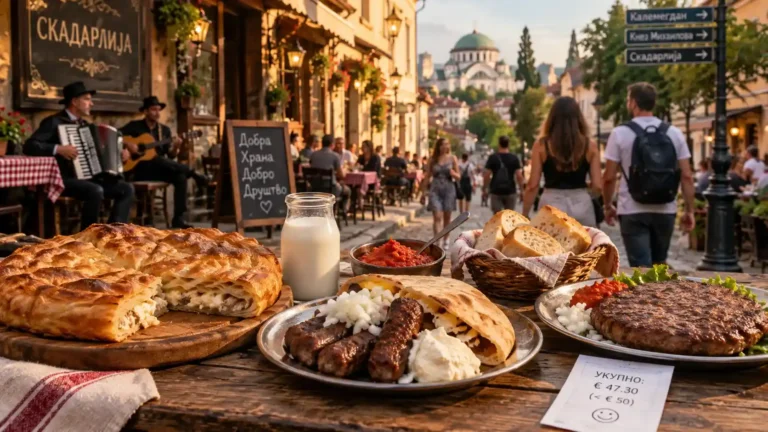
Several excellent family-friendly restaurants within the bazaar serve traditional North Macedonian cuisine in atmospheric settings — stone-walled rooms with low wooden ceilings, copper lanterns casting warm light over long communal tables. Dishes to try include tavče gravče served in individual clay pots, grilled lamb kebabs with fresh flatbread, and ajvar-smothered grilled vegetables alongside Macedonian white cheese. Budget approximately 30–40 USD for a full family dinner in the Old Bazaar, including soft drinks and dessert.
Day 9 — Matka Canyon: North Macedonia’s Natural Wonder
Day 9 of this family-friendly Albania North Macedonia itinerary is dedicated to what many families identify as the single most memorable natural experience of the entire route — Matka Canyon, located just 15 kilometers southwest of central Skopje and representing one of the most dramatically beautiful gorges in the entire Balkan Peninsula.
Morning: Drive to Matka Canyon
The drive from central Skopje to Matka Canyon takes approximately 30 minutes, following the Treska River valley as it cuts progressively deeper into the limestone mountains southwest of the capital. The canyon entrance is marked by the Matka Dam, built in 1938 and creating the artificial Lake Matka that now fills the lower section of the gorge. Parking is available near the dam, and several small restaurants at the canyon entrance serve coffee and breakfast items for families arriving in the morning.
What Makes Matka Canyon Family-Friendly
Matka Canyon combines dramatic natural beauty with a variety of activities genuinely suited to different age groups and physical abilities, making it one of the most inclusive natural attractions on the entire Albania North Macedonia family route.
1. Kayaking and Boat Tours on Lake Matka
The most popular family activity at Matka is exploring the canyon by water. Electric-powered boat tours depart regularly from the dock near the dam, carrying passengers deep into the narrowing gorge where sheer limestone cliffs rise hundreds of meters on both sides and swallows nest in crevices above the impossibly green water. The boat journey to the canyon’s deepest accessible point takes approximately 20 minutes each way and is suitable for children of all ages including toddlers.
Kayak rentals are available for older children and families who prefer self-guided exploration at their own pace. The calm, sheltered waters of the canyon make kayaking safe and manageable for beginners, and paddling silently beneath the towering cliff walls — with only birdsong and the drip of water from limestone overhangs breaking the silence — is an experience of profound natural beauty.
2. Vrelo Cave
Accessible only by boat from the Matka dock, Vrelo Cave is one of the deepest underwater caves in the world, with scientific exploration having documented vertical depths exceeding 200 meters below the water surface. Above the waterline, the accessible portion of the cave features impressive stalactite and stalagmite formations, underground pools of luminescent blue-green water, and a constant cool temperature that provides welcome relief on hot summer days.
The cave entrance is reached by boat from the main dock, and guided cave visits are available throughout the day. The tour inside the cave lasts approximately 20 minutes and covers the most accessible chambers. Children aged four and above generally manage the cave visit comfortably, though the path inside involves some uneven stepping that requires careful footing. The ethereal blue light filtering through the water in the cave’s inner chambers invariably produces gasps of amazement from children and adults alike.
3. Canyon Hiking Trails
For families with older children and teenagers who want more physical challenge, Matka Canyon offers several marked hiking trails that ascend the canyon walls to viewpoints overlooking the gorge. The trail to the Church of Saint Andrew — a small medieval monastery clinging to a cliff face above the canyon — takes approximately 45 minutes of moderate uphill walking and rewards hikers with extraordinary views back down the gorge and across the surrounding mountain landscape. The trail is well-marked but involves some steep sections that require sure footing and appropriate footwear.
A longer trail continues from Saint Andrew to the ridge above the canyon, offering panoramic views that extend on clear days all the way to Skopje’s urban sprawl in the valley below. This trail is recommended only for families with fit, older children as it involves approximately 3 hours of hiking with significant elevation gain.
4. Swimming at Matka
During summer months, designated swimming areas near the Matka Dam offer safe lake swimming for families. The water is clean, refreshingly cool even in peak summer, and the surrounding canyon scenery makes it one of the most spectacular natural swimming spots in North Macedonia. Basic changing facilities and a small café near the swimming area provide necessary amenities.
Midday: Lunch at the Canyon Restaurants
Several small restaurants at the canyon entrance specialize in freshwater trout and carp pulled directly from the Treska River and Lake Matka. Grilled river trout served with roasted potatoes, fresh salad, and local bread makes for an outstanding canyon-side lunch that both parents and children invariably rate among the best meals of the entire trip. Prices are very modest — a full family lunch with drinks typically costs 25–35 USD.
Afternoon: Return to Skopje and the Old Bazaar Crafts District
Returning to Skopje by early afternoon leaves time for a more thorough exploration of the Old Bazaar that a dinner visit alone cannot provide. The bazaar’s daytime atmosphere reveals working craftspeople that evening visits miss entirely.
Afternoon highlights in the Old Bazaar:
- The Čifte Amam (Double Bath) — A beautifully restored 15th-century Ottoman double bathhouse that now serves as an art gallery. The domed interior with its pierced star-shaped skylights creates a magical light environment that children find fascinating.
- The Daut Pasha Hamam — Another Ottoman bathhouse converted to an art gallery, featuring one of the largest collections of Macedonian modern art in the country displayed within extraordinary medieval architecture.
- Traditional craft workshops — The bazaar contains active workshops where craftspeople produce copper goods, leather items, traditional embroidery, and handmade jewelry using techniques unchanged for centuries. Many craftspeople welcome curious observers and are happy to demonstrate their skills to children, creating informal and genuinely memorable educational moments.
- Slatko tasting — Look for small traditional sweet shops in the bazaar selling slatko, a uniquely Macedonian preserve made from whole fruits or rose petals suspended in thick syrup and served by the spoonful as a gesture of hospitality. Children almost universally adore this intensely sweet confection.
Evening: Skopje Fortress and Sunset Views
The Kale Fortress sits directly above the Old Bazaar on a rocky hill that has been fortified since at least the 6th century BC. The current walls date primarily from the Byzantine and Ottoman periods, and the fortress grounds are freely accessible during daylight hours. Evening visits are particularly rewarding as the setting sun illuminates the city below in warm golden light, and the contrast between the ancient fortress walls and the baroque-themed modern cityscape visible in the valley below provides a visual summary of Skopje’s complex and layered identity.
Families who climb to the fortress walls in the final hour before sunset are rewarded with what is arguably the finest panoramic view of Skopje available anywhere, with the Vardar River, the Stone Bridge, Macedonia Square, and the surrounding mountain ridges all visible simultaneously in a single sweeping composition.
Day 10: Final Experiences, Practical Logistics, and Why This Route Delivers
Day 10 — A Gentle Farewell to the Western Balkans
The final day of your family-friendly 10-day Albania North Macedonia route arrives with that particular bittersweet quality that only the best family trips produce — children who do not want to leave, parents quietly calculating whether an extension is financially feasible, and a collective family awareness that something genuinely special has been experienced together over the past ten days.
Most international flights from Skopje depart in the afternoon or evening, which means Day 10 can be structured to include a meaningful final morning experience rather than simply involving anxious waiting in hotel lobbies with packed luggage. Alexander the Great International Airport is located just 25 kilometers east of the city center, making the transfer straightforward and quick even with family luggage.
Morning: Skopje’s Museum Quarter and Memorial House of Mother Teresa
For families departing from Skopje, the Memorial House of Mother Teresa provides a genuinely moving and historically significant final morning experience. Born in Skopje in 1910 as Anjezë Gonxhe Bojaxhiu to an Albanian Catholic family, Mother Teresa is North Macedonia’s most celebrated historical figure, and the memorial complex built on the site of the church where she was baptized honors her life and humanitarian work with thoughtful, family-accessible exhibits.
The memorial house features personal artifacts, photographs, letters, and audiovisual presentations covering Mother Teresa’s journey from Skopje schoolgirl to global humanitarian icon. For children who have studied her in school, the experience of standing in her hometown and seeing objects from her actual life creates a powerful connection between classroom knowledge and real-world history. The complex includes a beautiful chapel, a museum wing, and landscaped grounds that provide a calm, reflective space for families on their final morning.
Admission is free, and the memorial is located in the heart of the modern city center, making it easily combined with a final coffee and pastry at one of the surrounding café terraces before heading to the hotel to collect luggage.
Optional Final Morning Alternative: Skopje City Park
Families with very young children who prioritize outdoor time over museum visits will find Skopje’s City Park (Gradski Park) an ideal final morning destination. Located just north of the city center along the Vardar River, the park features open lawns, shaded walking paths, a small lake with rowing boat rentals, a zoo, and multiple playground areas. Children who have spent ten days absorbing history, culture, and natural landscapes often benefit enormously from an unstructured final morning simply playing in a park — it consolidates the trip’s experiences in their own way and sends everyone to the airport in genuinely good spirits.
Completing the Circle: What This Route Teaches Families
A family-friendly 10-day Albania North Macedonia route is more than a collection of destinations strung together by mountain roads and border crossings. Traveled thoughtfully, it becomes a sustained family education in geography, history, culture, religion, and the natural world — delivered not through textbooks but through direct, immersive experience that children carry with them for the rest of their lives.
What children learn on this route:
- Geographic diversity — Within ten days, children experience coastal plains, Alpine mountain wilderness, ancient lakeshores, river canyons, and urban environments, developing an intuitive understanding of how dramatically landscapes change across relatively small distances.
- Historical depth — From Illyrian ruins and Byzantine churches to Ottoman bazaars and Communist bunkers, the route spans over two millennia of human civilization in a single cohesive journey, making abstract historical periods tangible and real.
- Cultural empathy — Encountering Albanian mountain hospitality, North Macedonian monastery traditions, Ottoman bazaar culture, and the multilingual, multi-ethnic character of both countries builds genuine cross-cultural understanding that shapes children’s worldviews in lasting ways.
- Environmental awareness — The extraordinary natural environments encountered on this route — glacial rivers, ancient lakes, limestone canyons, Alpine meadows — instill a deep appreciation for wild places and the importance of their preservation.
- Resilience and adaptability — Navigating rough mountain roads, sleeping in simple guesthouses, eating unfamiliar foods, and managing border crossings builds genuine resilience and adaptability in children of all ages, qualities that serve them throughout life.
Complete 10-Day Itinerary Summary
For easy reference and trip planning, here is the complete day-by-day summary of this family-friendly Albania North Macedonia route:
Day 1 — Arrive Tirana, explore Skanderbeg Square, Blloku District, and Et’hem Bey Mosque
Day 2 — Bunk’Art bunker museum, Artificial Lake Park, traditional dinner in Tirana
Day 3 — Drive to Shkodër, visit Rozafa Castle, afternoon drive to Valbona Valley
Day 4 — Blue Eye of Theth, Grunas Waterfall, Kulla tower museum, overnight in Theth
Day 5 — Farewell to Albanian Alps, Lake Shkodër lunch, afternoon drive to Ohrid
Day 6 — Ohrid old town circuit, lake swimming, Old Bazaar exploration
Day 7 — Boat journey to Monastery of Saint Naum, spring pool rowing boats, return to Ohrid
Day 8 — Drive to Skopje via optional Bitola stop, Macedonia Square orientation, Old Bazaar dinner
Day 9 — Matka Canyon kayaking and cave exploration, Old Bazaar crafts afternoon, Kale Fortress sunset
Day 10 — Memorial House of Mother Teresa or City Park morning, depart from Skopje
Estimated Family Budget for 10 Days
Understanding the financial reality of this Albania North Macedonia family trip helps families plan with confidence. The following estimates are based on a family of two adults and two children aged 6 to 12, traveling in the mid-range budget category during shoulder season.
Accommodation (10 nights): Budget guesthouses and mid-range family hotels across the route average approximately 60–90 USD per night for a family room. Mountain guesthouses in Valbona and Theth typically include dinner and breakfast, representing exceptional value. Total accommodation estimate: 700–900 USD for the full ten nights.
Food and dining: Eating well in both Albania and North Macedonia is remarkably affordable. Breakfast is typically included in accommodation costs. Lunch at local restaurants averages 15–25 USD for a family of four, and dinner ranges from 25–45 USD including drinks. Budget street food and market snacks add another 5–10 USD daily. Total food estimate: 350–500 USD across ten days.
Transportation: Car rental for ten days from a reputable international agency averages 400–600 USD including basic insurance for a standard SUV. Fuel costs across the route total approximately 80–120 USD depending on fuel prices at time of travel. Boat trips, taxis, and local transport add approximately 80–100 USD. Total transportation estimate: 560–820 USD.
Entrance fees and activities: Combined entrance fees for castles, museums, cave tours, and boat rentals across the entire route total approximately 100–150 USD for a family of four, reflecting the genuinely low cost of attractions in both countries compared to Western European equivalents.
Total estimated budget: 1,710–2,370 USD for a family of four across ten full days, excluding international flights. This represents extraordinary value for a trip of this geographic scope, cultural richness, and experiential quality.
Family Packing Essentials for This Route
Packing correctly for a family trip through Albania and North Macedonia makes a significant practical difference, particularly given the variety of environments encountered across the ten-day route.
Clothing essentials:
- Lightweight, quick-drying layers for variable mountain temperatures
- Sturdy walking shoes or trail runners for all family members — the single most important packing decision on this route
- Sandals for lake beaches and town walking
- Light rain jacket or windproof layer for mountain sections
- Modest clothing items (long trousers or skirts, shoulder coverings) for monastery and mosque visits — these can double as layers in cooler mountain evenings
Health and safety essentials:
- Comprehensive first-aid kit including blister treatment, antiseptic, and pain relief appropriate for children
- High-factor sunscreen and quality sunglasses for all family members
- Insect repellent for lakeside and valley evenings
- Oral rehydration sachets for managing heat exhaustion in younger children during summer travel
- Any prescription medications in quantities exceeding the trip duration, stored in original packaging with documentation
Practical travel essentials:
- Physical road map or downloaded offline maps for both countries — mobile data coverage in mountain areas is unreliable
- Universal power adapter and sufficient portable battery banks for keeping devices charged during long driving days
- Reusable water bottles for all family members — tap water is safe in cities, and refilling at mountain springs is standard practice throughout the Albanian Alps
- Small daypack for each family member capable of carrying water, snacks, sunscreen, and a layer for day hikes
- Photocopies of all travel documents stored separately from originals
Why This Route Outperforms Other Family Travel Options
In an era where family travel options are virtually unlimited, understanding what distinguishes a family-friendly Albania North Macedonia route from more conventional family destinations helps parents make the case to skeptical co-travelers — including children who may initially prefer the familiar reassurance of a beach resort.
Compared to a standard Mediterranean beach holiday, this route delivers comparable beach and lake swimming alongside a richness of cultural, historical, and natural experience that a single-destination beach trip simply cannot match. Children return from Albania and North Macedonia with stories to tell rather than just a tan to show.
Compared to Western European family destinations including France, Italy, or Spain, this route offers equivalent or superior natural scenery, comparable historical significance, and dramatically lower costs — typically at 30 to 40 percent of the budget required for a similar duration in Western Europe. The absence of mass tourism crowds means children can actually engage with historical sites rather than viewing them over the heads of hundreds of other visitors.
Compared to other Balkan family itineraries including Croatia or Slovenia, Albania and North Macedonia remain genuinely off the beaten path, delivering an authentic travel experience increasingly rare in Europe. The warmth and curiosity with which local communities receive international families — particularly families with children — creates social interactions that enrich the travel experience in ways that heavily touristed destinations cannot replicate.
Before your family departs for the Western Balkans, a handful of additional travel tools and services will ensure the trip runs smoothly from the first day to the last. For guided tours and local experiences throughout the route — including Matka Canyon kayaking, Ohrid boat excursions, and Tirana walking tours — Viator, GetYourGuide, Klook, and Tiqets all list vetted, family-friendly activities with instant confirmation and straightforward cancellation policies. Travel insurance is non-negotiable when adventuring through mountain terrain with children, and Insubuy, VisitorsCoverage, and EKTA offer comprehensive family travel policies covering medical evacuation, trip cancellation, and adventure activity coverage at competitive premiums. For staying connected throughout your journey without expensive international roaming charges, affordable eSIM data plans for both Albania and North Macedonia are available through Airalo, Yesim, and Saily, allowing your family to navigate, communicate, and share travel moments without interruption. Finally, should any flight disruptions affect your departure from Skopje or your connection home, AirHelp provides professional assistance in claiming compensation for delays and cancellations, giving families one less thing to worry about on the journey home.
Final Thoughts: The Lasting Value of This Family Adventure
A family-friendly 10-day Albania North Macedonia route asks something of the families who undertake it — flexibility, a tolerance for occasional discomfort, willingness to navigate unfamiliar roads and unfamiliar languages, and the courage to choose the extraordinary over the familiar. In return, it delivers something that the best family travel always delivers: a shared experience so vivid and layered that it becomes part of the family’s collective identity.
Children who travel through the Albanian Alps and along the shores of Lake Ohrid develop a relationship with the wider world that shapes their curiosity, their empathy, and their sense of possibility for decades to come. Parents who make the journey discover not only two remarkable countries but also their own family’s capacity for adventure, adaptability, and genuine wonder.
The Western Balkans are changing rapidly. Tourism infrastructure is improving, visitor numbers are growing, and the window for experiencing Albania and North Macedonia in their current state of authentic, uncrowded beauty will not remain open indefinitely. Families who make this journey in the coming years will be among the fortunate few who knew these extraordinary countries before the wider world caught up.
Pack your bags, charge your cameras, and point the car toward the mountains. The Albanian Alps are waiting, Lake Ohrid is shimmering, and the greatest family adventure you have never considered is ready to begin.
Frequently Asked Questions About the Family-Friendly 10-Day Albania North Macedonia Route
Is Albania safe for families traveling with young children?
Albania is considered one of the safest destinations in the Balkans for family travel. Violent crime targeting tourists is extremely rare, locals are famously hospitable toward children, and major tourist areas in Tirana, Shkodër, and the Albanian Alps are well-patrolled and welcoming. Standard urban safety precautions apply, but families consistently report feeling comfortable and well-received throughout the country.
Do I need a visa to visit Albania and North Macedonia?
Citizens of the United States, United Kingdom, European Union, Canada, and Australia do not require a visa to enter either Albania or North Macedonia for stays of up to 90 days. Your passport must be valid for at least six months beyond your intended departure date. Always check the most current entry requirements with your country’s official foreign affairs ministry before traveling, as regulations can change.
What is the best age for children to do this itinerary?
This family-friendly Albania North Macedonia route is well-suited for children aged four and above. Toddlers can manage most activities with appropriate planning, though the mountain guesthouse sections and longer hiking days are more enjoyable for children aged six and older. Teenagers particularly appreciate the combination of outdoor adventure, ancient history, and genuine cultural immersion that this route delivers.
Is it better to fly into Tirana or Skopje for this itinerary?
Flying into Tirana and departing from Skopje is the most logical approach for this one-directional route, eliminating the need to backtrack and allowing your family to experience the itinerary in a natural geographic flow from south to north. Both airports receive regular international flights from major European hubs. Use Kiwi.com or WayAway to search multi-city flight combinations efficiently.
Is a rental car absolutely necessary for this route?
A rental car is very strongly recommended for this itinerary. While public buses connect major cities, they do not serve the Albanian Alps villages of Valbona and Theth adequately, and schedules between Ohrid and Skopje are infrequent. A rental car gives your family the flexibility to stop at scenic viewpoints, manage children’s schedules, and access remote natural attractions that public transport simply cannot reach. Compare rental options on Discover Cars and RentalCars.com for the best family vehicle rates.
How much does the full 10-day trip cost for a family of four?
Based on mid-range travel including accommodation, food, activities, and ground transportation but excluding international flights, a family of four can complete this itinerary comfortably for approximately 1,710 to 2,370 USD across ten days. Albania is notably cheaper than North Macedonia, and mountain guesthouses in Valbona and Theth that include dinner and breakfast represent outstanding value even within this already affordable budget.
What currency do I need in Albania and North Macedonia?
Albania uses the Albanian Lek (ALL) and North Macedonia uses the Macedonian Denar (MKD). Neither country uses the Euro as official currency, though some tourist businesses accept Euros informally. ATMs are widely available in cities and larger towns. It is advisable to carry some local cash for rural guesthouses, village markets, and smaller attractions that do not accept card payments.
Do I need travel insurance for this trip?
Travel insurance is strongly recommended for this itinerary, particularly given the mountain terrain, outdoor activities, and border crossings involved. Look for policies that specifically cover adventure activities including hiking and kayaking, as well as medical evacuation coverage. Reliable family travel insurance options are available through Insubuy, VisitorsCoverage, and EKTA.
What is the best eSIM option for staying connected in Albania and North Macedonia?
Both Albania and North Macedonia have improving but inconsistent mobile data coverage, particularly in mountain areas. Purchasing an eSIM before departure ensures immediate connectivity upon arrival without expensive roaming charges. Airalo, Yesim, and Saily all offer affordable regional data plans covering both countries in a single package.
Can I extend this itinerary into neighboring countries?
Absolutely. This Albania North Macedonia family itinerary connects naturally with several neighboring destinations. North Macedonia borders Serbia to the north, making a Skopje to Belgrade extension straightforward. Kosovo lies between Albania and North Macedonia and can be incorporated as a half-day or full-day detour. Montenegro’s Adriatic coast is accessible from Shkodër in approximately two hours, making it a natural add-on for families who want to combine mountain adventure with Adriatic beach time.