Kosovo Itinerary 5 Days: Pristina, Prizren & Rugova (2026)

A practical Kosovo itinerary 5 days should show you more than a list of beautiful places: it needs sensible overnight stops, realistic intercity connections and enough time for the mountains. This first-time route starts in Pristina (Prishtina), continues to Prizren, spends two nights in Peja (Peć) for the Rugova region, and returns toward Pristina for your flight or onward journey.
You will see Ottoman-era streets, an important collection of Serbian Orthodox heritage sites, café culture and dramatic western Kosovo scenery. The schedule is designed for five calendar days and four nights, assuming you arrive by early afternoon on Day 1 and leave on the afternoon or evening of Day 5. If either flight is very early or late, use the alternatives noted below. No personal on-the-ground visit is claimed; practical details are based on published transport and destination information, which should be reconfirmed close to travel.
Quick answer: the best Kosovo route for five days
Day 1: Pristina sightseeing; sleep Pristina. Day 2: travel to Prizren, Old Town and fortress; sleep Prizren. Day 3: travel to Peja, Old Bazaar and Patriarchate of Peć; sleep Peja. Day 4: one carefully chosen Rugova activity, scenic drive or guided hike; sleep Peja. Day 5: return toward Pristina and visit Gračanica if your departure time allows. Best transport: buses between cities, arranged car or driver for mountain access.
Table of Contents
Kosovo Itinerary 5 Days: Route, Overnight Stops and Travel Times
This route avoids repeated journeys back to Pristina. It also keeps the alpine day separate from transport days, so weather changes do not automatically ruin the entire schedule. Approximate road and bus times are planning ranges, not promised departure schedules.
| Day | Where to go | Main experience | Overnight |
|---|---|---|---|
| 1 | Pristina | Newborn, National Library, centre and café culture | Pristina |
| 2 | Pristina → Prizren | Shadervan, Sinan Pasha Mosque, Kalaja viewpoint | Prizren |
| 3 | Prizren → Peja | Patriarchate of Peć, Peja bazaar and town | Peja |
| 4 | Rugova from Peja | Scenic gorge OR selected guided hiking trail | Peja |
| 5 | Peja → Pristina / PRN | Gračanica only if timing permits; departure | — |
| Travel leg | Planning allowance | Public transport note |
|---|---|---|
| Pristina → Prizren | About 1.5–2 hours by bus, plus station transfers | Check same-date departures |
| Prizren → Peja | About 1.5–2.5 hours by bus | Fewer direct services; an indirect service may take longer |
| Peja → Pristina | About 1.25–2 hours by bus | Allow onward transfer to airport |
| Peja → Rugova trailhead | Varies sharply by village and trail | Arrange driver or qualified guide in advance |
For intercity services, use the Prizren–Peja timetable and Peja–Pristina timetable as date-specific planning tools. For example, the route listings in October 2026 indicated roughly €5 for a Prizren–Peja or Peja–Pristina ticket, but the exact price, number of departures and direct/connecting services must be checked for the date of travel.
If you have a very early flight on Day 5
Sleep in Pristina on Night 4 instead of Peja, cutting the mountain excursion shorter or shifting it to a guided half day. Do not count on completing a mountain hike, an intercity bus, Gračanica and airport check-in on the same morning.
Before You Go: Visas, Borders, Safety and Money
Entry requirements and the Kosovo–Serbia border
Kosovo uses the euro even though it is not an EU member. Entry permissions depend on nationality and travel documents; many passports have short-stay visa exemptions, but they do not apply universally. Check the Kosovo consular visa information and the current advice from the authorities responsible for your passport. Some travelers have additional documentation requirements and may be asked to show accommodation and onward travel.
Important routing point: Serbia does not treat the Kosovo crossing points as international entry points. Travelers who entered Kosovo from Albania, Montenegro or North Macedonia may be refused direct entry into Serbia from Kosovo if they do not have a qualifying Serbian entry stamp. Conversely, going Serbia → Kosovo → Serbia can be possible, subject to documentation and current border practice. This is not a blanket rule that nobody can visit both destinations. Review the UK government’s explanation of the Serbia–Kosovo entry issue before buying an onward bus ticket.
Travel safety and mountain restrictions
Kosovo can be rewarding for independent visitors, but there is no guarantee of safety. Government advisories in September–October 2026 advise additional caution, particularly in northern municipalities such as North Mitrovica, Zvečan, Zubin Potok and Leposavić because of potential unrest. Avoid protests and keep track of local developments; see the US State Department travel advisory. The five-day route below does not require entering these northern municipalities.
The UK government also warns of residual landmines and unexploded ordnance in some mountainous border areas, particularly around the Kosovo–Albania–Montenegro frontier. Stay on recognised open trails, heed local advice and do not attempt off-trail shortcuts. In Rugova, poor visibility, thunderstorms, snow, rockfall and weak phone signal can all change what is safe. Check the latest regional risks and consult an experienced local guide before any serious hike.
When to go, payment and mobile data
For urban sightseeing, late spring and early autumn often bring pleasant conditions. Summer suits many valley activities, but heat and afternoon storms remain possible; snow can linger higher up. Winter makes for a different trip and demands specialist planning for high trails. Choose the mountains according to actual conditions, not the month printed in an itinerary.
- Money: Carry euro cash for markets, buses, taxis and some guesthouses; city hotels and larger businesses may take cards.
- Language: Albanian and Serbian are Kosovo’s official languages. English is useful in many tourism businesses but not universal.
- Connectivity: Confirm whether your existing roaming or eSIM package covers Kosovo specifically; regional Europe plans do not always include it.
- Emergency planning: Tell someone your planned mountain route and return time; bring offline navigation, water, power bank, layers and a first-aid kit.
📱 Mobile data before arrival
A Kosovo-specific data plan can help with station maps and communication, but check handset compatibility and network coverage first. Browse Kosovo eSIM options on Airalo.
✈️ Flights to Pristina
Flight routes and fares are seasonal. Check your actual arrival time before committing to four overnight bookings. Compare flights to Pristina.
Day 1: Arrive in Pristina and Explore the Capital
Pristina is a sensible starting point for the Kosovo itinerary 5 days. The airport is outside the centre, and time needed for immigration, luggage and ground transport varies. If you land before lunch, aim for a relaxed afternoon of central sights; if you land late, do only the evening walk and save museums for another trip.
A realistic city-centre walking loop
- Newborn Monument: an emblem of Kosovo’s 2008 declaration of independence; its appearance has changed over the years, so do not assume it is still the original yellow.
- National Library of Kosovo: distinctive modernist building worth viewing from the outside; confirm visitor access rather than assuming entry.
- Mother Teresa Boulevard: a pedestrian-friendly area for coffee and people-watching.
- Cathedral of Saint Mother Teresa: a different religious and architectural experience; respect any restrictions during services.
- Ottoman-era quarter and Imperial Mosque: add if opening/access and remaining daylight allow.
Allow approximately 3–5 unhurried hours for these sights including pauses, photography and the walk between them. The historic bazaar survives in altered form; do not expect the intact maze of an Ottoman souk described in some older travel writing. Markets and cafés change tenants, so follow current local streets and signs rather than descriptions promising a particular shop.
Dinner and where to sleep in Pristina
Choose accommodation near the central pedestrian area or somewhere with a straightforward onward connection to the intercity bus station. The bus station is not beside every central hotel: account for a short local ride on Day 2. Try qebapa, flija where available, or a bakery byrek; restaurant menus vary and no single dish is guaranteed on demand.
Day 1 decision if your flight is late
Do not rush to Gračanica on arrival day unless transport and access are confirmed. It is easier to visit on Day 5 with a flexible afternoon departure or to substitute it for one of the central sights.
Day 2: Pristina to Prizren, Old Town and Fortress
Travel to Prizren after breakfast and leave your overnight bag at your accommodation. Bus journeys typically take around 1.5–2 hours, with additional time for reaching stations. Planning a single afternoon in Prizren only to return to Pristina wastes an opportunity: an overnight stay leaves room for an unhurried evening.
Morning to lunchtime: Shadervan and Ottoman landmarks
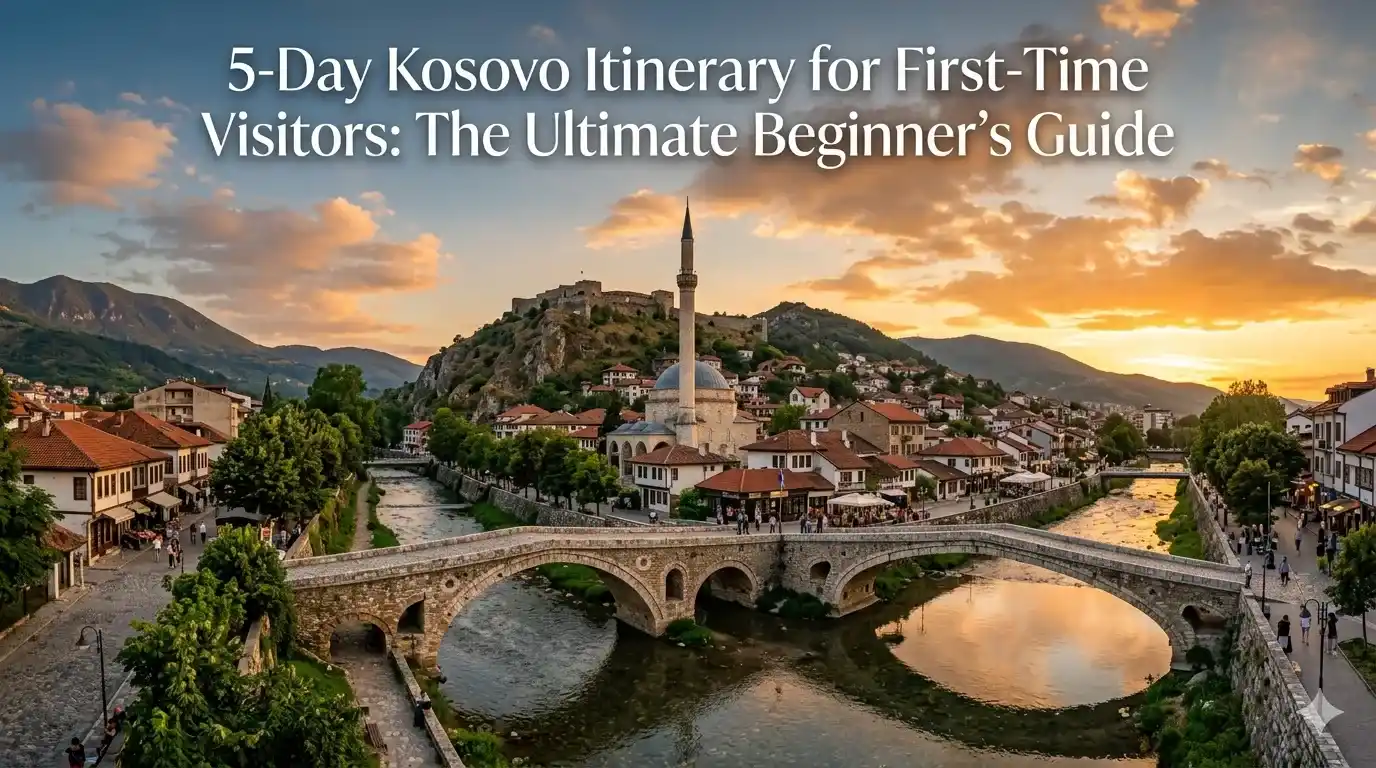
Start at Shadervan Square and follow the riverside through the historic core. The central stone bridge and Sinan Pasha Mosque are close enough to combine on foot, while the League of Prizren complex adds useful context about nineteenth-century Albanian political history. Check museum and mosque visiting rules; interiors may be unavailable during prayers, services or maintenance.
Choose lunch in the centre rather than trying to visit every museum in a single morning. Local grill restaurants, bakeries and cafés are easy to integrate into the route, but avoid relying on old online menus for exact prices.
Afternoon: Kalaja Fortress and optional UNESCO heritage
The climb from the old town to Prizren Fortress (Kalaja) is steep in places and can take roughly 25–45 minutes uphill depending on route, heat and walking pace. Allow longer in warm weather. The panorama is the reward; choose the viewpoint before sunset, then descend in daylight if paths are slippery or lighting is poor.
The Church of Our Lady of Ljeviš is one of the four components of the UNESCO-listed Medieval Monuments in Kosovo. Do not assume you can enter without advance arrangements: contact the appropriate local visitor office or religious custodian, observe site-specific security and photography rules, and treat an exterior stop as the fallback.
Evening and overnight
Stay near the Old Town if walking and restaurants matter more to you than parking. Drivers should check access to historic lanes and ask hotels about parking before arriving. This overnight stop is particularly valuable if you want time for the riverside after the day-trip crowds have left.
🏨 An overnight in Prizren
Compare guesthouses and hotels by actual walking route to Shadervan and Kalaja, not just a listing’s distance estimate. Compare Prizren stays on Agoda.
Day 3: Prizren to Peja, Patriarchate and Old Bazaar
Day 3 is primarily a transfer and culture day, not the main mountain hike. Bus routes from Prizren to Peja are available, but the number and timing of direct journeys can vary by day. Allow approximately 1.5–2.5 hours for a suitable direct bus and extra time if your journey requires a change. For an early start, check the actual timetable before selecting a departure.
Patriarchate of Peć and visiting etiquette
The Patriarchate of Peć, west of Peja near the mouth of Rugova Gorge, is a functioning Serbian Orthodox monastery complex and another part of the UNESCO World Heritage inscription. Its historic churches and frescoes warrant a respectful visit, but access policies can change. Confirm opening arrangements directly with the custodians or locally, dress modestly and ask before photographing any interior. Do not promise universal access, a fixed admission fee or the presence of particular guards on every day.
Walk Peja’s working town centre
Return to the centre for the Old Bazaar (Çarshia e Gjatë), a meal and a relaxed walk by the Peja river. The working shopping streets give you a different view of urban Kosovo from Prizren’s historic centre. If you arrive late, move the monastery to the following morning and reduce the Rugova plans accordingly.
For more city attractions and the best direction to organise side trips, use our guide to things to do in Peja. It covers cultural stops and additional nature trips without squeezing them all into today.
Why stay in Peja for two nights?
Two consecutive nights in Peja mean you can start Day 4 with the right equipment and weather information, store most luggage in your room and return after the walk without organising another intercity connection. A base in Peja is normally simpler for first-time visitors than an unconfirmed high-mountain lodge with uncertain transfer times.
Day 4: Rugova Gorge and One Mountain Experience
Rugova is the day that justifies spending longer in western Kosovo. The Peja tourism authority describes the principal Rugova Gorge as roughly 12 km long, beginning a short distance from the town, while the wider Rugova mountain area extends much farther. The scenic road through the gorge is impressive, but driving past rock walls is not the same as completing a mountain trail. Pick one of the three options below based on weather, fitness and transport.
| Option | Experience | Suitable for | Transport / caution |
|---|---|---|---|
| A · Scenic gorge | Roadside viewpoints, stops where permitted, village lunch | First-time visitors, limited hiking experience | Car/driver; do not stop on blind bends |
| B · Short valley walk | Locally recommended trail with limited ascent | Active beginners with suitable conditions | Confirm open trail and pick-up location |
| C · Guided mountain hike | Selected Kuqishte/Liqenat or other suitable route | Hikers with reliable footing and time | Guide, gear and trail status essential |
Option A: A scenic Rugova day without serious hiking
Arrange a car or local driver for the gorge and one or two planned stopping points. Stop only in safe marked areas; the road is narrow in places and not a photo walkway. Enjoy a lunch stop in a village or lodge where service is currently operating. Ask the driver about return time and whether any viewpoint involves uneven ground or stairs.
Option B: A shorter marked hike with a local assessment
Ask the Peja tourism hiking resources or your host for an appropriately graded route. Choose the actual start point, length, elevation gain and expected duration first; a trail labelled “easy” online can still be exposed, unmaintained or icy. The Kuqishtë (Kuqishte) area and Liqenat lakes are popular mountain objectives, but higher lake walks are not automatic beginner strolls.
Option C: A major ascent only if experienced and equipped
Hajla Peak rises to approximately 2,403 m and is a substantial mountain objective rather than an easy 3–4-hour hike for everyone. It may require a long day, ascent on rough terrain and winter skills outside suitable summer conditions. A qualified guide can help assess whether a route and your available time are compatible. If the forecast is poor or you cannot arrange a suitable guide, choose Option A instead. Do not improvise a cross-border route: permits and border procedures for international trails require separate planning.
Mountain safety: non-negotiable
Snow or ice, thunderstorm risk, poor visibility, off-trail navigation and residual explosive hazards are reasons to change plans. Carry enough drinking water and layers, load an offline track, tell someone your route, and turn back early if progress or weather deteriorates. Avoid the assumption that summer means all trails are open.
For the wider cross-border hiking context, see our Prokletije hiking and permits guide. It treats permits, regional trail access and longer routes separately from this five-day itinerary.
🥾 Prefer organised hiking?
A locally guided outing may simplify route selection and transport, but verify the actual meeting point, difficulty, guide qualifications and cancellation terms. Compare Peja and Rugova guided hikes.
Day 5: Peja to Pristina, Optional Gračanica and Departure
Return from Peja to Pristina by a suitable intercity bus or pre-arranged vehicle. Published listings currently show Peja–Pristina journeys averaging around 1 hour 20 minutes, but service details vary. You must still allow time to get from the bus station to the city, collect baggage if needed and reach Pristina Airport. Be conservative with airport buffer time.
Gračanica is optional, not a guaranteed pre-flight stop
Gračanica Monastery lies southeast of Pristina and is part of the UNESCO Medieval Monuments in Kosovo ensemble. It remains an active Serbian Orthodox religious site; arrangements, access, dress and photography rules must be respected. If your flight is in the afternoon or evening and you have arranged transport, allow at least a couple of additional hours for the return journey and visit. If your flight is earlier, skip it rather than risking the departure.
If you prefer more time in Pristina, visit a museum or enjoy a final coffee instead of taking an additional taxi. Museum opening hours and current exhibitions can change, so check the chosen institution first. Another possible adjustment is to visit Gračanica on Day 1 and reduce the city walk, but only with an early arrival.
Airport transport reality check
The airport is outside central Pristina. Check the current official airport-bus service or arrange a licensed taxi/transfer; do not assume that a published airport-bus timetable or fare from an older guide remains valid. For an international flight, protect the airline’s recommended check-in margin, then add time for the road from Peja and possible congestion.
Getting Around Kosovo: Buses, Taxis and Rental Cars
You do not need a car for every part of this route. Intercity buses serve Pristina, Prizren and Peja, and the historic centres are largely explored on foot. The difficulty is reaching mountain trailheads, monasteries outside city centres and isolated stops when return transport is uncertain.
| Transport type | Works well for | Watch out for |
|---|---|---|
| Intercity bus | Pristina–Prizren–Peja–Pristina | Station locations; timetable changes; luggage |
| City taxi | Airport links and shorter urban transfers | Agree on fare or confirm meter/app terms |
| Pre-booked driver | Rugova or several rural stops in one day | Pickup, waiting time and return fare |
| Rental car | Flexible mountain trips and luggage | Parking, insurance excess and cross-border permission |
| Guided hike | Trail conditions, navigation and mountain transport | Choose difficulty to match fitness; weather cancellations |
Do not rely on one brand of ride-hailing app being operational in every city or pickup area. Ask your accommodation which licensed dispatch service currently works locally. If renting a car, verify road conditions and written cross-border permission before leaving Kosovo with the vehicle; the rental agreement may not cover all neighbouring countries.
🚗 Car for the mountain portion
Compare terms rather than headline prices, especially deposits, excess, roadside cover and restrictions on unpaved roads or borders. Compare rental cars in Pristina.
Kosovo 5-Day Budget: What to Set Aside
A realistic budget needs a defined scope. The examples below are per person for five days and four nights, excluding international flights, travel insurance, visa charges (if any) and expensive private excursions. Accommodation assumes either a hostel bed or a share of a twin/double room; solo private rooms can cost more. These are indicative planning allowances, not live quotations.
| Cost for 5 days / 4 nights | Budget traveler | Mid-range traveler |
|---|---|---|
| Accommodation (4 nights) | €60–120 | €120–240 |
| Food and drinks (5 days) | €60–100 | €100–175 |
| Intercity and city transport | €25–55 | €35–90 |
| Rugova driver/guide contribution | €20–60 | €50–130 |
| Admissions / incidental costs | €10–30 | €20–60 |
| Illustrative total | €175–365 | €325–695 |
For example, one traveler using hostel accommodation could plan €90 for four nights, €80 for five days of food, €35 for buses and local transfers, €45 for a shared Rugova outing, and €20 for incidental spending: €270 total before flights and insurance. A solo rental car, private guide or upgraded room could increase the amount substantially. Check which accommodation nights are included and do not compare a four-night estimate with a five-night package.
Where to Stay: The Three Bases That Make This Work
Pristina — first night
Stay near the central boulevard for sightseeing, or select somewhere with a convenient connection to the intercity bus station. Avoid paying extra for a view if an early transfer is your real priority.
Prizren — second night
Old Town accommodation is convenient for Shadervan and an evening meal. Some central streets limit vehicle access; ask about drop-off and parking. A river-facing room is not automatically quiet during festivals or weekends.
Peja — third and fourth nights
Choose a central hotel or guesthouse that can arrange Rugova transport, store luggage and help verify current weather. Sleeping high in the mountains can be excellent for a longer trek, but adds avoidable logistics to a first five-day city-and-nature route.
Food to Try During Your Five Days in Kosovo
Kosovo’s cuisine reflects Albanian, Serbian and wider Balkan traditions, and local specialties change by town and household. Try flija, layered pastry cooked over a covered fire where available; qebapa/ćevapi with bread and onions; byrek from bakeries; tavë kosi at restaurants that prepare it; and seasonal salads, cheeses and grilled vegetables. Ask about ingredients and meat stocks if you have dietary restrictions.
In Prizren, the historic streets make it easy to combine local dishes with a riverside café break. In Peja, choose a suitable lunch stop before or after your Rugova outing, but do not rely on a remote guesthouse serving meals without contacting it first. Tipping is optional, not a mandatory service charge, unless a separate charge is clearly listed on the bill.
Can You Do This Kosovo Itinerary Without a Car?
Yes, with one qualification: the cities are achievable using intercity buses, but Day 4 requires advance organisation. Book a Peja-based driver, locally guided hike or a reliable return arrangement. Do not assume a public bus will take you to a specific trailhead and bring you back at your preferred hour.
- Day 1: Walk central Pristina, take a short local transfer if needed.
- Day 2: Bus to Prizren; visit Old Town on foot.
- Day 3: Bus to Peja; use local transport for the Patriarchate if preferred.
- Day 4: Arrange a dedicated Rugova activity and return.
- Day 5: Bus back to Pristina, then airport taxi or confirmed airport service.
If you have only four nights and dislike moving hotels
A simpler alternative is two nights in Pristina and two in Peja, with Prizren as a long day trip. You will spend more time on buses but change hotels once instead of twice. The three-base route above remains better for enjoying Prizren at night.
What About Adding Albania or North Macedonia?
Kosovo connects naturally with Albania and North Macedonia, but an extra international border should not be squeezed into this same five-day plan. Prizren can be linked with northern Albania by road, while Skopje is a reasonable onward destination from Pristina if a suitable service is available. Check the actual route, date, tickets, entry requirements and luggage rules. Do not claim Prizren–Shkodër is always a direct, quick bus connection.
For a separate mountain-focused extension, our Albanian Alps and Kosovo hiking guide covers cross-border permits. If you plan to travel onward to North Macedonia, the North Macedonia ten-day road-trip guide helps structure that as a different trip rather than stealing a day from Rugova.
Frequently Asked Questions: Kosovo Itinerary 5 Days
Is five days enough for Kosovo?
Yes for a first visit to Pristina, Prizren, Peja and one well-planned Rugova day. It is not enough for a multi-day Peaks of the Balkans trek or every UNESCO monastery.
Can I do this Kosovo itinerary without renting a car?
Yes for the three cities using intercity buses, but book reliable local transport or a guide for the Rugova day. Always check bus timetables and station locations for your dates.
What is the best time of year for this itinerary?
Late spring and early autumn often suit city travel. Rugova hiking depends on current snow, weather, visibility and route conditions; no calendar month guarantees a safe trail.
Is Kosovo safe for tourists in 2026?
Safety varies by place and date. Government travel advisories recommend increased caution, particularly in northern Kosovo. Avoid demonstrations, review current official advice and follow local mountain safety warnings.
Can I travel directly from Kosovo into Serbia?
Entry may be refused if you lack a qualifying Serbian entry stamp from a recognised entry point. Serbia-to-Kosovo-to-Serbia routing may be possible with the right documentation. Check the latest official rules for your passport.
Can I visit Gračanica Monastery before my flight?
Only when you have a sufficiently late departure, transport arranged and confirmed visiting access. Otherwise skip it or visit on the first day; never jeopardise airport check-in.
Are the UNESCO monasteries open to everyone?
The sites are active religious places with arrangements that may change. Ask the custodians about entry, appropriate dress, photography and potential restrictions before visiting.
Which currency does Kosovo use?
The euro. Cards work at many larger city businesses, while cash is useful for smaller purchases, some intercity services and mountain guesthouses.
Can I include Valbona in the five-day Kosovo trip?
Valbona is in Albania and would require an international border crossing and significant travel. Keep it for a separate Albanian Alps extension instead of attempting it as a casual day trip from Peja.
How do I get from Pristina Airport to the city?
Use the current official airport-bus service when its operating hours match your flight, or a licensed taxi or pre-arranged transfer. Verify fares and departure times close to arrival.
Official Sources and Final Planning Checklist
A published route is not a live transport, weather or border bulletin. Check your travel date using these planning sources: UK entry/border advice, US travel and regional safety guidance, intercity bus listings, Peja/Rugova visitor information and UNESCO’s medieval-monuments overview.
- Confirm visa eligibility and the direction of any Serbia crossing.
- Reserve nights in Pristina, Prizren and Peja, or choose the two-base alternative.
- Look up same-date buses rather than copying a sample timetable.
- Arrange Rugova transport, weather check and a route that matches your fitness.
- Contact religious sites about visitor access before making them fixed appointments.
- Allow a conservative connection to the airport on Day 5.
Final Thoughts: A Five-Day Kosovo Trip You Can Actually Follow
The value of this Kosovo itinerary 5 days is its balance: a welcoming capital, Prizren’s architectural heritage, Peja’s historic centre and one whole day for the Rugova landscape. You do not need to rush a high summit, force a cross-border excursion or add every listed monument to get a worthwhile trip. Choose where you sleep first, confirm your bus connections and let mountain conditions determine Day 4. That combination produces a much more workable first visit.