14-Day Balkans Itinerary by Train: The Scenic Rail Journey Guide

Last reviewed: 11 October 2026. This 14-day Balkans itinerary by train connects Ljubljana, Zagreb, Sarajevo, Mostar, Montenegro, Belgrade, Novi Sad and Sofia. It is a train-led itinerary, not an all-train route: some international railway links do not currently carry regular passengers, so buses are essential between Zagreb and Sarajevo, Mostar and Montenegro, and Belgrade and Sofia. Knowing those gaps before you book is what makes the itinerary useful rather than merely picturesque.
You will still experience some remarkable railway scenery: the Slovenian Alps near Lake Bled, the Neretva valley between Sarajevo and Mostar, and the steep bridges and mountain valleys of Montenegro’s Bar–Belgrade line. The key decision is when to travel. The daylight Bar–Belgrade train is seasonal; outside its operating dates, the practical international alternative is the overnight train. We explain both options so you can adapt the plan without booking a train that is not running.
Route reality check for 2026
Train: Ljubljana–Zagreb, Ljubljana–Bled day trip, Sarajevo–Mostar, Bar–Belgrade (seasonal day / regular night), Belgrade–Novi Sad. Bus: Zagreb–Sarajevo, Mostar–Bar/Podgorica, Belgrade–Sofia. Check all legs against the railway or bus operator for your precise travel date; timetable changes and disruptions are common.
Table of Contents
14-Day Balkans by Train: Route at a Glance
| Day | Base / main activity | Transport and overnight |
|---|---|---|
| 1 | Ljubljana Old Town | Arrive and sleep in Ljubljana |
| 2 | Lake Bled day trip | Regional train + local bus/walk; Ljubljana overnight |
| 3 | Ljubljana → Zagreb | International train; Zagreb overnight |
| 4 | Zagreb sightseeing | No long-distance travel; Zagreb overnight |
| 5 | Zagreb → Sarajevo | International bus; Sarajevo overnight |
| 6 | Sarajevo highlights | City exploration; Sarajevo overnight |
| 7 | Sarajevo → Mostar | Scenic train; Mostar overnight |
| 8 | Mostar → Bar / Podgorica | International bus; Montenegro overnight |
| 9 | Bar → Belgrade | Seasonal daylight train or overnight sleeper |
| 10–11 | Belgrade | Two city days, with Day 10 arrival if taking the sleeper |
| 12 | Novi Sad day trip | Return train to Belgrade; Belgrade overnight |
| 13 | Belgrade → Sofia | International bus; Sofia overnight |
| 14 | Sofia | Sightseeing and depart or extend |
This is an ambitious two-week route spanning six countries. It works best if you can tolerate three long bus transfers and one major mountain-rail day. Travelers wanting a more relaxed holiday should extend it to 17–19 days, or drop either Novi Sad or Slovenia. Do not book every hotel before confirming your least frequent transport connections.
Before You Book: What Actually Runs in 2026?
The four timetable checks that determine your itinerary
- Ljubljana → Zagreb: International trains run, but departure times vary with timetable revisions and construction. Check Slovenian Railways (SŽ) and Croatian Railways (HŽPP).
- Sarajevo → Mostar: A genuine scenic train journey, but check the ŽFBH timetable and service notices immediately before departure. Extra Sarajevo–Ploče trains can be seasonal and are not the same as year-round domestic services.
- Bar → Belgrade: The daylight Tara train finished its extended 2026 season at the beginning of October; the overnight Lovćen is the reliable off-season planning basis, subject to operator updates. Confirm departures on ŽPCG and Srbija Voz.
- Belgrade → Novi Sad: Station arrangements are changing in October 2026. Always check the exact stop on your ticket; Novi Sad’s original main station should not be assumed to be the arrival point. See Srbija Voz for ticketing and station notices.
Is an Eurail or Interrail Pass worth buying?
Not automatically. The Eurail Global Pass (for eligible non-European residents) and Interrail Global Pass (for eligible European residents) cover participating rail networks, including some of the countries on this route. But they do not replace tickets for the three bus segments, and seat, sleeper or reservation charges may be extra. A five-travel-day pass can look convenient on paper, yet this itinerary has fewer long intercity rail journeys than its title suggests.
Compare individual fares for Ljubljana–Zagreb, Sarajevo–Mostar, Bar–Belgrade and Belgrade–Novi Sad first. Include the cost of any mandatory reservations and sleeper berths, then compare against the pass. Use the Eurail network guide for current validity; a pass is not proof that a particular international service exists.
Travel documents and money
Slovenia, Croatia and Bulgaria are in the Schengen Area; Bosnia and Herzegovina, Montenegro and Serbia are not. Crossing out of and back into Schengen is a real border event. Check entry rules for your passport nationality, including any visa or residence-permit conditions, rather than assuming that one EU or Schengen permission automatically covers all six countries.
Currencies are also mixed: EUR in Slovenia, Croatia, Montenegro and Bulgaria (which adopted the euro on 1 January 2026); BAM in Bosnia and Herzegovina; and RSD in Serbia. Bring a payment card plus a modest reserve of local cash. Avoid relying on euro banknotes for every purchase in Serbia or Bosnia.
Days 1–2: Ljubljana and a Lake Bled Train Day Trip
Day 1: Ljubljana’s compact historic centre
Arrive in Ljubljana and keep your first day deliberately light. The train and bus stations are near the centre, but check your accommodation’s walk time before dragging a suitcase across the city. Walk through Prešeren Square to the Triple Bridge, follow the Ljubljanica River to the Central Market and Dragon Bridge, and save Ljubljana Castle for the late afternoon. The funicular is convenient if you are carrying tired legs rather than a backpack.
This first evening is for logistics, too: check the following day’s Bled railway connection, buy food for the day trip and keep a screenshot of the return options. The most effective way to enjoy the rest of the Balkans is to avoid turning an easy first day into an exhausting race.
Day 2: Which Lake Bled station should you choose?
There are two different rail approaches to Bled, and confusing them can waste time. Trains to Lesce–Bled are convenient from Ljubljana, but the station is about 4 km from the lake: plan a bus, taxi, bicycle or a long walk. Bled Jezero station is much closer to the lakeshore, yet most connections from Ljubljana require a change at Jesenice; direct weekend services can also operate.
Choose by your actual connection and onward transfer, not by whichever station looks closest on the map. The official SŽ Lake Bled guide explains both routes. At the lake, walk a section of the lakeside path, visit Bled Castle or take a traditional pletna boat if weather allows. The Ojstrica viewpoint is rewarding but involves a short, steep uphill walk with uneven ground.
Avoid the Bled station mistake
If you book Lesce–Bled, do not assume you will step off the train beside the lake. If you book Bled Jezero, check the transfer at Jesenice and the last realistic train home. Decide which lakeside activities to prioritize rather than trying to squeeze everything into one afternoon.
Days 3–4: Ljubljana to Zagreb by Train
Day 3: Cross into Croatia and explore Upper Town
Travel from Ljubljana to Zagreb on a scheduled international service. Journey times depend on train type and stops; roughly 2–3 hours is a useful planning expectation, not a guaranteed timetable. Slovenian Railways publishes services including morning, afternoon and evening possibilities, with changes on some dates. Arrive at Zagreb Glavni kolodvor, then reach the centre on foot or by tram.
Explore Ban Jelačić Square, the streets of historic Upper Town, St Mark’s Church from outside, and the Museum of Broken Relationships if open. Finish on Tkalčićeva Street for dinner. Croatia and Slovenia both belong to Schengen, and Slovenia lifted its temporary controls at the Croatian border in June 2026; nevertheless carry your identification whenever crossing a national border.
Day 4: A full Zagreb day and a realistic plan for Sarajevo
See the Lower Town’s parks and squares, the Croatian National Theatre and the surrounding architecture. The Botanical Garden is a worthwhile seasonal stop; verify admission and opening dates. Keep the afternoon for rest and your next transfer, because the journey to Sarajevo is one of the schedule bottlenecks of the whole itinerary.
Do not plan to sightsee in Sarajevo on the morning of Day 5. There is no regular direct Zagreb–Sarajevo passenger train to use as a simple replacement. The international bus is the practical option. FlixBus’s published journey is about seven hours at its fastest and its listed services start around midday, though operators and dates vary. Border procedures and traffic can extend the journey. Compare the operator’s current details before settling your accommodation check-in.
Bus transfer: Zagreb to Sarajevo
The original article’s Busbud booking link is retained. Check the exact date, arrival bus station and luggage policy before paying: Compare Zagreb to Sarajevo bus times.
Days 5–6: Sarajevo, Bosnia and Herzegovina
Day 5: An intercity travel day, not a second Zagreb day
Travel by bus from Zagreb to Sarajevo. If you choose a midday departure, expect to arrive in the evening, possibly after dark. Check whether the ticket says Sarajevo or Istočno Sarajevo (East Sarajevo), since these are different terminals and the last part of the journey into your hotel can be different. A convenient base is in or around Baščaršija, where you can start sightseeing the next morning without another long transfer.
Keep your passport and ticket handy at the Croatian–Bosnian border. Bosnia and Herzegovina is outside Schengen and uses the convertible mark (BAM). If the bus runs late, skip any attempt at a night tour and focus on check-in and a late meal.
Day 6: Baščaršija and one deeper experience
Start at Sebilj Fountain in the old bazaar, then visit the courtyards and trading streets around Gazi Husrev-beg Mosque. Walk past the Latin Bridge, associated with the 1914 assassination of Archduke Franz Ferdinand. Try Bosnian coffee and ćevapi, but allow time simply to absorb the city’s mix of Ottoman, Austro-Hungarian and modern influences.
In the afternoon, choose one bigger activity rather than overloading the day: the Tunnel of Hope museum for context on the 1992–1996 siege, or the cable car toward Mount Trebević for the hillside views and the Olympic bobsleigh-track area. Both require travel time and opening-hour checks. Visiting both plus the old town is possible only with a carefully timed plan, so they are alternatives rather than promises.
Sarajevo guided experiences
The original Viator affiliate search link is unchanged. A locally guided history walk can provide useful context, but choose the itinerary and accessibility details carefully: Compare guided tours in Sarajevo.
Day 7: Sarajevo to Mostar on the Neretva Railway
The railway south from Sarajevo is the signature rail experience in Bosnia and Herzegovina. It passes through mountain valleys and follows parts of the Neretva corridor toward Mostar and Čapljina. On clear days, the views of the gorge and reservoir landscapes are a highlight of the entire two-week route.
Before the trip, consult ŽFBH for the current Sarajevo–Mostar departure. Do not assume that a train to Ploče runs daily: the 2026 Sarajevo–Ploče international service has been advertised on limited seasonal days, while regional services follow their own timetable. The original article’s claim that every train leaves “early in the morning” is too absolute. The train to Mostar commonly takes around two hours, but maintenance or service changes can alter the trip.
Mostar station is north of the historic centre, so allow time to walk or use a local taxi after arrival. Spend the afternoon around the reconstructed 16th-century Stari Most, the cobbled Kujundžiluk bazaar and viewpoints on both riverbanks. The Old Bridge’s history includes its destruction in 1993 and rebuilding before reopening in 2004; treat it as part of a living city rather than just a photo stop.
You may see trained members of the local diving club jump into the Neretva, but this is neither guaranteed nor something visitors should imitate. Any contributions to performers are voluntary. Sleep in Mostar to enjoy the streets after day-trippers have left, and check the next morning’s cross-border bus in advance.
One night in Mostar
The original Agoda hotel link remains as supplied. Compare location and check-in terms, especially if you arrive by train later than expected: Compare hotels in Mostar on Agoda.
Day 8: Mostar to Montenegro by Bus — No Direct Railway
This is the hardest logistical gap in the itinerary. There is no regular passenger rail connection that takes you from Mostar directly into Montenegro. Use a scheduled international bus toward Bar, or a bus via Herceg Novi, Budva or Podgorica if the direct route does not run on your date. Do not assume that a change-free service to Bar is available every day: schedules can be seasonal and some arrivals are much later than the advertised minimum journey time.
Where a suitable direct service operates, a Mostar–Bar journey can take around six hours before unplanned border delays. Confirm the operator, exact departure date, arrival terminal and passport requirements before buying accommodation or a Bar–Belgrade ticket. A 07:30-ish morning departure is an example seen in some timetables, not a reliable daily departure. Check a live operator listing or ask Mostar bus station.
If you reach Bar by mid-afternoon, visit the old town ruins at Stari Bar or relax near the waterfront. If your bus arrives late, skip the sightseeing and protect the next day’s train connection. Podgorica can be a sensible alternative overnight base if your bus route and onward rail plans line up better; check this against your actual boarding station for Day 9.
Why this day matters
Do not book Bar–Belgrade independently of your Bosnia–Montenegro bus. Border delays can make a same-day train departure risky. This itinerary deliberately puts a night in Montenegro between the bus transfer and the northbound railway.
Day 9: The Bar–Belgrade Railway — Summer Day Train or Night Train
Plan A: The daylight Tara train, when the seasonal service operates
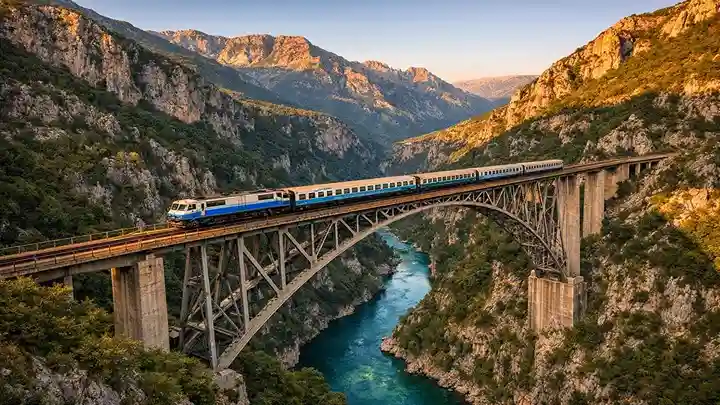
If your trip coincides with the seasonal daylight Tara service, this is the version to choose for scenery. The northbound train has operated from Bar in the morning (09:00 in the published late-2026 summer timetable), arriving at Belgrade Centar in the evening (20:17 in that timetable). The train passes Lake Skadar, climbs north of Podgorica, crosses the spectacular Mala Rijeka viaduct and continues through the mountains toward Serbia. The ride takes roughly eleven hours: it is a travel day, not a quick morning excursion.
Seasonal warning: The 2026 northbound daytime service ended on 1 October 2026 after an extension beyond the original season. It must not be described as an everyday year-round train. Future summer dates require fresh confirmation from ŽPCG and Srbija Voz; neither the 09:00 departure nor the seasonal operating dates should be copied forward automatically.
Plan B: Overnight Lovćen train, outside the daylight season
Outside the daytime operating period, organize Day 9 around the overnight Lovćen train. The published 2026 northbound schedule shows a departure from Bar at 20:10 and arrival at Belgrade Centar about 07:08 the next morning. This saves a hotel night, but most of the spectacular high-mountain scenery passes in darkness. Sleeping berths or couchettes cost extra and availability depends on the actual train formation; reserve them if you need a proper bed.
If daylight scenery is a priority on an off-season trip, consider a separate daytime regional rail outing from Bar or Podgorica toward Kolašin, followed by the northbound overnight service. This can be an enjoyable compromise but is not a guaranteed same-day connection: verify both directions and build in time for disruptions and the boarding station. Do not promise to see the full Morača canyon after dark.
Seats, tickets and which side of the train
The railway crosses both sides of valleys and winds through tunnels, so there is no consistently best side to sit for the whole route. Window availability, daylight, dirty glass and temporary work can affect the experience more than a fixed left/right rule. Keep your camera ready near Lake Skadar and the dramatic climb north of Podgorica, but avoid leaning out of windows or obstructing corridors.
As an indicative published fare, ŽPCG lists a standard second-class Bar–Belgrade ticket around €23.80 on its timetable, with any sleeper accommodation charged separately. Always reconfirm prices, reservation procedures and train number before traveling; a fare visible in a route finder is not a booking guarantee.
Days 10–11: Belgrade — Historical Sights and Time to Recharge
Day 10: Arrival, Kalemegdan and the Danube–Sava confluence
If you traveled on the seasonal daytime train, you arrived the previous evening. If you used the overnight Lovćen, today begins with your morning arrival at Beograd Centar (Prokop), which is not the old historic central station and is not immediately beside the pedestrian city centre. Check local transit or your hotel’s directions before setting off.
Visit Belgrade Fortress and Kalemegdan Park, then walk through Knez Mihailova. The view of the confluence of the Sava and Danube is an excellent introduction to the city. Keep Day 10 gentle after the sleeper: a late breakfast and a walk are more realistic than three museums.
Day 11: Saint Sava, Yugoslav history and Skadarlija
See the monumental Church of Saint Sava, then consider the Museum of Yugoslavia and House of Flowers for context on modern Balkan history. In the evening, head to Skadarlija for traditional restaurants. Choose dishes and performances according to your interests; food, drink and music bills can vary considerably between establishments.
This extra day is useful insurance against a delayed Bar–Belgrade train. If you are traveling with children, have limited mobility or need a slower pace, you can reduce sightseeing and use more time here without losing a key border connection.
Day 12: Novi Sad by Train — Confirm the Actual Arrival Station
A Belgrade–Novi Sad rail day trip is achievable, but the older claim that you always reach “Novi Sad station” on a 36-minute Soko ride is misleading for 2026. Rail operations around Novi Sad changed after the 2024 station canopy collapse and subsequent service restrictions. As of 11 October 2026, many rail journeys from Belgrade used Petrovaradin as the Novi Sad-area stop, with onward transport into the city.
Important station update: A new TPS Novi Sad stopping pattern has been announced for 12 October 2026, with Soko and other services using an alternative stop outside the historic station building. Travelers must check which stop their specific train uses, whether the change has entered service as announced, and the onward city-bus connection. A fast rail journey is not the same as arriving in Novi Sad’s old town.
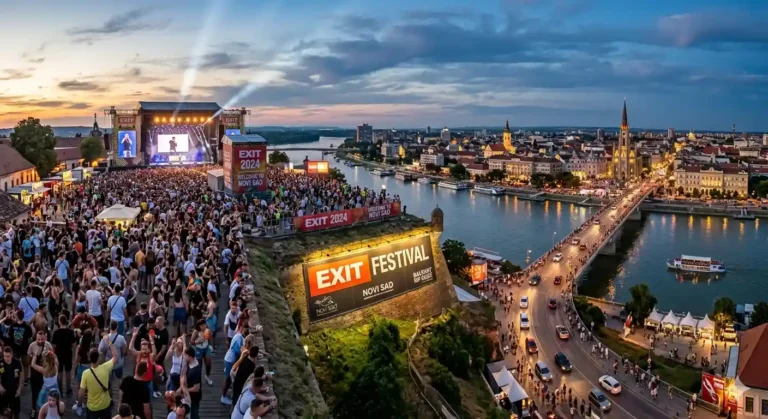
Spend the morning at Petrovaradin Fortress for Danube views, then cross into the historic centre to explore Freedom Square, the Name of Mary Church and Dunavska Street. Return to Belgrade that evening so your departure to Sofia on Day 13 is straightforward.
Check before paying for Soko
Use Srbija Voz to verify the station printed on your ticket, not an old blog timetable or the old Novi Sad station address. Allow extra time for transfers between the rail stop, fortress and city centre.
Day 13: Belgrade to Sofia by Bus, Not by a Guaranteed Train
The direct international Belgrade–Sofia passenger train is not operating as a normal through service in 2026. The older guide’s “morning train from Belgrade, change at Niš, reach Sofia in the afternoon” is not a bookable all-rail itinerary you can rely on. The practical choice for a two-week trip is a scheduled international bus from Belgrade to Sofia. Exact duration depends on departure, operator, stops and checks at the Serbia–Bulgaria border; reserve most of the day for the transfer.
Use a date-based timetable such as Polazak or the relevant operator’s booking website. Confirm whether the listed boarding point is Belgrade’s principal bus terminal or another stop and where it arrives in Sofia. Serbia is outside Schengen; entering Bulgaria involves immigration checks and, for some non-EU short-stay travelers, the EU Entry/Exit System. Avoid committing to a timed Sofia attraction or onward flight immediately after this journey.
If the direct bus is unavailable on your date, you may need an alternative combination involving Niš, but only use it after identifying actual matching timetables and border-transfer arrangements. It should not be sold to readers as a fixed 2.5-hour plus 3-hour train connection.
Day 14: Sofia and the End of the Journey
Spend your final day in Sofia’s compact centre. Start at Alexander Nevsky Cathedral and Saint Sophia Church, then walk toward the Roman remains at Serdica and the Saint George Rotunda. Finish around Vitosha Boulevard or one of the city’s parks. Boyana Church is an excellent optional trip, but you will need additional travel time; do not tack it onto a tight airport departure.
Because this itinerary starts in Ljubljana and ends in Sofia, it is worth comparing a multi-city airline search with separate one-way flights, while factoring in baggage charges and airport transfer costs. Do not assume the two single flights will always be cheaper.
Flights for an open-jaw itinerary
The existing Aviasales route link is preserved. Compare flight options into Ljubljana, then separately check your preferred departure airport after Sofia: Compare flights to Ljubljana.
Practical Booking Sequence and Budget for the Full Trip
Book the bottlenecks before the easy city stays
- First: Establish your Day 9 travel date and whether a seasonal Bar–Belgrade day train actually operates. If not, plan around the overnight train and berth availability.
- Second: Find a viable Day 8 Mostar–Montenegro bus before paying for Bar lodging.
- Third: Confirm Day 5 Zagreb–Sarajevo and Day 13 Belgrade–Sofia buses, including each terminal and realistic arrival time.
- Fourth: Check the ŽFBH Sarajevo–Mostar train on Day 7 and your Ljubljana–Zagreb departure on Day 3.
- Last: Book local sightseeing, flexible hotels and Bled / Novi Sad day-trip trains after the core transfers are settled.
An indicative per-person budget, not a quoted fare
Prices move with the season, your accommodation standard and how early you book. The following figures are planning allowances per traveler in euros, not verified live hotel or train quotations. They exclude flights to Ljubljana and home from Sofia, and assume that accommodation costs are shared only when specified.
| Expense | Budget-minded allowance | More comfortable allowance |
|---|---|---|
| Accommodation per night | €25–50 (hostel / simple room) | €55–110 (private room; location-dependent) |
| Meals and drinks per day | €15–30 | €30–55 |
| Local transport and attractions per day | €8–18 | €15–35 |
| Long-distance trains and buses | Add a separate trip-wide allowance; bus legs and sleepers vary | Add a separate trip-wide allowance; consider sleeper upgrades |
| Contingency | Budget extra for border delays and replacement transport | Keep an emergency transport and accommodation reserve |
Most people will spend more in Ljubljana and Zagreb than in parts of Bosnia and Herzegovina or Serbia. A rail pass can be poor value here once you price in the non-rail segments. Add an emergency reserve for a missed bus or train, especially around Day 8 or Day 9, and avoid booking non-refundable onward travel on the same day as a long international transfer.
Luggage, connectivity, cash and border checks
- Travel light: Carry-on-sized luggage is easier on older rolling stock, station stairs and cross-border buses. Confirm bus hold-baggage fees and any sleeper compartment restrictions.
- Keep offline backups: Save screenshots of tickets, your passport details where appropriate, hotel directions, train numbers and alternate travel options.
- Check mobile roaming: An EU roaming package may not cover Serbia, Montenegro or Bosnia and Herzegovina. Confirm each country with your provider before crossing.
- Carry some local currency: EUR works officially in Slovenia, Croatia, Montenegro and Bulgaria, while BAM and RSD are used in Bosnia and Serbia.
- Allow border time: A Schengen exit or re-entry and several non-Schengen crossings can involve queues and document checks. Passport requirements depend on nationality and status.
- Check rail accessibility: Step-free access, seat reservations and bicycle carriage differ greatly across operators. Ask in advance if assistance is needed.
Travel insurance for cross-border journeys
The original VisitorsCoverage link is preserved. Compare policies carefully for medical coverage, cancellation, train and bus delays, and whether every country on your route is included: Compare travel insurance plans.
Best Time for This Scenic Balkan Rail Itinerary
June to September generally offers the best prospect of daylight views in the mountains and of finding the seasonal Bar–Belgrade day train, but only dates actually announced by the operator count. Some summer periods bring busy buses and expensive accommodation, and the heat in Mostar, Podgorica and Sofia can be intense. Late spring is pleasant for sightseeing but the long daylight international service may not yet be running.
October to early spring: Trains and buses still connect many of the main points, but the special long daytime Bar–Belgrade journey is not a dependable option after the 2026 summer season. If the mountain scenery is the whole reason for your trip, choose a confirmed operating window or add a local daylight rail excursion in Montenegro and take the overnight international service.
Official Railway and Border Resources to Check
For factual updates, favor the carriers and competent authorities over a general itinerary article. These sources can change a connection even when a timetable copied into another site looks plausible:
- Slovenian Railways (SŽ) — Ljubljana, Bled and Zagreb timetables.
- Croatian Railways (HŽPP) — Croatian and international service changes.
- Railways of the Federation of Bosnia and Herzegovina (ŽFBH) — Sarajevo–Mostar and seasonal Ploče services.
- Montenegro Railways (ŽPCG) — Bar–Belgrade and domestic services.
- Srbija Voz — Belgrade–Novi Sad station details and international train notices.
- Bulgarian Railways (BDZ) — Sofia services and extensions to Plovdiv / Istanbul.
- Slovenian government — Schengen border-control changes.
- European Central Bank — Bulgaria’s adoption of the euro in 2026.
Final Verdict: Is This 14-Day Balkans Itinerary by Train Realistic?
Yes, if you approach it as a train-led adventure with three essential international bus transfers, not as a continuous rail journey. Its standout experiences are the Ljubljana–Bled outing, Sarajevo–Mostar railway and Montenegro’s Bar–Belgrade line. The weakest parts are the inter-country transport gaps and the seasonal restriction on the daylight mountain train. A traveler who confirms those connections before paying for hotels will have a markedly more dependable itinerary.
The most important planning question is not “Can I see six countries in 14 days?” but “Does the Bar–Belgrade service I want actually run on Day 9?” Solve that first, arrange the Mostar-to-Montenegro bus around it, and let the rest of the route follow. Allow extra days if you want a slower trip, longer time in Sarajevo, or more hikes and mountain scenery.
Frequently Asked Questions: Balkans by Train
Can you travel the entire 14-day route by train?
No. A reliable version of this route uses buses between Zagreb and Sarajevo, Mostar and Montenegro, and Belgrade and Sofia. The remaining named intercity and scenic sections are planned by rail, subject to the operator timetable.
Does the Bar–Belgrade daytime train run all year?
No. The daylight Tara train is seasonal. The last northbound trip of its extended 2026 season was announced for 1 October 2026; the Lovćen overnight service is the practical alternative outside the daylight season, subject to current schedules.
Can I take a train from Zagreb to Sarajevo?
Not as a regular direct passenger service in the current itinerary. Plan an international bus journey and check the date, route and Sarajevo arrival terminal before booking.
Does the train from Belgrade go into Novi Sad city centre in October 2026?
Do not assume so. Services have used Petrovaradin, and new TPS Novi Sad stopping arrangements were announced for 12 October 2026. Always confirm the named stop and local transfer with Srbija Voz.
Is an Eurail or Interrail Pass good value for this journey?
It depends on the exact tickets and dates. The itinerary has three international bus legs not covered by a rail pass, and some trains may require reservations or sleeper supplements. Compare point-to-point prices before buying a pass.
What currency should I use on this trip?
Euro in Slovenia, Croatia, Montenegro and Bulgaria; Bosnian convertible mark (BAM) in Bosnia and Herzegovina; Serbian dinar (RSD) in Serbia. Bulgaria adopted the euro in January 2026.
Can I travel from Belgrade to Sofia by a direct international train?
A regular through Belgrade–Sofia passenger train is not running in 2026. Use a date-checked international bus or verify a practical transfer plan yourself before relying on separate rail or bus segments.