Sofia in 2 Days: The Perfect First-Time Bulgaria Itinerary

Sofia in 2 Days is enough to discover Bulgaria’s capital without rushing between every attraction. A well-planned weekend lets you explore Roman ruins, impressive Orthodox churches, Ottoman-era landmarks, local restaurants, green spaces, and lively pedestrian streets.
The key is to organize your Sofia itinerary geographically. Spend your first day exploring the historic center, then use your second day for either UNESCO-listed Boyana Church or a more relaxed combination of museums, parks, and neighborhood cafés.
This practical guide covers what to see, realistic sightseeing times, airport transfers, public transportation, Bulgarian food, accommodation areas, and approximate costs for first-time visitors.
Quick Answer: Sofia in 2 Days
- Are two days enough? Yes, for Sofia’s major central highlights and one carefully chosen extra experience.
- Best area to stay: Serdika or near Vitosha Boulevard.
- Best transport: Walking in the center; metro for longer journeys.
- Walkability: Excellent for the main historic sights.
- Best historical stop: Ancient Serdica and the Rotunda of Saint George.
- Best religious landmark: Alexander Nevsky Cathedral.
- Best evening walk: Vitosha Boulevard toward the National Palace of Culture.
- Traditional food: Try a Bulgarian restaurant around Solunska Street or central Sofia.
- Boyana Church: Worth a half-day for medieval art enthusiasts.
- Vitosha Mountain: Better for nature-focused visitors willing to sacrifice city sightseeing.
- Sightseeing pace: Approximately six to eight hours daily, including breaks.
- Advance reservations: Usually unnecessary for outdoor sightseeing; useful for popular restaurants, organized tours, and larger Boyana groups.
- Best strategy: Historic center on Day 1; choose either Boyana or central museums on Day 2.
Table of Contents
Sofia in 2 Days: Quick Itinerary Overview
The following Sofia in 2 Days itinerary minimizes unnecessary transport and keeps sightseeing, food, and relaxation within a manageable schedule.
| Time | Day 1: Historic Sofia | Day 2: Your Choice |
|---|---|---|
| Morning | Alexander Nevsky Cathedral and Saint Sofia Church | Boyana Church or central museum |
| Late morning | Russian Church, government district and Largo | National History Museum or City Garden |
| Lunch | Traditional Bulgarian restaurant | Casual café or Bulgarian lunch |
| Afternoon | Serdica, religious landmarks and Vitosha Boulevard | Return from Boyana or Borisova Gradina |
| Evening | National Palace of Culture and dinner | Relaxed meal, wine bar or central walk |
Important: Both days assume you have two full sightseeing days, rather than arriving late on Day 1 or departing early on Day 2.
Is 2 Days Enough in Sofia?
Yes. Two full days are sufficient for most travelers visiting Sofia for the first time, particularly those interested in architecture, history, local food, and a comfortable weekend city break.
The main advantage is geography. Alexander Nevsky Cathedral, Saint Sofia Church, the Largo, Ancient Serdica, Saint George Rotunda, and several religious landmarks are clustered in the central area.
You can explore much of this district on foot instead of repeatedly taking taxis or buses.
However, two days are not enough to experience every museum, hike Vitosha Mountain, explore Boyana, and take an excursion to Rila Monastery.
For a first visit, prioritize central Sofia over distant attractions. A third day becomes particularly valuable if you want mountain hiking or a longer excursion outside the city.
Sofia Itinerary Day 1 – Historic Center, Serdika & Vitosha Boulevard
Day 1 follows a mostly northwestern and southwestern walking direction, starting near Alexander Nevsky Cathedral and finishing around Vitosha Boulevard and the National Palace of Culture.
Start at Alexander Nevsky Cathedral
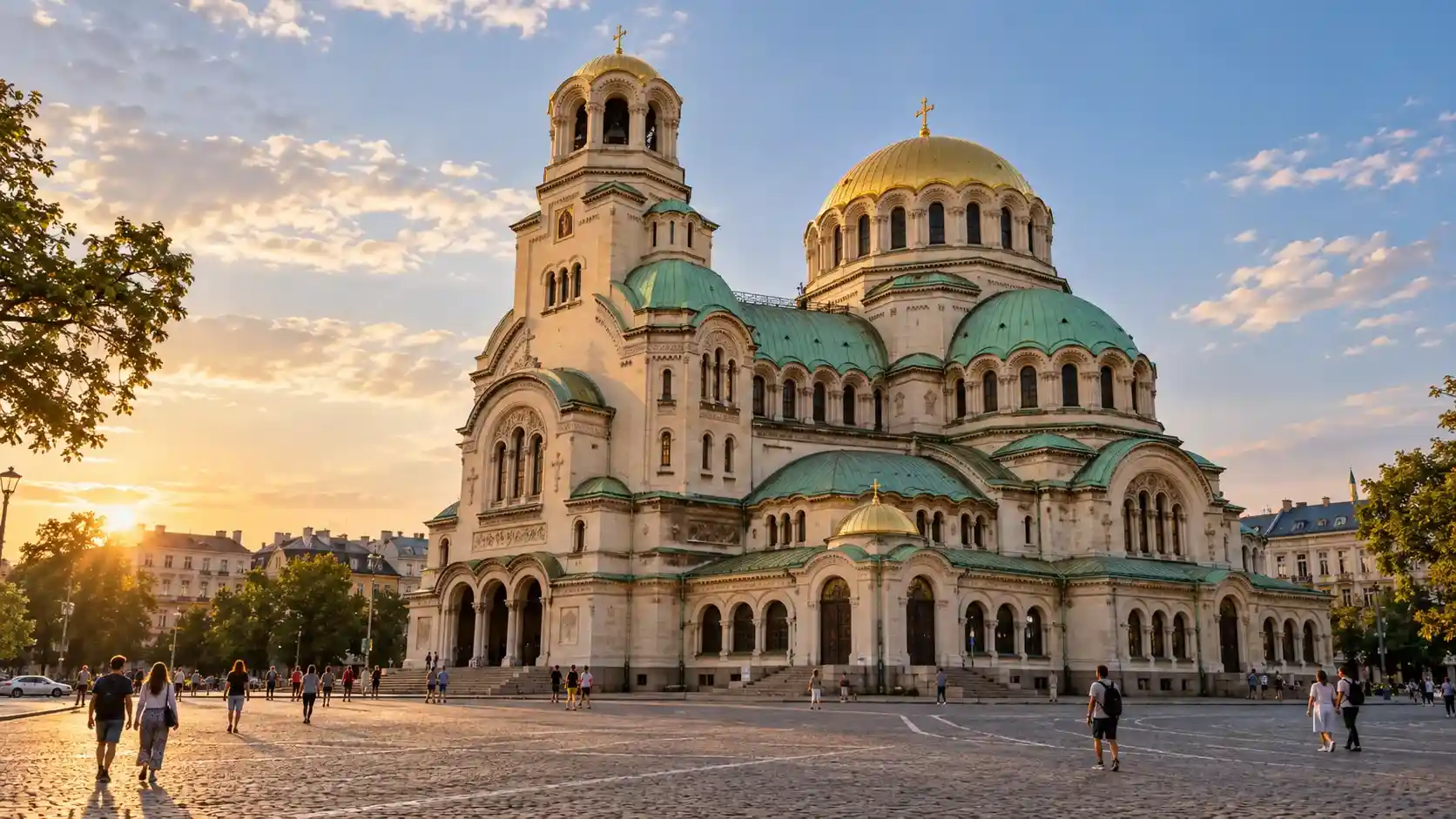
Begin at Alexander Nevsky Square, home to Sofia’s most recognizable landmark. The cathedral’s golden dome, green roofs, and Neo-Byzantine architecture make it an excellent introduction to the Bulgarian capital.
Construction was completed in the early twentieth century, and the cathedral commemorates those who died during the struggle that led to Bulgaria’s liberation from Ottoman rule.
Allow approximately 30–45 minutes to admire the exterior and, when accessible, the interior.
Ordinary entry to the main worship space is generally free, while the separate Museum of Christian Art in the crypt requires a ticket. The National Gallery’s published adult admission for the crypt is €10 as of August 2026.
Wear respectful clothing, keep your voice low, and follow any restrictions on photography, especially during religious services. For current visitor details, consult Sofia’s official tourism information.
Visit Saint Sofia Church
Saint Sofia Church stands only a short walk from Alexander Nevsky Cathedral. Although less visually imposing, it is among the city’s most historically significant buildings.
The present basilica dates largely from the sixth century, and its history helps explain Sofia’s early Christian heritage. The city also takes its present name from this church.
Allow 15–25 minutes for a short visit. An underground archaeological exhibition exists beneath the church, but check current access arrangements before making it part of your schedule.
Continue Toward the Russian Church
Walk toward the Russian Church of Saint Nicholas, recognizable by its gilded onion domes and decorative exterior.
This stop fits naturally between the cathedral district and the government buildings. It is particularly worthwhile for architecture enthusiasts and travelers interested in Sofia’s variety of Orthodox religious buildings.
Allow around 10–15 minutes outside, adding time only if visitor access is available.
Explore Parliament, the Largo and Government District
Continue through Sofia’s central civic district, where grand nineteenth-century buildings stand alongside monumental architecture from the socialist period.
The yellow-paved streets, government buildings, and nearby former royal palace reflect different political eras without requiring lengthy museum visits.
Walk west toward the Largo, a central architectural ensemble associated with Bulgaria’s twentieth-century history.
This is primarily an outdoor sightseeing stop. Spend approximately 20–30 minutes observing the buildings and understanding how the modern city developed around its historic core.
Discover Ancient Serdica
The Serdika archaeological area is one of Sofia’s most distinctive attractions because Roman-era remains appear directly within the modern transport and government district.
Ancient Serdica was an important Roman settlement. Today, sections of its streets, foundations, and structures are visible around the Largo and Serdika metro area.
Many exposed archaeological remains can be viewed without paying an admission fee. Separate exhibitions or museum spaces may require tickets.
Allow 30–45 minutes to explore the visible remains and read the available information.
Practical advantage: You are now beside Serdika metro station, making this a useful reference point for navigating central Sofia throughout your trip.
Visit the Rotunda of Saint George
A short walk from Serdika brings you to the Rotunda of Saint George, a compact red-brick church surrounded by much larger government and hotel buildings.
Dating from Roman times, the rotunda is considered one of Sofia’s oldest preserved buildings.
Its contrast with the surrounding modern architecture makes it particularly interesting, even if you are not normally enthusiastic about religious sites.
General visits are traditionally free when access is permitted. Allow 15–20 minutes, and be respectful if worship is taking place.
Banya Bashi Mosque and Sofia Central Mineral Baths
Return toward the northern side of the Serdika district to see two nearby landmarks associated with Sofia’s Ottoman history and mineral springs.
Banya Bashi Mosque remains an active place of worship. Visitors should respect prayer times, dress modestly, remove their shoes when required, and avoid disturbing worshippers.
Nearby stands the former Central Mineral Baths building, distinguished by its patterned façade and domed architecture.
Although it once operated as a public bathhouse, the building now houses the Regional History Museum of Sofia. Do not expect to bathe inside the historic building.
The surrounding area also reflects Sofia’s long relationship with natural mineral water.
If you want to enter the museum, allow an additional 60–90 minutes rather than squeezing it into an already full afternoon.
Consider Sofia Synagogue
The Central Sofia Synagogue is close to the mosque and mineral baths, making it a logical additional stop.
Its presence alongside Orthodox churches and an active mosque illustrates the religious diversity of central Sofia.
The synagogue publishes visiting hours from Sunday to Friday and closes to visitors during certain national and Jewish holidays. Visitor access can also depend on religious activities.
Allow approximately 20–30 minutes if the building is open. Otherwise, appreciate the exterior and continue with your itinerary.
Lunch – Try Traditional Bulgarian Food
After your historical walking route, head toward the streets between Serdika and Vitosha Boulevard for lunch.
Moma Bulgarian Food & Wine, on Solunska Street, is a good choice for a polished introduction to Bulgarian cooking. It offers traditional-inspired dishes and Bulgarian wines in a distinctive setting. Expect moderate-to-higher restaurant pricing.
Shtastlivetsa, at 27 Vitosha Boulevard, is another convenient option, especially if you want to combine lunch with the next section of the itinerary. Its menu is broader than strictly traditional Bulgarian cooking.
Hadjidraganov’s Houses, near Lion’s Bridge, offers a more traditional tavern-style atmosphere. However, it is a detour north of the main route, so choose it only if food and traditional décor are a priority.
Try Shopska salad, grilled kebapche, or a regional Bulgarian stew. Menu availability varies by restaurant.
Walk Along Vitosha Boulevard
Spend the late afternoon exploring Vitosha Boulevard, Sofia’s best-known pedestrian shopping street.
This boulevard offers shops, outdoor cafés, restaurants, and a lively urban atmosphere. On clear days, sections of the street provide views toward Vitosha Mountain.
It is worth visiting, but mainly for the experience of walking through central Sofia rather than for a particular attraction.
Allow 45–60 minutes, including a relaxed coffee or dessert break.
Finish Near the National Palace of Culture
Continue south to the National Palace of Culture, commonly called NDK.
The enormous cultural and conference complex represents a different architectural period from Sofia’s older religious and civic landmarks.
Its surrounding open spaces and park areas are useful for an evening stroll, particularly after a day spent visiting churches and archaeological sites.
You do not need to enter the building unless there is an event you specifically want to attend.
Dinner and Evening in Central Sofia
For a convenient dinner, remain around Vitosha Boulevard or the streets immediately east and west of it.
Moma works well for a Bulgarian-focused meal, while Shtastlivetsa suits travelers looking for a comfortable restaurant directly on the pedestrian boulevard.
For something different, Raketa Rakia Bar near Zaimov Park offers Bulgarian-inspired cooking and a retro socialist-era interior. It requires a separate journey from NDK, so choose it as a deliberate dinner destination rather than an additional walking stop.
Reservations can be useful for popular restaurants on Friday and Saturday evenings.
Detailed Day 1 Schedule
| Approximate Time | Activity | Duration | Transport | Practical Note |
|---|---|---|---|---|
| 9:00–10:15 | Alexander Nevsky and Saint Sofia | 75 min | Walking | Check worship access |
| 10:15–11:30 | Russian Church and government area | 75 min | Walking | Mostly outdoor sightseeing |
| 11:30–13:30 | Serdica, Rotunda and nearby religious landmarks | 2 hours | Walking | Skip interiors if delayed |
| 13:30–14:45 | Lunch | 75 min | Walking | Try Bulgarian cuisine |
| 15:00–17:00 | Vitosha Boulevard and NDK | 2 hours | Walking | Allow a coffee break |
| Evening | Dinner and relaxation | Flexible | Walking or metro | No extra sightseeing required |
Day 1 Planning Tip: Prioritize the cathedral, Serdica, Saint George Rotunda, and Vitosha Boulevard. If you are running late, skip additional museum interiors instead of sacrificing lunch or turning the afternoon into a race.
Travelers who prefer historical commentary can also compare guided walking tours in Sofia on GetYourGuide. Choose a tour that follows your planned route rather than duplicating attractions you will visit independently.
Sofia Itinerary Day 2 – Culture, Boyana & Local Life
Day 2 should feel different from your first day. Instead of collecting more churches and monuments, choose one of two approaches based on your interests and available time.
Start with Breakfast or Coffee
Sofia has both traditional bakeries and modern specialty coffee shops.
Furna, near the Women’s Market, is a practical choice for pastries, including Bulgarian-style banitsa. Coffee Syndicate on Moskovska Street is another option for travelers who prefer specialty coffee close to the historic center.
Breakfast does not need to consume a large part of the morning. Allow 30–45 minutes before beginning your chosen Day 2 route.
Choose Your Day 2 Strategy
Option A: Boyana Church and southern Sofia. Choose this if medieval art, UNESCO heritage, and a quieter suburban atmosphere interest you more than additional museums.
Option B: Central museums, gardens, and cafés. Choose this if you prefer less transportation, unpredictable weather makes outdoor excursions difficult, or you want a slower second day.
Neither option is universally better. The right decision depends on whether Boyana Church is personally important to you.
Option A – Visit Boyana Church
Boyana Church stands in the southern part of Sofia near the foothills of Vitosha Mountain.
Listed by UNESCO in 1979, it is internationally significant for its medieval frescoes, particularly the paintings dated to 1259.
The remarkable part of the experience is not the building’s size but the quality and historical importance of the preserved paintings.
Verified visitor information for 2026: Standard adult admission is €10. The church permits no more than nine people inside simultaneously, and visits to the medieval sections are limited to approximately ten minutes. Interior photography is prohibited.
Individual visitors and small groups of up to five people can visit without an advance reservation, but larger organized groups require confirmed bookings.
Check seasonal hours and any exceptions through the official Boyana Church visitor information.
Getting there: One practical public transport route is metro line M2 to Vitosha station, followed by bus 64 toward Boyansko Hanche and a short walk. Sofia also introduced bus 65 in April 2026, connecting the Krasno Selo metro area with Boyana Church.
Verify departure times before leaving. A licensed taxi is more convenient for travelers with limited mobility, children, or a tight schedule.
Budget approximately three to four hours for the full outing from central Sofia, including travel, potential waiting time, and the visit itself.
National History Museum – Worth Combining?
The National History Museum is in the Boyana area, south of central Sofia, making it a possible addition to Option A.
Its collections cover major periods of Bulgarian history, including archaeology, medieval history, and later national development.
Allow approximately 90–120 minutes for a meaningful visit. The museum requires admission, and visitor arrangements should be checked before departure.
Although the museum and Boyana Church are in the same wider district, they are not directly beside one another. Plan an additional local transfer or walk depending on your route.
Recommendation: Combine both only if history is a major reason for your trip. Otherwise, visit Boyana Church, return toward the center, and enjoy a relaxed afternoon.
Should You Add Vitosha Mountain?
Vitosha Mountain rises immediately south of Sofia and provides hiking, forest walks, viewpoints, and seasonal mountain recreation.
However, it should not be treated as a quick extension of Boyana Church without considering transportation and weather.
As checked in October 2026, the Vitosha ski operator explicitly states that the Simeonovo Gondola is not operating. Its Vitoshko Lale lifts also entered seasonal maintenance after September 28, with winter reopening dependent on conditions.
The operator identifies bus 66 and private vehicles as access alternatives to its mountain area. Other historical lift routes should not be assumed operational without separate confirmation.
Check current Vitosha lift and access information immediately before planning a mountain excursion.
Vitosha Mountain Decision
Add Vitosha if: Hiking, mountain scenery, or seasonal outdoor activities are more important to you than museums and city neighborhoods. Dedicate most of Day 2 to the mountain.
Stay in Sofia if: You want to visit Boyana Church, enjoy local restaurants, or explore the capital without worrying about mountain weather and transportation.
Do not plan a two-day itinerary around a lift unless its operation is confirmed for your specific travel date.
Option B – Spend Day 2 in Central Sofia
For many first-time visitors, remaining in the center is the most comfortable option.
Start at the National Archaeological Museum, close to Serdika. It provides more detailed context for the Roman and earlier history introduced during Day 1.
The museum’s published adult admission is €6, with seasonal visiting hours. Allow approximately 60–90 minutes.
Next, continue toward City Garden and the Ivan Vazov National Theatre. This area is suitable for photography, a coffee break, and a slower look at everyday urban life.
Art enthusiasts can instead visit the National Gallery’s Kvadrat 500 collection near Alexander Nevsky Cathedral. Its published adult admission is €10, and the gallery normally closes on Mondays and certain holidays.
Choose one substantial museum rather than attempting to visit all of them.
The Museum of Art from the Period of Socialism is another worthwhile attraction, but it is outside the compact historic-center route. It is usually a better choice for an extended visit than for a relaxed two-day itinerary.
Lunch on Day 2
For a lighter lunch, Sun Moon near the Small Five Corners area provides vegetarian food, bread, and bakery items. It suits travelers who want an alternative to another large traditional meal.
If you spent your morning at Boyana, returning to the center for lunch provides more choice and avoids relying on an unfamiliar restaurant near your excursion.
Alternatively, choose a casual restaurant near City Garden if following Option B.
Walk Through Borisova Gradina
Borisova Gradina is one of Sofia’s main green spaces and a pleasant contrast to the historic streets explored on Day 1.
Its paths, trees, and recreation areas make it useful for walking, especially during spring, summer, and early autumn.
Allow approximately 45–75 minutes rather than attempting to cover the entire park.
If it is raining heavily or daylight is limited, replace the park with an indoor gallery, café, or earlier dinner.
Enjoy Your Final Evening
Finish the trip with whichever experience you enjoyed most.
You could return to Vitosha Boulevard, choose a Bulgarian restaurant, try a local wine, or spend an hour in a quiet café.
Travelers with an early flight or bus should stay near their accommodation instead of planning an additional cross-city journey.
Detailed Day 2 Schedule
| Approximate Time | Option A: Boyana | Option B: Central Sofia | Transport | Practical Note |
|---|---|---|---|---|
| 8:30–9:30 | Breakfast and travel | Breakfast and coffee | Metro/bus or walking | Check opening times |
| 9:30–12:30 | Boyana Church and travel buffer | Archaeological Museum and City Garden | Bus/taxi or walking | Boyana entry may involve waiting |
| 12:30–14:00 | Optional museum or return toward center | Lunch | Varies | Keep lunch flexible |
| 14:00–16:30 | Lunch and relaxed central walk | Borisova Gradina or gallery | Walking/metro | Weather-dependent |
| Evening | Dinner | Dinner and drinks | Walking/metro | Leave time for departure preparations |
Day 2 Planning Tip: Treat Boyana Church and a central museum day as alternative experiences. Trying to combine Boyana, several museums, Vitosha Mountain, and an evening restaurant usually makes the day unnecessarily exhausting.
Best Things to Do in Sofia in 2 Days
Must-See with Only 2 Days
- Alexander Nevsky Cathedral: Sofia’s major architectural landmark.
- Saint Sofia Church: An introduction to the city’s early Christian history.
- Ancient Serdica: Roman remains integrated into the modern center.
- Rotunda of Saint George: A small but historically significant ancient church.
- Vitosha Boulevard: The most convenient central area for strolling, cafés, and dinner.
- The Largo: An accessible introduction to Sofia’s twentieth-century architecture.
Worth Adding If Time Allows
- Boyana Church for visitors particularly interested in UNESCO heritage.
- National Archaeological Museum for a deeper understanding of ancient Bulgaria.
- Borisova Gradina for greenery and slower sightseeing.
- Sofia Synagogue if visitor access aligns with your schedule.
- Regional History Museum for Sofia’s urban history.
Better with a Third Day
- A substantial hike on Vitosha Mountain.
- A full excursion to Rila Monastery.
- Additional museums outside the compact center.
- A longer visit to Sofia’s residential neighborhoods.
Bulgarian Foods to Try in Sofia
Sampling traditional Bulgarian food is an important part of a Sofia city break. Many dishes are shared across Bulgaria rather than being unique to the capital.
- Banitsa: Savory layered pastry, commonly filled with eggs and white cheese. Ideal for breakfast.
- Shopska salad: Tomatoes, cucumber, peppers, onion, and grated Bulgarian white cheese.
- Tarator: A chilled yogurt-based soup commonly prepared with cucumber, garlic, and dill.
- Kebapche: Seasoned grilled minced-meat rolls, often served with bread or potatoes.
- Kyufte: Bulgarian grilled meatballs or patties, with regional variations.
- Kavarma: A hearty dish combining meat, vegetables, and seasonings.
- Sirene: Bulgarian brined white cheese widely used in salads and pastries.
- Bulgarian yogurt: A staple food served plain or incorporated into numerous dishes.
- Mekitsa: Fried dough often enjoyed at breakfast with sweet or savory accompaniments.
- Garash cake: A rich Bulgarian chocolate-and-walnut dessert.
For a short visit, choose two or three dishes that appeal to you rather than ordering everything at one meal.
Where to Eat in Sofia
Choose restaurants based on location, meal type, and budget instead of traveling across the city solely because a restaurant appears on a popular list.
Traditional Bulgarian Food
Moma Bulgarian Food & Wine – Solunska Street: A moderate-to-higher-priced restaurant for traditional-inspired Bulgarian dishes and wine. Suitable for couples and visitors who want a longer sit-down meal. Reserving for dinner is sensible.
Hadjidraganov’s Houses – near Lion’s Bridge: A traditional tavern-style option with Bulgarian cuisine and folkloric décor. Better for travelers prioritizing atmosphere than for those following the fastest central walking route.
Budget-Friendly Food
Furna – near Women’s Market: A bakery suited to inexpensive breakfast pastries, takeaway snacks, and a casual start to the day. It is not a full-service dinner restaurant.
Sun Moon – Small Five Corners: A casual vegetarian bakery and restaurant with bread, light meals, and plant-focused options. Useful for visitors avoiding meat-heavy meals.
Modern Bulgarian Cuisine
Shtastlivetsa – Vitosha Boulevard: A moderate-to-higher-priced restaurant combining Bulgarian influences with a broader menu. Its central location makes it particularly convenient after a walk along the boulevard.
Raketa Rakia Bar – near Zaimov Park: A lively option featuring Bulgarian-inspired food, a retro interior, and rakia. Consider booking ahead for a busy evening.
Breakfast and Coffee
Coffee Syndicate – Moskovska Street: A specialty coffee stop suitable for a shorter café break close to central attractions. Expect café pricing rather than a full restaurant menu.
Dinner and Drinks
Vitosha Boulevard works well for a first evening because restaurants are close together. For a different atmosphere, Raketa combines dinner with Bulgarian drinks in a more distinctive setting.
Where to Eat Tip: Restaurant hours, menus, and prices can change. Check the restaurant directly before traveling, and reserve only when necessary. Tipping is optional, not mandatory; review your bill before paying.
How to Get Around Sofia
Walking
Walking is the most efficient way to experience central Sofia.
Alexander Nevsky Cathedral, the government district, Serdika, and the main central shopping streets are close enough to combine without needing transportation between every attraction.
Expect uneven pavement, occasional cobblestones, and busy road crossings. Comfortable shoes are more useful than a complicated public transport plan for Day 1.
Sofia Metro
Sofia’s metro is particularly useful for airport transfers, travel between central districts, and reaching connections toward southern neighborhoods.
Important stations for visitors include Serdika, Sofia University, NDK, and Vitosha.
Under the published 2026 fare structure, a standard metro single journey costs €0.80. The integrated Ticket 30 Plus also costs €0.80 and allows eligible transfers within the first 30 minutes.
Contactless bank-card payment is supported at metro entry validators and on the surface network. When changing vehicles, validate again as required.
A one-day travel product is listed at €2, and the bank-card pay-as-you-go system can apply a daily cap under its conditions.
Check Sofia Metro’s official ticket information before traveling, particularly if using multiple ticket types.
Trams, Buses and Trolleybuses
Sofia’s surface transport network is useful for destinations not directly served by the metro.
Trams can be convenient for relatively short trips, while buses are important for reaching neighborhoods such as Boyana and certain mountain access points.
Use the official Sofia Urban Mobility information to confirm routes and departure times. Do not rely solely on transport instructions from old travel articles.
Taxi and Taxi Apps
Licensed taxis are useful for airport arrivals outside metro operating hours, visits to Boyana, and journeys with significant luggage.
Yellow!, OK Supertrans, and TaxiMe are among the established taxi services listed by Sofia’s tourism authorities. Availability and booking methods can change.
Use an official app, dispatch service, or recognized taxi rank. Check the vehicle and fare information rather than accepting unsolicited airport transport offers.
Rental Car
You do not need a rental car for a two-day visit centered on Sofia.
Parking, traffic, and the city’s walkable center generally make public transportation more convenient.
A car becomes more useful if Sofia is the starting point for a longer journey through Bulgaria, particularly one involving rural areas or several destinations.
For such trips, compare Sofia car rentals on DiscoverCars, checking insurance, deposits, and cross-border conditions before booking.
Sofia Transportation Comparison
| Transport | Best For | Cost | Main Limitation |
|---|---|---|---|
| Walking | Historic center | Free | Weather and distance |
| Metro | Airport and major districts | From €0.80 per trip | Limited coverage of some suburbs |
| Bus/tram/trolleybus | Neighborhoods and Boyana | Integrated city fares | Traffic and waiting |
| Taxi | Luggage and direct journeys | Metered fare | More expensive than public transport |
| Rental car | Bulgaria road trips | Variable daily rate | Parking and rental conditions |
Sofia Transport Tip: Use walking as your default for Day 1. Save public transport for your airport journey, Boyana excursion, or longer cross-city movements. Avoid paying for unnecessary taxi journeys between nearby central landmarks.
Sofia Airport to City Center
Sofia Airport is relatively close to the capital’s center, making it convenient for short city breaks.
Metro from Sofia Airport
Metro line M4 connects Sofia Airport with the central metro network.
The airport metro station is beside Terminal 2. Travelers arriving at Terminal 1 can use the airport’s free inter-terminal shuttle to reach Terminal 2.
From the airport, the journey to Serdika generally takes around 25–35 minutes, depending on waiting and travel conditions.
A single metro journey costs €0.80 under the published 2026 tariff.
Check the latest metro departures and terminal arrangements before arriving, especially for early-morning and late-night flights.
Airport Bus, Taxi or Private Transfer
Surface bus connections also exist, but the metro is usually simpler for a first-time visitor staying near Serdika.
Licensed taxis are useful if your accommodation is far from a metro station or you arrive outside normal metro service hours.
Private transfers are most useful for families, larger groups, travelers with substantial luggage, or those who prefer a prearranged pickup.
You can compare Sofia Airport private transfers through Welcome Pickups if this convenience matters to you.
Use the official Sofia Airport website for terminal and airport-service updates.
Airport Transfer Tip: If your hotel is within walking distance of Serdika, the metro is usually the best-value arrival option. For early departures, allow additional time for terminal transfers, airport security, and unforeseen delays.
Where to Stay for 2 Days in Sofia
For a short visit, accommodation location matters more than having a large selection of hotel facilities.
Around Serdika – Best Overall Choice
Serdika is the most practical base for first-time visitors who prioritize sightseeing and metro access.
Roman ruins, historic churches, restaurants, and public transportation are all conveniently located.
The main trade-off is that some streets can feel busy, especially near major roads and transport connections.
Around Vitosha Boulevard – Best for Restaurants
Choose this area if you enjoy walking to dinner, shopping, and spending evenings in cafés.
It is particularly suitable for couples and weekend travelers who prefer a lively, pedestrian-friendly location.
Rooms directly overlooking busy sections of the boulevard may experience more noise than those on surrounding side streets.
Around Alexander Nevsky and Oborishte – Best for Architecture
This area is appealing for travelers who want historic buildings, cultural landmarks, and a somewhat quieter environment.
It works well for photography enthusiasts and visitors who prefer mornings near major landmarks.
However, the walk to the southern end of Vitosha Boulevard is longer than from Serdika.
Around NDK – Best for Evening Convenience
NDK offers metro access, restaurants, green spaces, and convenient connections toward central and southern Sofia.
It is a good alternative for travelers who prefer accommodation near a modern transport hub rather than directly beside the historic core.
For a two-night city break, compare central Sofia accommodation on Booking.com, paying particular attention to recent reviews, exact location, cancellation conditions, and the total price.
Booking Tip: A slightly more expensive central hotel can be better value than a cheaper property requiring repeated taxi journeys. Search using a map and calculate walking time to Serdika or Vitosha Boulevard before booking.
How Much Does Sofia in 2 Days Cost?
Sofia can be an affordable European city break, although actual costs depend heavily on accommodation, dining preferences, and travel dates.
Currency update: Bulgaria adopted the euro on January 1, 2026. The euro is now the official currency, replacing the Bulgarian lev. Older travel guides quoting lev-only budgets may therefore be outdated. The change is confirmed by the European Commission.
The following estimates are illustrative planning ranges in euros, not guaranteed live prices. Accommodation assumes two nights, per person when two travelers share a room, except for budget hostel-style stays.
| Expense | Budget Traveler | Mid-Range Traveler | Higher-Comfort Traveler |
|---|---|---|---|
| Accommodation, two nights | €40–80 | €80–150 | €160–300+ |
| Meals, two days | €25–45 | €50–85 | €100–170 |
| Coffee and drinks | €8–16 | €15–30 | €30–60 |
| Attractions | €0–15 | €15–35 | €30–60 |
| City transport | €3–8 | €4–12 | €15–45 |
| Airport transport | €2–5 | €2–20 | €20–60 |
| Optional tour or excursion | €0–15 | €15–45 | €40–100+ |
For a typical two-night stay, a sensible preliminary budget might be approximately €90–170 per person for a budget-focused visit or €180–330 for a more comfortable mid-range city break, excluding flights and substantial optional excursions.
These are broad estimates, not a live price survey. Solo travelers using private rooms may pay significantly more for accommodation, while couples sharing expenses may spend less per person.
Cards are widely useful in central Sofia, but carrying a small amount of euro cash is sensible for minor purchases or businesses with limited payment facilities. Use reputable ATMs and decline unnecessary currency conversion offers when appropriate.
Sofia in 2 Days for Different Travelers
Solo Travelers
Solo travelers benefit from Sofia’s compact center and inexpensive public transportation. Stay near a metro station, consider a walking tour for historical context, and keep late-night routes straightforward.
Couples
Couples may prefer accommodation near Vitosha Boulevard, slower lunches, an evening walk around NDK, and a restaurant reservation instead of adding more museums.
Families
Families should reduce the number of church interiors and allow time for parks, meals, and rest. A few major sights combined with Borisova Gradina will often work better than a tightly packed historical schedule.
Budget Travelers
Budget travelers can focus on free outdoor landmarks, inexpensive bakery breakfasts, central walking routes, and metro travel. Paid museums should be chosen according to genuine interests rather than a desire to visit everything.
Best Time of Year for a 2-Day Sofia Trip
Spring
Spring is attractive for walking and parks, although changing temperatures and rain can affect the schedule. Carry a light waterproof layer and keep an indoor museum alternative available.
Summer
Summer provides longer daylight hours and outdoor café opportunities. Begin sightseeing earlier in the day and avoid spending the hottest afternoon hours walking continuously through exposed city squares.
Autumn
Autumn is well suited to cultural sightseeing and cafés. Conditions generally become cooler, and mountain excursions require extra attention to weather, daylight, and seasonal lift operations.
Winter
Winter can be atmospheric, particularly around festive periods, but shorter daylight and cold conditions make indoor attractions more appealing.
Snow and mountain weather can affect travel toward Vitosha. Never assume a ski lift or mountain bus operates simply because winter recreation is advertised.
Should You Visit Vitosha Mountain with Only 2 Days?
For most first-time visitors, central Sofia is the better priority.
A meaningful Vitosha excursion requires transport planning, weather checks, suitable footwear, and enough daylight. It can easily consume half a day or more.
Because the Simeonovo Gondola is not operating according to the mountain operator’s current information, itineraries recommending it as an easy shortcut should not be followed without verification.
Choose Vitosha if: You actively want a hike, enjoy nature more than museums, have favorable weather, and are comfortable dedicating much of Day 2 to the mountain.
Stay in central Sofia if: This is your first visit, you prefer cultural attractions, you are traveling with limited time, or you want to include Boyana Church without rushing.
Vitosha is worthwhile, but its value depends on your interests rather than its proximity to the capital.
Common Mistakes First-Time Visitors Make in Sofia
| Mistake | Why It Causes Problems | Better Approach |
|---|---|---|
| Visiting too many museums | Little time remains for the city itself | Choose one or two meaningful museums |
| Ignoring opening days | Some museums close on Mondays or holidays | Check individual museum calendars |
| Assuming every Vitosha lift operates | Closed infrastructure can disrupt a mountain day | Verify the specific lift and alternative transport |
| Taking taxis everywhere | Adds unnecessary expense | Walk within central Sofia |
| Staying too far from the center | Repeated journeys reduce sightseeing time | Stay near Serdika, Vitosha Boulevard, or NDK |
| Planning Boyana, Vitosha and several museums together | Transport and waiting leave too little time | Choose one main Day 2 priority |
| Using outdated lev budgets | Bulgaria now uses the euro | Plan spending in euros |
| Assuming every business accepts cards | Small purchases may require cash | Carry limited euro cash |
| Leaving too little airport time | Terminal transfers and queues may cause stress | Plan transport and airport arrival conservatively |
Practical Tips for Spending 2 Days in Sofia
- Book accommodation within convenient walking distance of the historic center or a metro station.
- Download an offline map before arrival.
- Organize landmarks geographically rather than following a random attractions checklist.
- Check church access, museum schedules, and public holidays.
- Use the metro for the airport and longer journeys.
- Verify Boyana Church’s current visitor restrictions before traveling.
- Check Vitosha transport and weather immediately before a mountain trip.
- Carry euros, a payment card, and comfortable walking shoes.
- Leave room for unplanned café stops and local meals.
- Keep the second day flexible if the weather changes.
- Use properly licensed taxis or recognized taxi-booking apps.
- Make optional bookings only when they improve convenience or guarantee an experience you particularly want.
Is Sofia Worth Visiting for 2 Days?
Yes. Sofia is an excellent choice for travelers interested in a manageable European city break with substantial history, different architectural periods, and convenient public transportation.
Few short city walks bring together Roman archaeological remains, medieval and Orthodox churches, Ottoman heritage, monumental socialist-era buildings, contemporary cafés, and public parks as conveniently.
The city is particularly rewarding for independent travelers, couples, history enthusiasts, and visitors beginning a longer Bulgaria itinerary.
Its main limitation is that two days provide only an introduction to the surrounding region. Travelers wanting mountains, monasteries, or other Bulgarian cities should allow additional time.
Final Thoughts – Sofia in 2 Days
Sofia in 2 Days works best when you resist the temptation to visit every attraction.
Spend Day 1 in the historic center, moving naturally from Alexander Nevsky Cathedral through Serdika and the surrounding religious landmarks toward Vitosha Boulevard.
On Day 2, choose between Boyana Church and southern Sofia or a more relaxed central museum-and-park itinerary.
Walk wherever practical, use public transport for longer journeys, and treat Bulgarian food and café stops as important parts of the experience.
Vitosha Mountain is a worthwhile addition for nature-focused travelers, but only when weather, available transport, and the overall schedule make it realistic.
Before departure, check current attraction information and compare accommodation, walking tours, and airport transfer options according to your actual needs. A balanced itinerary will make your first Sofia visit more enjoyable than an overcrowded sightseeing checklist.