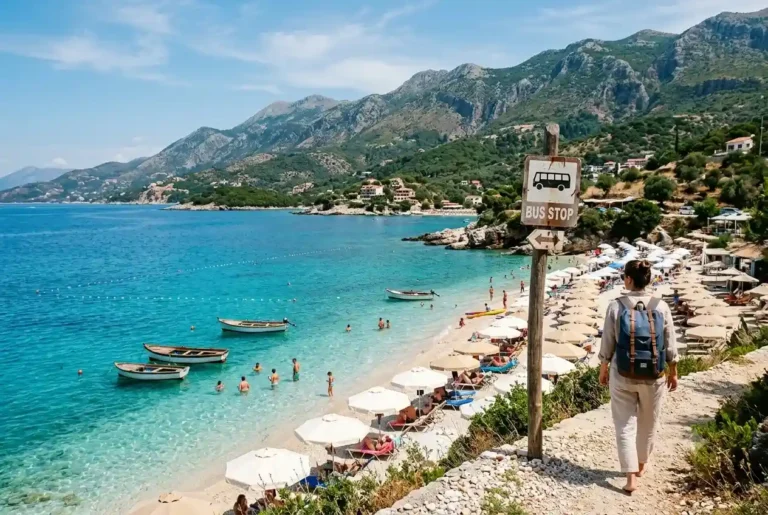
Albania 2 Week Itinerary (2026): 14 Days, Routes & Costs

An Albania 2 week itinerary sounds simple until you put the Albanian Alps, UNESCO-listed old towns and the Ionian coast on the same map. The distances are manageable, but the transfers are not always direct. A late mountain shuttle, missed ferry or long final-day airport run can turn an exciting route into a stressful one. This guide provides a realistic 14-day circuit that starts and ends at Tirana Airport, with clear overnight stops, public-transport alternatives and an optional Corfu exit.
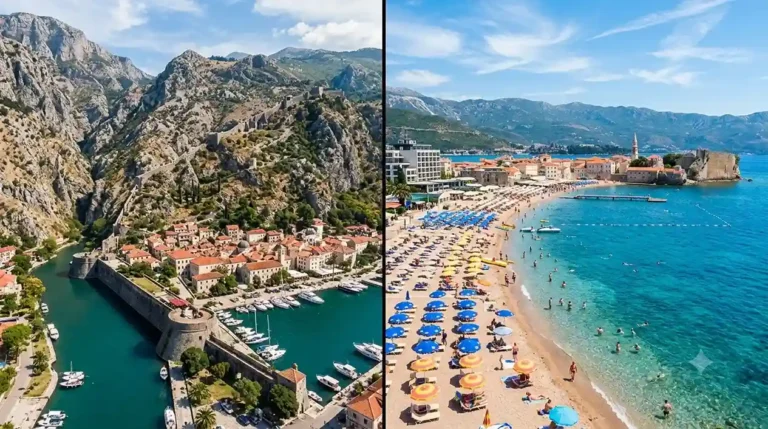
The route runs Tirana → Shkodër → Valbona → Theth → Shkodër → Berat → Himarë → Sarandë → Gjirokastër → Tirana. It balances four mountain-related days, two UNESCO cities and time on the Riviera. It is ambitious rather than leisurely: if your priority is a completely relaxed beach holiday or you cannot hike a full mountain day, use the alternative routes below. Logistics and indicative costs reflect information reviewed in October 2026; check schedules, operating seasons and conditions again for your departure date.
Table of Contents
Albania 2 Week Itinerary: Quick Answer
- Best route for a Tirana round trip: North first, south via Berat and Himarë, then Gjirokastër, finishing with a night in Tirana before flying.
- Best time for the full hiking-and-coast itinerary: June through September, provided the Valbona Pass is confirmed clear of snow; June and September are often more comfortable than peak August.
- Without a car: Feasible with city buses, prebooked Shkodër–Koman–Fierzë–Valbona transfers and a Theth return shuttle. The coast requires patience with connections.
- With a car: Useful in the south, but do not assume you can drive a car across the Valbona–Theth walking route. The ferry/mountain section needs a separate strategy.
- Best base for the Alps: Shkodër before the ferry and again after Theth, so you can store excess luggage and avoid a dangerous same-day rush south.
- Departure rule: Return to Tirana on Day 13 if flying from Tirana Airport on Day 14. If ending in Sarandë and sailing to Corfu, choose the open-jaw variation.
- Most important booking: Shkodër–Koman transfer, Koman–Fierzë ferry, Fierzë–Valbona transfer, mountain guesthouses and Theth–Shkodër pickup.
Map the Route Before Booking Hotels
The itinerary deliberately follows a north-to-south arc after the Alpine loop. The return to Shkodër on Day 6 is intentional: after hiking from Valbona to Theth, your next realistic road connection is back toward Shkodër. Similarly, the southern loop reaches the beach before Gjirokastër so that the final long transfer heads north toward your departing airport instead of forcing you to return from Sarandë on flight day.
| Day | Sleep in | Main plan | Transport/booking priority |
|---|---|---|---|
| 1 | Tirana | Arrive, Skanderbeg Square and Blloku | Airport bus or taxi |
| 2 | Tirana | Bunk’Art, city history or Dajti | Check site opening days |
| 3 | Shkodër | Travel north; Rozafa and old town | Tirana → Shkodër bus |
| 4 | Valbona | Shkodër → Koman ferry → Fierzë → valley | Book all three legs together |
| 5 | Theth | Hike over Valbona Pass | Only if trail/weather safe |
| 6 | Shkodër | Return from Theth; relaxed afternoon | Book mountain shuttle |
| 7 | Berat | Long bus transfer; old-town evening | Connect via Tirana if needed |
| 8 | Berat | Castle, Mangalem and Gorica | Walking and local urban bus |
| 9 | Himarë | Berat → Vlorë → Riviera | Verify onward coastal bus |
| 10 | Himarë | Choose one or two nearby beaches | Local taxi, boat or relaxed day |
| 11 | Sarandë | Riviera south; optional Butrint late afternoon | Himarë → Sarandë service |
| 12 | Gjirokastër | Butrint or Blue Eye, then old town | Allow for Sarandë transfer |
| 13 | Tirana | Gjirokastër sights, then north | Reserve long return journey |
| 14 | — | Tirana Airport departure | Do not plan a distant excursion |
Important trade-off: This is a broad country sampler. It gives the Riviera roughly two and a half days, not a full week, and keeps Gjirokastër to one overnight. Travelers who want slower beaches should omit the Valbona crossing or one cultural stop instead of compressing each transfer further.
Choose Your Transport Strategy
Can you do this Albania itinerary without a car?
Yes, with advance coordination. Intercity buses and shared minibuses (furgons) cover Tirana, Shkodër, Berat, Vlorë, Himarë, Sarandë and Gjirokastër, although some journeys require a change. Timetables, stops and final departures are not uniform across operators. Start with Albania’s eTransport route-search platform and check the exact operator, departure point and return option. Do not rely on a generic map pin marked “bus station,” particularly in Tirana, where different terminals serve different directions.
Book the Alpine logistics separately and keep written confirmation of meeting points. A Shkodër → Koman → Fierzë → Valbona itinerary consists of road transfer, ferry, and another road transfer. A ferry-only ticket will not deliver you to your guesthouse in Valbona. The same principle applies to Theth: its road access from Shkodër is now paved in normal conditions, but local vans are subject to seasonal availability and weather.
Does renting a car make sense?
A car simplifies Vlorë-to-Himarë beach stops, parking at selected viewpoints and Blue Eye transfers. It is much less useful for the classic Valbona-to-Theth point-to-point hike, which is a foot route rather than a drivable shortcut. One efficient hybrid is to do Days 1–8 by public transport, then collect a rental in Tirana or another suitable pickup point for the southern coastal loop. Compare the total cost of a one-way drop-off, fuel, parking, insurance excess and any restrictions on unpaved tracks before signing.
If a rental would materially improve your coastal route, compare Albania rental cars and insurance terms. Do not assume the lowest headline rate includes comprehensive cover or permission to use rural tracks.
Flights and airport: plan the last night correctly
Tirana International Airport is the most straightforward entry and exit for this particular circuit. The airport’s published city shuttle operates around the clock, generally hourly, with a fare of 400 ALL and a typical transfer of 30–40 minutes between the airport and the central stop behind the Opera and Ballet building. See the airport bus information and our detailed Tirana Airport to city-center transport guide.
If you leave from Corfu, a southern finish in Sarandë can reduce backtracking, but you must check the Sarandë–Corfu passenger ferry, port check-in, immigration requirements and the time needed to reach Corfu Airport. A ferry booking and an international flight are two separate journeys; avoid an unprotected tight connection.
Days 1–2: Tirana — Arrive, Settle In, Understand the Capital
Day 1: Central Tirana and an easy arrival
Travel from the airport to a centrally located room near Skanderbeg Square, Pazari i Ri or Blloku. Start with a short self-guided walk around Skanderbeg Square, Et’hem Bey Mosque and the Clock Tower. Continue past the Pyramid of Tirana, now repurposed as a public-facing creative and educational complex, and finish with dinner in Blloku. Your goal is to settle in, not to race across town after a flight.
2026 museum warning: the National History Museum beside Skanderbeg Square has been closed for a major renovation since March 2024, with a reopening previously announced for 2028. Treat the building as a landmark rather than an indoor museum stop unless the institution confirms a reopening. The formerly mentioned National Gallery of Arts also requires a current opening-status check; do not build the day around a presumed permanent exhibition.
Day 2: Cold War history, cafés and one optional excursion
Choose Bunk’Art 2 in the center for a focused introduction to Albania’s communist-era security system, then walk through Pazari i Ri for lunch and browse neighborhood cafés. If you prefer a bigger half-day outing, substitute Bunk’Art 1 and the Dajti Ekspres cable car near the outskirts, rather than attempting every bunker museum, a cable car and Krujë in one afternoon. The cable car normally closes on Tuesdays outside certain holiday exceptions: always check its current schedule.
Travelers who really want Krujë should use the day for its castle and old bazaar, which changes the timing of your Tirana sightseeing. Our Tirana in two days itinerary and day trips from Tirana comparison explain how to choose without stacking distant stops.
Sleeping tonight: Tirana. Pack a small mountain bag and leave bulky beach items organized; you may be able to store luggage at a Shkodër guesthouse later, but confirm their policy beforehand.
Day 3: Tirana to Shkodër — Rozafa Castle and the Old Town
Take a morning northbound bus from Tirana to Shkodër. Plan around roughly two to three hours for the road leg, plus the time to reach Tirana’s correct departure terminal. Arrive before lunch if possible. Ask your accommodation where its nearest useful pickup and drop-off points are rather than assuming the bus will stop at your hotel.
The afternoon has enough room for Rozafa Castle, above the junction of the Buna, Drin and Kir waterways, followed by a walk on the pedestrian streets around Rruga Kolë Idromeno. If you care about regional photographic history, the Marubi National Museum of Photography is a worthwhile indoor choice; check admission and closing time before setting off. An evening by Lake Shkodër or in Shirokë is an alternative to the castle, not an extra obligation.
Ask the guesthouse to arrange tomorrow’s early pickup for Koman. Confirm who holds your large suitcase while you take a smaller hiking pack through Valbona and Theth. If you will return to Shkodër on Day 6, storing unused luggage here is often more convenient than trying to move it over the pass.
For rooms close to the walking center and an early pickup, compare Shkodër accommodation, then contact your chosen property about baggage storage and a verified transfer partner.
Day 4: Koman Lake Ferry and Arrival in Valbona
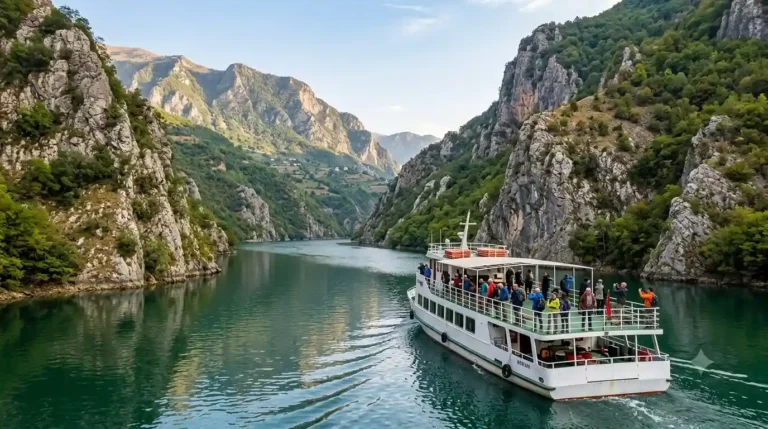
This is a transfer day, not a full sightseeing day in Shkodër. A typical combined journey starts early: road transfer from Shkodër to Koman, boat through the narrow Komani Lake gorge to Fierzë, then a minibus via Bajram Curri into the Valbona valley. Plan most of the morning and part of the afternoon for the combined route.
The Koman Lake Ferry Berisha operator advertises Koman → Fierzë at 09:00 and Fierzë → Koman at 13:00, with an indicative ferry passenger price of €9 online or €10 / 1,000 ALL cash at the time checked. A second operator, Rozafa Ferry, also displays its route and packaged transfer options. Timetables depend on weather, season and operator, so the published hours must be reconfirmed for your actual date.
Book your Valbona guesthouse with dinner if possible and ask where along the valley the transfer will drop you. Valbona is not a compact single street: a guesthouse near the trailhead and one farther down the valley can have very different walking distances the next morning. Keep the afternoon gentle, take a short walk only if time allows, and confirm trail conditions with your host.
Do not confuse the ferry with a Shala River excursion: The scenic Lake Koman sightseeing boats and the Koman–Fierzë transport ferry serve different purposes. Verify that the ticket is for the crossing to Fierzë if you need to reach Valbona.
Day 5: Hike from Valbona to Theth Over the Mountain Pass
For fit walkers, the Valbona–Theth crossing is the defining mountain day of this itinerary. Depending on your guesthouse and chosen trailhead, estimates generally range from 15 to 18 km for the point-to-point walk. Plan 6–8 hours of hiking, more if you are inexperienced, carrying a heavy pack, or stopping often. The pass is approximately 1,795 m above sea level; the ascent and long descent are substantial even without technical climbing.
Leave early with adequate drinking water, food, weatherproof layers, sun protection and a working offline map. Ask your accommodation whether they can provide a short transfer to the appropriate Valbona trailhead, and clarify arrangements for any larger luggage. A local guide is sensible if you are unfamiliar with mountain navigation or conditions are uncertain; it is not a substitute for a closed or unsafe pass.
Crucially, the pass is not a reliable year-round route. Snow can linger into early summer and return in autumn; thunderstorms and local trail damage can change conditions quickly even in July or August. Confirm locally before crossing and never use a fixed calendar claim such as “all trails are open in July.” For detailed preparation read our Valbona Valley hiking guide and Theth hiking and trail guide.
Arrive in Theth, check in and recover. The photogenic church and village are good for a gentle evening walk if you still have energy. Blue Eye of Theth is not a 20-minute detour from the Valbona Pass descent; it is a separate excursion usually approached from the Nderlysa side and requires additional time and transport planning.
If the pass is unsafe or you cannot hike it
Do not try to turn a closed pass into an ordinary transfer. Arrange a road journey through the appropriate valley/road network, which can take a large portion of a day, or simplify the north into Shkodër → Theth by mountain minibus → Shkodër and omit Valbona entirely. This adjustment is especially useful for families, travelers with reduced mobility and anyone visiting outside the reliable high-summer hiking window. Our Tirana to Theth transport guide explains access and alternative shuttles.
Day 6: Theth to Shkodër — Recovery and the Mountain Road
Use a confirmed daytime shared transfer from Theth back to Shkodër, allowing roughly 2–3 hours on the mountain road when weather and traffic cooperate. Some operators advertise morning and afternoon services, but do not assume a departure will operate on your date. Confirm pickup with the operator or guesthouse the preceding evening and leave your booking details accessible offline.
Once back in Shkodër, retrieve your stored luggage and keep the rest of the day flexible. You have just completed a ferry-and-hike sequence, so a relaxed café visit, lakeside stroll or rest is more sensible than an eight-hour onward race to Berat. Stay a second night in Shkodër; this extra recovery night is what makes the itinerary work without depending on perfect connections.
Day 7: Shkodër to Berat — The Main North-to-Central Transfer
Travel from Shkodër toward Berat. For independent travelers, the dependable planning assumption is a change around Tirana unless you can verify a through ticket. You may also need to move between departure points or platforms; ask your carrier for the exact connection, not simply “the Tirana bus station.” Treat the journey as a half-day to most-of-day transfer and leave spare time for delays.
Berat’s intercity bus terminal is not in the narrow UNESCO old town. The local urban bus connects the terminal toward central areas, while a taxi is more straightforward with luggage. Berat’s local transport information is outlined by the city’s tourism website. After check-in, walk the riverside and the Mangalem/Gorica neighborhoods if daylight remains.
UNESCO recognizes the historic centres of Berat and Gjirokastër together as outstanding examples of Ottoman-period architecture and urban life. Their inclusion is cultural, not a claim that every building or attraction within each city is included in the UNESCO boundary. See the official UNESCO listing.
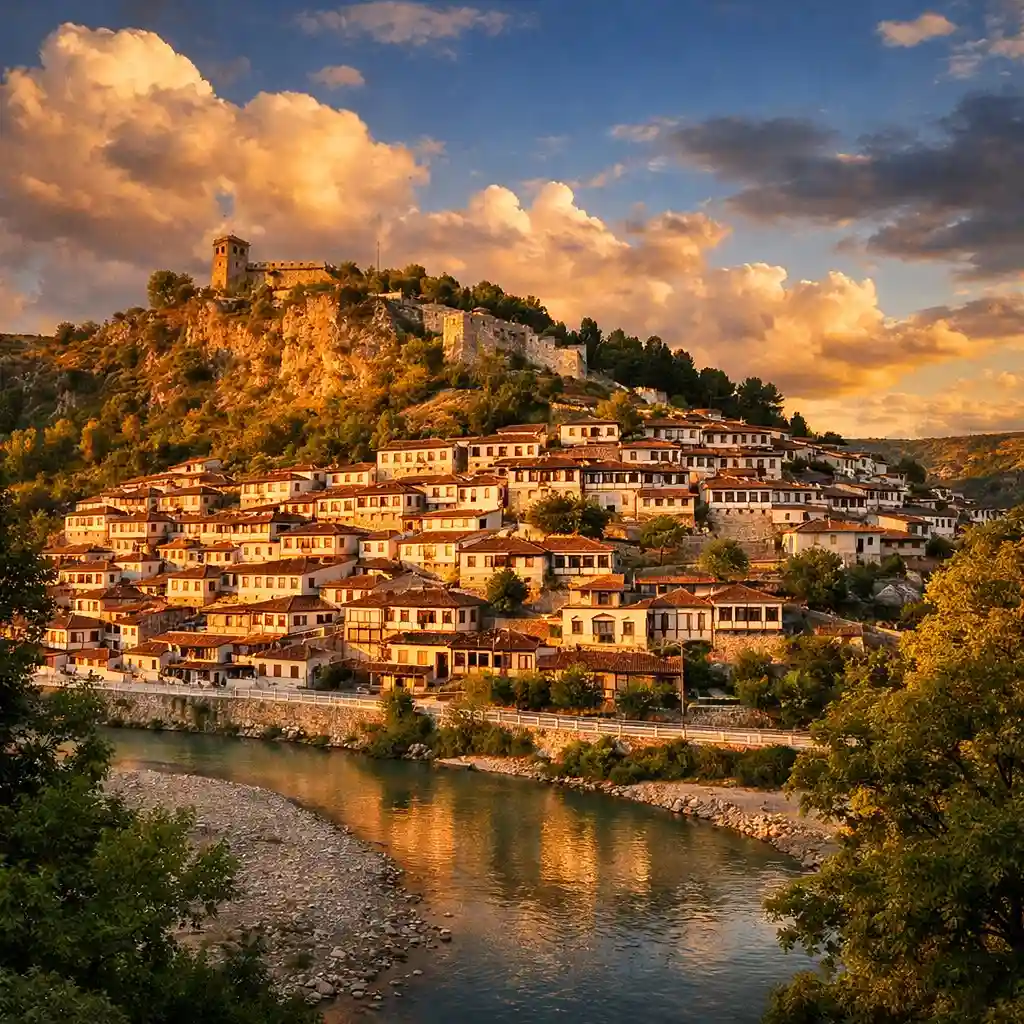
Day 8: Berat — Castle, Mangalem and Gorica
Spend an unrushed day in the town known for its hillside houses. Begin with Berat Castle (Kalaja), where homes, churches and historic lanes remain within the old walls. The uphill walk from lower town can feel demanding in the heat; consider a local taxi up and walking downhill later. Check whether the Onufri Iconographic Museum is open on your chosen day and allow extra time if art and religious history interest you.
For lunch and the afternoon, explore Mangalem’s lanes, cross Gorica Bridge and find a viewpoint facing the classic rows of white windows. A traditional cooking experience or a short rural excursion can be worthwhile if you have a driver, but you do not need an invented “must-see” bridge stop to make this a full day. A useful option when deciding how much time to spend in each UNESCO town is our Berat versus Gjirokastër comparison.
Berat overnight advice: Try to stay in the lower Mangalem or central area if you have bulky bags. Some castle and hillside guesthouses are beautiful but involve steep, uneven approaches that ordinary city taxis cannot always reach.
Day 9: Berat to Himarë via Vlorë — Enter the Riviera
Use an early Berat → Vlorë bus or transfer, then continue south to Himarë. This is a two-stage coastal journey for many bus travelers. The Berat tourism website publishes bus services to Vlorë, but you must separately verify that your arrival matches an onward Himarë departure. In October 2026, example Berat–Vlorë routes are listed as roughly two hours; the onward journey can take another 1.5–3 hours or longer depending on the vehicle and exact route.
By car, you can decide whether to use the Llogara Tunnel to save time or the scenic Llogara Pass for mountain-and-sea viewpoints. Do not assume every bus uses the scenic pass: some services take the tunnel, and an onward transfer may leave little time for a stop. Arrive in Himarë, settle into a beach-area base and enjoy a low-key dinner rather than cramming in multiple coves.
The benefit of this order is geographic: you reach the central Riviera first, then progress south to Sarandë, before heading inland to Gjirokastër. It reduces the Gjirokastër → coast → Sarandë → airport backtracking of the original version.
Day 10: Himarë and the Beaches — Quality Over Checklists
Choose a relaxed swim and walking day or one carefully planned excursion. Livadhi and Potam are useful options close to Himarë depending on where you sleep. Porto Palermo and Qeparo offer a different mix of coastline, village atmosphere and historic scenery; Gjipe may require a trail walk or licensed boat excursion rather than a simple roadside stop. Beach road access, parking, concession areas and services change through the season.
There is no need to visit Palasë, Dhërmi, Jale, Qeparo, Porto Palermo and Borsh in one day. Without a car, prearrange a local taxi with an agreed return pickup or book a legitimate seasonal boat trip. Keep the price of sunbeds and umbrellas as a variable you inspect locally, not a universal €3–€8 claim. For a choice between south-coast bases, compare our Ksamil versus Himarë guide.
The coast is also a good moment to build flexibility into the trip. Strong winds can cancel small-boat trips, and high-season traffic can slow the SH8 road. A quiet day on a nearby beach is not wasted time.
Day 11: Himarë to Sarandë — Coastal Road and an Optional Archaeology Stop
Take a southbound bus or a prebooked transfer to Sarandë, passing the coast around Borsh, Lukovë and other bays. Allow around 1.5–2.5 hours for a typical listed road service, more if stopping for photos or facing summer traffic. Confirm the precise Himarë pickup, since operators use different roadside points rather than one universally consistent station.
Check into Sarandë, ideally somewhere convenient for the promenade and onward buses. If you arrive early and have energy, you may visit Butrint this afternoon using the local connection through Ksamil, provided the park’s closing time gives you a genuine two- to three-hour visit. Otherwise, choose a nearby beach and preserve Butrint for tomorrow.
Avoid promising an after-hours park entrance, a fixed bus frequency or a very short drive through Ksamil in August. The road is busy at times and the protected archaeological site needs daylight. Butrint is a UNESCO World Heritage site with substantial ancient Greek, Roman, Byzantine and later remains.
Day 12: Butrint or Blue Eye, Then Gjirokastër
This is a day with a choice, not permission to pack every southern attraction into one morning. Option A: If you did not see Butrint on Day 11, visit it first from Sarandë, return for your luggage, and take an afternoon intercity bus or booked vehicle to Gjirokastër. Stay overnight in the old town and keep your evening calm.
Option B: If you already visited Butrint, leave Sarandë earlier toward Gjirokastër and arrange a stop at Syri i Kaltër (Blue Eye) on the way. It is close to the Gjirokastër–Sarandë road but is not a door-to-door urban bus stop. A taxi or a driver who agrees to wait makes the stop practical. Allow time for the designated approach walk from the site entrance; old claims of a quick ten-minute walk from anywhere can be misleading.
Do not swim inside the Blue Eye spring. The protected karst source is signposted against entering the water, and the upwelling, very cold water is hazardous. The Albanian protected-areas authority describes it as part of the Syri i Kaltër Nature Park. It is separate from the mountain Blue Eye near Theth. Follow the posted on-site rules, including any changing visitor fees.
Spend the late afternoon on Gjirokastër’s steep stone streets and in the Old Bazaar. If you can manage the incline, head up toward the castle viewpoint before closing; otherwise keep the castle for the next morning.
Day 13: Gjirokastër Castle and the Return to Tirana
Use the morning for Gjirokastër’s striking hilltop castle and one traditional tower-house museum such as Skenduli House or Zekate House if open. The city is a UNESCO-listed historic centre with Ottoman-era architecture, not a theatrical set: residents still live and work in and around its heritage fabric.
One original article detail needs correction: the American aircraft displayed at Gjirokastër Castle is associated with a Lockheed T-33 trainer incident, not a captured U-2 spy plane. Exhibition access and individual museum sections can change, so confirm before making that your main reason to visit.
Leave Gjirokastër for Tirana in the afternoon. Depending on the booked service, route, traffic and stops, budget approximately 3.5–5.5 hours or more door to door. Reaching the capital on Day 13 provides an essential buffer for a Tirana Airport departure on Day 14. Stay somewhere with a straightforward airport bus or taxi connection.
Do not sacrifice this transfer buffer: If your flight leaves early on Day 14, do not sleep in Sarandë or Gjirokastër on Day 13 unless you have deliberately booked a different departure arrangement. Unexpected road congestion or delayed buses are not acceptable risks for a flight.
Day 14: Tirana Departure, Without a Cross-Country Rush
Travel from central Tirana to Tirana Airport, allowing enough time for the airport transfer, baggage drop, security and any international check-in requirements. The airport’s 24-hour city shuttle is an option if its hourly schedule fits; otherwise arrange a known taxi or prebooked transfer. Do not plan Butrint, the Riviera, Krujë or another distant stop today.
If your flight is in the late evening and you have energy, leave luggage at your accommodation, enjoy one final Tirana meal and depart at a conservative time. Arriving home with the flight intact is more important than forcing an additional attraction into the last hours.
Alternative 14-Day Routes: No Hike, More Beach or Corfu Exit
Option 1: No challenging hike or early/late shoulder season
Replace the Valbona ferry-and-pass sequence on Days 4–6 with two nights in Theth via the Shkodër mountain shuttle and an additional night in Shkodër or Berat. Take scenic valley walks where local conditions permit. The change protects travelers from high-pass snow, gives families a more adaptable northern section and avoids a point-to-point luggage problem.
Option 2: More coast, fewer hotel changes
Drop Valbona and use the freed time for three or four nights around Himarë or Sarandë. Another option is skipping the second night in Berat. The point is to replace stops rather than keep all original stops and magically shorten the travel time.
Option 3: Fly home from Corfu
Keep the main north-to-south route through Berat and the Riviera, but finish in Sarandë on Days 12–13 instead of heading back to Tirana. Book an overnight or generous connection window on Corfu after crossing by ferry from Sarandë. Verify service dates, speedboat versus conventional ferry times, the correct ports and passport/visa rules for both Albania and Greece. This route is an open-jaw alternative, not suitable for a confirmed round-trip Tirana airline ticket.
Practical Transport Connections and Realistic Time Allowances
The following figures are planning windows, not guaranteed timetables. Roadworks, summer traffic, meeting points and operator changes affect the actual door-to-door time. Allow more time for hotel checkout, reaching a terminal and waiting for the next available connection.
| Journey | Planning estimate | What makes it tricky |
|---|---|---|
| Tirana → Shkodër | ~2–3 hours on bus | Reach correct Tirana departure terminal |
| Shkodër → Valbona via Koman | Most of a day | Road + ferry + Fierzë onward transfer |
| Valbona → Theth on foot | ~6–8+ hours | Snow and weather; long ascent/descent |
| Theth → Shkodër | ~2–3 hours | Mountain shuttle season and pickup |
| Shkodër → Berat | Half-day or longer | Often connect via Tirana; terminal transfer |
| Berat → Himarë | Half-day or longer | Via Vlorë; confirm second leg |
| Himarë → Sarandë | ~1.5–2.5 hours | Roadside pickup and coastal traffic |
| Sarandë → Gjirokastër | ~1.5–2.5 hours by road | Blue Eye stop needs separate arrangement |
| Gjirokastër → Tirana | ~3.5–5.5+ hours | Keep Day 13 buffer before flight |
To check exact dated coach inventory, compare the official eTransport listings with the individual operator or booking provider. Some routes have a direct service at one time of day and only indirect connections at another. Confirm the full trip, not just the first bus.
How Much Does a 2-Week Albania Trip Cost?
Albania can offer good value, but “cheap” is not a fixed price category, and the ferry/transfers and coastal season strongly affect this itinerary. The following figures are illustrative budgeting allowances per person for 14 days / 13 nights, not live fare quotes or averages from verified hotel inventory. Accommodation assumes a hostel or a shared double-room cost allocated per person; a solo private room can cost more. International flights, visas and high-cost specialist tours are excluded.
| Budget category | Budget planning allowance | Mid-range planning allowance |
|---|---|---|
| Accommodation, 13 nights | €200–€420 | €480–€950 |
| Meals and drinks, 14 days | €170–€300 | €300–€550 |
| Intercity buses, ferries, local transfers | €110–€230 | €220–€500 |
| Admission and basic activities | €40–€100 | €80–€180 |
| Illustrative total | €520–€1,050 | €1,080–€2,180 |
The low end assumes substantial public-transport use, modest accommodation and selective attractions. The higher mid-range allowance accommodates more taxis or private transfers and better-located hotel rooms. Before you settle on a total, collect actual quotes for the Koman/Valbona legs, guesthouse meals, southern rental or taxis, and your travel dates. You can spend markedly more than the higher column in peak August beachfront hotels.
How to save without breaking the route
- Use Shkodër as the same luggage-storage and transfer base on Days 3 and 6; avoid unnecessary luggage services.
- Book mountain guesthouses and ferry transfers before the busiest weeks and check what meals are included.
- Choose either a coast-area local taxi for one outing or a rental for multiple days; compare all-in cost, not each quote in isolation.
- Keep some activities free: historic walking routes, viewpoints accessible safely on foot, and a beach near your overnight town.
- Carry Albanian lek for guesthouses, local buses and small purchases; euro acceptance and exchange rates vary by business.
- Remember that tipping is optional, never a compulsory charge; inspect any included service fee before adding a gratuity.
When to Visit: Alps Season Versus Beach Season
| Travel months | What works | What to change |
|---|---|---|
| April–May | Tirana, UNESCO towns and green landscapes | Do not assume Valbona Pass is safe or ferry/guesthouse services align |
| June | Good balance as summer begins | Confirm pass snow clearance; early June may still be unsuitable |
| July–August | Most established hiking and beach season | Heat, crowds, high coastal prices and storm risk; book early |
| September | Often excellent for coast and mountains | Recheck seasonal shuttles and mountain forecast |
| October | Pleasant city breaks and some coast days | Replace pass hiking when conditions and services deteriorate |
| November–March | Urban heritage, quieter southern towns | Use non-Alpine version; mountain access may be blocked |
A route that includes both the high pass and swimming is best aligned with mid-June to September rather than a vague “Albania is great all year” claim. Even then, the mountain decision is made against current trail conditions, not the calendar alone. Read our seasonal Balkans travel guide for broader weather trade-offs.
Where to Stay: Match Your Bed to Tomorrow’s Departure
| Stop | Best practical location | Why |
|---|---|---|
| Tirana | Skanderbeg Square / central walking area | Airport shuttle and attractions |
| Shkodër | Walkable town center, practical mountain pickup | Store luggage; morning ferry transfer |
| Valbona | Guesthouse whose hike-start arrangement is confirmed | Trailhead can be far from your accommodation |
| Theth | Village guesthouse with onward shuttle coordination | No easy spontaneous late-night transport |
| Berat | Lower Mangalem / central city if carrying bags | Avoid difficult hillside luggage haul |
| Himarë | Town beaches or accessible coast road | Minimize local car dependency |
| Sarandë | Near convenient bus stop and promenade | Butrint/Ksamil and onward Gjirokastër routes |
| Gjirokastër | Old bazaar for atmosphere, accessible edge for luggage | Steep cobbles and transfer next day |
Accommodation location matters more than a generic “best hotel” list. Read current property maps and check how to reach your door from the bus stop. A mountain guesthouse offering dinner, breakfast and transfer help may represent better value than a cheaper room that leaves you stranded far from the hike.
Safety, Entry Rules and Responsible Travel
Passports and visas
Entry rules depend on nationality, residence status, travel documents and previous stays. Many short-stay visitors are eligible for visa-free entry, but do not assume every visitor receives the same “90 days” permission or that a visa for Albania also covers Greece, Montenegro or Kosovo. Verify official Albanian entry instructions and any additional country on your itinerary before buying non-refundable transport.
Mountain hiking and nature protection
The Valbona Pass requires sturdy footwear, water, sun and storm protection, and an offline navigation backup. Ask for current advice from local guesthouses or guides; turn around if conditions become unsafe. Do not enter fenced protected springs, approach unstable cliffs for photographs or assume a marked trail is suitable for everyone. Keep insurance details available and verify that hiking at your planned altitude is covered.
Cash, health and communications
Albania uses the lek (ALL). Cards are increasingly common in cities, but smaller guesthouses and rural transport may require cash. For drinking water, ask your accommodation about the local supply instead of applying a blanket “all tap water is safe” claim. Carry any essential medication, keep digital and offline copies of travel documents and consider mobile data or an eSIM for transport updates.
Do not generalize cultural gestures or local hospitality into universal rules: people vary. A few words in Albanian—faleminderit (thank you) and mirëdita (good day)—are useful. Ask permission before photographing people, be respectful in religious sites and do not feel obliged to accept food, drinks or alcohol.
Packing Checklist for Mountains and Coast in One Trip
- Comfortable hiking footwear with reliable grip for the Alpine pass; lighter shoes for city walks and cobbles.
- A warm insulating layer, rain shell and compact daypack even for summer mountain days.
- Refillable water bottles and snacks for long hikes and transport connections.
- Swimwear, quick-drying towel, sun hat and reef-conscious sun protection for the coast.
- Offline map files, charging cable and power bank for areas with patchy service.
- Cash in Albanian lek and a backup payment card; do not rely entirely on euros.
- A small bag for the Valbona–Theth walk, with larger luggage left in Shkodër if your host agrees.
- Booking confirmations and the contact numbers of your ferry, transfer and mountain guesthouses stored offline.
Albania 2 Week Itinerary: Frequently Asked Questions
Is 14 days enough to see Albania?
Fourteen days can combine Tirana, the Albanian Alps, Berat, some Riviera time and Gjirokastër. It is a sampler with several full transfer days rather than a slow stay everywhere. If you want a relaxed trip, remove one region.
Can I do this two-week Albania itinerary entirely by bus?
Most legs can be arranged without a rental car, but the Alpine section requires a combined road-ferry-road transfer plus a trail crossing or mountain shuttles. Coastal connections and the Blue Eye require advance checks and sometimes an additional taxi.
What is the best month for both the mountains and beaches?
July and August often have well-established services, while late June and September may offer better crowd levels. The Valbona–Theth pass must still be confirmed clear of snow and safe on the actual day.
How difficult is the Valbona to Theth hike?
It is a strenuous full-day mountain crossing commonly around 15–18 km with substantial ascent and descent. Allow roughly 6–8 hours or more. It is not suitable for everyone, and snow or storms can make it unsafe.
Can I swim at the Blue Eye near Sarandë?
No. Swimming in the protected Blue Eye spring is prohibited. Use designated viewing areas and follow the latest on-site protection rules.
Should I rent a car for the whole two weeks?
Not necessarily. A car is handy for the Riviera but does not replace hiking or solve the Valbona–Theth point-to-point logistics. Many travelers can mix buses for the north with a short southern rental or taxis.
Can I visit Butrint and catch a flight from Tirana on the same day?
That is a risky plan. Butrint is far south; road travel to Tirana Airport can take most of the day and delays happen. Sleep in Tirana the night before your flight.
Do I need to reserve the Koman ferry in advance?
Booking ahead is wise in summer, but book the complete journey: Shkodër to Koman, ferry to Fierzë, then onward transfer to Valbona. Confirm the operator season and meeting points.
Can I fly out of Corfu instead of returning to Tirana?
Yes if your flight and immigration documents permit it. End your trip in Sarandë, check the seasonal ferry timetable, and leave a generous buffer before any Corfu flight.
Is two weeks in Albania expensive?
The trip can be affordable, but total cost depends on season and transport style. Use the guide’s planning table as a starting allowance and compare real quotes for accommodation, ferries and private transfers.
Primary Sources and Last-Minute Checks
Useful sites to check before travel: Tirana Airport ground transport; Albania eTransport; Koman ferry schedule; Albanian Tourism Agency: Theth; protected Blue Eye spring; and UNESCO Berat/Gjirokastër. Check the dates on operator pages and do not copy an old sample timetable onto a new departure.
Final Verdict: The Best Way to Spend 14 Days in Albania
The most satisfying Albania 2 week itinerary is not the one that lists the most viewpoints; it is the one in which transfers, mountain conditions and departure flights actually fit together. Begin with two days in Tirana, work north through Shkodër and the Alps, then move south via Berat, the Riviera and Gjirokastër. Keep the final night in Tirana if your flight leaves from Tirana Airport.
If the Alpine pass is unsafe, replace it rather than taking risks. If you are more interested in beaches than hiking, cut a region rather than shortening every stop. With those choices made early, Albania offers a memorable combination of city history, mountain scenery and coast without relying on heroic travel days or outdated transport promises.