Solo Female Travel in the Balkans: Safety & 14-Day Itinerary

Solo female travel in the Balkans can be a rewarding first independent trip, but the best experience comes from realistic logistics rather than blanket promises that every place is perfectly safe or every border is easy. Historic cities, scenic coastal towns and good-value guesthouses make the region attractive. Intercity schedules, late arrivals, accommodation locations and changing entry rules still need planning—especially when you are navigating them alone.
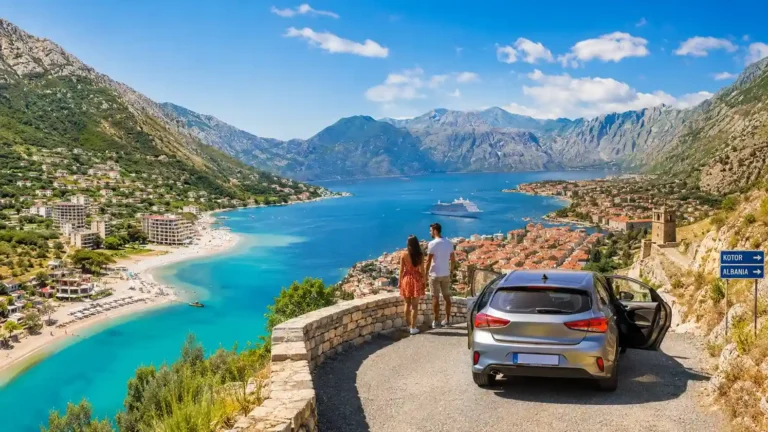
This 2026 guide covers practical personal-safety decisions, transport, accommodation, seasonal budgets and a genuinely achievable 14-day itinerary by public transport. Its core route is Tirana → Shkodër → Kotor → Dubrovnik → Mostar → Sarajevo: four countries, five intercity transfers and sufficient time for rest. Additional ideas for Ohrid, Kosovo, Serbia and Slovenia are optional extensions, not impossible detours wedged into the same fortnight.
Table of Contents
Quick Answer: Are the Balkans a Good Place to Travel Solo?
Yes, many independent women visit the Balkans and find the combination of city life, nature and affordable travel practical. However, safety is not a country-wide guarantee. The questions that matter most are how you reach your accommodation after dark, whether an onward connection is confirmed, how isolated an activity is, and whether you can change plans without depending on a stranger.
- Most practical first-trip bases: Tirana, Shkodër, Kotor, Dubrovnik, Mostar and Sarajevo, each with recognizable central accommodation zones and intercity connections.
- Good starter itinerary: focus on four countries in two weeks rather than racing between seven or eight countries.
- Best planning seasons: late spring and early autumn for a mix of manageable temperatures and functioning tourism services; check mountain conditions separately.
- Biggest avoidable problems: arriving late without a transfer, booking far uphill from stations, assuming ride-hailing exists everywhere, and leaving border travel to the day of a flight.
Practical rule for a first solo trip
Book your first two nights before landing; travel between cities in daylight when possible; keep enough cash and battery for a change of plan. You do not need to be fearless—you need good options.
Safety in the Balkans: What Actually Varies by Country
A table that labels entire countries “excellent” or “good” hides more than it explains. Travel advisories identify specific situations—pickpocketing, political demonstrations, unsafe road conditions, isolated hiking areas and historic unexploded ordnance—that matter more than an invented ranking. The comparison below is a planning aid, not an official safety score.
| Destination | More relevant concern | Practical response |
|---|---|---|
| Albania | Road conditions, petty theft in crowded places, occasional demonstrations | Use known operators and daylight arrivals; check news before crossing central Tirana |
| Montenegro | Tourist-area pickpocketing, winding roads, mountain weather | Use licensed taxis; plan Kotor hill walks early and carry water |
| Croatia | Tourist-area theft and taxi-related incidents | Use licensed or trackable rides; keep personal belongings close in Dubrovnik crowds |
| Bosnia & Herzegovina | Isolated unexploded ordnance in some rural areas; transport disruptions | Stay on established paths and roads; use local guides for rural exploration |
| North Macedonia | Rural transport gaps, variable road and mountain conditions | Confirm last return bus; use organized transport for remote attractions |
| Kosovo | Political tensions in parts of the north; remote-area ordnance risk | Read the current regional advisory and avoid protest gatherings |
| Serbia | Urban theft, demonstrations and special entry issues involving Kosovo | Avoid large rallies; check border entry rules for your exact route |
| Slovenia | Ordinary city theft and mountain rescue risks | Take normal precautions and use weather-appropriate Alpine planning |
For current risk notices, consult your own government and authoritative destination advice. In October 2026, UK guidance highlights demonstrations in Albania, pickpocketing and licensed-taxi precautions in Montenegro, taxi-related safety incidents in Croatia, and residual mine risks in rural Bosnia. Relevant official pages include Albania, Montenegro, Croatia and Bosnia and Herzegovina. These are examples for verification, not nationality-specific entry advice for every reader.
Street harassment, unwanted attention and personal boundaries
Responses to unwanted attention differ from person to person, and harassment can happen in any destination. You are not responsible for preventing someone else’s behavior. When approached in a way that feels uncomfortable, moving toward an open business, reception desk or populated street is generally a better first response than trying to win an argument. A simple “No, thank you” is sufficient; you do not owe a stranger details of where you are staying.
If someone follows you, enter a staffed hotel, shop or restaurant, ask an employee for help, and contact local authorities if necessary. Save your accommodation’s phone number offline. You can tell people that you are meeting a friend without revealing whether you are alone. This is a personal boundary, not a requirement to hide your travel style.
Taxis, apps and late arrivals
Do not assume Bolt or Uber functions in every Balkan city. Availability, licensing and local coverage vary. Before arrival, ask your accommodation which registered local operator it recommends, confirm the exact pick-up location and fare calculation, and keep the address on your phone. If the service provides ride details, share the trip with a trusted person. An official airport or station taxi desk can be preferable to an unmarked offer.
Treat late arrival as a logistics question, not a moral judgment. If a coach arrives after the reception closes, ask about self-check-in in writing and budget for a licensed ride. A property ten minutes from the center on the map might be at the top of steep steps or on a poorly lit road.
Solo hiking, swimming and outdoor activities
Choose established, marked trails; check the forecast, route length, elevation and expected sunset. In Montenegro, official advice warns that hikers have become lost after leaving marked paths. In Bosnia and in some border mountains near Kosovo, unexploded ordnance remains a serious reason not to explore abandoned tracks or off-trail terrain. Remote walks in the Albanian Alps or Durmitor are not ordinary city strolls: use a qualified local guide or suitable group if you lack navigation experience.
For coastal excursions, check boat-operator legitimacy, life jackets, weather cancellation policy and the planned return. Never assume it is safe to swim alone to offshore islands or enter a cliff-side swimming spot without checking access. Travel insurance may exclude unaccompanied trekking, certain water sports or activities above a stated altitude; read exclusions before booking.
Emergency plan and digital safeguards
- Keep a short note with your accommodation address, insurer emergency number, embassy or consulate contact and a trusted person at home.
- Save a digital passport copy in a secure account and keep a separate backup card; do not post your passport publicly.
- Share your broad route and expected check-in time with a trusted contact; choose how much live location sharing you are comfortable with.
- Save the applicable local emergency numbers before each border crossing. 112 is used in several countries, but do not assume the same emergency-routing arrangements apply everywhere.
- If you lose your passport, contact local police and your embassy/consulate; a police report alone may not be enough to continue travel.
If buying travel insurance, compare medical treatment, emergency transport, trip interruption and exclusions for hikes or boat activities, not just the premium. You can compare available insurance policies and read the policy wording before purchasing.
Where to Stay When You Travel Alone
The safest-feeling lodging is not necessarily the most expensive. A central guesthouse with consistently recent reviews, a secure entrance and an owner who answers messages may fit better than a beautiful but isolated villa. Aim for a location from which you can walk to dinner, buy water and reach the next bus without an unpredictable taxi.
Hostel, guesthouse or private room?
| Accommodation type | Best for | Before you book |
|---|---|---|
| Female-only hostel dorm | Meeting other travelers while keeping a preferred sleeping arrangement | Confirm dorm configuration, lockers, reception hours and recent reviews |
| Small central guesthouse | Privacy and a quieter night | Check address, building entrance, stairs and host check-in process |
| Private hotel room | Rest after a long bus day or a late arrival | Compare all-in price and confirmed transport from the terminal |
| Apartment | Multi-night stays or self-catering | Check real location, independent reviews and how to reach the host |
Read reviews written by recent solo guests, including negative reviews. Look for repeated mentions of clean bathrooms, locks, street noise, privacy, late check-in and staff responses to problems. A “female dorm” filter does not guarantee availability on your dates; verify the room type before paying. Never assume an unreviewed hostel name or guesthouse is still operating just because it appears in an old blog post.
For the Bosnia segment, you can compare current accommodation locations in Mostar and Sarajevo. Prioritize a manageable walk to the relevant station or a clearly priced onward taxi rather than ranking properties by low nightly price alone.
Which neighborhoods work well for a first visit?
- Tirana: the Skanderbeg Square/Blloku side of the central area is convenient for cafés and sightseeing; verify the actual bus departure point separately.
- Shkodër: choose the walkable center near the pedestrian streets if you plan to continue by coach.
- Kotor: near the Old Town edge or the Škaljari intercity bus station is practical; Old Town accommodation can involve steep staircases and late-night noise.
- Dubrovnik: Gruž is useful for coach arrivals, while the Old Town area is better for sightseeing but costly and stair-heavy.
- Mostar: a central property on a walkable route from the bus/rail station is better than distant hillside views with luggage.
- Sarajevo: central Baščaršija or a tram-connected district gives more transport flexibility than an isolated hillside apartment.
How to Get Around the Balkans Without a Car
Buses connect many major towns, but there is no single regional transit system that guarantees every transfer. Some services are direct and bookable online; others are sold at the terminal or listed by local operators. International routes can take far longer than the road distance suggests because of passport checks, summer traffic, luggage loading and arrival at a different terminal from the one you expected.
Your bus-booking routine
- Find the exact operating date and compare at least one provider or operator timetable. Screenshots of last summer’s departures are not reliable.
- Check both terminal names. “Sarajevo” and East Sarajevo, for example, are not interchangeable arrival points.
- Ask whether luggage, station fees or printed tickets cost extra, and whether an online ticket must be exchanged at a counter.
- Arrive with enough time to find the correct platform and verify destination with staff; seat numbers may not work as expected on every operator.
- For an international connection, reserve ample time for the border. Do not plan a flight on the same day as a long cross-border bus when an overnight buffer is possible.
For wider bus-route planning, see the Balkans itinerary without a car guide. Treat the examples below as planning windows rather than live departure promises.
| Leg | Useful planning window | Connection or station check |
|---|---|---|
| Tirana → Shkodër | Often roughly 2–3 hours by intercity road transport | Confirm the current Tirana departure terminal |
| Shkodër → Kotor | Allow roughly 3–5+ hours plus border variability | Check for a dated direct service; otherwise investigate Podgorica connections |
| Kotor → Dubrovnik | Allow roughly 3–5+ hours; border waits can add time | Kotor intercity station to Dubrovnik Gruž bus station |
| Dubrovnik → Mostar | Often around 3.5–5+ hours including border procedures | Dubrovnik Gruž to the named Mostar bus station |
| Mostar → Sarajevo | Often roughly 2–3.5 hours by confirmed rail or bus | Confirm actual ŽFBH operation and station location |
These ranges leave room for regular differences but are not guaranteed upper limits. For date-specific examples, compare Kotor–Dubrovnik departures and Dubrovnik–Mostar operator listings. For Shkodër–Kotor, check whether a direct international bus is actually offered on your travel date before considering separate tickets through Podgorica.
Mostar to Sarajevo train: October 2026 service update
Important update checked 17 October 2026: Bosnia’s ŽFBH railway announced that regular passenger service between Sarajevo, Mostar and Čapljina resumed from 15 October 2026, after a suspension that began on 8 September. This reverses the earlier disruption warning—but a restoration announcement does not promise that your chosen train will be punctual or that a particular departure has seats. Read the official ŽFBH restoration announcement and the operator’s current timetable before travel.
The rail journey is scenic and generally takes around two hours when the expected service runs. Keep an intercity bus as an alternative if a later disruption affects your date. The site’s Sarajevo–Mostar train guide provides station details and useful historical notices, but use the newer 15 October restoration notice for the present operating status.
Mobile data, payments and taxis
EU roaming privileges do not automatically cover every non-EU Balkan country. Check your plan’s countries and fair-use terms; an eSIM or a local SIM may work better for a multi-border journey. Download the locations of the departure bus station, arrival bus station, accommodation and nearby pharmacy while connected to Wi-Fi. Keep a screenshot of the operator ticket and an offline confirmation number.
Carry some local cash even if you use a card. Smaller guesthouses, buses, station luggage counters and public toilets may prefer cash, and a card payment processor can fail. Confirm the amount and currency before paying; select local currency when a card terminal offers unfavorable dynamic currency conversion.
Realistic 14-Day Solo Female Balkans Itinerary
This trip covers Albania, Montenegro, Croatia and Bosnia and Herzegovina in a logical chain without a rental car. It has 13 hotel nights across 14 calendar days and ends at Sarajevo, so look for an open-jaw flight arriving in Tirana and departing Sarajevo. Adjusting the final airport is possible, but will change the route and required travel buffer.
| Day(s) | Base / night | Main focus | Move |
|---|---|---|---|
| 1–2 | Tirana (2 nights) | Arrival and central city sights | Airport transfer on Day 1 |
| 3–4 | Shkodër (2 nights) | City, lake and optional easy excursions | Tirana → Shkodër on Day 3 |
| 5–7 | Kotor (3 nights) | Old Town, bay and a flexible rest day | Shkodër → Kotor on Day 5 |
| 8–9 | Dubrovnik (2 nights) | Historic city and coastal time | Kotor → Dubrovnik on Day 8 |
| 10–11 | Mostar (2 nights) | Old Bridge, neighborhoods and optional excursion | Dubrovnik → Mostar on Day 10 |
| 12–13 | Sarajevo (2 nights) | Old Town, history and city walking | Mostar → Sarajevo on Day 12 |
| 14 | Depart Sarajevo | Flight-day buffer and departure | Local airport transfer |
Days 1–2: Tirana, Albania — arrive gently
On Day 1, arrive at Tirana International Airport and take a confirmed airport bus or licensed transfer to your accommodation. The Tirana Airport to city center guide explains the current options. If the flight lands in the evening, go straight to your booked property, eat close by and save sightseeing for the morning.
On Day 2, explore Skanderbeg Square, the central pedestrian streets and Blloku. Bunk’Art 2 can be a meaningful museum visit if current entry hours fit your plans. Do not assume the National History Museum will be open on your dates; verify directly before you make it the centrepiece of the day. Choose a café break and an early night instead of trying to cover every historic site.
Solo logistics: confirm your next day’s departure terminal before dinner. Tirana has different bus pickup locations by operator and destination; your lodging address does not tell you where the Shkodër service departs.
Days 3–4: Shkodër — a straightforward northern Albania base
Travel north on Day 3, check in near the city center and enjoy its pedestrian streets, cafés and local museums. Shkodër makes a less rushed stepping stone toward Montenegro than a one-day detour from the Albanian Riviera. For activity ideas, use the Shkodër things to do guide, confirming any ticket prices or opening hours before visiting.
On Day 4, choose either a city-and-lake day or a properly organized countryside trip with a guaranteed return. Walking to local landmarks and spending time by Lake Shkodër creates a pleasant low-stress day. Do not turn this into a quick self-guided Theth mountain trek: the mountain journey, trail length and weather require their own planning and frequently an overnight stay.
Solo logistics: check whether tomorrow’s Shkodër–Kotor bus crosses directly or requires a connection in Podgorica. Save the operator contact information and pack documents where you can reach them quickly at the border.
Days 5–7: Kotor, Montenegro — bay scenery without constant transfers
Day 5 is an international travel day. A direct bus is the easiest option when it runs on your date; a connection through Podgorica is the fallback to investigate, not a service to assume. After checking in near the Old Town or station, take an easy waterfront walk. Avoid scheduling a paid sunset cruise if your bus is exposed to uncertain border queues.
On Day 6, visit the historic Old Town and choose a safe time of day for the fortress climb if the path is open and the weather is suitable. It is physically demanding, exposed to heat and includes uneven stone steps. Bring water, shoes with grip and enough time to descend in daylight; you do not need to finish the entire climb to enjoy Kotor.
Keep Day 7 flexible: visit Perast and Our Lady of the Rocks by appropriate local bus and a short boat transfer, or join a reputable small-group tour that identifies its departure pier, duration and weather policy. The Kotor day trips without a car guide helps compare options. You can also compare guided bay boat trips if a group departure suits you.
Solo logistics: if you stay inside the walls, check whether the property has a staircase and whether late check-in involves collecting keys elsewhere. Montenegro without a car explains the station and base trade-offs.
Days 8–9: Dubrovnik, Croatia — allow for the border
Take a dated Kotor–Dubrovnik bus on Day 8. You are entering the Schengen area, so the passenger-document process may take extra time. Go to your accommodation in Gruž or your chosen central area, then explore the Old Town when you are not carrying luggage. Do not count on reaching a specific afternoon museum entry if the coach crosses a busy border.
Day 9 is for a measured Dubrovnik visit: start early on the historic streets, choose one main paid attraction such as the city walls if the current fee is acceptable, and plan shade breaks in hot months. An island boat trip is optional, not obligatory. In the evening, favor a route you know back to the property; the polished stone steps can become slippery after rain.
Solo logistics: Dubrovnik can dominate the trip budget, particularly during cruise and summer peaks. Compare the total cost of a Gruž stay plus bus rides against a room closer to the Old Town, and confirm the exact following day’s Dubrovnik–Mostar departure.
Days 10–11: Mostar, Bosnia and Herzegovina — history without a frantic day trip
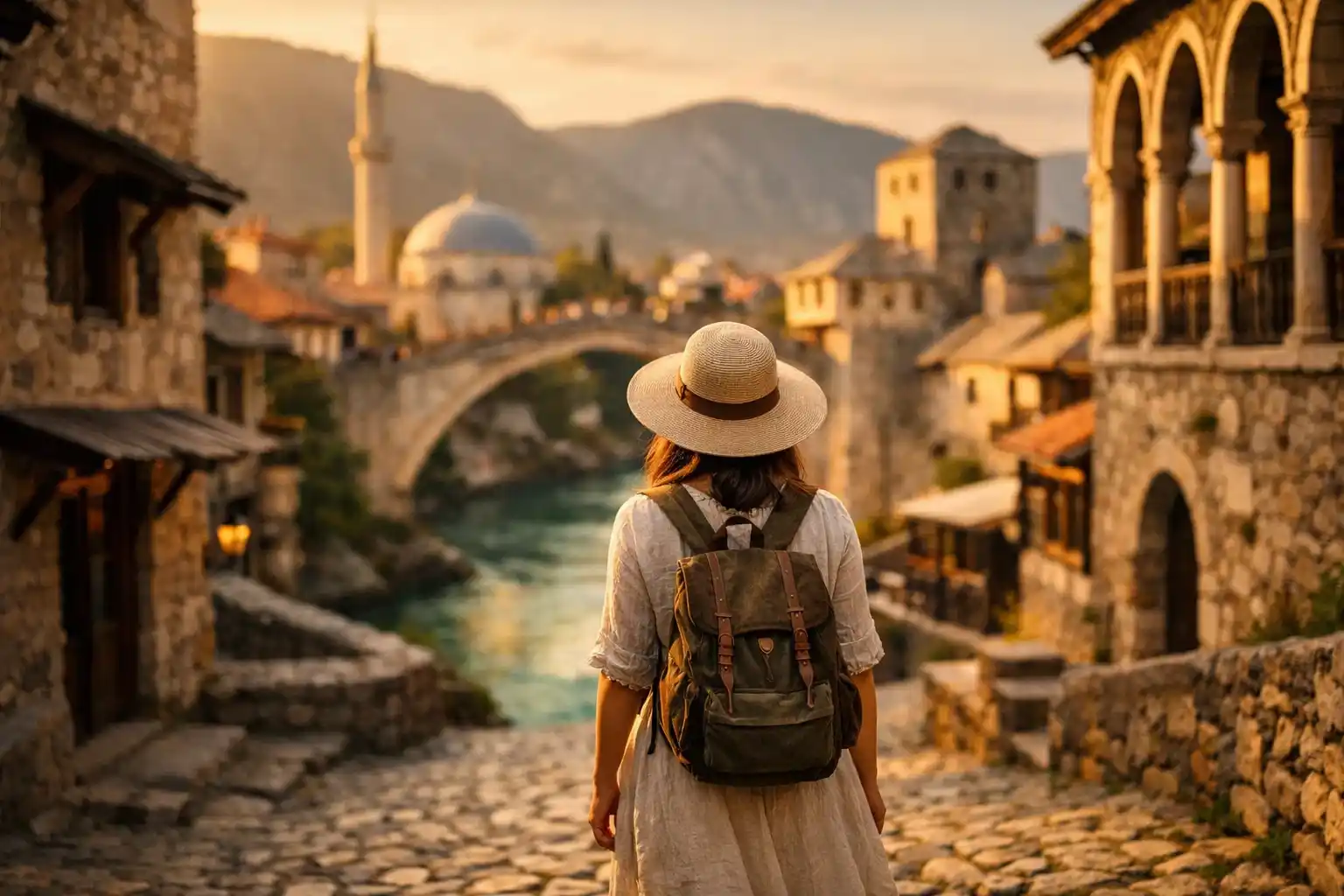
On Day 10, take the international bus from Dubrovnik to Mostar, complete entry formalities and check in. Mostar’s Old Bridge and surrounding streets reward a slow late-afternoon walk. If you are tired from the border, stay in the central pedestrian area and save distant sights for tomorrow. The Dubrovnik–Mostar transport comparison helps explain why a transfer plus overnight can be more comfortable than a tightly timed day trip.
Use Day 11 for the Old Bridge area, the smaller Kriva Ćuprija bridge, museums or a carefully booked half-day excursion. Blagaj, Počitelj and Kravica waterfalls are not interchangeable short walks from central Mostar; grouping all of them independently with public transport is difficult. Pick one longer outing and agree on the return transport first. For additional ideas, see Mostar’s lesser-known sights for independent travelers.
Solo logistics: the old town has steep, smooth cobblestones. Walk with shoes that grip rather than planning every hour around the best photo spot. Accommodation near the pedestrian center or a manageable route to the station reduces the cost of a late transfer.
Days 12–13: Sarajevo — finish with time to understand the city
Transfer from Mostar to Sarajevo on Day 12. Since ŽFBH announced the restoration of regular service on 15 October 2026, the train is once again a sensible candidate if it is confirmed for your date; a bus remains a reliable planning alternative. Check which service reaches the central station and how you will transfer to your room. Spend the evening walking the Baščaršija district and sampling Bosnian coffee or a local meal.
Day 13 can combine the historic center, one museum or guided history walk, and time to reflect. Sarajevo’s wartime past deserves context rather than a checklist. If you visit the Tunnel of Hope museum or a hillside viewpoint, pre-plan the onward and return transport. Sunset lookouts are not worth an isolated walk back down unfamiliar streets in darkness.
Solo logistics: check the airport transfer from your particular neighborhood and store flight documents offline. Leave any major day tour off Day 14; traffic, weather or a lost document is easier to resolve with spare time.
Day 14: Departure from Sarajevo
Plan a calm breakfast, check out and head to Sarajevo airport with the buffer recommended by your airline and current border/security procedures. Do not buy a same-day international bus from another country into Sarajevo to catch your flight. If your only affordable flight departs Dubrovnik instead, rearrange the itinerary before booking rather than improvising a stressful final connection.
What Will a Two-Week Solo Balkans Trip Cost?
Budgets depend heavily on room type, travel season, how often you move and what you choose to book. The following are editorial planning allowances in euros, not live hotel quotes or fixed 2026 fares. Dubrovnik can be substantially more expensive than Shkodër or Mostar; a single private room can cost much more per person than a shared room.
| Expense | Budget-minded planning allowance | More private / flexible allowance |
|---|---|---|
| Accommodation per night | €20–50 average across the route | €55–115 average across the route |
| Food and drinks per day | €15–30 | €25–45 |
| Local travel and small expenses per day | €5–12 | €10–20 |
| Activities, averaged per day | €5–15 | €10–30 |
| Intercity buses/trains, total for five transfers | Allow roughly €110–200 total | Allow roughly €130–240 total |
| Accommodation: 13 nights | €260–650 | €715–1,495 |
For a transparent 14-day example, a budget traveler might set aside €420 for 13 nights, €280 for food, €110 for local transport and small purchases, €110 for sightseeing and €155 for the five long-distance transfers: €1,075 on the ground. A more private-room example might allow €1,040 for 13 nights, €420 for food, €180 for local transport, €220 for activities and €185 for transfers: €2,045. These are models, not quotations. Add international flights, insurance, visa costs if applicable, roaming and an emergency buffer separately.
The greatest savings usually come from reducing one-night stays, booking a centrally located bed with reasonable cancellation terms, choosing one paid highlight per city and traveling outside peak coastal dates. Do not cut the emergency transport or accommodation buffer simply to reach an attractive daily-budget headline.
Visas, Border Crossings and Currency
Border rules follow your citizenship, passport, residence status and actual route, not a single “Balkans visa.” Croatia and Slovenia are in the Schengen area; Albania, Montenegro, Bosnia and Herzegovina, Serbia, North Macedonia and Kosovo have separate entry systems. A Schengen visa or visa exemption is not automatically a universal permit for all non-Schengen Balkan countries.
Four-country route: pre-booking border checklist
- Verify Albania’s visa and document requirements for your nationality and any onward-ticket or stay conditions.
- Confirm entry conditions for Montenegro—including passport validity, visa status and proof of accommodation if required.
- Check Croatia’s Schengen eligibility and your remaining permitted days under the relevant 90-in-180-day rule or your visa conditions.
- Check Bosnia and Herzegovina entry eligibility, passport validity, and accommodation-registration duties. Properties commonly complete registration for guests, but verify this.
- Keep tickets, accommodation confirmations, any required travel insurance and funds evidence accessible offline for border questions.
- Avoid booking consecutive cross-border services with a connection too tight for immigration queues.
The European Entry/Exit System (EES) became fully operational on 10 April 2026, and it may add border processing steps for affected non-EU travelers. See the European Commission’s EES information. As of this review in October 2026, the official ETIAS website says ETIAS is not yet in operation and is not accepting applications. Check its status again before future travel; avoid unofficial sites asking you to apply early.
If extending to Kosovo and Serbia, investigate the direction of entry before purchasing buses: some travelers who enter Kosovo without an earlier Serbian entry stamp may face difficulty entering Serbia directly from Kosovo. See Serbia’s published entry advisory. Do not assume that an old route map resolves this issue.
Currency cheat sheet
| Country | Currency | Useful note |
|---|---|---|
| Albania | Albanian lek (ALL) | Local cash useful for small purchases |
| Montenegro | Euro (EUR) | Euro used although country is not in the EU |
| Croatia and Slovenia | Euro (EUR) | Part of the euro area |
| Bosnia and Herzegovina | Convertible mark (BAM) | Local BAM is useful for cash-only businesses |
| Kosovo | Euro (EUR) | Euro used locally; separate from EU membership |
| North Macedonia | Denar (MKD) | Do not assume vendors accept euros |
| Serbia | Dinar (RSD) | Use local currency for ordinary daily purchases |
When to Go: Weather, Crowds and Seasonal Risks
May to early June: cities, cafés and coastal walks can be pleasant, but high mountain passes may still hold snow, rain or unstable ground. A green landscape is not proof that every trail is open. September to early October: good for urban and coastal routes in many years, with shorter daylight and a greater need to check seasonal boats and bus frequencies later in autumn.
July and August: make Dubrovnik, Kotor and other coastal centers more crowded and costly. High midday temperatures can make hill climbs unpleasant or unsafe without an early start. November through March: city travel remains possible but mountain conditions, shortened daylight and reduced tourism services call for more conservative itineraries. If a specific hike drives your trip, plan around its verified access window, not a general “best month for the Balkans” label.
Seasonal planning tip
Choose a date for the weakest link in your route—the mountain tour, international bus or seasonal boat—not merely the cheapest flight. Recheck operators after each seasonal timetable change.
Meeting People While Keeping Your Independence
Traveling solo need not mean spending every day alone. Walking tours, small-group cooking classes, museums with guided sessions and well-reviewed hostels provide social opportunities without requiring you to join all-night nightlife. You can meet people for a city tour while reserving your evenings for yourself; there is no right level of sociability.
When meeting new acquaintances, make your own plans to return, avoid sharing room numbers or passport photos, and decide in advance whether an activity still feels worthwhile if everyone else cancels. For nightlife, keep control of your drink, use a licensed return ride and leave any situation that feels uncomfortable. Your itinerary is yours to change.
Local etiquette varies across the region and within each country. Dress as you prefer in ordinary public spaces, while following specific access rules at mosques, churches and monasteries; some sites ask visitors to cover shoulders, knees or hair. Ask before photographing people. A kind offer of food or a ride should never feel like an obligation to accept.
Packing and Preparation Checklist
- Valid travel documents; any required visas; secure digital copies; offline accommodation and transport confirmations.
- Travel insurance that explicitly covers your planned hiking, swimming or other adventure activities; accessible emergency contact details.
- Two payment methods stored separately, modest local-currency cash and an emergency reserve.
- Fully charged phone, power bank, charging cable and suitable European plug adapter.
- Offline maps of all six bases and saved station locations; a translation app with downloaded language packs where available.
- Comfortable footwear with grip for old-town stone and gentle trails, plus a light waterproof layer.
- Sun protection, refillable water bottle, any prescribed medication in original packaging, and a simple personal first-aid kit.
- A light scarf or layer for religious sites, cool evenings or sun; swimwear and a compact towel if needed.
- Emergency contacts and a short plan for what to do if you miss your next bus or cannot access your room.
You generally do not need special “solo female” gadgets to travel responsibly. A door alarm or portable lock is a matter of personal preference and property compatibility, not a substitute for a secure, reviewed accommodation. Check airline rules for batteries and any personal safety item before packing.
Alternatives if You Have Seven Days or Three Weeks
Seven days: choose Albania and Montenegro (Tirana → Shkodër → Kotor) and fly from a workable regional airport, or choose Sarajevo → Mostar → Dubrovnik for history and coast. Trying to include four countries in seven days adds border time without improving the trip.
Three weeks: spend extra days in Montenegro and Bosnia or add a coherent separate branch through Ohrid in North Macedonia and Prizren in Kosovo. Check the real onward routes from Ohrid, Prizren and your subsequent airport—those are not simple back-to-back sightseeing stops with guaranteed direct buses. A Serbia or Slovenia extension also deserves dedicated travel days and fresh border checks.
If your main goal is the Albanian Riviera instead of mountain-and-city variety, replace Shkodër or one other section with a focused Himarë/Sarandë stay and rebuild the onward transport plan. The most affordable and safest-feeling itinerary is usually the one that avoids using every second day to change accommodation.
Frequently Asked Questions About Solo Female Travel in the Balkans
Is solo female travel in the Balkans safe for a beginner?
It can be manageable for a first solo trip when you pick walkable bases, well-reviewed accommodation, daylight connections and activities suited to your comfort level. No country is risk-free. Check destination-specific advisories and make contingency plans rather than relying on rankings that call a whole country “safe.”
Can I travel the Balkans alone without renting a car?
Yes, especially on the Tirana–Shkodër–Kotor–Dubrovnik–Mostar–Sarajevo corridor. Confirm actual international bus dates and arrival terminals. Remote mountains, dispersed beach areas and national parks may require tours, taxis or an adjusted itinerary.
Is a two-week Balkans route too rushed?
Two weeks is enough for a selected four-country route with six bases, but it is not a sensible amount of time to thoroughly cover Slovenia, Croatia, Bosnia, Montenegro, Albania, North Macedonia, Kosovo and Serbia. Travel days and border delays need to be counted as part of the itinerary.
Are night buses a good way to save money?
They can be an option on particular routes, but they may leave you at a terminal long before accommodation check-in, with little sleep and limited transport. For a first-time solo journey, daytime connections with a confirmed arrival plan are usually easier to manage.
Do I need a Schengen visa for every Balkan country?
No. Croatia and Slovenia are Schengen destinations; the other countries discussed here have their own rules. Whether you need a visa depends on your nationality and residence circumstances. Check the appropriate official government/consular site for each border before booking.
What should I do if a bus is cancelled or a border is delayed?
Contact the operator, keep proof of disruption, notify your accommodation of a changed check-in time and check the next verified service. Avoid unlicensed offers from strangers. Keep a small contingency fund for a safe extra night or a legitimate replacement transfer.
Official Sources and Final Pre-Departure Checks
Information that changes fastest includes bus availability, railway operations, visas, border queues, travel-advisory alerts, excursion weather, admission prices and accommodation check-in rules. Reconfirm those for your dates. Useful primary sources for this guide include the Federation of Bosnia and Herzegovina Railways, EU Entry/Exit System, official ETIAS status page and the country-by-country foreign travel advice pages linked above.
For a final check three to seven days before travel: reconfirm every cross-border booking and the luggage allowance; verify host access and late check-in; save route maps offline; check up-to-date demonstrations, heat, storms and hiking notices; and reserve realistic buffer time ahead of your flight. This matters more than the number of countries on a map.
Affiliate disclosure: Some accommodation, activity and insurance links in this guide may be affiliate links. If you book through one, the site may earn a commission at no additional cost to you. The recommendation is to compare cancellation terms, coverage and real transport needs—not to book services you do not need.
Bottom line: The best solo female travel in the Balkans plan is one that gives you choices. A compact route, sensible arrival times and a few informed safety routines make it easier to appreciate the architecture, coastline, food and people while retaining control of your own trip.