
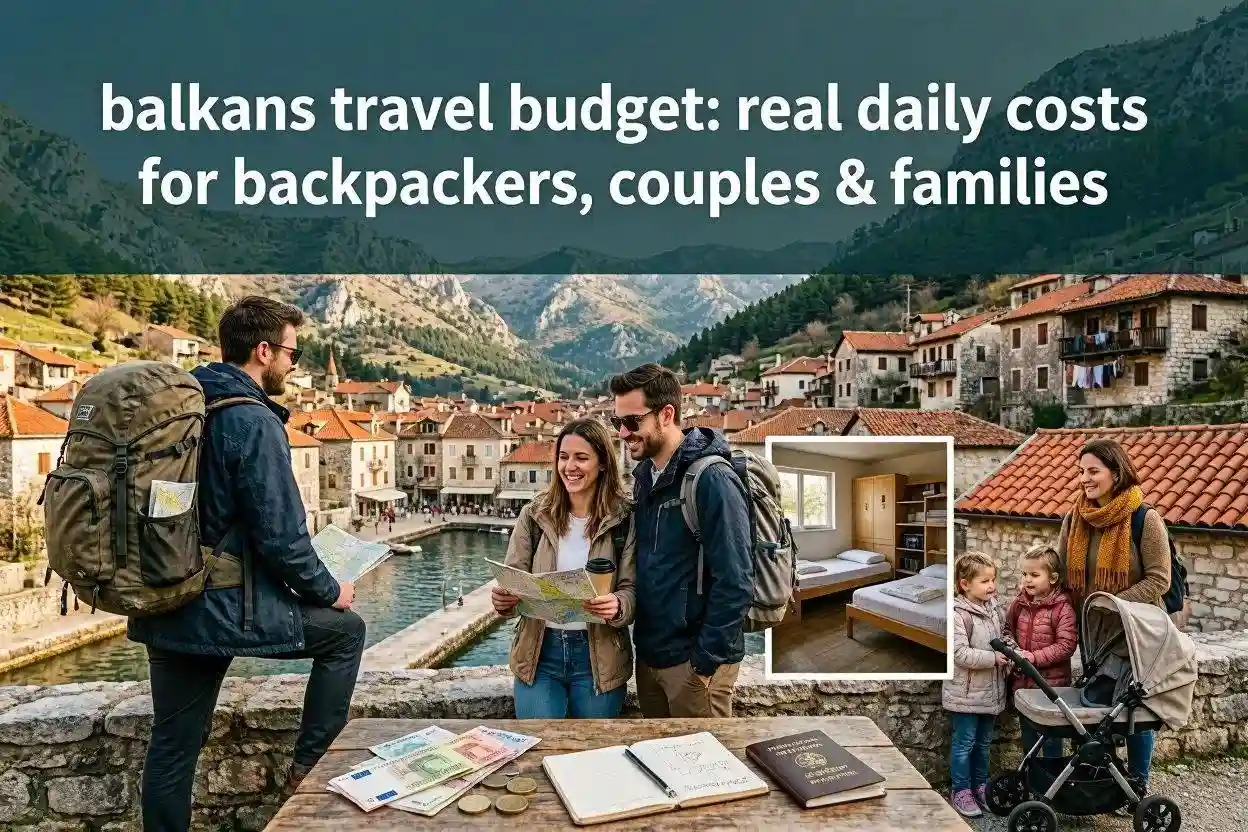
Balkans Travel Budget 2026: Real Daily Costs by Country

A practical Balkans travel budget starts with the questions that actually change your bill: Which country are you visiting, where will you sleep, how many people are sharing the room, and how often will you cross a border? The same €70 can cover a comfortable day in an inland town or disappear quickly on a summer afternoon in a famous Adriatic resort.
This research-based guide gives you 2026 planning ranges in euros for backpackers, couples, families and mid-range travelers. It also shows sample calculations, country comparisons, transport and accommodation trade-offs, local currencies and expenses that are easy to overlook. All figures are illustrative planning allowances, not live hotel quotes, official average prices or guarantees. Confirm current rates for your actual dates before paying.
For many inland destinations, a solo budget traveler can use €55–85 per day as an initial planning range; a couple sharing a modest private room might start with €130–210 per day in total, while a family of four might model €220–360 per day in total. Coastal Croatia, Kotor, popular Greek islands, festivals and peak summer dates may require substantially more. See the assumptions below before treating any amount as a target.
Balkans Travel Budget 2026: Daily Costs at a Glance
The ranges below are planning budgets rather than market-wide price statistics. They assume ordinary accommodation, meals, local movement and some sightseeing. They are not calculated by averaging hotel listings across every destination. A traveler who changes countries every night should add more for intercity travel; someone spending several days in one city may spend less.
| Travel style | Daily allowance (EUR) | Who is included? | Typically covers | Often extra |
|---|---|---|---|---|
| Solo backpacker | €55–85 | 1 person | Dorm bed or modest room; local meals; public transport; limited attractions | Long-distance transfers, expensive excursions |
| Solo mid-range | €100–180 | 1 person | Private room; restaurant meals; transport; several paid sights | Premium coastal hotels, rental-car one-way fees |
| Budget couple | €130–210 | 2 people combined | Shared budget double room; inexpensive restaurants; buses | Boat excursions, airport transfers |
| Mid-range couple | €210–340 | 2 people combined | Comfortable double room; restaurants; mixed activities | Luxury beach stays, car parking and fuel |
| Family of four | €220–360 | 4 people combined | Apartment; groceries and casual meals; local transport; selected sights | High-season family rooms, rental car, major tours |
A couple budget of €170 per day means €85 per person. A family budget of €300 per day means €75 per person if split four ways, but actual spending depends on children’s ages and room occupancy. Always compare like with like.
How These Budget Estimates Were Built
To make the figures useful, divide the trip into separate spending categories instead of repeating a single vague “cheap versus expensive” claim. This also makes it easy to replace my illustrative amounts with the real prices you find for your own dates.
- Accommodation: Count paid nights, including property fees and local visitor tax where applicable. Two travelers normally share one room; solo travelers pay the full private-room rate.
- Food and drinks: Estimate breakfasts, lunches, dinners, water and optional café stops separately. A self-catering family will have a different bill from four restaurant diners.
- Regional transport: Count every intercity or cross-border bus, train, ferry or rental-car day. Some luggage and booking fees are charged separately.
- Local transport: Include station-to-hotel transfers, city buses, occasional taxis, parking and fuel when relevant.
- Activities: Include museums, boat tours, national park access, guided walks and sports gear, but only if you intend to use them.
- Reserve: Add a buffer for delays, fare changes, exchange costs and spontaneous activities. This is not money you must spend.
Planning formula: accommodation for paid nights + food for travel days + intercity fares + local movement + paid experiences + contingency = estimated trip total. International flights, visas and insurance are separate unless explicitly included. One night is not automatically charged for every calendar day; a 14-day trip often means 13 paid nights, depending on flight times.
A worked daily example: solo backpacker
| Category | Illustrative allowance |
|---|---|
| Dorm or basic guesthouse | €28 |
| Meals, water and coffee | €21 |
| Local transport and averaged regional buses | €13 |
| Attractions | €6 |
| Buffer | €7 |
| Total | €75 per person per day |
This €75 model fits within the solo range above. It is deliberately not called the “average price in the Balkans”: your actual room might be cheaper in an inland city, while a busy coastal stop could exceed the entire accommodation allowance. For a week, seven such daily envelopes equal €525, but use an accommodation-by-night calculation for a precise final quote.
Country-by-Country Budget Comparison
The matrix compares illustrative backpacker spending per person per day, broadly assuming a hostel or simple guesthouse, inexpensive meals, local transport and modest sightseeing. It deliberately excludes expensive international journeys, international flights and major paid adventures. The inland/coastal split matters more than any simple ranking of entire countries.
| Destination | Backpacker daily planning band | Potential budget pressure | Good-value approach |
|---|---|---|---|
| Albania | €45–75 | Riviera in July–August | Use Tirana, Shkodër, Berat or inland stays as budget anchors |
| Bosnia & Herzegovina | €45–75 | Festival weekends and some tour costs | Mix Sarajevo, Mostar and smaller inland stops |
| North Macedonia | €45–75 | Peak summer around Lake Ohrid | Travel by bus; compare stays beyond the waterfront |
| Kosovo | €40–70 | Private transfers to mountain areas | Base in Pristina or Prizren and use regional buses |
| Serbia | €50–85 | Central Belgrade accommodation and events | Compare Belgrade with Novi Sad and smaller cities |
| Bulgaria | €50–85 | Ski resorts and Black Sea peak season | City breaks in Sofia or Plovdiv |
| Montenegro | €55–95 inland; €80–140 on popular coast | Kotor, Budva and boat tours in summer | Compare Podgorica and inland towns; book coast carefully |
| Croatia | €65–110 inland; €95–165 on popular coast | Dubrovnik, Split, islands in summer | Use inland bases or shoulder-season dates |
| Slovenia | €80–140 | Ljubljana, Lake Bled, alpine stays | Book rooms early; use regional public transport |
| Greece (wider Balkan trips) | €65–120 mainland; higher on famous islands | Island ferries and summer hotels | Limit island hopping and use mainland bases |
The Balkans have no single price level. One night in Dubrovnik or a resort near Kotor may cost more than several nights in an inland destination. Before deciding which country is cheapest, compare the precise cities and travel weeks you intend to visit.
Albania, Bosnia and North Macedonia: good value, with exceptions
Inland Albania, much of Bosnia and Herzegovina, and North Macedonia are useful starting points for a limited budget. Bus-based city travel, traditional bakeries and modest guesthouses can keep everyday spending manageable. However, remote mountain transfers, rafting, organized hikes and popular summer waterfronts can change the picture quickly. Do not assume every region is equally inexpensive.
Serbia, Bulgaria and Kosovo: compare transport as well as rooms
Belgrade or Sofia may be easy to reach, but city-centre room prices and special events influence the total. In Kosovo, an affordable room does not automatically mean a cheap day trip into the mountains if it requires a private car. Travelers without a vehicle should price onward transport before choosing accommodation.
Croatia, Montenegro, Slovenia and Greece: season and location dominate
Famous coastal accommodation, islands, paid parking, boat excursions and restaurants with a prime waterfront location are frequent budget multipliers. A short stay in a popular resort can still fit a modest trip if the rest of the itinerary uses cheaper inland bases. Shoulder-season savings are possible but should not be advertised as a fixed percentage without checking real rates.
Accommodation: What Actually Changes the Total
Accommodation often determines whether a Balkans holiday feels inexpensive or costly. Price the whole stay including taxes, cleaning fees, deposits and transport from the property. A room that looks cheap may not be economical if it is far from the bus station or requires an expensive taxi on arrival.
| Stay type | Best fit | Important comparison | Potential hidden extra |
|---|---|---|---|
| Hostel dorm | Solo or social budget trip | Price per bed, kitchen, storage, late arrival | City tax, towels, lockers |
| Guesthouse or basic hotel | Couples, short stays | Private bathroom, location, breakfast | City tax, transfer, parking |
| Apartment | Families, groups, longer stays | Whole-unit price divided by people | Cleaning fee, deposit, late check-in |
| Mid-range hotel | Comfort-focused travelers | Total room cost, cancellation, transit | Breakfast, spa, parking |
| Coastal resort | Beach-focused stays | Peak-date rate, actual beach access | Sunbeds, resort services, parking |
For two adults, a €72 double room works out to €36 per person per night before taxes. Four people sharing a €128 apartment work out to €32 per person per night before additional fees. By contrast, a solo traveler in a €72 room pays all €72; this is why a per-person comparison must state the room arrangement.
Accommodation is often the largest variable in a Balkans travel budget, especially during the summer months. Before finalizing your route, you can compare hotels, apartments and guesthouses on Agoda across several Balkan destinations and check whether changing your dates or location could provide better value.
Search the same property for your exact dates and guest count, compare the final checkout price rather than the first-night headline, and read cancellation terms. A free cancellation rate may be worth more than saving a small amount on a non-refundable room when buses and border crossings are involved.
Food and Drinks: Sample Daily Spending Plans
Food budgets depend more on where and how you eat than on a country label. Bakery breakfasts, markets and local lunch specials can be inexpensive, while repeated waterfront restaurant meals add up. Prices differ even across neighborhoods within the same city.
| Eating pattern | Suggested per-person daily allowance | Typical approach |
|---|---|---|
| Self-catering / very economical | €15–22 | Groceries, bakery breakfast, occasional inexpensive prepared food |
| Modest local meals | €22–35 | Bakery breakfast, casual lunch, simple restaurant dinner |
| Mixed restaurants | €35–55 | Cafés, sit-down meals and some higher-priced locations |
| Premium / waterfront dining | €55+ | Frequent full-service restaurants, premium drinks or seafood |
A useful method is to count the specific number of restaurant meals instead of multiplying every day by the same amount. For example, if a room includes breakfast, the money previously set aside for breakfast can be kept as a buffer or used for occasional dinners. If you travel with children, a grocery shop and one family meal out may cost less than four restaurant meals at every sitting.
How to budget without missing the local food
- Use neighborhood bakeries and supermarkets for some breakfasts and snacks, but still set aside money for regional dishes you want to try.
- Read the complete menu before sitting at a waterfront restaurant; seafood may be priced by weight.
- Count drinking water, coffee, desserts and snacks rather than pretending only two meals create a full day.
- Do not treat tipping as a compulsory percentage. A tip is optional; check the bill for any actual service charge.
Transportation: Buses, Trains, Ferries and Rental Cars
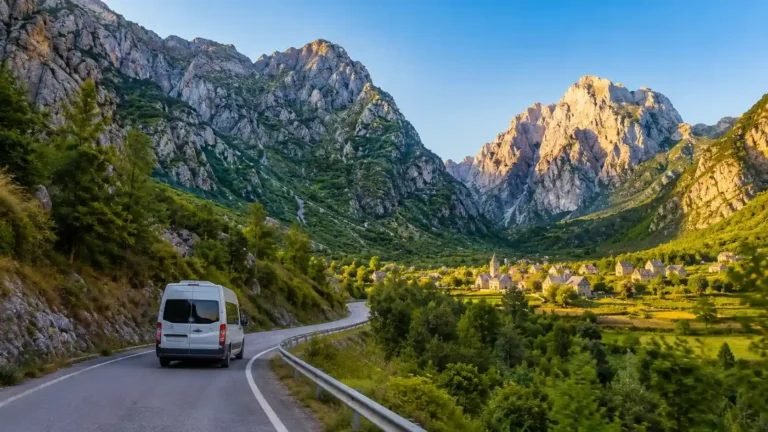
For many western Balkan routes, buses provide the most practical intercity connections. That does not mean every route is frequent, cheap or direct. A fare comparison has little meaning unless you also check the station, luggage policy, route duration and number of border checks.
| Mode | When it can save money | What may increase the bill |
|---|---|---|
| Intercity bus | Solo travel and major city links | Luggage, platform or booking charges; two tickets for a transfer |
| Train | Selected domestic corridors with convenient timetables | Limited cross-border service; taxis to distant stations |
| Rental car | Several people sharing costs, remote areas | Insurance, fuel, tolls, parking, cross-border permit, one-way fees |
| Ferry or passenger boat | Island and bay trips where it replaces a road detour | Luggage, vehicle tickets, port transfers, seasonal surcharges |
| Private transfer | Families or difficult late arrivals | High total fare; may be worthwhile only when divided across group |
| Short flight | Very distant cities where surface routes are impractical | Checked bags and airport transfers |
Instead of assuming “the bus costs €20,” compare the complete trip. A €23 bus plus a €10 taxi to a distant station costs €33. A seemingly expensive €35 centrally located alternative might be faster and cheaper overall. For two separate legs, account for each ticket and allow time between buses, especially at international borders.
Regional buses are often one of the most budget-friendly ways to move between Balkan cities. Travelers can compare bus routes and tickets on Busbud before departure to check available schedules and see whether bus travel offers better value than flights or private transfers for their route.
Car rental: share the total, not just the daily rate
A rental car advertised at €35 per day is not a €35 travel day. Add fuel, mandatory cover, optional insurance, parking, tolls, cross-border permissions and any drop-off fee. A five-day car can be worthwhile for four people heading to places poorly served by public transport but inefficient for one person visiting walkable city centers.
For families, couples and travelers visiting national parks or smaller destinations, renting a car can sometimes provide better overall value than arranging multiple transfers. You can compare car rental prices with DiscoverCars for your starting destination. When comparing costs, remember to include fuel, parking, tolls and any cross-border fees, and always check whether the supplier permits travel between the countries on your itinerary.
Flights: compare the overall journey
For flights into or out of the region, look beyond the headline fare. A second flight can save time only if the baggage and airport access costs still make sense. International flights are not included in the daily and worked-trip estimates elsewhere in this article.
For longer distances, a low-cost flight can sometimes save both time and money, especially when using different cities for arrival and departure. Travelers can compare flights on Trip.com for Balkan gateways such as Tirana, Sarajevo, Belgrade, Skopje, Sofia, Zagreb and Podgorica. Compare the total journey cost rather than the airfare alone, including baggage and airport transportation.
Worked Trip Budgets: 14 Days, 13 Nights
The examples below show how to calculate a specific trip and make this guide useful beyond broad per-country descriptions. Assume a city-focused journey through lower- and mid-priced destinations in spring or autumn, without long rental-car periods or premium coastal hotels. The figures are hypothetical spending allocations; they are not offers from hotels or operators. All sums are in euros.
| Expense | Solo budget traveler | Mid-range couple (both people) | Family of four (all four) |
|---|---|---|---|
| 13 nights of lodging | €364 (13 × €28) | €1,092 (13 × €84) | €1,664 (13 × €128) |
| 14 days of meals | €294 (14 × €21) | €896 (14 × €64) | €1,344 (14 × €96) |
| Intercity transfers | €130 | €280 | €460 |
| Local transport | €45 | €90 | €110 |
| Activities | €80 | €200 | €300 |
| Contingency | €90 | €220 | €340 |
| Total trip budget | €1,003 (one person) | €2,778 (€1,389/person) | €4,218 (€1,054.50/person) |
Notice that the cost per person for the couple or family can be lower than for a solo mid-range traveler because accommodation is shared. These models should not be compared with a daily national average. To use them, replace each line with your own live accommodation quotes, meal expectations and transport tickets.
If your focus is specifically a two-week route through the Western Balkans, our separate Western Balkans 2 Week Trip Budget guide concentrates on a particular itinerary and its trip-by-trip costs. This page instead helps you create a budget for almost any destination mix.
A Better Way to Choose Between Two Destinations
Suppose you have three nights to fill. A coastal guesthouse costs €105 per night and an inland guesthouse €55. At first glance the inland choice saves €150 over three nights. But also compare the onward route: if reaching the inland town requires an additional €40 transfer and you still want a €55 day tour, your realistic saving falls to €55. Neither option is automatically “better”; the right choice depends on the activities you will actually enjoy.
Three questions that reveal false savings
- Does the cheaper room increase taxi or bus spending?
- Is the alternative destination still enjoyable without an expensive private tour?
- Can you reduce an entire intercity journey instead of only trimming a few euros from each meal?
This matters particularly for a region with mountain roads, multiple border crossings and seasonal coastal traffic. A good Balkans travel budget measures total value, not simply the cheapest visible price tag.
Hidden Costs to Check Before Booking
- Visitor taxes: some destinations require local overnight taxes; verify whether your property collects them separately. Croatia provides official tourist-tax guidance.
- Station and luggage charges: some regional bus operators charge separately for luggage in the hold, or a station or platform fee.
- ATM and currency fees: an ATM operator fee and your home bank’s conversion charges can both apply.
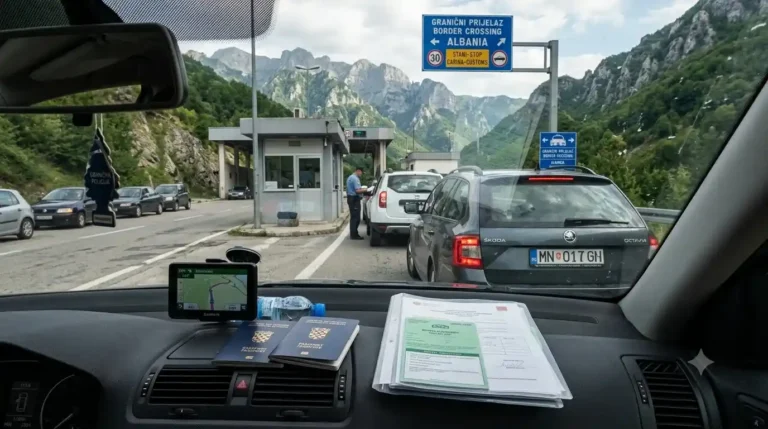
- Rental-car border permissions: written authorization, cross-border documents and one-way return fees can change the economics of a road trip.
- Ferry and boat costs: vehicle tickets, island transfers, port taxis and weather-related rerouting.
- Hotel taxes and cleaning: compare the complete final price for apartments and hotels.
- Mobile data: check roaming across countries rather than assuming one EU-style mobile package covers the whole trip.
- Insurance and travel documents: consider health/travel coverage, visas if relevant, and passport requirements separately from daily spending.
- Paid sights and activities: the headline tour price may not include the same entrance fees, transport or equipment at every provider.
For a complicated international itinerary, keep a separate contingency amount for missed connections and route changes. The reserve is a planning tool, not a predicted fee or an expense you must actually incur.
Local Currencies and Payment Tips for 2026
Most figures in this guide are in euros for easy comparison, but several countries use their own currencies. In October 2026 the important update is that Bulgaria uses the euro, following adoption on 1 January 2026. Croatia has used the euro since 2023; Montenegro and Kosovo also use the euro.
| Destination | Currency to plan for | Practical note |
|---|---|---|
| Croatia, Slovenia, Greece, Bulgaria | Euro (EUR) | Bulgaria adopted the euro on 1 January 2026 |
| Montenegro, Kosovo | Euro (EUR) | Montenegro uses the euro as its means of payment |
| Bosnia & Herzegovina | Convertible mark (BAM/KM) | €1 = 1.95583 BAM (official fixed rate) |
| Serbia | Serbian dinar (RSD) | Check card conversion and local-cash needs |
| Albania | Albanian lek (ALL) | Some smaller businesses prefer cash |
| North Macedonia | Macedonian denar (MKD) | Keep local cash for small payments |
Verified official references: European Central Bank: Bulgaria introduces the euro (2026); European Commission: Croatia and the euro; Central Bank of Bosnia and Herzegovina; and Montenegro national tourism: payment information.
When offered a card-terminal or ATM conversion into your home currency, compare the displayed rate and fees rather than accepting automatically. Carry some local cash for smaller transactions, but do not carry all of your trip money at once.
Where to Save Money Without Sacrificing Your Trip
- Change one expensive location: reduce high-season coastal nights rather than reducing every meal to the minimum.
- Slow down: stay two or three nights in useful bases when possible; fewer cross-border moves can reduce ticket and taxi spending.
- Compare full room totals: a kitchen and good location may offset a slightly higher nightly rate.
- Book practical routes: prefer confirmed direct journeys over risky chains of buses solely to save a small fare.
- Plan expensive experiences: choose one standout boat trip or guided excursion instead of buying several similar tours.
- Use shoulder-season dates: compare actual weeks before assuming May or September will always be cheaper.
- Keep a cancellation strategy: flexible lodging matters if a seasonal bus or mountain trip may change.
- Use free activities intentionally: old-town walks, local markets and public viewpoints add value but do not replace necessary transport spending.
You do not need to book a paid activity every day to enjoy the Balkans, but choosing one or two memorable experiences can fit comfortably into a balanced itinerary. Travelers can compare tours and activities on GetYourGuide and check prices, reviews, duration and inclusions before deciding which experiences are worth adding to their travel budget.
If you are planning the route itself and need to understand which cities work with public buses and trains, see our separate Balkans Itinerary Without a Car guide. Avoid booking attractions before confirming the transport that gets you there.
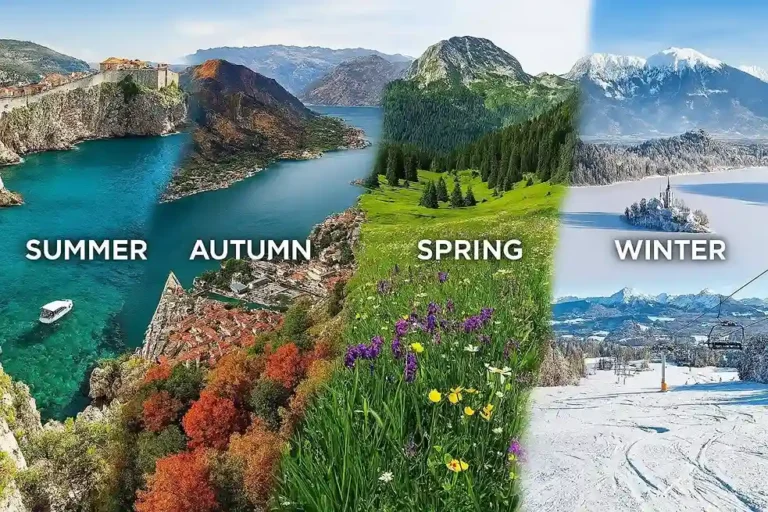
Best Time to Visit the Balkans on a Budget
| Season | Typical budget advantage | Main trade-off |
|---|---|---|
| April–June | Often more accommodation options and moderate demand outside major holidays | Sea temperatures and high mountain routes vary |
| July–August | Long daylight hours and broad summer activity selection | More expensive coastal stays, busy roads and limited availability |
| September–October | Potential for comfortable sightseeing and reduced coastal demand | Some tours and transport services may scale back |
| November–March | Often better room values for city stays | Shorter days, weather disruption, mountain and ferry limitations |
The best budget period depends on the precise trip. For a city-focused journey, spring and autumn often work well. For beaches, late-season service changes and weather matter. For hiking, do not assume all mountain roads or passes are accessible because the calendar says summer; check current conditions and local operators.
Frequently Asked Questions About Balkans Travel Costs
Is €50 per day enough for the Balkans?
It may be achievable for a frugal solo traveler in selected inland cities with inexpensive lodging, groceries and minimal paid activities. It is not a dependable all-region allowance for popular coastal destinations, frequent international travel or summer accommodation booked late. A higher buffer is sensible for first-time visitors.
Is it cheaper for a couple or a solo traveler?
A couple can often reduce per-person accommodation costs by sharing a room. However, two adults still need two meals, seats on many buses and tickets to paid attractions. Always display both the total couple budget and the per-person equivalent.
How much should a family of four plan per day?
An initial €220–360 per day for the whole family is one useful model for a modest apartment-based trip, but children’s ages, destinations, peak-season lodging and private transfers can shift costs considerably. Build a quote from a four-person apartment, meals, transport and the actual attractions you plan.
Is Croatia always more expensive than Albania or Bosnia?
Popular Croatian coastal destinations can be far more expensive in summer, but the specific city, booking date and travel style still matter. An inland Croatian stay outside peak season can compare favorably with a high-end stay on the Albanian Riviera. Compare actual properties, not only country averages.
How much money should I carry in cash?
Keep a practical amount of the local currency for transport, small restaurants and contingencies; the exact amount depends on your itinerary. Use official currency information and check bank charges. In Bulgaria, use euros, not outdated advice that treats the lev as the current currency.
Do these estimates include flights and insurance?
No. Unless explicitly stated, the daily bands and worked 14-day budgets exclude international flights, visas and insurance. Regional public transport and ordinary sightseeing are included as illustrative line items, but the precise number of transfers varies by route.
Final Checklist: Build Your Own Balkans Travel Budget
- Choose countries, cities and the exact travel dates first.
- Decide whether the budget is for one person or the whole group.
- Price the exact number of paid accommodation nights and total property fees.
- Calculate meals, intercity routes, local travel and planned activities separately.
- Confirm local currencies, border documentation and operator baggage rules.
- Add a sensible contingency and keep international flights separate.
- Recheck all transport and accommodation prices before making non-refundable bookings.
A useful Balkans travel budget is not a promise that every country is cheap; it is a clear calculation that helps you decide where to spend and where to save. Use the country comparisons to choose destinations, the worked examples to build your numbers, and current operator prices to make the final decision. That way the trip stays realistic even when a hotel rate, ferry service or bus schedule changes.

A realistic budget breakdown, which is rarer than it should be. One line worth adding for longer trips: in Bulgaria the jump from nightly accommodation to a monthly rental happens sooner than most travellers expect. Past roughly ten days in one city it is usually cheaper to take a short-term flat than to keep paying nightly, and owners on the coast are noticeably flexible outside July and August.
The other budget trap is transport between countries rather than inside them. Buses within Bulgaria are very cheap, but crossing borders in the Balkans often costs more and takes far longer than the map suggests, so a route that loops through fewer countries usually leaves more money for the places themselves.