Serbia Bulgaria Border Crossing (2026): Rules & Queues

Fact-checked: 18 October 2026. This guide focuses on international travellers making a road or public-transport journey between Serbia and Bulgaria. Border procedures, queues and bus services can change at short notice; always check the linked official services again before departure.
A Serbia Bulgaria border crossing is more than a routine stop between two Balkan destinations. You are moving between Serbia, which is outside the European Union and Schengen Area, and Bulgaria, which is part of both. That affects passport checks, visa rules, customs limits and, for some visitors, the EU Entry/Exit System (EES).
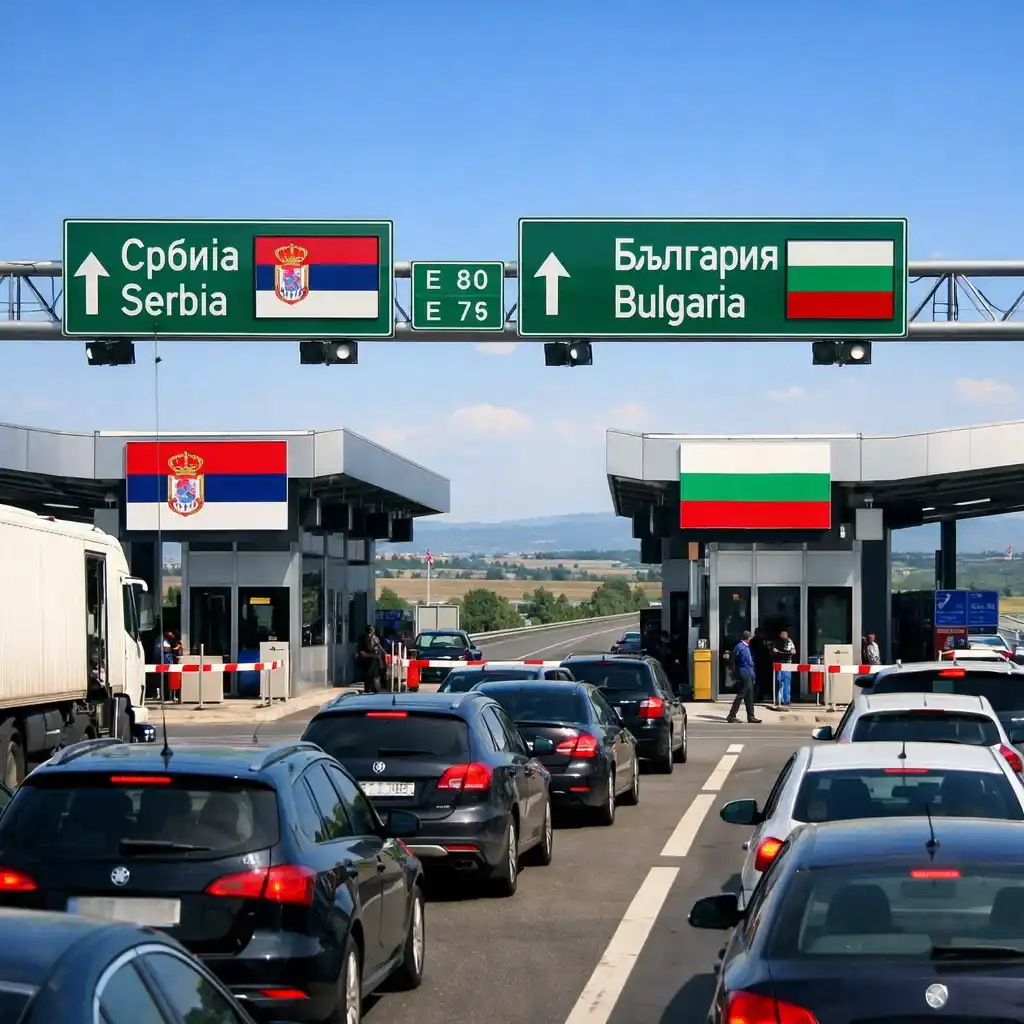
For most people driving between Niš and Sofia, the main route is Gradina (Serbia)–Kalotina (Bulgaria). Smaller crossings can make sense for other parts of the border, but they are not automatically quicker. In 2026, two especially useful updates are that Bulgaria uses the euro and the A6 Europe Motorway connecting Sofia towards Kalotina is complete. This article explains what those changes mean in practice, how to select a crossing and which documents to prepare.
At a glance: Bulgaria became fully integrated into the Schengen land-border area on 1 January 2025; its border with Serbia remains an external Schengen border. The EU’s EES has been fully operational since 10 April 2026 for applicable short-stay travellers. ETIAS is not operating as of this review—do not pay a third-party site for an authorisation you cannot yet apply for. The main Gradina–Kalotina checkpoint operates around the clock, but waiting times are not guaranteed.
Table of Contents
Serbia Bulgaria Border Crossing: Quick Answer
| Travel question | Practical answer |
|---|---|
| Main Niš–Sofia road border | Gradina (Serbia) / Kalotina (Bulgaria), the usual E80 corridor |
| Other officially listed road crossings | Strezimirovtsi, Oltomantsi, Vrashka Chuka, Bregovo — use only when they fit the entire trip |
| Passport and immigration | Separate national checks: Serbia is outside Schengen; Bulgaria is in Schengen |
| EES in 2026 | Operational for applicable non-EU short-stay travellers |
| ETIAS on 18 October 2026 | Not operational; no applications currently accepted |
| Currency | Serbian dinar (RSD) in Serbia; euro (EUR) in Bulgaria |
| For drivers | Check valid licences, registration, insurance, written rental permission and Bulgaria e-vignette |
| Queue information | Check AMSS and Bulgarian Border Police shortly before travel; no reliable fixed wait |
A practical rule: Choose your border crossing according to the whole journey, not the shortest published queue at one checkpoint. Verify the return crossing as carefully as the outward trip.
Which Serbia–Bulgaria border crossing should you use?
Bulgaria’s officially notified border-crossing list names five road crossing points on the Serbian frontier: Kalotina, Strezimirovtsi, Oltomantsi, Vrashka Chuka and Bregovo. These are Bulgarian-side names; you may encounter different spellings on Serbian road signs or mapping apps. The list is published in the Official Journal of the European Union.
| Bulgarian crossing | Serbian-side name | Best route to consider | Planning caution |
|---|---|---|---|
| Kalotina | Gradina | Niš, Dimitrovgrad and Sofia on the E80 corridor | Main international route, including substantial freight traffic; queues vary |
| Strezimirovtsi | Strezimirovci | Southwestern Serbia and western Bulgaria | Mountain-area access roads; confirm opening hours and vehicle eligibility |
| Oltomantsi | Ribarci | Kyustendil region and nearby southern Serbian roads | Local road network; not a direct substitute for the Niš–Sofia motorway |
| Vrashka Chuka | Vrška Čuka | Zaječar, Belogradchik and northwestern Bulgaria | Check road conditions and restrictions before choosing this route |
| Bregovo | Mokranje | Negotin and the Vidin area | Useful for the far north; may be a significant detour from Sofia |
This is a route-selection comparison, not a live status board. Smaller crossings may have restricted operating hours or limits on certain vehicle categories. Confirm conditions with the border authorities before travelling, particularly if driving a truck, campervan or rental vehicle. Never assume you can avoid a queue simply by taking a different crossing—the detour can be longer than the delay.
Gradina–Kalotina: the main Niš–Sofia crossing
The E80 corridor links Niš with Dimitrovgrad and Gradina on the Serbian side, and Kalotina with Sofia on the Bulgarian side. This is normally the straightforward choice for an international road trip between these cities and for many coach services. The Serbian Automobile and Motorcycle Association (AMSS) lists Gradina as a 24-hour checkpoint, alongside border-delay information in each direction on its road conditions map.
Crossing involves checks by the authorities of both countries. A Serbian-side waiting-time estimate therefore does not necessarily include the time spent with Bulgarian border authorities. Treat any figure you see online as a snapshot, not a guaranteed total journey time. Freight and passenger queues may differ.
Strezimirovtsi–Strezimirovci
This crossing may be relevant for travellers already exploring southern Serbia or western Bulgaria rather than travelling directly between the two capitals. Access involves regional and mountain roads, so check conditions in winter or poor weather. Verify the crossing’s hours and permitted traffic category with local authorities; do not rely on a generic map listing alone.
Oltomantsi–Ribarci
Oltomantsi is in the Kyustendil direction and can be practical for nearby regional itineraries. It is not necessarily a convenient alternative for drivers approaching from Niš on the main motorway. Assess the full journey on both sides, not only the number of vehicles at the border.
Vrashka Chuka–Vrška Čuka
This northern inland route is relevant for the Zaječar and Belogradchik region. The surrounding roads are different from the Sofia motorway corridor, and you should check road type, mountain conditions and checkpoint restrictions before choosing it.
Bregovo–Mokranje
The northernmost option is useful when travelling between Negotin in Serbia and Vidin in Bulgaria. For a journey to Sofia, calculate the total detour carefully. A low-traffic checkpoint is not automatically the fastest crossing for your route.
What Happens at Gradina–Kalotina? Step-by-Step
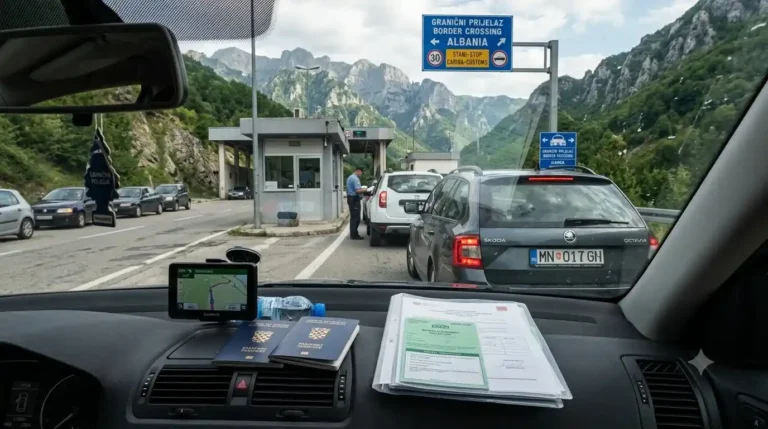
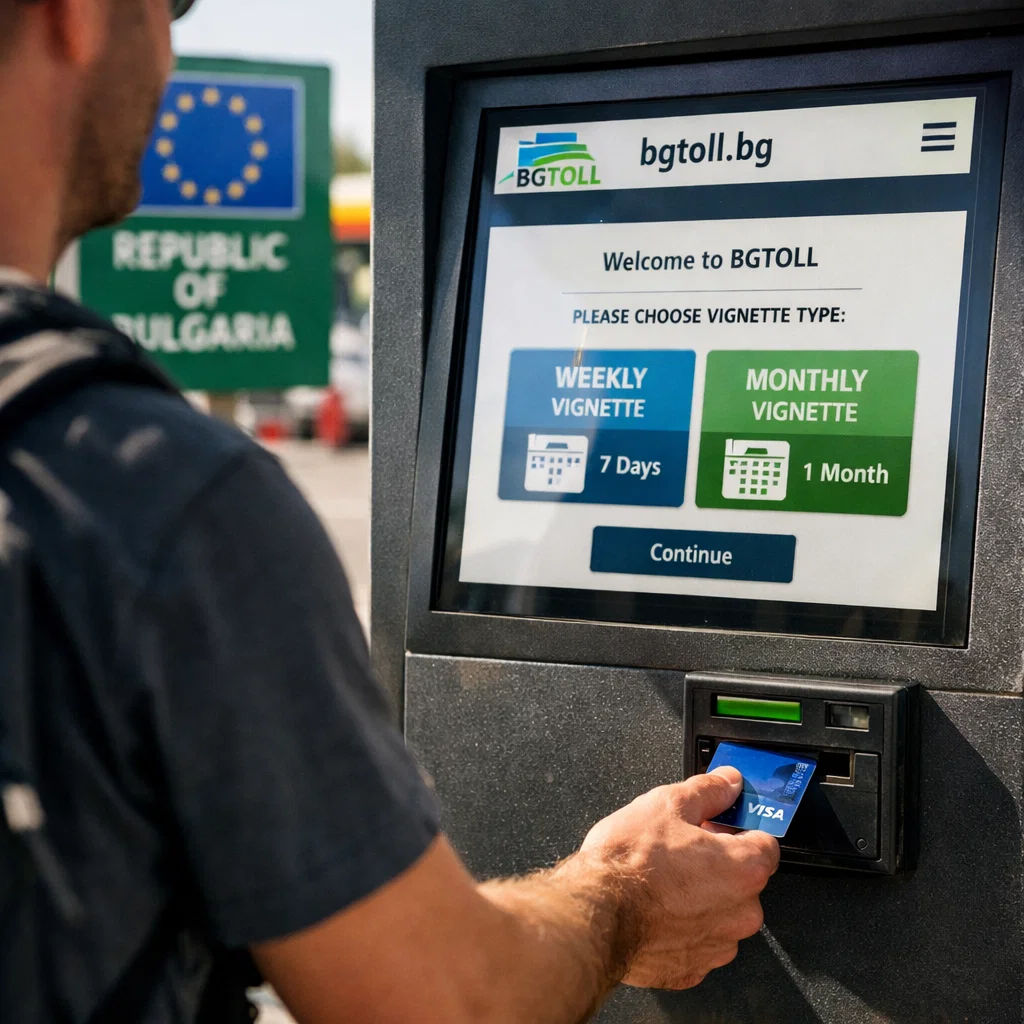
The precise arrangement depends on traffic direction, your citizenship and any instructions issued on the day, but it helps to picture this as two separate international border formalities rather than one motorway tollgate. The border is not abolished by Bulgaria’s Schengen membership.
- Approach the correct passenger-vehicle lane. Follow signs and officers; do not enter freight-only lanes because they appear shorter. Keep your travel documents accessible without handling your phone while driving.
- Complete Serbia’s exit checks. Border officers may inspect passports or accepted identity documents, visas and the vehicle or luggage. A driver may be asked for the registration and proof of authorization to use the car.
- Continue to Bulgarian entry control. Bulgaria’s checks cover Schengen entry eligibility and, when relevant, EES registration or verification. Passengers must comply individually; your car documents do not replace immigration documents.
- Follow customs and inspection instructions. An officer may direct you to a particular lane or inspection area. Declare applicable cash and goods instead of assuming everything for personal use is exempt.
- Resume the trip only after clearance. Check that navigation and roaming still work, confirm your vignette coverage for the vehicle and continue using the correct road and speed-limit signs.
On the Bulgaria-to-Serbia return, the process runs in the opposite direction: Bulgarian/Schengen exit and Serbian entry, with separate checks and potentially different queue conditions. If your Schengen status depends on a limited-entry visa, confirm how leaving and later returning affects that document before planning a multi-border loop.
Should You Divert to a Smaller Border Crossing?
A smaller checkpoint can be useful when it lies naturally between your two destinations. It is rarely a sensible short-cut if it forces a large rural detour. Before changing course, verify (1) that the crossing is operating, (2) that your vehicle class may use it, (3) the quality of the approach roads on both sides, and (4) the extra driving and daylight required. This is particularly important in winter and when travelling with children or a campervan.
Border time calculation: Do not subtract one side’s reported delay from your schedule and call the remainder a guarantee. Border processing includes two authorities, potential inspections and an uncertain wait. For important flights, separate your border-crossing day from the day of departure where possible.
Serbia–Bulgaria Border Updates for 2026
Bulgaria is a full Schengen member—but this remains an external border
Checks at internal land borders involving Bulgaria and Romania were lifted on 1 January 2025, completing their Schengen integration. Serbia, however, is not a Schengen country. Travellers going from Serbia into Bulgaria continue to cross an external Schengen border, so passport, immigration and customs checks still apply. Bulgaria’s Schengen status does not mean that you can drive in from Serbia without a checkpoint. See the EU Council decision.
EES is operational; ETIAS is not accepting applications
The Entry/Exit System (EES) became fully operational on 10 April 2026. It digitally records entry and exit information for non-EU nationals making qualifying short stays at external borders. Depending on your travel status, an officer may collect or check your facial image, fingerprints and travel-document details. EU citizens and other exempt categories are not registered in the same way. For official explanations, see the European Commission’s EES overview.
The European Travel Information and Authorisation System (ETIAS) is a separate future requirement for travellers from certain visa-exempt countries. The EU says it is planned for a future launch, with the EU saying it will announce the exact start date in advance, but it is not operating and applications are not being accepted at the date of this review. As of 18 October 2026, the official EU site says no ETIAS applications are being collected. Always check the official ETIAS website just before your trip, especially if travelling later in 2026 or in 2027.
Practical distinction: EES is a border recording procedure carried out by officials; ETIAS, once launched, will be an authorisation you apply for before travel if your nationality and circumstances require it. Neither should be confused with a Schengen visa.
Bulgaria now uses the euro
Bulgaria adopted the euro (EUR) on 1 January 2026. The Bulgarian lev was accepted alongside the euro only during the January changeover; the euro became the sole legal tender on 1 February 2026. Serbia continues to use the Serbian dinar (RSD). You do not need to obtain Bulgarian lev for a 2026 visit. The European Central Bank’s changeover guide explains the dates.
The A6 Europe Motorway is no longer an unfinished project
Older travel guides may still describe the Bulgarian A6 Europe Motorway between Sofia and the Serbian border as partially under construction. That information is out of date: the Bulgarian government announced the opening of the final section in September 2025. You should still check temporary works, traffic and incidents on your actual travel day. See the Bulgarian government’s announcement.
2026 Entry Rules at a Glance: Do Not Confuse the Systems
| System or document | What it does | What it does not do |
|---|---|---|
| Serbian visa or visa exemption | Allows eligible entry to Serbia under Serbian rules | Does not automatically authorize entry to Bulgaria |
| Schengen visa or exemption | Covers eligible short-stay Schengen entry, subject to conditions | Does not automatically replace a Serbian visa |
| EES | Records covered non-EU short-stay crossings at external Schengen borders | It is not a visa or a travel authorization sold by an agent |
| ETIAS | Future pre-travel authorization for some visa-exempt travellers once launched | Not accepting applications on 18 October 2026 |
| Passport / accepted ID | Establishes identity and nationality for the relevant crossing | Does not waive visa or other entry conditions |
A common mistake is to assume that because you entered Serbia legally, you must be eligible to drive into Bulgaria. Check the Bulgarian/Schengen requirements for your actual passport, and check Serbia separately for your journey back. Travellers with more than one citizenship should use and disclose travel documents consistently as required by the border authorities.
Passports, visas and entry rules
Your passport nationality, visa or residence status—and which direction you are travelling—matter more than where you started your journey. A valid Serbian visa does not automatically authorise entry into Schengen Bulgaria; a Schengen visa does not automatically solve every Serbian entry question. Check both countries before leaving home.
Entering Bulgaria from Serbia
For short stays, Serbian nationals holding qualifying biometric passports are visa-exempt for up to 90 days in any rolling 180-day period across the Schengen Area, provided the other entry conditions are met. The passport generally must have been issued within the last 10 years and remain valid at least three months after the intended Schengen departure. For nationality-specific advice, consult the Serbian Ministry of Foreign Affairs’ Bulgaria travel information.
EU citizens may normally use a valid passport or national identity card to enter Bulgaria, but the document permitted when leaving Serbia depends on that traveller’s citizenship and applicable agreements. Other non-EU visitors may be visa-exempt or may need a valid Schengen visa, depending on their nationality and immigration status. A residence permit or an exceptional status can change the rule, so avoid one-size-fits-all advice.
Border officials may ask why you are visiting, where you will stay, how you intend to fund your trip and how you will leave the Schengen Area. Carry accessible confirmation of accommodation and onward travel when relevant; do not bury your only copy of a booking in an offline app that needs internet to open.
Entering Serbia from Bulgaria
Serbia runs its own visa and entry regime. Some travellers can enter visa-free; others require a Serbian visa. Serbia also recognises certain valid visas and residence permits from specified countries for eligible travellers, subject to conditions. Use Serbia’s official visa requirements page and visa regime search for your passport, rather than relying on whether Bulgaria admitted you.
The Serbian Ministry of Foreign Affairs says border authorities may request evidence of sufficient funds, assessed at €50 per day of stay; this is a proof-of-means benchmark, not a border fee or a mandatory amount of cash to hand over. Supporting evidence may include cash or a bank statement. Accommodation details, departure arrangements and medical insurance information may also be requested. Read Serbia’s general entry requirements.
What if you have a connecting journey?
If you are using Bulgaria to enter the wider Schengen Area, count all relevant Schengen days, not only days spent in Bulgaria. If you are continuing through Serbia to another country, check the next country’s entry rules too. A valid route on a map does not guarantee transit permission for every nationality. Travelling with children may involve additional documentation, depending on citizenship and who accompanies the child.
Driver and Passenger Documents: Who Needs What?
| Traveller or vehicle | Prepare before departure |
|---|---|
| Each passenger | Valid passport or accepted ID, relevant visa or residence document, proof of accommodation/onward plans when needed |
| Driver | Original valid driving licence; International Driving Permit where required by licence rules or rental supplier |
| Privately owned vehicle | Registration and appropriate insurance proof; owner authorization if applicable |
| Rental / leased / company vehicle | Contract explicitly allowing Serbia and Bulgaria, insurer confirmation and any required cross-border authorization |
| Passenger with a pet | Microchip, rabies documentation, appropriate EU health certificate or qualifying passport, and designated-entry-point checks |
| Traveller with restricted or declarable goods | Relevant customs paperwork and accurate declaration |
Travel with printed or offline-accessible copies as backups, but expect to present the original documents when the law or operator requires them. Children have individual nationality-dependent rules; if one parent or another adult is accompanying a child, check both countries’ requirements and bring relevant consent or custody documents where applicable.
Rental company question to send before paying: “I will collect the car in [city], cross Gradina–Kalotina between Serbia and Bulgaria, and return it in [city]. Please confirm in writing whether both countries are permitted, which insurance and registration documents I must carry, whether there is a cross-border fee, and whether roadside assistance covers Bulgaria and Serbia.”
Driving across the border: what to prepare
Vehicle documents and rental-car permission
Take your driving licence, vehicle registration, proof of valid motor insurance and your passport/ID documents. If the vehicle is rented, leased, company-owned or registered to someone else, obtain the applicable written permission for international travel from the owner or rental company. Check whether the rental agreement permits both Serbia and Bulgaria, which locations are excluded and whether an additional border fee applies.
Affiliate disclosure: Some booking and travel-product links in this guide may earn BalkanTripGuide a commission if you purchase. They do not change the advice about documents, visa eligibility or road safety.
When comparing a rental car, check contract terms rather than selecting a vehicle purely on price. You can explore car rentals in Sofia on DiscoverCars, but only the individual supplier can confirm whether a specific booking allows Serbia and whether additional insurance is necessary.
Do you need a Green Card insurance certificate?
Not everyone does. Serbia and Bulgaria participate in the Multilateral Guarantee Agreement that recognises motor insurance through vehicle registration for participating countries. The Serbian Ministry of Foreign Affairs says a Green Card is not necessary for Serbian vehicles travelling to Bulgaria, and that Bulgarian-registered vehicles fall within the system for Serbia. Vehicles registered in other countries may be treated differently. Check your registration country and your insurance provider before travel—especially for rental vehicles or registrations outside the agreement. See Serbia’s official international vehicle insurance explanation.
Bulgarian electronic vignette
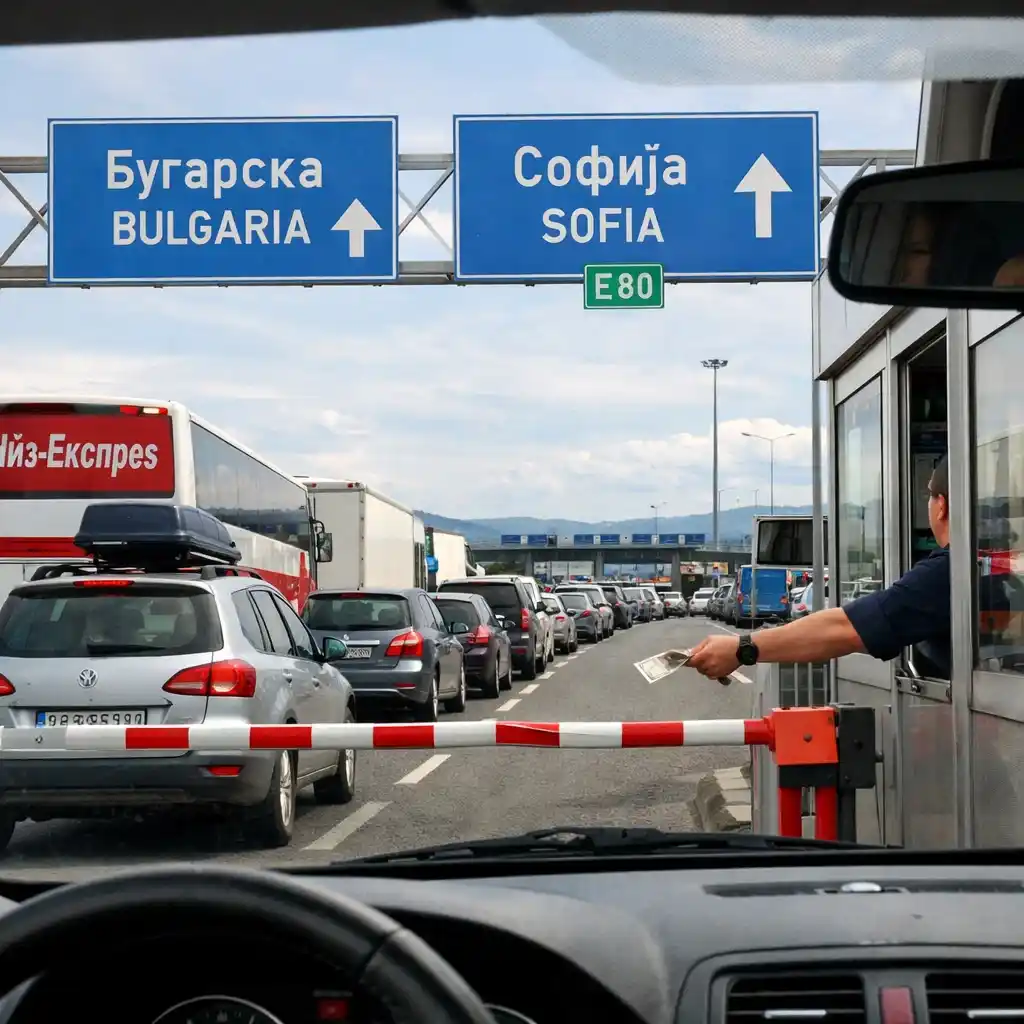
For ordinary passenger cars using Bulgaria’s vignette-charged road network, you need a valid electronic vignette linked to the vehicle’s number plate. Buy it for the correct registration country, number plate, vehicle class and validity period. A Bulgarian vignette is not the same as a Serbian motorway toll.
The official Bulgarian toll service is BG Toll and its e-vignette purchasing portal. You may also encounter official terminals and authorised physical retailers. Buy before using chargeable Bulgarian roads, then verify the registration details on the confirmation. Heavy vehicles and certain vehicle categories have different charging rules: check the official classification rather than applying the passenger-car rule to every vehicle.
Serbian motorway tolls
Serbia does not use Bulgaria’s vignette model on its tolled motorways. Instead, motorway tolls are assessed by the relevant route/vehicle category and paid at toll points or through supported electronic systems. Keep a payment card and a little RSD for incidental expenses, and follow the instructions at each toll lane. Do not assume every small border-area business accepts euros or cards.
Headlights, driving, fuel and roadside basics
Daytime headlights are required in both countries. Follow posted speed limits, use hands-free calling only where permitted and avoid alcohol when driving. Bulgaria’s passenger-car limits depend on road classification, so a blanket claim that ‘EU speed limits’ apply is not useful—read the signs on the actual road. Weather, works and road restrictions change, especially off the motorway.
Plan fuel and rest stops before arriving at the queue. Carry water, charging cables, medications and a warm layer in the passenger compartment. Keep your reflective vest, warning triangle and any equipment applicable to your vehicle readily accessible. Where winter equipment rules apply, the correct tyres and equipment matter more than having a generic road-trip checklist.
Budget for a Serbia–Bulgaria Drive Without Inventing Fixed Costs
The cost of the international drive has several separate parts. Exact amounts depend on the car, itinerary, travel date and payment options. Do not confuse a road charge with a visa, border fee or temporary card hold.
| Cost or financial requirement | How to calculate it | Common mistake |
|---|---|---|
| Serbian motorway toll | Check the route and vehicle category through the Serbian motorway toll system | Assuming a Bulgarian vignette also pays Serbian tolls |
| Bulgarian e-vignette | Choose the correct vehicle category and validity period on BG Toll | Buying for the wrong plate or registration country |
| Fuel | Estimate actual return distance and consumption, then compare current pump prices | Using a one-way fuel estimate for a return trip |
| Rental cross-border charge | Ask the individual supplier before booking | Assuming permission is included because insurance exists |
| Accommodation / parking | Consider late arrival and city-centre restrictions | Booking a non-refundable hotel on an over-optimistic border ETA |
| Cash declaration | Declare €10,000 or more when entering/leaving the EU, where the rule applies | Mistaking declaration for a payable border tax |
A family may reasonably pay more for a direct motorway journey with confirmed vehicle permission instead of diverting to a remote crossing in search of a shorter queue. You can reduce avoidable costs by choosing the right vignette period, checking rental fees before paying, taking breaks before reaching the checkpoint and keeping important connections on a later day.
How long will the border crossing take?
There is no reliable fixed number of minutes for every day or checkpoint. A short queue can grow quickly after a coach arrival, a busy holiday weekend or changes in inspection procedures. At Gradina–Kalotina, the Serbian and Bulgarian controls are separate, and delays on the other side may not be included in the first estimate you find online.
Check the AMSS road-conditions map for Serbian border reports and its Gradina traffic-camera page for a visual check. Consult the Bulgarian Border Police for Bulgarian-side notices. Check immediately before leaving, then again on approach if it is safe to do so.
A workable planning method: (1) check both sides, (2) make sure the alternative crossing is open to your vehicle, (3) compare the total driving distance and road quality, and (4) keep time flexibility for onward buses, trains, accommodation check-in or flights. Claims such as ‘Tuesday is always the quietest day’ or ‘this checkpoint always takes 20–45 minutes’ should not be treated as dependable forecasts.
Without a Car: Bus-Trip Checklist
Coach travel removes the need to buy a vignette or bring a vehicle registration, but it does not eliminate border formalities. Bus passengers may be asked to leave the coach with documents, and the operator may determine how luggage is inspected. The actual procedure depends on the border officers and service.
- Search your exact travel date in both directions; verify the operating carrier, not only the reseller.
- Write down the precise Sofia and Belgrade departure and arrival stations; these cities can have more than one practical bus stop.
- Check whether the journey is direct, the expected stop pattern, and how a missed connection or delayed border affects the fare.
- Save your ticket and passport details offline; bring water, medication and a warm layer in the hand luggage.
- When the driver gives instructions at the checkpoint, follow them, and do not assume your seat reservation guarantees a fixed arrival time.
If you are continuing around Serbia after arrival, our essential Serbia travel tips explains station and local-payment considerations that matter beyond this border.
Sofia to Belgrade by bus or train
A traveller without a car should first look for a currently operating bus service, then compare the departure terminal, arrival terminal, transfers and route through the border. Bus offerings change by date. Do not assume a company runs daily merely because it appears in an older guide. You can compare available departures on the Omio Belgrade–Sofia bus route page, then confirm the final service details with the operating carrier.
Border passport checks apply to coach passengers too. Follow driver instructions about luggage and documents, and choose onward connections with flexibility rather than scheduling a tight transfer immediately after the frontier. If a booking screen suggests an unusually long itinerary, check whether it includes an indirect routing or a transfer.
Do not assume a direct international train is running. Cross-border railway timetables have been affected by infrastructure works and service changes. Confirm a specific date and service through Srbija Voz and Bulgarian State Railways (BDZ) rather than interpreting historic train names as operating schedules.
When a Crossing Is Delayed, Closed or You Are Referred for Inspection
A border delay is frustrating but is not, by itself, evidence that a crossing is closed. If traffic stops, follow the signed queue and official directions. Do not enter unmarked lanes, pay unofficial intermediaries or make U-turns inside controlled border areas. Check reliable updates only when safely parked or as a passenger.
If an officer requests additional checks, be prepared to explain your route, show the original documents and answer accurately. Keep essential medicines, food and weather-appropriate clothing in the cabin. When traveling by coach, the driver’s updated departure decision matters more than a transport app’s estimated arrival time.
If you cannot proceed because of an entry-document problem, contact the relevant border authority, embassy or consulate as instructed. A travel guide cannot determine an individual entry decision. Keep refundable accommodation and onward tickets when immigration eligibility or border timing is uncertain.
Money, customs and personal belongings
What currency should you carry?
Carry RSD for Serbia and EUR for Bulgaria. Bank cards are useful in both countries, but a modest amount of local cash can help with small purchases, parking or unexpected card-payment problems. For ATM withdrawals, review your bank’s foreign-exchange fees and decline dynamic currency conversion if your bank normally offers a better rate. There is no reliable universal percentage by which every border exchange booth is more expensive; compare the displayed rate and fees before accepting a transaction.
If you need a night before or after a late arrival, compare Sofia accommodation options on Agoda based on parking, check-in time and cancellation terms rather than choosing solely by distance from the border.
Cash declarations and goods brought into the EU
When entering or leaving the EU at the Serbian–Bulgarian land border, carrying €10,000 or more in cash or qualifying equivalents triggers a declaration requirement. The threshold is €10,000 or more, not merely amounts above €10,000. The rule concerns declaring funds, not paying a tax on your money. Check the Bulgarian Customs guidance for forms and current details.
Allowances for tobacco, alcohol and other goods depend on direction of travel, your age, the method of entry and the type of goods. Since Serbia is outside the EU, you should not assume rules for travel within the EU apply when arriving in Bulgaria. Declare goods where required, and check restrictions on meat, dairy products, medicines and other controlled items. If carrying valuable equipment for work or goods for resale, consult customs in advance; tourist allowances may not apply.
Travelling with a Dog, Cat or Ferret Across the Border
Entry into Bulgaria from Serbia means bringing an animal into the EU from a non-EU country. The required documents can include a microchip, valid rabies vaccination, an EU-compliant animal health certificate and a non-commercial travel declaration. A standard EU pet passport is not automatically the correct document for a pet resident in Serbia. The EU’s 2026 list includes Serbia among the territories for which a rabies antibody titration test is generally not required for qualifying non-commercial movements. The exemption does not waive identification, vaccination, certificate or entry-point requirements. However, exemptions and paperwork depend on the animal’s origin and travel history. Check the European Commission’s pet entry guidance and the designated entry point before departure. Start preparations well before the trip.
Safety, emergencies and travel connectivity
Keep passports, payment cards and other valuables with you—not visible in a parked vehicle. Use official payment websites rather than unsolicited offers to ‘skip the border queue’ or pay a private person to fix paperwork. If a problem occurs inside a checkpoint, remain in the authorised area and follow border-officer instructions.
For emergencies in Bulgaria, dial 112. For vehicle problems in Serbia, AMSS roadside assistance offers services and road-condition information; consult AMSS for current contact details and service eligibility. The Serbian Embassy in Sofia is an appropriate consular resource for Serbian nationals; travellers of other nationalities should identify their own embassy or consulate in advance.
Roaming conditions may change after crossing from one country to the other. If you rely on mobile navigation, download an offline map first and confirm that your mobile plan works on both sides; Bulgaria and Serbia are not interchangeable coverage territories. For example, Airalo’s Bulgaria eSIM options cover Bulgaria packages—check a product’s actual country list before assuming Serbia is included.
Example Niš to Sofia Road Plan: A Realistic Sequence
- Before leaving Niš: verify everyone’s entry status, your rental authorization, the vehicle registration/insurance and the latest AMSS and Bulgarian police notices.
- During the approach: use the main E80 motorway corridor, stop for fuel and a break if needed, and keep the original documents in reach.
- At Gradina–Kalotina: follow the correct lanes and both border agencies’ instructions. Leave your onward arrival time flexible rather than expecting a standard queue.
- After entering Bulgaria: confirm the relevant e-vignette is valid for the actual vehicle and continue towards Sofia on the current signed route.
- On arrival: park once, check accommodation times and keep paperwork available for the return journey.
This is an order-of-operations example, not a timed itinerary or a substitute for live navigation. Our nine-day Serbia–Bulgaria self-drive itinerary uses the same crossing within a more complete multi-stop route.
A practical border-crossing checklist
- Passport or accepted ID: Check the documents and permitted entry route for your nationality, for both Serbia and Bulgaria.
- Visa status: Verify Schengen and Serbian rules independently. ETIAS was not active when this guide was reviewed.
- Trip evidence: Keep accommodation confirmation, relevant onward transport information and evidence of funds accessible.
- Vehicle papers: Driving licence, registration, valid insurance and written cross-border rental permission where applicable.
- Road charges: Pay the Serbian motorway toll as required; obtain a valid Bulgarian e-vignette before using applicable roads.
- Current conditions: Review checkpoint opening times, restrictions, the weather and both countries’ traffic notices.
- Time cushion: Allow extra time for border inspections and avoid risky onward connections.
- Money: Carry dinars for Serbia, euros for Bulgaria, and know the €10,000-or-more EU cash declaration threshold.
- Pets or special goods: Check official EU and Serbian documentation rules before travel.
- Offline essentials: Download maps and tickets; keep emergency contact information and critical medication accessible.
Where to Go After the Border
If you are entering Bulgaria for a longer holiday, our seven-day Bulgaria itinerary compares a compact Sofia–Rila–Plovdiv plan with longer alternatives. It can be followed with public transport on selected legs, but cross-border entry and domestic transport should be verified separately.
For a wider driving loop, the Serbia–Bulgaria–Romania road trip explains how external Schengen border checks differ from internal Schengen connections. A shorter Serbia–Bulgaria road-trip plan is usually easier if you want to avoid an extra international transfer.
Travellers starting in the capital can consult our Belgrade three-day city itinerary before hiring a car. Returning to Serbia after a road trip? Recheck your Serbian entry eligibility and the current traffic situation independently.
Official sources worth checking before departure
| What you need to verify | Official information |
|---|---|
| Live border queues and Gradina cameras | AMSS road conditions and cameras |
| Bulgaria-side border notices | Bulgarian Border Police |
| Serbian nationality-based entry rules | Serbian Ministry of Foreign Affairs |
| Schengen entry procedures | European Commission EES and ETIAS |
| Bulgarian electronic vignette | BG Toll |
| Cash and customs | Bulgarian Customs |
| International railway services | Srbija Voz and BDZ |
Final Thoughts: Serbia Bulgaria Border Crossing in 2026
For a typical Niš–Sofia journey, Gradina–Kalotina remains the obvious crossing to investigate first. If you are in the northwest or southwest, one of the smaller border points may be more direct—but only after you have checked hours, vehicle restrictions and the full drive. The practical 2026 changes are clear: Bulgaria is in Schengen, the EES is operating, the euro has replaced the lev and the main A6 route is complete. ETIAS is not yet a current requirement at the time of this update.
Rather than trusting an old fixed queue estimate, prepare the correct documents, check live border information on both sides and leave room for delays. A border crossing that is straightforward on paper can still be slow on a busy day—and a well-researched route gives you useful alternatives without false guarantees.
Frequently Asked Questions (FAQ)
Is the Serbia–Bulgaria border open 24 hours?
The main Gradina–Kalotina crossing is listed by AMSS as operating 24 hours a day. Smaller crossings may have different hours or vehicle restrictions; verify the specific checkpoint before travelling.
Do Serbian citizens need a visa to visit Bulgaria?
Holders of qualifying Serbian biometric passports can generally visit visa-free for up to 90 days in any rolling 180-day Schengen period, subject to the other entry requirements. Check passport validity and official guidance before departure.
Do I need ETIAS for Bulgaria in October 2026?
No. The official EU ETIAS service was not operational and was not accepting applications as of 18 October 2026. Check the official ETIAS site for changes before a later trip.
Is the EES in use on the Serbia–Bulgaria border?
Yes. The EU Entry/Exit System has been fully operational since 10 April 2026 for applicable non-EU short-stay travellers crossing Schengen external borders.
What currency is used in Bulgaria in 2026?
The euro (EUR). Bulgaria adopted it on 1 January 2026 and it became the sole legal tender from 1 February. Serbia uses the Serbian dinar (RSD).
Do I need a Green Card to drive between Serbia and Bulgaria?
Not usually for a properly insured vehicle registered in Serbia or Bulgaria, due to their multilateral insurance agreement. The rule can differ for vehicles registered elsewhere; confirm with the insurer.
Can I use a rental car to cross?
Often yes, but only if the individual rental company gives permission for travel into both countries. Request confirmation in writing and check insurance and any cross-border charges.
How long does the Gradina–Kalotina border crossing take?
There is no dependable fixed duration. Queues depend on traffic, inspections and operations on both the Serbian and Bulgarian sides. Check AMSS and Bulgarian Border Police updates shortly before travel.