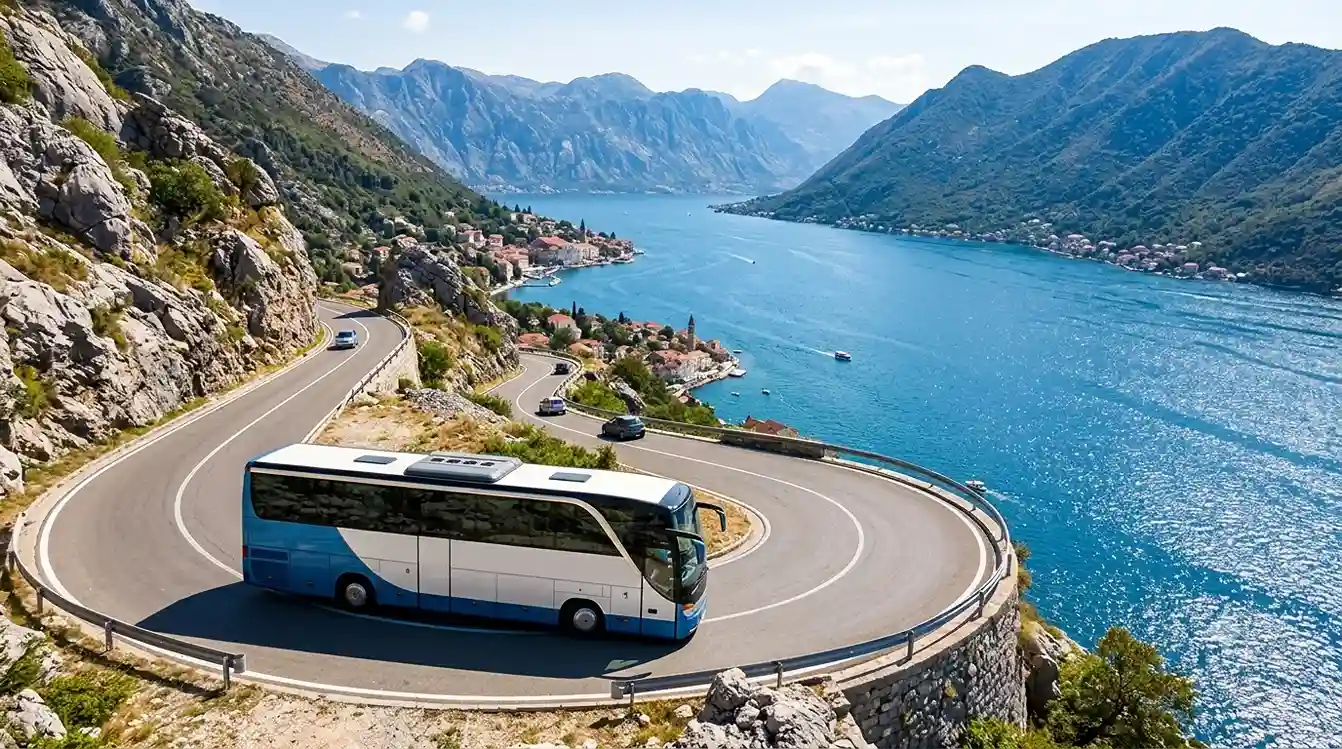
Dubrovnik to Kotor Bus: Tickets, Times, Prices & Border Tips

The Dubrovnik to Kotor bus is one of the simplest ways to travel from Croatia to Montenegro without a rental car. Direct coaches connect the cities on bookable departures, but this is an international journey: a short driving distance does not guarantee a quick arrival when passport checks and coastal traffic are involved.
This guide covers the departure and arrival stations, where to find real bus times, how much to budget, the important difference between a station voucher and a mobile ticket, and what to expect at the border. It also explains when an overnight stay makes more sense than a rushed day trip.
Disclosure: Some optional booking links below are affiliate links. We may earn a commission if you book through them, at no additional cost to you. The practical advice and official-source links are independent of those partnerships.
Table of Contents
Dubrovnik to Kotor Bus: Quick Answer
Direct Dubrovnik–Kotor buses are available to book on selected departures. Most services leave from Dubrovnik Main Bus Station in Gruž and reach Kotor Bus Station in Škaljari, a short walk from the Old Town. Advertised journeys on some direct services take roughly 2–3 hours, but the border can extend the trip considerably. Check the exact service before paying: availability, intermediate stops and boarding rules vary by operator.
| Essential detail | What to know |
|---|---|
| Departure station | Dubrovnik Main Bus Station, Obala pape Ivana Pavla II 44A, Gruž |
| Arrival station | Kotor Bus Station, Put Prvoborca bb, Škaljari |
| Route | Croatia to Montenegro; international border crossing |
| Scheduled journey | Often around 2–3 hours for a direct coach; delays are possible |
| One-way fare | Usually a few tens of euros; compare the final ticket price and extras |
| Currency | Euro in both countries |
| Best use | A one-way transfer with a flexible arrival plan |
| Main concern | Border queues and whether the ticket needs station collection |
The key decision: Choose a confirmed, practical departure rather than the shortest advertised travel time. If you have a flight, cruise departure or another expensive connection, do not rely on a tight same-day transfer from across the border.
Dubrovnik to Kotor Bus Times: Where to Find the Actual Schedule
There is no single timetable that can safely be treated as permanent. The number of departures can change by season, day of the week and operator. Some search results also mix direct coaches with services requiring a connection.
For departures you can actually book, start with the Dubrovnik Main Bus Station booking portal and the FlixBus Dubrovnik–Kotor route page. You can also compare Dubrovnik to Kotor buses on Busbud to see the services shown for your travel date.
Instead of relying on a timetable copied into an article, compare these details for the specific bus you intend to take:
| What to check | Why it matters |
|---|---|
| Departure time and operating day | A listed route may not operate every day |
| Direct or connecting service | A connection adds waiting time and the risk of missing the next bus |
| Scheduled arrival in Kotor | Useful for hotel planning, but not a guarantee at the border |
| Operator and actual boarding stop | The selling website may not be the company operating the vehicle |
| Ticket delivery and collection | A barcode voucher and a mobile boarding ticket are not always interchangeable |
| Baggage and station charges | The first advertised fare may not be the final amount |
| Cancellation and change terms | Important if your flight or previous bus is delayed |
If two sites show conflicting information, check the operating company’s instructions or contact the station. Save your booking confirmation and any updated departure notice offline. For a day trip, search the Kotor to Dubrovnik return bus at the same time; a good outward departure is useless if the last return is too early.
Where Does the Bus Leave in Dubrovnik?
The usual departure point is Dubrovnik Main Bus Station (Autobusni kolodvor Dubrovnik) at Obala pape Ivana Pavla II 44A, in the port district of Gruž. This is not at Pile Gate or next to Dubrovnik’s medieval walls. The station’s official contact page provides its location and contact details.
Getting to the station from the Old Town
From Pile Gate, use a local Libertas bus heading toward Gruž, a licensed taxi or a prearranged pickup. Walking with large suitcases is rarely the most convenient option, especially in hot weather. Check the route and stop on the Libertas Dubrovnik website, because local bus routes and frequency can change.
As a practical target, reach the station 30–45 minutes before your departure, or earlier if you have to collect a ticket, find the correct counter or manage large bags. Follow any stricter boarding deadline printed by your carrier.
From Lapad, Babin Kuk or Dubrovnik Airport
From Lapad or Babin Kuk, travel toward Gruž rather than first going through the Old Town. Dubrovnik Airport is not the usual departure point for the Kotor coach. If you are arriving by air, allow time for passport control, baggage collection and the separate journey to the main bus station. A same-day connection can work, but a short airport-to-bus gap is risky.
How to Book Dubrovnik to Kotor Bus Tickets
You can buy through the Dubrovnik station, directly from a carrier or through a ticket-comparison platform. The most important detail is who issued the ticket, because the boarding document and collection procedure may differ.
Booking through Dubrovnik Main Bus Station
The station’s official online-ticket instructions explain that an online ticket must be purchased at least two hours before departure. After paying, the buyer receives an emailed barcode coupon; the station instructs customers to present it at the ticket counter and collect the actual ticket no later than 30 minutes before departure.
Do not assume the barcode email is the document you board with. If you book through the station, follow its stated collection process. Check the station’s current terms for counter hours, refunds, fees and any exceptions.
Booking directly with a carrier or marketplace
Carriers may use different rules. For instance, FlixBus accepts mobile tickets issued through its own system, subject to the conditions of that booking. A carrier’s QR-code policy does not automatically replace the Dubrovnik station’s ticket-collection rules for tickets bought from the station.
A comparison platform can help you view departure options, but before paying make sure the booking clearly identifies the operator, Dubrovnik boarding stop, Kotor arrival stop, luggage allowance, full total and boarding instructions. Keep a copy of the actual ticket, not just the payment receipt.
How Much Does the Dubrovnik to Kotor Bus Cost?
There is no reliable single fare for every departure. One-way tickets generally cost a few tens of euros, but the amount changes with demand, the carrier, booking channel and travel date. A useful illustrative planning allowance for an adult seat is approximately €30–€50; this is not a fixed tariff or a price promise. The amount shown at checkout for your chosen departure is the one that matters.
| Cost | What to include in your budget |
|---|---|
| Bus ticket | Actual one-way fare shown for your chosen departure |
| Booking or station fee | Confirm whether included in the quoted total |
| Suitcase in the luggage hold | Check whether it is included or paid separately |
| Transfer to Gruž station | Local bus or taxi from your accommodation or airport |
| Transfer after arrival | Often unnecessary for a central Kotor stay, but depends on your address |
| Small contingency | Water, snacks or incidental payments if the journey runs late |
Both Croatia and Montenegro use the euro, so there is no currency exchange needed for the border crossing itself. A small amount of cash can be useful for minor fees, while card payment availability depends on the seller and carrier.
Compare total costs, not only headline fares. A cheaper listing that involves awkward ticket collection, an extra bag charge or a poor arrival time might not be the best purchase.
How Long Does the Dubrovnik to Kotor Bus Take?
Direct services may display scheduled journey times around 2–3 hours. That is a useful starting point, not a dependable door-to-door travel estimate. You still need to travel to the station, board, cross the Croatia–Montenegro border, retrieve your bags and reach your accommodation.
The biggest variable is usually border processing. The bus may wait in a queue before passengers are checked, and the procedures on both sides can take longer when many vehicles arrive together. Coastal traffic and extra stops can also affect the arrival time.
For an ordinary one-way travel day, leave several additional hours free rather than planning a timed activity immediately after the published arrival. If you must catch a flight or another nonrefundable connection, spending the previous night near that departure point is generally safer.
Does the bus stop along the way?
That depends on the service. Some operators use different stop patterns, potentially including locations around Herceg Novi or Tivat. Never infer stops from a general map of the Bay of Kotor. The stops on your specific booking or the operator’s schedule are the reliable reference.
Croatia–Montenegro Border Crossing: What to Expect
The usual road corridor runs through the Karasovići–Debeli Brijeg border crossing, although the operator determines the actual route. Croatia is part of the Schengen Area; Montenegro is not. Passengers therefore leave Schengen at the Croatian border and enter Montenegro under a separate set of immigration rules.
Typically, the bus queues at the crossing and the driver explains the document-check procedure. Depending on the authorities and circumstances, passports may be inspected on board, collected temporarily for checking or examined after passengers disembark. There may also be luggage or customs checks. The bus continues only once the necessary procedures are completed.
Keep your passport or other accepted travel document in your hand luggage, not in a suitcase under the bus. Carry any required visa, residence card and supporting documents where you can reach them quickly. Stay with the group and follow border officers’ instructions.
EES and ETIAS: what bus travelers need to know
The European Union’s Entry/Exit System (EES) is used at Schengen external borders for eligible non-EU short-stay travelers. It may involve electronic records and biometric checks. See the Council of the EU’s EES information for the applicable scope and exemptions.
ETIAS is a separate European travel-authorization system for certain visa-exempt visitors entering participating European countries. It is not a visa for Montenegro and does not replace permission to enter Montenegro. Whether an ETIAS authorization is required for your own journey, particularly if you plan to re-enter Croatia, should be checked on the official EU ETIAS website before traveling. Do not rely on unofficial services offering border documents.
Important for travelers returning to Croatia: If you hold a single-entry Schengen visa , leaving Croatia for Montenegro may use up that entry. Check whether your visa permits re-entry before buying a return coach ticket. Montenegro's rules and Schengen's rules must be checked separately.
Visa and Passport Requirements for Montenegro
Entry permission depends on your nationality, travel document, immigration status, visas and planned length of stay. Someone who can enter Croatia is not automatically allowed to enter Montenegro, and the reverse is also true.
The best starting points are the Government of Montenegro’s visa information and your own country’s consular guidance. Montenegro has provisions for certain holders of valid third-country visas or residence permits, but the eligible documents, permitted stay and nationality rules are conditional. Never assume that an expired visa or a residence card from any country qualifies.
Before booking, check the following:
- Montenegro entry: Does your passport or qualifying permission allow the visit you are planning?
- Document validity: Is your passport or accepted identity document valid for the applicable period?
- Croatia re-entry, if returning: Are you visa-exempt, or do you have sufficient permitted Schengen entries and remaining days?
- Children: Does each child have the required travel document, and is parental consent or custody documentation relevant?
- Supporting details: Can you show your accommodation address and onward plans if an officer asks?
For non-EU visitors, check the Schengen 90-days-in-180-days rule where it applies. Montenegro’s permitted stay is governed separately. If your situation is unusual, obtain advice from an official consular source rather than relying on a discussion-forum answer.
Arriving at Kotor Bus Station
International buses usually arrive at Kotor Main Bus Station, at Put Prvoborca bb in the Škaljari area. The Kotor station’s official website provides its address and contact information.
The terminal is outside Kotor’s walled Old Town. For many centrally located accommodations, walking to the Old Town gates takes roughly 10–15 minutes, depending on the entrance, luggage and your walking speed. The streets around the historic center can be uneven, and some Old Town properties involve stairs.
If you are staying just outside the Old Town, arrival on foot is often easy. Accommodation inside the walls is atmospheric but may require carrying bags along stone lanes. A stay in Dobrota, Muo or Prčanj can offer bay views, though it may require an additional transfer after the coach.
For an overnight visit, compare Kotor hotels by map location on Agoda and confirm your building entrance and check-in arrangements. Our one-day Kotor walking itinerary helps you plan what to do once your bags are dropped off.
Can You Take the Bus for a Dubrovnik to Kotor Day Trip?
Sometimes, but the timetable must work in both directions. Crossing the border twice on the same day makes a bus-based round trip more vulnerable to delays. Before committing, check the first usable departure from Dubrovnik, the last return bus from Kotor, and how much actual sightseeing time remains between them.
If you will have only a short visit, focus on the Old Town, waterfront and a relaxed meal. A long fortress climb or boat excursion may not be realistic when you also have to return to the bus terminal. Staying one night in Kotor usually provides a much better experience for independent travelers.
If you have only one day and need to return to Dubrovnik, an organized Montenegro day trip departing from Dubrovnik may simplify the logistics. Read the specific tour itinerary and check the pickup point, return transport, time in Kotor, border-document conditions and what is included. A guided day tour is different from a scheduled point-to-point bus ticket.
Bus, Private Transfer or Rental Car: Which Is Better?
| Option | Good choice when | Watch out for |
|---|---|---|
| Scheduled bus | You are traveling alone or as a couple and moving one way | Fixed departure, border delays and baggage rules |
| Private transfer | You want door-to-door service or are splitting the cost between several people | Higher price and the same immigration checks |
| Rental car | You plan several days exploring Montenegro beyond Kotor | Cross-border permission, insurance, parking and possible international drop-off fees |
| Guided day tour | You need a coordinated Dubrovnik return journey with sightseeing | A fixed itinerary and possibly limited free time |
A private transfer can be practical for a family with bags, but confirm that the provider is authorized for the Croatia-to-Montenegro cross-border trip, not merely a local taxi service. Ask for a full quote including waiting time, child seats and pickup/drop-off points. Transfers still queue at the border.
A car becomes more useful if you will continue toward Perast, Budva, Lovćen or inland Montenegro. You can compare Dubrovnik rental-car options on DiscoverCars, but obtain the supplier’s written approval for entering Montenegro and understand the insurance and return arrangements before paying. Our Montenegro road trip guide is better suited to travelers who want a multi-stop driving itinerary.
What If There Is No Direct Bus on Your Travel Date?
First search nearby times or another operating day. If the station and booking platforms disagree, contact the carrier or the Dubrovnik station before abandoning the route.
A possible fallback is traveling to Herceg Novi and connecting onward to Kotor, but only if actual services align. This is not a protected transfer when the tickets are bought separately. Delays at the border can cause you to miss the second coach, so leave a generous connection window and consider the cost of a backup option.
You can also compare a licensed cross-border transfer, a permitted rental car or a change to your overnight itinerary. In winter and on holidays, avoid assuming that summer-style departure frequency will be available.
Luggage, Children and Accessibility
Baggage allowances depend on the carrier. Some tickets include a suitcase in the hold; others may involve a fee collected separately. Verify the number, dimensions and weight of bags allowed before paying. Keep passports, medication, valuables, water and a phone charger in a small bag on board.
When traveling with children, carry snacks and supplies for a longer-than-planned border stop. Confirm child fares, seat-belt arrangements and stroller rules with the operator. If you need step-free boarding or mobility assistance, contact the carrier ahead of booking and verify the specific vehicle and station arrangements rather than relying on generic website icons.
Dubrovnik to Kotor Bus: Departure-Day Checklist
- Confirm the exact Dubrovnik departure time, operator and Gruž station location on your ticket.
- Verify that you have the correct boarding document; collect a station-issued ticket if required.
- Check your Montenegro entry eligibility and your Schengen re-entry conditions if returning to Croatia.
- Keep documents and valuables in hand luggage, not underneath the coach.
- Confirm any luggage fees and leave time to reach the correct platform.
- Save your Kotor accommodation address and arrival instructions offline.
- Leave the arrival day flexible in case the border crossing takes longer than scheduled.
Frequently Asked Questions
Is the bus from Dubrovnik to Kotor direct?
Direct buses are offered on selected departures. Always check the booking details because some results may include connections or different intermediate stops.
Do I need to print my bus ticket?
Not always. A mobile ticket from a carrier may be sufficient, but tickets bought through Dubrovnik station’s own online system have a specific counter-collection procedure. Follow the instructions of the issuer of your ticket.
Can I use my Schengen visa to enter Montenegro?
Some travelers may qualify under Montenegro’s rules for holders of certain valid visas or residence permits, but it is not automatic. Verify your personal eligibility with the Montenegrin authorities. If you plan to return to Croatia, also check your Schengen visa’s entry count.
Can I take the bus from Dubrovnik Airport directly to Kotor?
Do not assume an airport pickup. The usual international bus leaves from Dubrovnik Main Bus Station in Gruž, so plan and budget for a separate airport transfer unless your particular ticket explicitly states otherwise.
Is the bus reliable enough for a flight connection?
It is not a good choice for a tight connection. A scheduled arrival cannot account for every border queue or road delay. Travel earlier, or ideally reach the city of your flight departure the previous day.
Official Sources and Useful Route Guides
For decisions that could affect your booking or border admission, use the original providers rather than relying on an old timetable screenshot:
- Dubrovnik Main Bus Station — live departure search, station information and ticket-collection rules.
- Kotor Bus Station — location and contact information.
- Government of Montenegro — entry and visa rules.
- Council of the EU and official ETIAS information — Schengen border systems.
For the rest of your itinerary, see our Montenegro without a car guide, day trips from Kotor without a car and Kotor vs Budva accommodation comparison.
Final Verdict: Is the Dubrovnik to Kotor Bus Worth It?
For a traveler moving from Dubrovnik to Kotor without a car, a direct bus is usually a sensible and economical choice. You avoid cross-border rental paperwork and arrive close to Kotor’s historic center. The trade-off is less flexibility: you must follow the ticket issuer’s boarding rules and allow for uncertain border delays.
Choose a departure you can realistically reach, book with the correct operator, check immigration requirements in both countries and leave the rest of the day open. That combination matters far more than finding an advertised journey that is a few minutes shorter.