Pristina Travel Guide 2026: Sights, Transport & Costs

A useful Pristina travel guide should answer three questions before suggesting attractions: how do you get from the airport to the city, what can you genuinely see on foot, and how much should you set aside for a short stay? Kosovo’s capital (also written Prishtina) is a compact, energetic place for a city break, with a pedestrian boulevard, Ottoman-era streets, modern public art, excellent cafés and easy onward bus connections.
This 2026 guide builds a practical first visit around the NEWBORN monument, National Library, Mother Teresa Boulevard, historic mosques and the city’s café scene. It also covers realistic one-, two- and three-day plans, the updated airport bus fare, accommodation areas, food, daily budgets and day trips to Prizren or Gračanica.
Prices are published fares or illustrative planning estimates, not live booking quotes. Museum opening times, transport departures and tour inclusions change; check the linked operator or official website for your dates. We have not claimed to have personally visited every venue or verified prices by making on-site purchases.
Table of Contents
Pristina Travel Guide 2026: At a Glance
| Planning question | Practical answer |
|---|---|
| How long to stay? | 1 full day for central highlights; 2 days for a comfortable city break; 3 days if adding a regional excursion. |
| Currency | Euro (€). Carry small notes or coins for cafés, buses and markets. |
| Languages | Albanian and Serbian are official languages in Kosovo. English is useful in tourist-facing venues, but not universal. |
| Airport | Pristina International Airport Adem Jashari (PRN), roughly 15–20 km from the central city depending on your destination. |
| Airport bus 1A | Official 2026 fare: €6 physical ticket or €5 digital/SMS ticket, one way. Verify timetable and payment method. |
| Ordinary city bus | Official 2026 single fare: €0.80 physical or €0.60 digital/SMS. Day tickets also available. |
| Best area to stay | Central pedestrian core / Mother Teresa Boulevard for a first visit; Ulpiana for a residential alternative. |
| Best general months | May, June and September for walking; summer can be hot, winter cold. |
| Day trip without a car | Prizren by direct intercity bus; approximately 1 h 45 min–2 h in many published departures. |
First decision: how much time do you really have?
With only one night, concentrate on the central walking loop. With two nights, add a museum, the old quarter and a longer meal. Treat Prizren and the Bear Sanctuary as separate optional excursions, not sights you can cover casually between cafés.
Is Pristina Worth Visiting? What Makes the City Different
Pristina is better approached as a lived-in capital than as a perfectly preserved medieval town. You will see modern office blocks beside historic religious buildings, street art near older neighborhoods, new businesses in the café district and busy traffic around the more walkable center. That contrast is part of its identity.
It particularly suits curious travelers interested in contemporary culture, architecture, food and recent history. Kosovo declared independence in 2008, a status recognized by many countries but not all; travelers do not need to take a political position to visit respectfully and understand the context. Avoid reducing the city to a single monument or a slogan about “authenticity.”
If you only want a picture-postcard old town, Prizren may better fit your expectations. If you want a lively capital with straightforward onward bus travel, Pristina is an excellent base.
Best Time to Visit Pristina
April to June: Comfortable Walking Weather
Spring is often an enjoyable time to cover the central sights on foot. May and June usually have longer days, outdoor seating and greener surroundings. Bring a light rain layer: a pleasant afternoon does not guarantee dry evenings.
July and August: Summer Events and Heat
Summer can be lively, but city temperatures may exceed 30°C during hot spells. Build in café breaks and protect the midday hours. Accommodation demand can rise around events and festival dates; do not assume every week is identical.
September and October: A Strong Alternative
Early autumn often gives a good compromise between sightseeing temperatures and summer crowds. Later in October, rain and shorter daylight can reduce the appeal of a long outdoor day.
November to March: Cold-Weather City Breaks
Winter is possible with indoor museums, food stops and coffeehouses, but fog, snow or air pollution episodes can affect comfort. Check forecasts and transport before mountain or regional excursions.
How to Get to Pristina: Airport, Bus and Driving
Flying into Pristina International Airport (PRN)
Pristina International Airport Adem Jashari is the main international gateway to Kosovo. Flights and connections vary by season and point of origin. Compare the full journey cost, not only the airfare: a late arrival can make a pre-arranged taxi more practical than waiting for a shuttle.
Comparing flights to Pristina
If you can adjust your travel dates, compare the complete itinerary and baggage rules before choosing the cheapest-looking flight.
Airport Bus 1A: What It Actually Costs in 2026
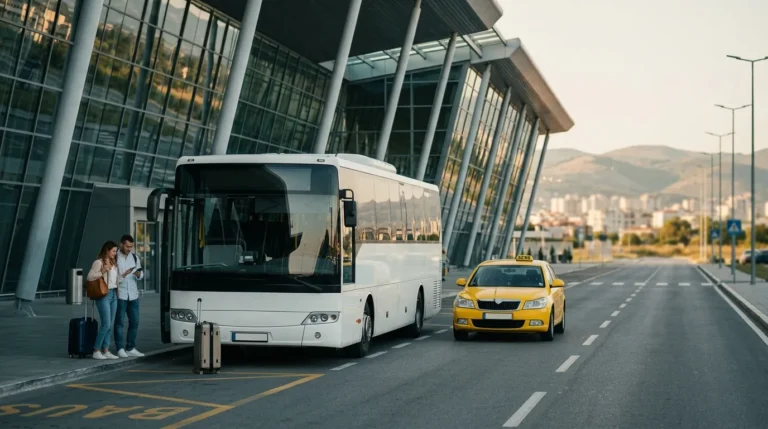
Pristina’s municipal operator, Trafiku Urban, publishes airport line 1A and an updated ticket tariff effective July 1, 2026. The one-way price is €6 for a physical ticket or €5 for a digital/SMS ticket. These are the official listed fares, not the older €3 price still visible on some travel and booking websites. Verify the exact boarding point, app eligibility and departure for your flight.
Allow roughly 35–50 minutes on the airport–city route, depending on the service and traffic, plus the time to reach your accommodation from the stop. A scheduled bus is not an on-demand transfer, so confirm the first and last convenient departures on the official airport-line page. If your flight arrives outside the useful bus window, use a reputable booked taxi.
Airport Taxi or Pre-Arranged Pickup
For a taxi, ask your hotel for a trusted local company, request a quote for the exact address and confirm whether the fare includes airport pickup and luggage. Do not publish one universal fare: night conditions, traffic, vehicle size and provider differ. If the trip is pre-paid, keep your booking reference offline.
Coming by Intercity Bus
Pristina is connected with Prizren, Peja, North Macedonia and Albania by bus services of varying frequency. International routes may involve immigration checks and different operators or stations. Use our Balkan transport guide as a planning companion, but check a date-specific booking or operator page before traveling.
A bus to Pristina usually arrives at the main intercity bus station rather than directly at Mother Teresa Boulevard. From there, take a suitable local bus or an official taxi with a clearly agreed fare. Allow extra time if you have large luggage or arrive after dark.
Renting a Car: Usually Not Necessary for the Center
Central Pristina is more pleasant on foot. A rental car makes more sense for visiting several towns or countryside locations; compare parking, insurance, deposit rules and border permissions before booking. Rental-car cross-border authorization is especially important if your wider route includes Serbia.
Kosovo Entry Rules and the Serbia Border: Read Before Booking
Kosovo visa requirements depend on nationality, passport type and, in some cases, a qualifying residence permit or visa. Do not assume that every visitor can stay visa-free for 90 days. Confirm your specific situation with the Kosovo visa guidance or an authorized diplomatic mission before paying for non-refundable travel. Keep your accommodation address and onward plans accessible at entry.
Important for multi-country routes: entering Kosovo from Pristina Airport, Albania or North Macedonia and then attempting to go directly into Serbia can cause an entry problem. Serbian authorities generally require an appropriate Serbian entry record for travelers entering Serbia from Kosovo. If you entered Kosovo from elsewhere and do not have such a record, you may need to enter Serbia through a third country instead. The UK travel advice explains this distinction. Ask your carrier and check entry rules for your passport before booking.
Route-planning example
Pristina → Prizren → Skopje stays within Kosovo and then crosses into North Macedonia, and can be a workable route subject to visa requirements. Pristina → Serbia directly is not equally straightforward for every traveler: border eligibility depends on how you entered Kosovo and your travel documents.
Getting Around Pristina: Walking, City Buses and Taxis
Walking the Central Tourist Area
Mother Teresa Boulevard, the NEWBORN monument, central cafés, the cathedral and several cultural landmarks can be connected on foot. The historic mosque/market quarter lies a little farther northeast; hills, crossings and uneven pavement mean that “walkable” does not mean step-free everywhere. Use a map rather than assuming every attraction is directly on the boulevard.
Trafiku Urban City Buses: Updated 2026 Prices
The operator’s July 2026 notice introduced €0.80 for a single physical ticket and €0.60 for a digital/SMS single ticket. A calendar-day pass costs €1.20 physical or €1.00 digital, and there are weekly options for longer visits. Payment eligibility and purchasing instructions are set by the operator, so check the official fare notice rather than assuming your foreign phone supports SMS payments.
The airport 1A tariff is separate from ordinary city-bus fares. If you are using a city bus to reach Gërmia Park or another neighborhood, confirm your route and both directions before boarding.
Taxis and Navigation
Registered local taxis are useful after dark, with luggage, or for longer distances outside the pedestrian core. Book via a known company or ask your accommodation to order one. Do not promise that any international ride-hailing app works in Kosovo; availability differs from city to city. Save the destination address in Albanian and offline, and confirm the final payment method before departure.
Top Things to Do in Pristina: A Walkable Sightseeing Route
Instead of zigzagging between random sights, use the following sequence as a flexible 4–6-hour central circuit with breaks. Museum access and walking pace may require adjusting the order. Start wherever your accommodation makes sense.
1. NEWBORN Monument: Modern Kosovo in One Photograph
The oversized NEWBORN letters were unveiled in 2008 and have become a recognizable symbol of Kosovo’s contemporary history. Their visual design changes over time, so an older picture online might not match what you see. The monument is a short photo stop, not a ticketed museum. Read the current lettering and local context rather than assuming the same color scheme every year.
2. Mother Teresa Boulevard and the Central Café District
Walk along Mother Teresa Boulevard (Bulevardi Nënë Tereza), the central pedestrian gathering area, for people-watching, cafés and public buildings. You can spend half an hour or much longer here depending on your interests. It is a useful orientation point and an easy place to return to for dinner. Watch for bicycles, delivery movements and uneven pavement.
3. National Library of Kosovo: Architecture Worth Seeing
The National Library is celebrated and debated for its concrete volumes, metal lattice and multiple white domes. It is especially rewarding for architecture fans, but remember that it is a functioning institution, not an open-access tourist gallery. Photograph the exterior respectfully; interior access, exhibitions and visitor rules may vary, so ask staff before entering research or reading areas.
4. Cathedral of Saint Mother Teresa and Its Viewpoint
The modern Catholic cathedral is another striking part of central Pristina. Its tower is often recommended for city views, but tower admission, lift access and opening times should be confirmed on site. Dress appropriately, do not interrupt services and leave extra time if you have mobility requirements.
5. Imperial Mosque and the Historic Quarter
Continue toward the Imperial Mosque (Xhamia e Mbretit), a major Ottoman-era religious landmark, and nearby older streets. This is a living place of worship. Visit outside prayers when permitted, dress modestly and ask before taking interior photographs. The surrounding neighborhood gives a different atmosphere from the modern boulevard.
6. Kosovo Museum and Emin Gjiku Ethnological Museum
The Kosovo Museum and the Ethnological Museum at the Emin Gjiku complex add cultural context that street-level sightseeing cannot provide. They are not interchangeable: one relates to archaeological and historical collections; the other interprets domestic life and traditional culture. Hours, restoration work and gallery access may change. Prioritize whichever is open and fits your interests instead of assuming both can be visited any afternoon.
7. Old Bazaar Streets and Everyday Markets
Pristina’s older bazaar area is not a single polished tourist market. What survives is a mix of shops, market streets and everyday trading. Browse respectfully, watch your belongings in busy areas and ask before photographing vendors. For souvenirs, compare quality and prices rather than expecting a uniform “tourist market” price.
Gërmia Park: The Best Nature Break Close to the City
Gërmia Park (Germia) is a useful counterbalance to the concrete and traffic of the center. Travelers come for walking, jogging, forest paths and a seasonal recreation area. It is outside the central pedestrian loop, so set aside additional transport time. Ask your accommodation about the most suitable bus or registered taxi for the specific entrance you want.
A walk in the park can be an easy second-day outing, but longer marked paths are not automatically short or flat. Check daylight, trail conditions and the weather; the outdoor swimming facility is seasonal, so do not include it as a guaranteed year-round attraction.
What to Eat in Pristina: Local Food Without the Hype
Kosovar cuisine draws heavily on Albanian and wider Balkan traditions. You will find bakeries, grilled-meat restaurants, baked dishes, salads and plenty of coffee. A simple bakery lunch can be inexpensive, while a long traditional restaurant meal will cost more. Food choices and portion sizes vary enough that a “€10 a day for everyone” promise is misleading.
| Dish | What to expect | Budget or ordering tip |
|---|---|---|
| Flija (flia) | Many thin layered batter sheets, traditionally baked slowly; served with dairy accompaniments. | Not every restaurant prepares it every day: ask before making a special trip. |
| Qebapa / ćevapi | Small grilled minced-meat portions with bread and sides. | Ask whether bread, salad and sauces are included. |
| Byrek / burek | Savory pastry with cheese, meat or spinach-style fillings. | A useful low-cost breakfast or snack; ask the filling if you have dietary restrictions. |
| Tavë dishes | Regional baked meat or vegetable casseroles. | Ingredients and portion sizes differ by restaurant. |
| Ajvar | Roasted pepper-based spread or side. | Often served with grilled dishes, bread or mezze. |
| Macchiato and café drinks | A major part of the city’s social life. | Check menu prices in the most central venues. |
Restaurants and Cafés Worth Comparing
Liburnia is known for a traditional, rustic dining atmosphere and hearty local dishes; it can be busy at popular times. Pishat offers central, sit-down Balkan cooking and a broad menu. Tiffany is a longstanding traditional restaurant where ordering may be guided by staff, so clarify dishes and prices before agreeing. Soma Book Station is a livelier book-themed café, food and cultural hangout rather than a specialist traditional restaurant. Check that each venue is operating, the current menu and table availability before visiting.
For budget meals, browse bakeries and grill counters outside the most tourist-facing boulevard tables. Vegetarian options exist, but meat and dairy appear in many regional staples; ask specifically about ingredients and preparation, especially for food allergies.
Where to Stay in Pristina: Areas That Actually Fit Your Trip
Mother Teresa Boulevard and the Central Core
The most convenient first-visit base for a short stay. You can walk to major central sights, meet a guide easily and return to your hotel between activities. It can be busy or noisy, so inspect recent guest reviews for street noise, stairs and parking before choosing a room.
Ulpiana and Nearby Residential Streets
Ulpiana offers a more residential feel with cafés and services. It suits travelers who want a quieter or longer stay and are comfortable walking farther or occasionally using a city bus or taxi. Check the exact building location: neighborhood names cover an area larger than a single corner of a map.
Sunny Hill / Bregu i Diellit
This is another residential option, but do not book solely on a lower advertised nightly price. Compare the journey to the center, evening return route and accessibility as well as the room rate.
Hotel Examples: Match the Property to Your Budget
Hotel Sirius and Swiss Diamond are recognizable central hotel options; City Inn is another smaller city property often considered by visitors. Hostels and privately run rooms can be significantly cheaper, but availability and standards vary. These are orientation examples, not inspected recommendations or guaranteed nightly prices.
Compare Pristina accommodation
For a short trip, a central room can reduce daily transport time. Filter for recent guest feedback, late check-in, cancellation terms and the actual address.
Pristina Travel Budget 2026: What to Allow Per Day
The numbers below are illustrative 2026 allowances in euros per person, not price observations from a standardized hotel survey or live reservations. They use low-to-moderate accommodation assumptions outside exceptional event dates. Prices can be higher in the summer, at short notice or for solo travelers wanting a private room.
| Cost item | Budget traveler (per person/day) | Two sharing private room (per person/day) |
|---|---|---|
| Accommodation | €16–28 hostel or simple shared lodging | €22–45 share of a double room |
| Meals and soft drinks | €12–22 | €18–30 |
| Local transport | €2–5 | €3–8 |
| Activities, coffees and incidentals | €4–12 | €5–15 |
| Total planning allowance | €34–67 | €48–98 |
These daily amounts exclude flights, travel insurance, visa costs, day trips, major shopping and airport transfers. Some travelers spend less; a weekend with a high-end dinner or multiple taxis costs more. Where rooms are charged per property, divide the room total by the travelers actually sharing it.
Example: Two Days and Two Nights on a Budget
For one person in a hostel: two nights at €22 = €44, two days of food at €18 = €36, return airport bus at €6 each way = €12 (physical tickets), local buses and incidental transport €4, tickets/coffee €12 and contingency €15. Illustrative total: €123, excluding international travel, insurance and extra regional excursions. Your actual accommodation, airport ticket type and activities will change the result.
How to keep costs down without creating a miserable trip
Walk the core; use the correct city bus ticket when needed; choose one museum you really want to see; eat at a bakery for one meal; and avoid renting a car you will simply park. Tipping is a personal choice in Kosovo, not an obligatory surcharge.
A Realistic One-Day Pristina Walking Itinerary
| Time window | Suggested activity | Why it works |
|---|---|---|
| Morning | Mother Teresa Boulevard, coffee, NEWBORN monument | Easy arrival and orientation; mostly central walking. |
| Late morning | National Library exterior and cathedral | Two distinctive architectural stops without crossing the city repeatedly. |
| Lunch | Traditional grill or bakery | Build in a rest before the old quarter. |
| Afternoon | Imperial Mosque area and one open museum | Adds heritage and context; check museum hours first. |
| Evening | Dinner and café in central Pristina | No need for a late return from an out-of-town attraction. |
Treat this as a sample route order, not reservations or timed entrances. If a museum is closed, use the extra time for the older streets. Visitors who land in the afternoon can spread this loop across two calendar days.
Two Days in Pristina: A Better-Paced First Visit
Day 1: Central Pristina and the Historic Quarter
Spend the first day on the walking loop above: NEWBORN, boulevard, library, cathedral, historic mosques and a museum if open. Have a relaxed traditional dinner and finish in a café. This combines the most recognizable places without turning the day into a transportation exercise.
Day 2: Gërmia or a Cultural Excursion
For a relaxed city-based break, visit Gërmia in the morning, eat lunch and explore whichever gallery or museum you missed. Alternatively, pre-arrange a visit to Gračanica Monastery and the nearby area, or spend more of the day at the Bear Sanctuary. These choices vary in transport time and should not be treated as one combined “quick nature stop.”
If you are primarily interested in Ottoman architecture and a historic town, save the full day for Prizren rather than trying to visit and return by lunchtime.
Three Days in Pristina: Choose One Proper Day Trip
Prizren by Bus: The Easiest Independent Choice
Prizren is a practical independent day trip for travelers who want an old-town contrast. Current published bus examples commonly take about 1 hour 45 minutes to 2 hours each way, with fares around €4–5 one way. Book or check departures for the specific date, including a return bus. The historic center is a separate walk from Prizren’s bus station.
Use the Pristina to Prizren bus guide for station access and schedule checks, and the Prizren destination guide for the fortress, bridges and historic quarter. Do not mistake a bus timetable example for guaranteed departures on every holiday.
Prefer a guided Prizren outing?
An organized day trip can remove the intercity-bus logistics, but compare the amount of time actually spent in Prizren, group size and admission inclusions before paying.
Gračanica Monastery: A Heritage Alternative
Gračanica Monastery lies a short drive southeast of Pristina and is part of the UNESCO-listed Medieval Monuments in Kosovo property. It is an active Serbian Orthodox religious site. Dress modestly, behave respectfully, and check entry and photography arrangements before travel; it is not a casual drop-in photo set with guaranteed access at any hour. The UNESCO listing provides heritage context.
Bear Sanctuary Prishtina: A Well-Documented Family Option
The FOUR PAWS Bear Sanctuary Prishtina near Mramor/Badovc is around 20 km from the city. Its official website publishes an adult entrance fee of €4, with different child and group tickets; listed visiting hours are 10:00–19:00 in April–October and 10:00–16:00 in November–March. Recheck directly before visiting, as feeding schedules, access and tours are subject to animal welfare and operating conditions.
The sanctuary provides transport guidance, including local-bus and taxi options, on its official directions page. You can avoid guessing a long hike from the main road by arranging transport all the way to the entrance. An organized activity here is different from a wildlife-watching excursion: these are rescued animals cared for in a managed sanctuary.
Peja and Rugova: Better With More Than a Casual Half-Day
Peja is a possible next stop for a wider Kosovo itinerary, but Rugova Canyon and mountain activities require additional transport from town. Rather than rushing in a single afternoon, reserve a whole day or an overnight if mountain landscapes are the main reason for visiting. Our five-day Kosovo itinerary offers broader route-planning context.
Is Pristina Safe? Practical Advice for Independent and Solo Travelers
Many visitors have a comfortable city break in Pristina, but language such as “one of the safest capitals” should not be treated as a verified ranking. Normal urban precautions apply: use established taxis, keep valuables secure in crowds, avoid isolated streets late at night and do not join demonstrations. Official guidance notes occasional protests in the city and particular travel risks in some northern municipalities; those are not the same as ordinary sightseeing in central Pristina.
For solo travelers, a central property with good recent reviews, a clear late-arrival plan and an accessible pickup point can make the most difference. Do not assume a venue or public place is risk-free simply because it is popular. Our solo female travel guide to the Balkans covers broader considerations; country-specific official advice should still take precedence.
See the UK government’s Kosovo safety guidance or the advisory issued by your own government shortly before departure. General emergency number: 112. Save your accommodation address and any relevant medication details offline.
Cash, Connectivity, Culture and Practical Details
- Euro cash: The euro is used in Kosovo. Carry small denominations for markets and occasional cash-only vendors.
- Bank cards: Often accepted at hotels and larger venues; check withdrawal fees and pay in euros when appropriate.
- Language: Albanian is widely heard in Pristina; Serbian is also an official language. A polite greeting and translation app are useful.
- Religious sites: Dress respectfully, especially inside active mosques, churches and monasteries. Access can be restricted during worship.
- Phone data: Confirm that any European roaming package includes Kosovo; “Europe” coverage is not a universal guarantee.
- Photography: Do not photograph police or military infrastructure without permission. Ask before photographing individual residents.
- Weather: City heat and winter cold both affect how far you will want to walk.
- Editorial updates: Recheck transport tariffs, schedules and museum openings before publishing a dated itinerary as definitive.
Mobile internet for your arrival
An eSIM can simplify maps and taxi communications on your first day, but only if your handset supports it and the plan explicitly covers Kosovo. Save offline maps as a backup.
Official Links to Check Before Your Pristina Trip
- Trafiku Urban airport line 1A — ticket options and service updates.
- Trafiku Urban July 2026 tariff notice — city and airport ticket prices.
- Kosovo visa information — nationality-based guidance; verify its current status.
- Kosovo entry and Serbia border guidance — country-specific entry-record considerations.
- UNESCO: Medieval Monuments in Kosovo — context for Gračanica.
- Bear Sanctuary official tickets and hours — conditions for an optional day trip.
Frequently Asked Questions About Pristina
Is Pristina worth visiting for one day?
Yes. A full day can cover the boulevard, NEWBORN, the National Library exterior and historic quarter at a comfortable pace. Stay longer if you want museums and regional excursions.
How many days should I spend in Pristina?
One day works for highlights, two days for a relaxed city visit, and three days if you add Prizren or another separate excursion.
How much is the Pristina airport bus in 2026?
Trafiku Urban officially lists €6 for a physical airport-line ticket and €5 for a digital/SMS ticket, each way, after its July 2026 tariff change.
Can I visit Pristina without a car?
Yes. Most central sights are walkable, ordinary city buses and local taxis serve other areas, and intercity buses connect Pristina with Prizren and other towns.
Is Pristina expensive for a tourist?
It can be a good-value city break, but costs depend on dates and accommodation. The sample budget in this guide is €34–67 per day for a budget traveler before flights and airport transfers.
Is Pristina safe for solo travelers?
Many travelers visit independently, but no destination is risk-free. Choose well-reviewed accommodation, arrange trusted transport after dark and follow current official travel advice.
Can I take a day trip from Pristina to Prizren?
Yes. Many published direct bus journeys take about 1 hour 45 minutes to 2 hours each way. Confirm current departures and the return bus for your date.
What language and currency do people use in Pristina?
Kosovo uses the euro. Albanian and Serbian are official languages; English is often helpful in visitor-facing businesses but not guaranteed.
Can I enter Serbia directly after flying into Pristina?
Do not assume so. Travel directly from Kosovo into Serbia may require an appropriate Serbian entry record; check official advice and your passport situation before planning the crossing.
Final Thoughts: Who Should Add Pristina to Their Balkans Itinerary?
Pristina is rewarding when you approach it on its own terms: lively streets and cafés, layers of history, memorable modern architecture, and a useful base for discovering other parts of Kosovo. Give yourself at least a full day for the center rather than ticking off the NEWBORN monument on a rushed transfer.
The simplest successful trip uses a central base, the correct airport or city-bus fare, one well-planned cultural route and enough flexibility to enjoy the places between the sights. If you have another day, choose a purposeful excursion such as Prizren, Gračanica or the Bear Sanctuary and verify its transport and opening arrangements first.