Solo Female Travel in the Balkans: The Complete Safety & Itinerary Guide
If you’ve been dreaming about solo female travel in the Balkans but find yourself hesitating — wondering whether it’s safe, affordable, or even logistically possible — this guide is your answer. The Balkans remain one of Europe’s most underrated regions: raw, dramatic, historically layered, and genuinely welcoming to independent travelers. From the medieval old towns of Bosnia to Albania’s turquoise Riviera and Slovenia’s fairy-tale lakes, solo female travel in the Balkans offers an unmatched blend of adventure, culture, and value. This complete guide walks you through safety realities, must-know tips, and a detailed day-by-day itinerary so you can travel with clarity and confidence.
1. Why the Balkans? The Case for Solo Female Travel Here
The Balkans — a loose geographic and cultural term encompassing Slovenia, Croatia, Bosnia & Herzegovina, Montenegro, Albania, North Macedonia, Serbia, and Kosovo — have quietly become one of the most compelling destinations for independent female travelers. Here’s why:
- Affordability: Albania, Kosovo, and North Macedonia offer some of Europe’s lowest costs of living. A full day of food, accommodation, and transport can cost under €30.
- Compact Geography: You can cross multiple countries in a single week without the exhaustion of long-haul flights.
- Low Tourist Saturation: Outside of Dubrovnik in peak summer, crowds are minimal compared to Western Europe.
- Cultural Depth: Byzantine churches, Ottoman bazaars, communist-era bunkers, and Venetian waterfronts exist within hours of each other.
- Friendly Locals: Balkan hospitality is legendary. Solo female travelers frequently report feeling welcomed rather than vulnerable.
💡 Quick Tip
The Balkans aren’t a single country — plan for border crossings, currency changes, and varying visa rules. EU citizens travel freely; others should check entry requirements per country before departure.
2. Is the Balkans Safe for Solo Female Travelers? An Honest Assessment
Safety is the first question every woman asks when planning solo female travel in the Balkans, and it deserves a nuanced answer rather than blanket reassurance or fear-mongering.
Overall Safety Rating by Country
| Country | Safety Level | Notes |
|---|---|---|
| Slovenia | Excellent | Safest in the region; EU member, very low crime |
| Croatia | Excellent | EU member; touristy but very safe |
| Bosnia & Herzegovina | Good | Conservative in rural areas; cities are welcoming |
| Montenegro | Excellent | Small, safe, coastal towns are solo-friendly |
| Albania | Good | Reputation worse than reality; most solo women report positive experiences |
| North Macedonia | Good | Undervisited gem; Ohrid especially safe |
| Serbia | Good | Belgrade is vibrant and relatively safe; standard urban precautions apply |
| Kosovo | Good | Young, pro-Western; Prizren is a highlight |
Common Safety Challenges & How to Navigate Them
While violent crime against tourists is rare, solo female travelers in the Balkans should be aware of the following:
- Street harassment: More prevalent in larger cities like Tirana and Belgrade. Confidence and purposeful walking deter most unwanted attention.
- Taxi scams: Always agree on the fare before getting in, or use Bolt (widely available across the region).
- Nightlife risk: Standard big-city precautions — keep your drink with you, tell your accommodation where you’re going, don’t accept rides from strangers.
- Infrastructure gaps: Remote hiking trails can lack phone signal. Download offline maps (Maps.me or Google Maps offline) before heading out.
- Cultural conservatism: In rural Bosnia, Kosovo, and parts of Albania, modest dress is advisable and respectful.
🚨 Safety Essentials
- Share your itinerary with a trusted contact back home
- Keep a photo of your passport in a secure cloud folder
- Carry local currency — many rural areas are cash-only
- Get travel insurance that covers adventure activities and medical evacuation
- Register with your country’s embassy if staying more than 2 weeks
3. Best Time to Visit the Balkans as a Solo Female Traveler
Timing your solo Balkans trip correctly affects not just weather, but crowds, prices, and the overall social atmosphere you’ll encounter.
- May – June (Best Overall): Warm, green, minimal crowds, lower prices. Ideal for hiking and coastal exploration before peak tourist season.
- September – October (Runner-Up): Warm sea temperatures, harvest season, golden light for photography, and significantly fewer tourists than August.
- July – August (Peak Season): Coastal Croatia and Montenegro are packed and expensive. Inland destinations like Sarajevo, Ohrid, and Prizren remain accessible and pleasant.
- November – March (Off-Season): Budget-friendly and atmospheric — especially in Sarajevo and Belgrade. Some coastal businesses close. Mountain roads may require snow chains.
✅ Best Window for Solo Female Travelers
Late May through mid-June hits the sweet spot: hostels and guesthouses are staffed and lively (great for meeting other solo travelers), the weather is reliably warm but not brutal, and you’ll avoid the July–August price surge on the coast. This period is also ideal if you plan to hike — trails are clear, waterfalls are full, and nature is at its most vivid.
4. Where to Stay: Accommodation Tips for Solo Female Travelers in the Balkans
Accommodation can make or break a solo trip. For solo female travel in the Balkans, a mix of female-only dorm hostels and small family-run guesthouses is the winning formula.
Accommodation Options Ranked for Solo Women
- Social Hostels with Female Dorms: Best for meeting people. Look for hostels with common rooms, walking tours, and organized social events. Top picks: Hostel Boogaloo (Sarajevo), Hostel Celica (Ljubljana), HI Hostel Zadar.
- Family-Run Guesthouses (Sobe/Pansion): Warm, inexpensive, often includes breakfast. The host family model provides an added layer of security and local knowledge.
- Boutique Hotels: For occasional nights when you want privacy and comfort without breaking the bank — still affordable in most Balkan cities.
- Avoid: Unmarked private rentals in remote areas with no reviews, especially if transport is dependent on the host.
ℹ️ Info Box: Booking Platforms That Work Best in the Balkans
- Booking.com — widest inventory including guesthouses and apartments
- Hostelworld — best for hostel-specific filtering (female dorms, social ratings)
- Airbnb — useful in larger cities; read reviews carefully
- Direct booking — small guesthouses often offer 10–15% discounts if you email directly
5. Getting Around: Transport Guide for Solo Female Travelers
One of the biggest logistical challenges of solo travel in the Balkans is transport — train networks are limited, so you’ll rely on a mix of buses, minibuses, and rideshare apps.
Transport Options by Type
- Intercity Buses: The backbone of Balkan travel. Comfortable, frequent, and affordable. Book tickets at the station or through FlixBus for international routes.
- Shared Minibuses (Furgons): Common in Kosovo and Albania. Depart when full — arrive early. Very cheap, often the only option for remote destinations.
- Bolt/Uber: Available in most capital cities and larger towns. Always safer and more transparent than hailing a taxi.
- Trains: Scenic but slow. The Belgrade–Bar railway is a stunning exception and worth taking for the experience.
- Car Rental: Gives maximum freedom, especially for Albania’s south and Montenegro’s Durmitor region. International driving license required in some countries.
- Ferries: Essential for island-hopping in Croatia. Book ahead in July–August.
💡 Quick Tip: Night Buses
Night buses are common and widely used by locals and backpackers alike between cities like Split–Sarajevo or Tirana–Pristina. Choose a seat near the front, keep your bag with you or on your lap, and invest in a neck pillow and eye mask. These save accommodation costs and travel time simultaneously.
6. The Complete 14-Day Solo Female Travel Balkans Itinerary
This 14-day itinerary for solo female travel in the Balkans is designed for first-timers who want a balanced mix of cities, nature, coast, and culture. It flows south to north (or can be reversed), starting from Albania’s capital and ending in Croatia — all connected by affordable bus routes.
📋 Itinerary Overview
Route: Tirana → Albanian Riviera → Ohrid (North Macedonia) → Prizren (Kosovo) → Sarajevo (Bosnia) → Mostar → Kotor (Montenegro) → Dubrovnik (Croatia)
Duration: 14 days
Best Season: May–June or September
Budget: ~€40–60/day (mid-range) or ~€25–35/day (budget)
Days 1–2: Tirana, Albania
Begin your journey in one of Europe’s most misunderstood capitals. Tirana has transformed dramatically and is now a colorful, café-filled city with genuine energy.
- Day 1: Arrive, settle in, walk Blloku neighborhood, try byrek (savory pastry) and raki
- Day 2: Bunk’Art 2 (Cold War museum), National History Museum, Skanderbeg Square, rooftop sunset at Sky Tower
- Stay: Hostel Argjiro or Tirana Backpacker Hostel (social, well-reviewed, female dorms available)
Days 3–4: Albanian Riviera (Himara / Dhërmi)
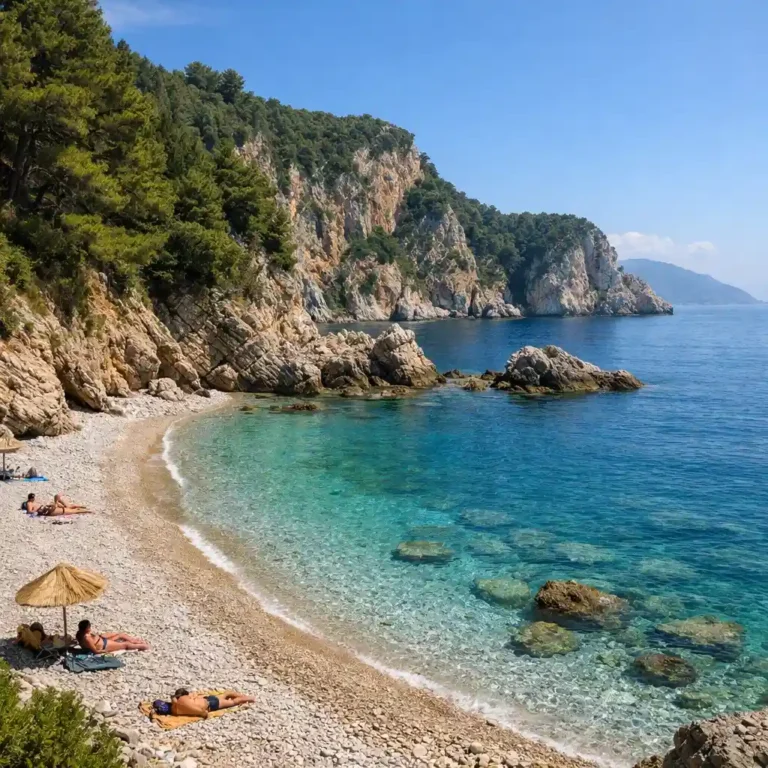
Albania’s Riviera is arguably Europe’s best-kept coastal secret. Turquoise water, white pebble beaches, and almost no commercial over-development.
- Day 3: Bus from Tirana to Himara (4–5 hrs), beach afternoon at Livadhi
- Day 4: Hike between Dhërmi and Palasë, swim at Gjipe Beach (hidden canyon cove), seafood dinner
- Stay: Himara guesthouses; ask locals — most family homes rent rooms affordably
Days 5–6: Ohrid, North Macedonia
Cross into North Macedonia to reach Lake Ohrid — a UNESCO-listed freshwater lake surrounded by Byzantine churches and Ottoman architecture. It’s one of the most serene spots in all of solo female travel Balkans routing.
- Day 5: Arrive from Albania (bus via Pogradec border), walk Ohrid Old Town, Church of St. Sophia
- Day 6: Kayak on Lake Ohrid, visit St. Naum Monastery, swim in the lake at sunset
- Stay: Sunny Lake Hostel or Vila Raskrsnica — both have strong solo traveler communities
Day 7: Prizren, Kosovo
Prizren is Kosovo’s cultural capital and arguably the most photogenic city in the western Balkans — cobbled streets, a river running through the center, and a hilltop fortress overlooking it all.
- Day 7: Bus from Ohrid (via Bitola or direct), walk the çarshia (old bazaar), hike to Prizren Fortress, evening coffee culture on the riverside
- Stay: Driza’s House or Prizren Hostel — excellent for solo travelers
Days 8–9: Sarajevo, Bosnia & Herzegovina
No Balkans itinerary is complete without Sarajevo — a city that has survived siege and emerged with extraordinary resilience, warmth, and cultural complexity. Its Ottoman Baščaršija bazaar meets Austro-Hungarian architecture meets post-war memorials in a way found nowhere else on earth.
- Day 8: Arrive, check in, walk Baščaršija, Gazi Husrev-beg Mosque, try ćevapi and Bosnian coffee
- Day 9: War Tunnel Museum, Yellow Fortress at sunset, evening in Bjelave neighborhood
- Stay: Hostel Boogaloo (iconic; great social events) or Hostel Franz Ferdinand
Day 10: Mostar, Bosnia & Herzegovina
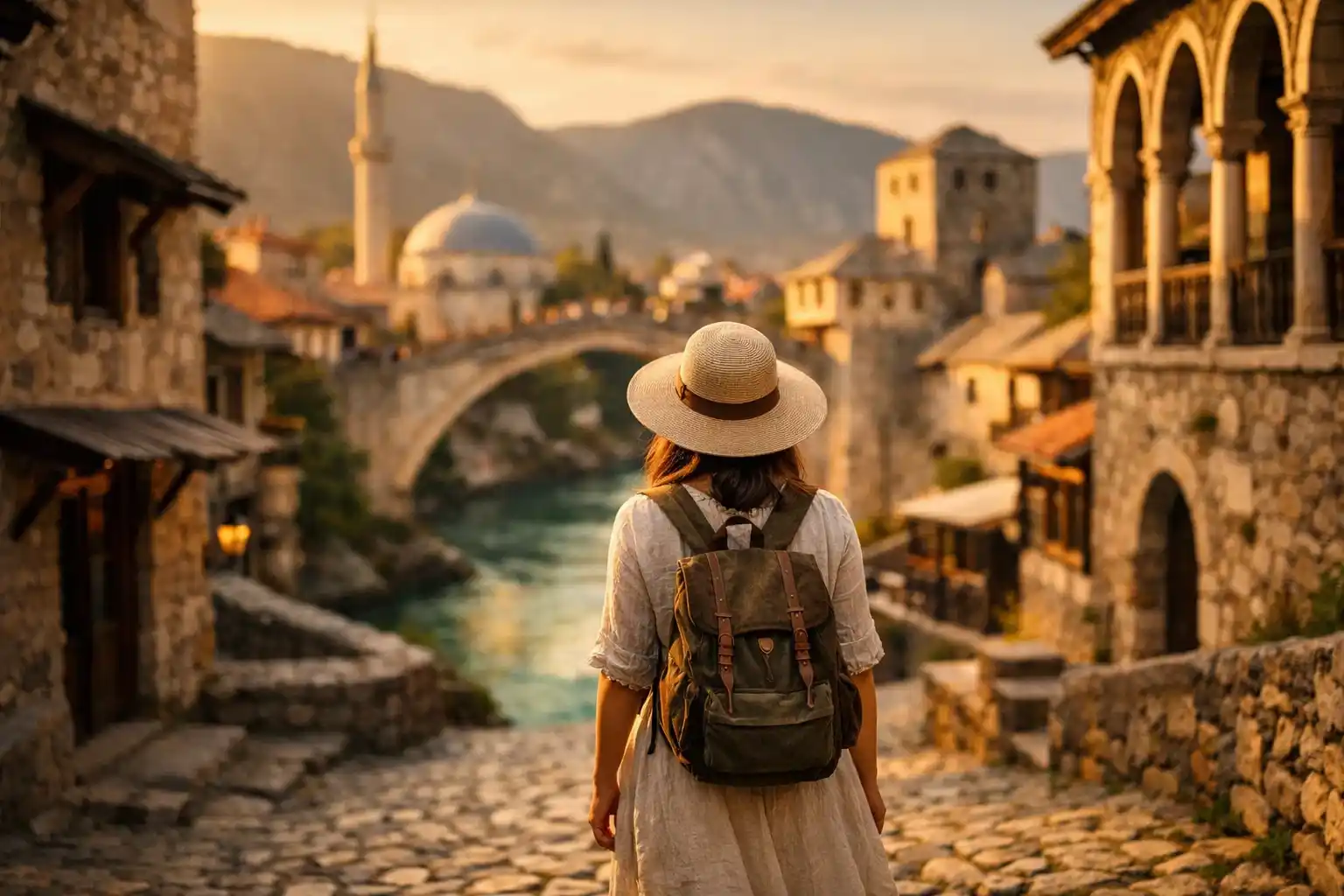
A day trip or overnight in Mostar is essential. The reconstructed Stari Most bridge is a symbol of reconciliation — and the old town’s mix of mosques, artisan workshops, and riverside cafes is genuinely magical.
- Day 10: Bus from Sarajevo (2.5 hrs), walk old town, watch bridge divers, Kriva Čuprija bridge area, Kravica Waterfall if time allows
- Stay: Hostel Miran or Shangri La Mostar (great for solo travelers)
Days 11–12: Kotor, Montenegro
Montenegro’s Bay of Kotor is one of Europe’s most dramatic coastal settings — a fjord-like bay ringed by medieval walls and Venetian fortifications. Kotor is compact, walkable, and one of the most solo-female-friendly places in the entire region.
- Day 11: Bus from Mostar via Dubrovnik, arrive Kotor, evening walk around the old town walls
- Day 12: Climb to St. John Fortress (1,200+ steps — worth every one), boat to Perast and Our Lady of the Rocks island
- Stay: Old Town Hostel Kotor or Hostel Marija
Days 13–14: Dubrovnik, Croatia
End your solo female travel Balkans journey in the city that needs no introduction. Dubrovnik is tourist-heavy in peak season, but its medieval walls, game-of-thrones filming locations, and the islands of Lokrum and Elafiti make it a worthy finale.
- Day 13: Walk the City Walls, Stradun promenade, Fort Lovrijenac, sunset swim at Buža Bar cliff
- Day 14: Day trip to Lokrum Island, Rector’s Palace, depart from Dubrovnik Airport or continue by ferry to Hvar/Split
- Stay: Fresh Sheets Hostel or Hostel Angelina Old Town
7. Budget Breakdown for Solo Female Travel in the Balkans
| Category | Budget (€/day) | Mid-Range (€/day) |
|---|---|---|
| Accommodation | €8–14 (dorm) | €25–45 (private) |
| Food | €8–12 | €18–28 |
| Transport | €4–8 | €10–15 |
| Activities & Entry | €3–6 | €10–18 |
| Miscellaneous | €3–5 | €5–10 |
| Daily Total | ~€26–45 | ~€68–116 |
8. Cultural Etiquette for Solo Female Travelers in the Balkans
Cultural awareness is both a safety and respect strategy. The Balkans are diverse — Catholic, Orthodox, Muslim, and secular communities coexist — and social norms vary significantly across the region.
- Cover your shoulders and knees when entering mosques, monasteries, or churches — a lightweight scarf in your daypack solves this instantly.
- Dining alone is accepted and not unusual, especially in cafés and restaurant terraces. Don’t hesitate to eat out solo at any hour.
- “Besa” is an Albanian code of honor that includes protecting guests — this explains why Albanian hospitality often feels unusually genuine.
- Accepting coffee or tea is often seen as accepting friendship in Bosnia and Kosovo. Refusing abruptly can feel impolite — a brief “hvala” or “faleminderit” (thank you) goes a long way.
- Photography of people requires permission. Always ask before photographing faces, especially older locals and religious figures.
9. Packing List for Solo Female Travel in the Balkans
🎒 Essential Packing Checklist
- Lightweight scarf (modesty + warmth)
- 1 smart-casual outfit for nicer restaurants
- Comfortable walking shoes + sandals
- Rain jacket (April–June especially)
- Swimwear + beach towel
- Unlocked phone + local SIM (A1, Ipko, etc.)
- Portable charger / power bank
- Offline maps downloaded
- Photocopies + digital passport copies
- Travel insurance documents
- Ibuprofen, antihistamine, blister patches
- Sunscreen (SPF 50+)
- Personal door alarm (€5–10 on Amazon)
- Reusable water bottle with filter
- Wise or Revolut card (low conversion fees)
- Small euro/dollar cash reserve
- Neck or hidden waist wallet
- Backup debit card in separate bag
10. Final Thoughts: Why Solo Female Travel in the Balkans Is Worth It
The Balkans will surprise you. Not just for the landscapes — though those are extraordinary — but for the conversations you’ll have with a Sarajevo coffee shop owner who survived a siege, the Albanian grandmother who insists on feeding you burek before you leave, the young Kosovar student who practices her English by giving you unsolicited but accurate recommendations. Solo female travel in the Balkans isn’t just safe and affordable — it’s genuinely transformative in a way that heavily touristed regions rarely are anymore.
The region rewards curious, respectful, and adaptable travelers. It doesn’t hand you its best moments on a platter — you earn them by getting a little lost, saying yes to an invitation, and traveling at a pace that allows the place to breathe. For the solo female traveler willing to step slightly off the beaten path, the Balkans offer an experience that is, in the best possible way, completely unlike anywhere else.
📌 Quick Reference: Solo Female Travel Balkans — Key Facts
- Best time to visit: May–June or September–October
- Safest countries: Slovenia, Croatia, Montenegro
- Most underrated: Kosovo, North Macedonia, southern Albania
- Best cities for solo travelers: Sarajevo, Ohrid, Prizren, Kotor
- Daily budget: €25–45 (budget) / €60–100 (mid-range)
- Key app: Bolt (rides), Maps.me (offline maps), Booking.com (accommodation)
- Currency: Euro (Montenegro, Kosovo), Kuna/Euro (Croatia), BAM (Bosnia), Lek (Albania), Denar (North Macedonia)
Disclosure: This guide is based on firsthand research and aggregated traveler reports. Safety conditions can change — always check current travel advisories from your country’s foreign affairs ministry before departure. Some accommodation and transport details may shift seasonally.
❓ Frequently Asked Questions
Is the Balkans safe for solo female travelers?
Yes — the Balkans are generally safe for solo female travelers, particularly Slovenia, Croatia, and Montenegro which have very low violent crime rates. Countries like Albania and Kosovo have worse reputations than their reality justifies; most women report overwhelmingly positive experiences. Standard urban precautions apply: avoid unlit areas at night, use rideshare apps instead of unmarked taxis, and trust your instincts. The region is notably safer than many Western European capitals.
Do I need a visa to travel through the Balkans?
It depends on your passport. EU and US citizens can enter most Western Balkan countries visa-free for up to 90 days. Slovenia and Croatia are EU Schengen members, so your Schengen days count there. Albania, Bosnia & Herzegovina, Montenegro, Kosovo, Serbia, and North Macedonia each have their own entry rules — most offer 90-day visa-free stays for US, UK, EU, Australian, and Canadian passport holders. Always verify the latest entry requirements on your government’s travel advisory website before departure, as rules change.
What is the cheapest Balkan country to travel solo?
Kosovo and Albania are consistently the most affordable countries in the Balkans. In both, a hostel dorm costs €8–12/night, a full local meal under €5, and intercity buses rarely exceed €10. North Macedonia and Bosnia & Herzegovina are close runners-up. Croatia is the most expensive, especially along the Dalmatian coast in July and August, where prices rival Western Europe.
How long do I need to travel the Balkans solo?
Two weeks (14 days) is the minimum to cover a meaningful route across 4–5 countries without feeling rushed. Three weeks allows for slower travel, detours, and more spontaneous stops. If you only have 7–10 days, focus on one sub-region: either the Western Balkans (Albania–Kosovo–Bosnia–Montenegro) or the Adriatic coast (Croatia–Montenegro). A month-long trip can comfortably cover the entire region from Slovenia to Greece.
What currency is used in the Balkans?
The Balkans use several different currencies. Slovenia and Croatia use the Euro (€). Montenegro and Kosovo also use the Euro despite not being EU members. Bosnia & Herzegovina uses the Convertible Mark (BAM), pegged to the Euro. Albania uses the Albanian Lek (ALL), North Macedonia uses the Macedonian Denar (MKD), and Serbia uses the Serbian Dinar (RSD). Carry a Wise or Revolut card to avoid high conversion fees and always keep some local cash for rural areas and markets.
Can I travel the Balkans solo without a car?
Absolutely. The majority of solo travelers in the Balkans navigate entirely by public transport — intercity buses, shared minibuses (furgons), and occasional trains. The main cities and coastal towns are all well-connected by bus networks. The only destinations that genuinely benefit from a rental car are remote mountain areas like Durmitor (Montenegro), the Albanian Alps, and some of North Macedonia’s lake villages. For those, organized day tours from nearby towns are a good alternative if you prefer not to drive.
What should a solo female traveler wear in the Balkans?
Dress codes vary by location. In coastal Croatia and tourist-heavy cities, anything goes. In Bosnia, Kosovo, and rural Albania, modest dress — covering shoulders and knees — is both culturally respectful and practically advisable, particularly when visiting religious sites. Carry a lightweight scarf in your day bag at all times; it doubles as a mosque cover and a layer for chilly evenings. You don’t need to dress conservatively throughout the trip — just read the room and adjust by location.
Is Albania safe for solo female travelers?
Albania is safer than its reputation suggests. The country’s “Besa” cultural code — a sacred duty to protect and honor guests — translates into a genuine hospitality that solo female travelers consistently report as one of the trip’s highlights. Tirana is a modern, vibrant capital, and the Riviera is rapidly developing a strong solo traveler scene. The main precautions are practical: use Bolt for rides in Tirana, be aware of potholed roads on mountain routes, and avoid unmarked remote campsites alone. Solo women who visit Albania almost universally say they’d return.