Ultimate Guide: Essential Serbia Travel Tips for First-Time Visitors

Serbia is the hidden pulse of the Balkans—a land where gritty urban energy meets rolling vineyards, and ancient fortresses overlook some of the most vibrant nightlife in Europe. However, for those visiting for the first time, the country can feel like a beautiful puzzle. From navigating the Cyrillic alphabet to understanding the unwritten rules of the kafana, preparation is key.
In this comprehensive guide, we break down the essential Serbia travel tips for first-time visitors to ensure your journey through the “Land of Hospitality” is seamless, safe, and unforgettable.
Table of Contents
1. Safety in Serbia: What You Need to Know
One of the most common questions for travelers is: Is Serbia safe? The short answer is a resounding yes. Serbia is consistently ranked as one of the safest countries in Europe for tourists, often feeling safer than many Western European capitals.
Personal Safety and Street Crime
Violent crime against tourists is extremely rare. Whether you are walking through the Bohemian quarter of Skadarlija in Belgrade or the quiet streets of Novi Sad at midnight, you are unlikely to face any trouble.
- Solo Travelers: Serbia is incredibly welcoming to solo travelers, including women. The culture is social, and locals are often happy to help if you look lost.
- Petty Theft: Like any major European hub, pickpocketing can occur in crowded areas like Knez Mihailova (Belgrade’s main pedestrian street) or on packed public buses. Keep your valuables zipped away and stay mindful in tourist hotspots.
Political Sensitivity
While Serbia is modern and forward-looking, history runs deep in the Balkans. It is generally best to avoid debating sensitive political topics like the 1990s conflicts or the status of Kosovo with locals unless you have a deep rapport. Serbs are incredibly passionate and hospitable, but these topics can lead to heated discussions that are best avoided on a first-time holiday.
Travel Insurance: Your Safety Net
Even in a safe country, unexpected flight cancellations, lost luggage, or minor medical issues can happen. To travel with total peace of mind, we recommend securing comprehensive coverage.
Pro Tip: Check out EKTA Insurance for affordable, reliable coverage tailored for Balkan adventures. Their digital-first approach makes it easy to manage your policy on the go.
Managing Money: Cash, Cards, and Currency
Understanding the local economy is one of the most essential Serbia travel tips for first-time visitors. Serbia is not part of the EU or the Eurozone; it uses its own currency, the Serbian Dinar (RSD).
Cash is King (Mostly)
While credit cards are widely accepted in Belgrade, Novi Sad, and Niš—especially in malls, hotels, and upscale restaurants—Serbia remains a heavily cash-based society compared to Western Europe or North America.
- Bakeries (Pekaras) and Small Shops: You will almost certainly need cash for your morning burek or a quick coffee at a local kiosk.
- Taxis: Most local taxis do not accept cards. Always ask “Kartica?” (Card?) before getting in, or carry small bills.
- Rural Areas: If you are heading to the stunning mountains of Zlatibor or the Uvac Canyon, carry enough Dinars for your entire stay, as ATMs can be scarce.
ATMs and Exchange Offices (Menjačnica)
You will see exchange offices, called Menjačnica, on almost every corner in the cities. They usually offer very fair rates with little to no commission.
- Avoid Airport Exchanges: The rates at Belgrade Nikola Tesla Airport are significantly worse than in the city center. Change just enough for a taxi, then wait until you reach the city.
- ATM Fees: Be wary of “Euronet” ATMs, which often charge high transaction fees. Stick to local bank ATMs (like Banca Intesa, NLB, or OTP) for better rates.
Booking Your Stay
For the best rates and a wide selection of everything from boutique Belgrade hotels to traditional “Etno” villages, we recommend using established platforms.
- Booking.com and Agoda are the most reliable tools for finding accommodation in Serbia, offering verified reviews and flexible cancellation policies.
Staying Connected: SIM Cards and eSIMs
Don’t rely on finding public Wi-Fi to navigate the winding streets of Zemun or check the “Soko” train schedule. Having mobile data is vital for a smooth experience.
The eSIM Advantage
The easiest way to get online the moment you land (or even before you take off) is through an eSIM. You won’t have to hunt for a local provider or swap out physical cards.
airalo offers excellent Serbia-specific data packages that are easy to install. It’s perfect for accessing maps and translation apps the second you cross the border.
The Heart of Serbian Culture: The Kafana and Rakija
To truly understand Serbia, you must step into a Kafana. This traditional bistro is more than a restaurant; it is the center of social life, where history is discussed, deals are made, and music plays until dawn. Understanding the unwritten rules of these establishments is among the most essential Serbia travel tips for first-time visitors.
The Rakija Ritual: Sip, Don’t Shoot
Rakija is the national spirit of Serbia, a potent fruit brandy typically made from plums (Šljivovica), quinces (Dunjevača), or apricots (Kajsijevača).
- Take it Slow: Unlike tequila, Rakija is meant to be sipped. It is often served in a small, long-necked flask called a čuturica or a small glass.
- The Toast (Živeli!): When clinking glasses, you must maintain eye contact with your companions. Failing to do so is considered rude (and according to local legend, brings seven years of bad luck!).
- Morning Tradition: Don’t be surprised if you see locals sipping Rakija with their morning coffee and a spoonful of slatko (fruit preserve)—it’s considered a medicinal tonic for longevity.
Smoking Culture
Serbia remains one of the few places in Europe where smoking indoors is still widely prevalent.
- Indoor Dining: While high-end restaurants and international chains are smoke-free, most traditional kafanas and bars allow smoking.
- Finding Fresh Air: If you are sensitive to smoke, look for newer “concept stores” or cafes with large garden terraces, which are spectacular during the Serbian spring and summer.
Transportation: Navigating Serbia Like a Local
Getting around Serbia is an adventure in itself. While the infrastructure is rapidly modernizing, a few insider tips will save you hours of confusion.
Mastering Belgrade’s Transit
Belgrade is a hilly city with no underground metro system, meaning buses and trams are your primary lifelines.
- Payment: The “Beograd Plus” system allows you to pay for tickets via SMS (if you have a local SIM) or by using a contactless credit card on the blue validators.
- Taxis vs. Apps: Avoid hailing taxis on the street, especially near the airport or train station, as “wild” taxis often overcharge tourists. Use the Pink Taxi or Naxis Taxi apps, or Cargo (Serbia’s reliable alternative to Uber/Lyft).
The High-Speed “Soko” Train
If you are traveling between Belgrade and Novi Sad, do not take the bus. The Soko high-speed train connects the two cities in just 36 minutes. It is clean, fast, and offers free Wi-Fi.
- Booking: You can buy tickets at the station or via the “Srbija Voz” mobile app to skip the lines.
Intercity Buses
For destinations like the Nis Fortress or the Zlatibor mountains, the bus remains the most flexible option.
- Station Fees: In Serbia, you often have to pay a small “station entry fee” (peronska karta) at the ticket window to access the platforms, even if you already have a ticket. Keep this small change handy!
Dress Code and Local Customs
Serbs are generally stylish and take pride in their appearance. Whether you’re heading to a museum or a café, looking “put together” will help you blend in.
Respecting Religious Sites
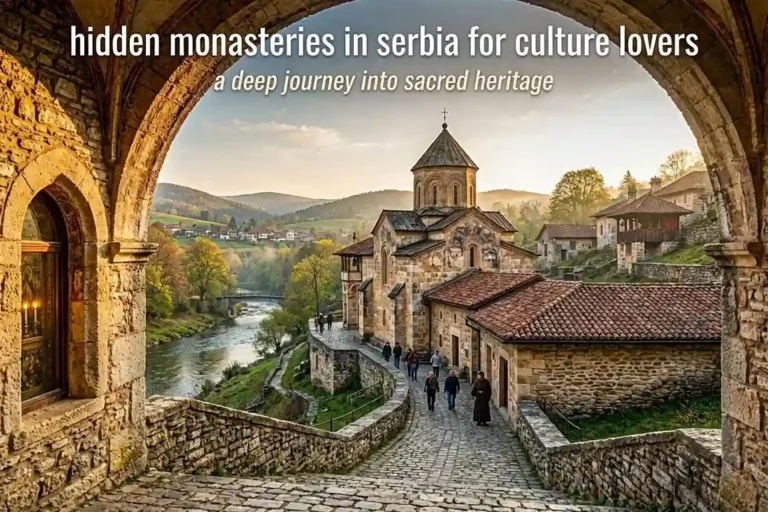
Serbia is home to some of the most beautiful Orthodox monasteries in the world.
- Modesty is Mandatory: When entering a church or monastery (like the Temple of Saint Sava), ensure your shoulders and knees are covered.
- Head Coverings: While not strictly required for tourists in city cathedrals, women may want to carry a light scarf for more traditional rural monasteries as a sign of respect.
Footwear Warnings
The charming “Turkish” cobblestones (kaldrma) in Belgrade’s Skadarlija or the Petrovaradin Fortress in Novi Sad are notorious for swallowing heels and causing trips. Stick to stylish sneakers or sturdy flats for daytime exploring.
Connectivity Check: Stay Online Effortlessly
Navigating bus schedules and translating menus is much easier with a steady data connection.
- Avoid Roaming: Roaming charges in Serbia for non-Balkan SIM cards are notoriously expensive.
- Instant Setup: We recommend using airalo to download an eSIM before you arrive. It’s the most efficient way to ensure you have data the moment you step off the plane, allowing you to call a taxi or find your hotel on Google Maps immediately.
Savoring Serbia: A Guide to Gastronomy
For many, the food is the highlight of the trip. Serbian cuisine is a hearty blend of Balkan, Turkish, and Central European influences. Understanding the local dining culture is among the most essential Serbia travel tips for first-time visitors who want to eat like a local.
Must-Try Serbian Dishes
- Ćevapi: Small, grilled minced meat sausages served with flatbread (lepinja), chopped onions, and kajmak (a clotted cream-like spread).
- Sarma: Cabbage leaves stuffed with minced meat and rice, a winter staple.
- Burek: A flaky, greasy pastry filled with meat, cheese, or spinach. It is traditionally eaten for breakfast with a side of drinkable yogurt.
- Karađorđeva Šnicla: A rolled veal or pork steak, stuffed with kajmak, breaded, and fried—often nicknamed “the maid’s dream.”
Exploring with Experts
While you can find great food on every corner, the best culinary secrets are often hidden in the backstreets of Belgrade’s Dorćol district or the markets of Zemun.
- Food Tours: To truly understand the history behind the flavors, we recommend booking a guided food tour. Platforms like GetYourGuide and Viator offer excellent walking tours that combine history with tastings of rakija, local cheeses, and traditional desserts.
Finding Your Home Base: Accommodation Tips
Where you stay can define your experience. Whether you want the gritty glamour of Belgrade or the baroque charm of Novi Sad, choosing the right neighborhood is key.
Where to Stay in Belgrade
- Stari Grad (Old Town): Best for first-timers who want to be within walking distance of Kalemegdan Fortress and Knez Mihailova.
- Vračar: A more residential, upscale vibe near the Saint Sava Temple, filled with excellent cafes.
- Novi Beograd (New Belgrade): Perfect for business travelers or those who want to be close to the Splavovi (floating river clubs).
Booking Engines
To find the best deals and see high-quality photos of your potential stay, stick to the industry leaders:
- Booking.com: The most popular platform in Serbia with the widest range of “Apartmans” (private guesthouses).
- Agoda: Often has competitive rates for larger international hotel chains in Belgrade.
Communication and Language
While English is widely spoken by the younger generation and in tourist areas, Serbia uses two scripts: Latin and Cyrillic.
The Script Challenge
In Belgrade, most signs are in both scripts, but as you move toward rural areas or smaller towns like Kraljevo, Cyrillic becomes more dominant.
- Download Google Translate: Specifically, download the Serbian language pack for offline use. The “Camera Translate” feature is a lifesaver for reading menus or bus schedules written only in Cyrillic.
- Connectivity: Ensure you have the data to use these tools. An eSIM from airalo ensures you aren’t stuck staring at a Cyrillic sign without a digital lifeline.
Essential Serbia Travel Tips for First-Time Visitors: The “Small Talk”
Serbs are incredibly proud and hospitable. If you are invited into someone’s home:
- Take off your shoes: Most Serbian households prefer guests to leave their shoes at the door.
- Bring a small gift: A bag of coffee, a bottle of wine, or a box of chocolates is the standard “thank you” for an invitation.
- Never arrive empty-handed: Even if the host says “don’t bring anything,” they don’t actually mean it!
Health, Safety, and Emergencies
While we’ve established that Serbia is very safe, being prepared for the “what ifs” is one of the most essential Serbia travel tips for first-time visitors. Knowing who to call and how to access healthcare can save a trip from turning into a headache.
Tap Water: Can You Drink It?
In Belgrade and most major cities, tap water is perfectly safe to drink and of high quality. You will see public drinking fountains (česme) all over Kalemegdan Park and Knez Mihailova—feel free to refill your bottle there.
- Rural Exception: In some parts of Vojvodina (like Zrenjanin) or very remote villages, locals prefer bottled water due to high mineral content. When in doubt, ask: “Da li je voda za piće?” (Is the water for drinking?).
Pharmacies (Apoteka)
Serbian pharmacies are excellent and easy to find, marked by a glowing green cross. Pharmacists usually speak English and can provide over-the-counter advice for minor ailments.
- Prescriptions: Many medications that require a prescription in the US or UK can be bought over the counter here, but always check with a professional first.
Handling Emergencies
If you find yourself in a bind, here are the numbers to know:
- Police: 192
- Fire Department: 193
- Ambulance: 194
- General Emergency: 112 (European standard)
The Importance of Travel Insurance
Serbian public healthcare is functional but can be slow for non-emergencies. Private clinics are world-class but expensive for those without coverage.
- Peace of Mind: We highly recommend EKTA Insurance. They offer 24/7 multilingual support and cover everything from medical emergencies to trip interruptions—an absolute must for navigating the Balkans confidently.
Money Matters: Tipping and Bargaining
Tipping is a common practice in Serbia, but the “rules” are different than in North America.
Tipping Etiquette
- Restaurants/Kafanas: A tip of 10% to 15% is standard for good service. Instead of leaving cash on the table, it is polite to tell the waiter the total amount you want to pay as you hand over the cash or card.
- Cafes and Bars: Rounding up to the nearest 100 Dinars is common for coffee or drinks.
- Taxis: Rounding up the fare is appreciated but not strictly required.
Is Bargaining Normal?
In short: No.
- Shops and Markets: Unlike in some neighboring countries, prices in Serbian shops and even “Zelena Pijaca” (Green Markets) are generally fixed. You might get a small discount if you buy in large quantities from a local farmer, but aggressive haggling is considered rude.
Planning Your Itinerary: Beyond Belgrade
While Belgrade is the magnetic center, the true soul of the country lies in its diverse regions. Using these essential Serbia travel tips for first-time visitors will help you branch out.
Top Day Trips and Tours
- Novi Sad & Sremski Karlovci: Visit the “Gibraltar on the Danube” and taste the famous Bermet wine.
- The Iron Gates (Đerdap): Where the Danube is at its deepest and most dramatic.
- Monastery Manasija: A fortified medieval masterpiece.
How to Book Tours
Don’t wait until you arrive to find a guide, especially during the busy summer months.
- Reliable Platforms: Use GetYourGuide or Viator to book wine tastings in Fruška Gora or history walks through Niš. These platforms allow you to read recent reviews and guarantee your spot with easy cancellation.
The Digital Traveler’s Kit
To keep your trip running smoothly, make sure these are ready before you land:
- Connectivity: Download your airalo eSIM. Having data for Google Maps is non-negotiable for finding those hidden “hidden gem” cafes.
- Accommodation: Double-check your reservations on Booking.com or Agoda. Most Serbian hosts will message you via the app or WhatsApp to coordinate your arrival.
When to Visit: A Seasonal Guide to Serbia
Choosing the right time to go is one of the most essential Serbia travel tips for first-time visitors. The country experiences a continental climate, meaning hot summers and snowy, atmospheric winters.
- Spring (April – June): Arguably the best time to visit. The weather is mild, the cafes in Belgrade open their terraces, and the countryside is lush and green.
- Summer (July – August): It can get very hot (often exceeding 35°C). This is the peak season for festivals like EXIT in Novi Sad and the famous splavovi (river clubs) in Belgrade.
- Autumn (September – October): Perfect for wine lovers. The harvest season in regions like Župa and Fruška Gora brings food festivals and pleasant, crisp air.
- Winter (December – February): Ideal for budget skiers heading to Kopaonik. Belgrade is also magical during the Orthodox Christmas (January 7th), with festive markets and “boiled” rakija.
The Ultimate First-Timer Packing Checklist
To ensure you’re prepared for the Serbian terrain and social life, keep these items in mind:
- Power Adapter: Serbia uses the standard European Type C and Type F plugs (two round pins). The voltage is 230V.
- Conservative Layers: A light scarf or long trousers for entering monasteries and churches.
- Walking Shoes: Sturdy sneakers for the cobblestones of Skadarlija and the fortress paths.
- Reusable Water Bottle: To take advantage of the safe and delicious public tap water.
- Digital Essentials:
- Connectivity: Your airalo eSIM profile should be pre-installed.
- Documentation: Digital copies of your EKTA Insurance policy.
- Booking Apps: Keep your Booking.com or Agoda apps updated for easy check-ins.
The Perfect 7-Day Serbia Itinerary
To put all these essential Serbia travel tips for first-time visitors into practice, here is a balanced 7-day route that covers the best of the North, South, and the vibrant capital.
Day 1–2: The Belgrade Pulse
- Morning: Start at the Kalemegdan Fortress for views of the Sava-Danube confluence.
- Afternoon: Walk the pedestrian Knez Mihailova, then visit the massive Saint Sava Temple.
- Evening: Have dinner in the bohemian Skadarlija (try the ćevapi!) and end the night on a Splav (floating river club).
- Stay: Search for boutique hotels in Stari Grad on Booking.com.
Day 3: Novi Sad & The Wine Region
- The “Soko” Train: Take the 36-minute high-speed train to Novi Sad.
- See: Explore the Petrovaradin Fortress and its “Reverse Clock.”
- Sip: Take a short taxi to Sremski Karlovci for a tasting of the unique Bermet wine.
- Tour Tip: Check Viator for guided day trips that include the Fruška Gora monasteries.
Day 4: Eastern Serbia Gems
- The Danube Route: Rent a car or book a tour to Golubac Fortress, a medieval fairytale castle on the river.
- Nature: Continue to the Iron Gates (Đerdap), the deepest gorge in Europe.
- History: Visit Lepenski Vir, one of the oldest Mesolithic archaeological sites in the world.
Day 5: Western Serbia’s Mountains
- Head West: Travel to Mokra Gora.
- The Train: Ride the Šargan Eight, a scenic narrow-gauge railway that loops through the mountains in a figure-eight.
- Film History: Walk through Drvengrad (Wooden City), built by director Emir Kusturica.
Day 6: Tara National Park or Zlatibor
- Active: Hike to the Banjska Stena viewpoint in Tara for a breathtaking view of the Drina River.
- Leisure: If you prefer amenities, visit Zlatibor and ride the Gold Gondola, the longest panoramic lift in the world.
- Stay: Look for traditional “Etno” guesthouses on Agoda for an authentic mountain experience.
Day 7: The Journey Back
- Morning: Visit the House on the Drina, the famous tiny house perched on a rock in the middle of the river.
- Return: Drive back to Belgrade (approx. 3 hours) for a final farewell dinner at a riverside restaurant in Beton Hala.
Final Preparation Checklist:
- [ ] Connectivity: Activate your airalo eSIM before leaving your home Wi-Fi.
- [ ] Safety: Ensure your EKTA Insurance policy is saved offline.
- [ ] Tours: Pre-book your wine tastings or river cruises on GetYourGuide.
Final Thoughts for Your Serbian Adventure
Serbia is a country that rewards the curious. It isn’t a “polished” tourist museum like some Western European cities; it is raw, authentic, and incredibly welcoming. By following these essential Serbia travel tips for first-time visitors, you’ll navigate the nuances of the culture and the logistics of the region with the confidence of a seasoned Balkan traveler.
Whether you are sipping a craft coffee in Dorćol, watching the sunset over the Danube at Petrovaradin, or dancing until dawn on a river barge, Serbia will likely get under your skin in the best way possible.
Master Your Transit: Navigating the 7-Day Route
To help you execute the perfect week-long itinerary, here are the logistical details for moving between these iconic Serbian destinations in 2026.
Belgrade to Novi Sad (Day 3)
- The Best Way: The “Soko” High-Speed Train.
- Details: Leaves from Beograd Centar (Prokop) station every hour. The journey takes only 36 minutes.
- Booking: Use the Srbija Voz mobile app or buy tickets at the station’s digital kiosks.
- Cost: Approximately 600–700 RSD ($5–$6).
Belgrade to Zlatibor/Tara (Day 5–6)
- By Bus (Most Flexible): Frequent buses depart from the main Belgrade Bus Station (BAS). The journey takes about 3.5 to 4 hours.
- By Train (Scenic): The Belgrade–Bar railway stops at Užice. From Užice, it’s a 30-minute taxi or local bus ride to Zlatibor. This route is famous for its stunning mountain tunnels and bridges.
- Private Shuttle: Companies like Terra Travel offer “door-to-door” van transfers which are very popular with tourists.
Recommended Stays for Every Budget
Choosing the right “base” is one of the most essential Serbia travel tips for first-time visitors. Here are top-rated options available on major booking platforms.
Belgrade (The Urban Core)
- Luxury: Hotel Moskva – An architectural landmark in the heart of the city.
- Boutique: Saint Ten Hotel – Sophisticated luxury in the quiet Vračar district.
- Budget-Friendly: Sky Hotel – Modern, clean, and perfectly located near the main pedestrian zone.
Novi Sad (The Culture Capital)
- Luxury: Hotel Leopold I – Located right inside the Petrovaradin Fortress with views of the Danube.
- Mid-Range: Hotel Centar – Right in the heart of the pedestrian old town.
Zlatibor & Tara (The Mountain Retreats)
- Spa & Wellness: Mona Plaza Zlatibor – The gold standard for mountain luxury and spa treatments.
- Authentic Tara: Garni Hotel Vila Drina – Located in Perućac, right at the foot of the national park, near the Vrelo River.
- Modern Choice: 21 Century Zlatibor by Adora – High-end apartments with great nature access.
Pro-Tip: Avoid the “Last Minute” Stress
In 2026, Serbia is more popular than ever. To ensure you get the best rooms and the most convenient transport:
- Reserve Early: Use Booking.com or Agoda at least 2 weeks in advance for mountain stays, as they fill up with local weekenders.
- Activate Data: Ensure your airalo eSIM is ready so you can use the Cargo app for city transport or Google Maps for your mountain hikes.
- Stay Covered: Don’t forget that mountain activities like hiking in Tara or skiing in Zlatibor are best enjoyed with the security of EKTA Insurance.
Summary Checklist for Your Trip:
- Book your stay early on Booking.com for the best central locations.
- Protect your trip with EKTA Insurance to cover any unexpected medical or travel issues.
- Stay connected from the moment you land with a data plan from airalo.
- Experience the culture deeply by booking a food or history tour through GetYourGuide or Viator.
Živeli (Cheers) and enjoy your journey through the heart of the Balkans!
To wrap up your journey into the heart of the Balkans, here is your finalized checklist for 2026. This ensures that your first trip to Serbia is as smooth and authentic as possible.
🛠️ Your Digital Toolkit for Serbia 2026:
- Instant Connectivity: Avoid astronomical roaming charges. Activate an eSIM from airalo before you land. This ensures your maps, translation apps, and the “Cargo” taxi app work the second you step off the plane.
- Safety & Security: While Serbia is incredibly safe, travel insurance is vital for medical emergencies or trip delays, especially if you’re hiking in Tara or Zlatibor. We recommend EKTA Insurance for its seamless digital claims process.
- Premier Stays: For the best central hotels in Belgrade or cozy “Etno” mountain huts, use Booking.com or Agoda. These platforms offer the most reliable verified reviews in the region.
- Local Experiences: To truly understand the history of the Kalemegdan Fortress or the secrets of Serbian Rakija, book a guided experience through GetYourGuide or Viator.
💡 Final Pro-Tip for First-Timers:
Serbs are among the most hospitable people in Europe. If you find yourself in a local Kafana, don’t be shy—raising your glass and saying “Živeli!” (Cheers) to your neighbors is the fastest way to make lifelong friends. Also, always carry some cash (Dinars) for the local Pekara (bakery); a fresh meat Burek at 3:00 AM is a rite of passage in Belgrade!
Since you’re ready to finalize your plans, let’s look at the three most iconic stays in Belgrade for 2026, categorized by the “vibe” they offer. You can check real-time availability and prices for your specific dates on Booking.com or Agoda.
🏨 Top 3 Belgrade Stays for First-Timers
| Hotel | Style | Why Stay Here? |
| Hotel Moskva | Historic Grandeur | An architectural icon. If you want to feel like royalty in the heart of the city (Terazije), this is it. |
| Saint Ten Hotel | Modern Luxury | Located in the chic Vračar district near St. Sava Temple. Perfect for travelers who love boutique, high-end design. |
| Mama Shelter | Social & Trendy | Located right on the main pedestrian street (Knez Mihailova). It has one of the best rooftop bars in the city. |
📱 Physical SIM vs. eSIM: Which is better for you?
While we highly recommend airalo for its “land and go” convenience, here is how the local physical SIM cards compare if your phone doesn’t support eSIM:
- Yettel (Tourist SIM): Usually the best coverage. For about 15–20 EUR, you get a massive amount of data (often 15GB to 50GB) valid for 15–30 days.
- A1 (Hello Visitor): Often the cheapest option for short stays, frequently found at newsstands (Kiosks) at the airport.
- MTS: The state-owned provider with the widest coverage in remote mountain areas like Tara or Uvac.
🛡️ One Last Essential Reminder
Before you finalize your bookings, ensure your travel insurance is active. Serbian private clinics are excellent but can be pricey without coverage. EKTA Insurance is the most popular choice for Balkan travelers because it covers everything from lost luggage to mountain rescue.
Your Next Steps:
- Check Prices: Compare the three hotels above on Booking.com to see which fits your budget.
- Book Your eSIM: Download the airalo app and purchase the “Serbia” package so you have data the moment you land.
- Secure Your Tours: Check GetYourGuide for a “Belgrade Underground” tour—it’s a fascinating way to see the city’s hidden history.
FAQ: Essential Serbia Travel Tips for First-Time Visitors
Do I need a visa to visit Serbia?
Most travelers from the EU, USA, UK, Canada, and UAE can enter Serbia visa-free for up to 90 days. However, visa requirements change. Always check the official website of the Serbian Ministry of Foreign Affairs before booking.
Is the tap water safe to drink in Serbia?
Yes, in Belgrade and most major cities, tap water is safe and high-quality. In rural Vojvodina, locals may prefer bottled water. When in doubt, ask your host at your Booking.com stay.
Can I use Euros in Serbia?
No. The official currency is the Serbian Dinar (RSD). While some hotels might show prices in Euros, legally, all transactions must be made in Dinars. Use Agoda to prepay your stay in your home currency to avoid exchange fees.
How do I get from the Belgrade Airport to the city center?
Avoid “wild” taxis. Use the Pink Taxi app, call a vehicle via Cargo, or take the A1 Shuttle Bus which drops you at Slavija Square. Ensure you have your airalo data active to call a ride easily.
Is Serbia safe for solo female travelers?
Yes, Serbia is very safe. Street harassment is rare, and the culture is generally respectful. Standard travel common sense applies, especially at night in less crowded areas.