Bosnia and Herzegovina Itinerary 7 Days: Sarajevo & Mostar (2026)

Bosnia and Herzegovina Itinerary 7 Days works best when you keep the route simple: spend the first half of the week in Sarajevo, travel directly south to Mostar, then use Mostar as a base for Blagaj, Počitelj and Kravica Waterfall. Jajce is worth visiting, but it sits northwest of Sarajevo—not between Sarajevo and Mostar—so it is better treated as an optional day trip or road-trip extension rather than forcing it into the southbound transfer day.
This updated one-week itinerary is designed for a first visit. It keeps the strongest experiences from the longer version of this guide, removes repetitive restaurant and neighborhood sections, and focuses on the information that actually affects your trip: what to do each day, how to move between places, which attractions need current checks, and when a car or organized tour genuinely saves time.
⚡ Bosnia and Herzegovina Itinerary 7 Days: Quick Plan
| Day 1 | Sarajevo arrival, Baščaršija and first Bosnian dinner |
| Day 2 | Sarajevo old town, Latin Bridge, Tunnel of Hope and Yellow Fortress |
| Day 3 | War Childhood Museum + Vrelo Bosne, or Jajce as an optional full-day alternative |
| Day 4 | Sarajevo → Mostar by train or bus; Mostar old town in the afternoon/evening |
| Day 5 | Mostar early morning + Blagaj |
| Day 6 | Počitelj + Kravica Waterfall by car or organized tour |
| Day 7 | Departure, return to Sarajevo, or continue toward Croatia/Montenegro |
Table of Contents
Is 7 Days Enough in Bosnia and Herzegovina?
Yes. Seven days is enough for a strong first trip if you resist the temptation to add too many distant towns. Sarajevo and Mostar deserve most of the week because they combine history, architecture, food and easy access to nearby attractions. The mistake is trying to turn a seven-day itinerary into a checklist covering every famous place in the country.
The most efficient route for travelers using public transport is Sarajevo → Mostar. The official 2025/2026 timetable from Željeznice Federacije BiH lists Sarajevo–Čapljina trains departing Sarajevo at 07:15 and 16:46; those services run through the Mostar corridor. Timetables can change, so confirm your exact date before travel.
Check the current ŽFBiH railway timetable.
Day 1 — Arrive in Sarajevo and Explore Baščaršija
Keep your arrival day light. After checking in, walk through Baščaršija, Sarajevo’s Ottoman-era old bazaar. This is the right place to get your first sense of the city without committing to a museum schedule.
Walk past the Sebilj Fountain, explore the coppersmith workshops of Kazandžiluk, and stop for Bosnian coffee. For dinner, try one of the city’s basic staples—ćevapi, burek, sirnica or another Bosnian pita—rather than building Day 1 around a destination restaurant.
Getting from Sarajevo Airport to the Center
Sarajevo International Airport’s current bus service runs between the airport and Baščaršija/Bentbaša. The airport states that the ticket price is 5 KM, with one piece of luggage up to 23 kg included. This replaces older information that described Drvenija as the main city terminus or quoted an 8 KM return fare.
Check the current Sarajevo Airport transport information before your flight because schedules are adjusted around passenger demand.
Affiliate disclosure: Some booking links below are affiliate links. If you book through them, Balkan Trip Guide may earn a commission at no additional cost to you. Only services that match a practical part of this itinerary are included.
If you arrive late, have heavy luggage or simply prefer a confirmed pickup, you can compare Sarajevo Airport transfers with Kiwitaxi. Kiwitaxi currently participates in the Travelpayouts partner network.
Day 2 — Sarajevo Old Town, Tunnel of Hope and Yellow Fortress
Start with Sarajevo’s historic center while the streets are still relatively quiet. The core sights sit close together: Baščaršija, Gazi Husrev-beg Mosque, Ferhadija and the Latin Bridge can all be covered on foot without turning the morning into a race.
After lunch, go to the Tunnel of Hope Museum near the airport. The museum explains how the tunnel beneath the airport runway connected besieged Sarajevo with territory outside the siege lines during the 1990s war.
Current official information lists the regular ticket at 20 KM. From April 1 to October 31, opening hours are 08:30–17:00 with last entry at 16:30; from November 1 to March 31, hours are 09:00–16:00 with last entry at 15:30. The museum states that it does not accept credit cards or foreign currency, so bring convertible marks.
Check the Tunnel of Hope official page before your visit.
Return to the old town and walk up to the Yellow Fortress (Žuta Tabija) in the late afternoon. It is a simple way to finish a history-heavy day with a wide view over Sarajevo.
Day 3 — War Childhood Museum and Vrelo Bosne
Use the morning for the War Childhood Museum, then switch pace completely in the afternoon with a trip to Vrelo Bosne in Ilidža.
Vrelo Bosne is reached by public transport to Ilidža, followed by a walk of about 10 minutes to the beginning of the Great Alley. From there, the tree-lined avenue to the springs is about 3.5 km and can be covered on foot, by bicycle or by horse-drawn carriage.
The park is not free. The current official price list charges foreign adult visitors 6 KM and foreign visitors aged 6–18 3 KM. Children under six enter free.
Check the official Vrelo Bosne access and price information.
Where Does Jajce Fit?
Jajce deserves a place in a Bosnia trip, but it should not be described as a stop “on the way” from Sarajevo to Mostar. Jajce lies northwest of Sarajevo, while Mostar lies south. Visiting Jajce and then continuing to Mostar adds a large detour.
If Jajce is a priority, you have three realistic choices:
- Replace Day 3 with a Jajce day trip from Sarajevo. You lose Vrelo Bosne and the War Childhood Museum but keep the rest of the route simple.
- Travel by car and stay one night in Jajce. This is better than trying to see the waterfall, fortress, catacombs and Pliva Lakes before racing south to Mostar on the same afternoon.
- Add an eighth day. This is the cleanest choice if you want Jajce without cutting Sarajevo or Herzegovina.
The town’s strongest sights are Pliva Waterfall, Jajce Fortress, the catacombs and the Mlinčići watermills. You can see the waterfall from free public viewpoints, but closer/lower viewing access may be ticketed, so check locally rather than assuming every viewing area is free.
Day 4 — Sarajevo to Mostar
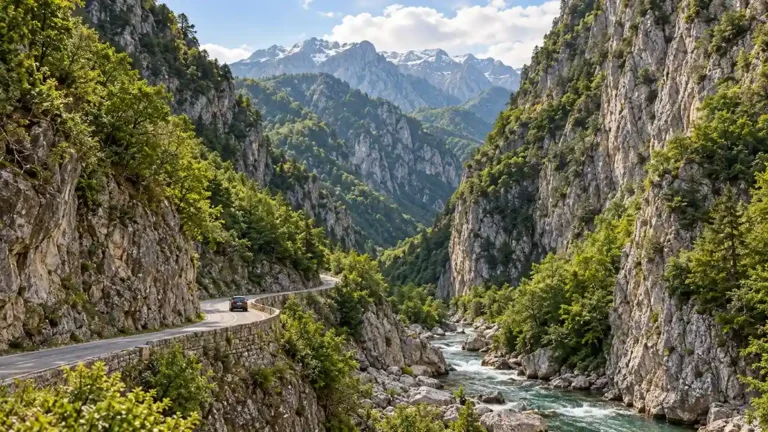
Travel directly from Sarajevo to Mostar. For most first-time visitors, the train is the most interesting option because the route follows the Neretva corridor through mountain scenery. Bus services are also available and may fit your schedule better.
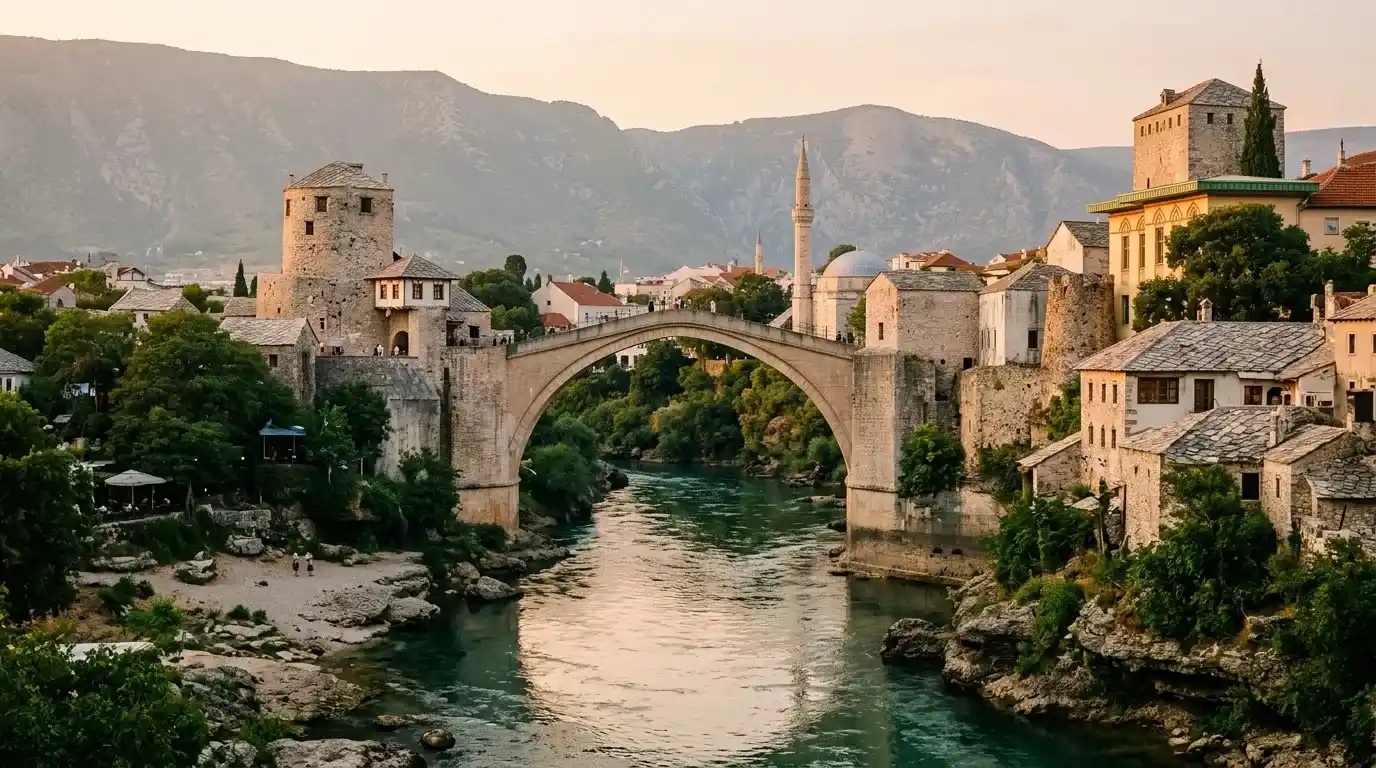
If you take the morning train, you can reach Mostar with enough time to check in and spend the afternoon around Stari Most, Kujundžiluk bazaar and the old town. There is no need to cram a second major excursion into the day.
Visit the bridge again after dark. Most day-trippers have left by then, and the old town feels completely different from the middle of the day.
For accommodation, staying in or immediately beside the old town works best for a two- or three-night visit. You can compare Mostar hotels on Trip.com. Trip.com is currently available through Travelpayouts.
Day 5 — Mostar and Blagaj
Start early in Mostar, ideally before the bridge fills with organized groups. Walk Stari Most, Kujundžiluk and the Crooked Bridge area, then leave the old town after lunch for Blagaj.
Blagaj sits about 12 km from Mostar and is built around the powerful Buna spring beneath a limestone cliff. The Blagaj Tekke, a historic Dervish complex beside the water, is the main attraction.
Importantly, Blagaj is reachable by public transport. The official Mostar Bus timetable lists Line 10: Sjeverni logor–Blagaj and Line 12: Sjeverni logor–Blagaj–Malo Polje. Schedules are limited compared with city routes, so check the current timetable before relying on the bus for the return journey.
Check the current Mostar Bus timetable.
A taxi still makes sense if your time is limited, but it is no longer accurate to say that visitors have no usable public-bus option to Blagaj.
Day 6 — Počitelj and Kravica Waterfall
Day 6 is the one day where a rental car or organized tour makes a major difference. Počitelj and Kravica Waterfall sit south of Mostar and combine naturally, but public transport does not connect the full route conveniently for a sightseeing day.
Start with Počitelj, where the old fortified settlement climbs steeply above the Neretva. You do not need half a day here; roughly an hour is enough for the main lanes, viewpoints and historic core.
Continue to Kravica Waterfall. The official site currently lists the standard adult entrance ticket at 20 KM throughout the year. Opening hours vary by season, so check the official visitor page shortly before departure.
Check current Kravica prices and opening information.
If you are comfortable driving, a rental car gives you the most control over the day. You can compare rental cars with DiscoverCars, which currently participates in Travelpayouts.
If you do not want to drive, an organized Herzegovina day tour is often simpler than arranging separate taxis. You can compare Mostar day tours on GetYourGuide. GetYourGuide is currently part of the Travelpayouts partner network.
Day 7 — Departure or Continue Your Balkan Trip
Use Day 7 according to your onward route. If you fly from Sarajevo, return the previous evening or choose transport that gives you a large buffer before the flight. Do not schedule a tight Mostar-to-airport connection on the same morning unless the timing is very comfortable.
If your trip continues into Croatia, Mostar is well positioned for onward travel toward Dubrovnik or Split. If you are continuing toward Montenegro, check the available bus or road options for your exact date rather than assuming daily frequency.
How to Get Around This 7-Day Route
Between Sarajevo and Mostar
Use the train or an intercity bus. The train is particularly attractive for the scenery, but always check the current ŽFBiH timetable because services and seasonal notes can change.
Inside Sarajevo
Walk in the old town and use trams, buses or short taxi rides for outlying sights such as the Tunnel of Hope and Ilidža. There is no reason to rent a car for your Sarajevo days.
Around Mostar
Blagaj can be reached by local bus, taxi, car or tour. Počitelj and Kravica are more convenient by car or as part of an organized excursion. This is why renting a vehicle for the entire week is not essential; you may only need one for the Herzegovina day.
Where to Stay
There is no need for a long neighborhood-by-neighborhood hotel guide inside this itinerary. For the route above, the decision is simple:
- Sarajevo: stay around Baščaršija or Ferhadija if this is your first visit. You will be able to walk to most central sights and restaurants.
- Mostar: stay in or just outside the old town if you have only two or three nights. If you have a car, confirm parking before booking.
- Jajce: only book a night if you deliberately choose the Jajce road-trip version of the itinerary.
What to Eat Without Building the Trip Around Restaurants
Bosnian food deserves attention, but the itinerary does not need a directory of individual restaurants that may change opening hours or quality. Instead, use the week to try a few core dishes:
- Ćevapi: grilled minced-meat pieces served with somun bread and onion.
- Burek and other pita: meat, cheese, spinach or potato-filled pastry.
- Begova čorba: a rich chicken and okra soup.
- Bosanski lonac: slow-cooked Bosnian stew.
- Grilled trout: especially common around Herzegovina river areas.
- Bosnian coffee: allow time for it rather than drinking it as a quick espresso substitute.
How Much Should You Budget?
A single “daily Bosnia budget” is not very useful because your largest costs depend on how you travel. Instead, price your trip by category: accommodation in Sarajevo and Mostar, intercity transport, museum and nature-site tickets, the Day 6 car/tour, food, and airport transfers.
The part most likely to change your budget is transport. A public-transport trip between Sarajevo and Mostar can be inexpensive, while a private transfer, one-way rental-car fee or organized day tour can add much more. Check those costs before deciding whether Jajce belongs in your seven days.
Best Time for This Itinerary
Spring and autumn are especially comfortable for city sightseeing. Summer gives you long days and the best chance of swimming at Kravica, but Sarajevo and Mostar can be hot and crowded. Winter is quieter and can work well for Sarajevo and Mostar, though daylight is shorter and some day-trip services operate on reduced schedules.
Do not build Day 6 around the assumption that swimming at Kravica is guaranteed. Water conditions and weather still matter even during the warmer months.
Practical Tips That Actually Matter
- Carry some cash in KM. The Tunnel of Hope explicitly does not accept cards or foreign currency, and smaller businesses may still prefer cash.
- Check transport the day before. Bosnia’s rail and bus schedules can have seasonal notes and timetable changes.
- Do not trust geography from itinerary blogs. Jajce is northwest of Sarajevo, not halfway down the route to Mostar.
- Keep arrival days light. Do not combine a long transfer with a dense museum schedule.
- Visit Stari Most early or late. Mostar is much more enjoyable outside the busiest day-trip hours.
- Check official attraction pages for current fees. Vrelo Bosne, the Tunnel of Hope and Kravica all have information that has changed from older travel articles.
Travel Insurance
For an international trip, consider whether your existing medical or travel coverage already applies in Bosnia and Herzegovina. If you are comparing policies, check medical coverage, trip interruption, rental-car exclusions and any activities you plan to do rather than choosing a policy only by price.
You can compare travel-insurance options through VisitorsCoverage, which currently participates in Travelpayouts. Read the actual policy terms before purchasing.
Frequently Asked Questions
Is this Bosnia and Herzegovina itinerary possible without a car?
Yes. Sarajevo and Mostar are easy to explore without a car, and you can travel between them by train or bus. Blagaj has local bus service. For Počitelj and Kravica, an organized day tour is usually the simplest car-free option.
Should I include Jajce in 7 days?
Include it if it is a personal priority, but understand the geography. It is not between Sarajevo and Mostar. Use it as a day trip from Sarajevo, stay overnight if driving, or add an extra day.
Is the Sarajevo–Mostar train worth taking?
Yes, particularly if the timetable fits your travel date. The route through the Neretva corridor is one of the most scenic intercity journeys in the country. Always verify the current ŽFBiH schedule.
Can I reach Blagaj by public transport?
Yes. Mostar Bus currently lists Lines 10 and 12 serving Blagaj. Check the live/current timetable because frequency is more limited than central city routes.
Is Vrelo Bosne free?
No. The current official tariff charges foreign adults 6 KM, with reduced prices for children and some other categories.
Final Thoughts — Bosnia and Herzegovina Itinerary 7 Days
The strongest Bosnia and Herzegovina Itinerary 7 Days is not the one with the most stops. It is the one that leaves enough time to understand Sarajevo, enjoy Mostar outside the busiest hours and make one well-planned Herzegovina day trip without spending half the week in transit.
For most first-time visitors, that means three nights around Sarajevo, then moving directly south to Mostar and using it as a base. Keep Jajce as an optional branch rather than pretending it lies on the southbound route. If you later return with more time, Jajce, Travnik, Trebinje, Konjic and Una National Park can form the basis of a second trip rather than being squeezed into this one.
The simplest planning rule
Sarajevo → Mostar → Herzegovina day trips. Add Jajce only when you have deliberately made room for the northwest detour.