Balkans Road Trip Border Crossing: Rules & Insurance (2026)

A Balkans road trip border crossing can be straightforward—or an expensive surprise if the rental contract, vehicle insurance and your own entry documents do not match the route. The most important question is not simply whether a road connects Croatia, Bosnia and Herzegovina, Montenegro, Albania, Serbia, North Macedonia or Bulgaria. It is whether your specific vehicle and every person inside it can legally make that crossing.
This 2026 guide separates three things that are often confused: immigration permission for travelers, permission from the rental company to take its car abroad, and compulsory motor liability insurance for the destination. It also covers Kosovo’s separate insurance arrangements, the Serbia–Kosovo entry issue, current border-delay checks, cross-border fees and practical itineraries.
The examples concern ordinary passenger cars and short tourism trips. Rules for commercial vehicles, trailers, long stays and unusual vehicle classes can differ. Recheck the linked authorities and obtain the vehicle supplier’s written approval before making a non-refundable booking.
Table of Contents
Quick Answer: Can You Drive a Rental Car Across Balkan Borders?
Yes—but not automatically. Cross-border rental driving is possible when the supplier permits the exact countries and transit route, the car carries the right documents and valid liability coverage, and each traveler satisfies the next country’s entry rules. A Green Card alone does not grant permission to drive a rented vehicle abroad.
The safest order is plan countries → check entry eligibility → request a written rental quote and country approvals → verify insurance → book. Reversing that order is how travelers end up with a cheap rental they cannot legally take from Dubrovnik to Kotor or from Tirana to Kosovo.
| Question | What to confirm before payment |
|---|---|
| May this car enter each country? | Get the approved country list in writing; ask about transit countries, vehicle category and ferries. |
| What proof of insurance is accepted? | Ask the insurer/rental company whether plate-based recognition, an International Motor Insurance Certificate or destination border insurance applies. |
| Can I enter personally? | Check nationality, passport or ID validity, visas and any Schengen days already used. |
| How will I bring the car back? | Check original-country return versus international one-way drop-off and the total price. |
| Will roads and checkpoints be usable? | Check crossing opening hours, closures, weather and live or recent official queues. |
Balkans Road Trip Border Crossing: Document Checklist
Keep originals accessible to the driver, with backup copies stored securely. Not every item below is mandatory in every country, but treating the list as a pre-departure checklist reduces uncertainty at the counter and checkpoint.
| Document | Why you may need it | Check carefully |
|---|---|---|
| Passport or eligible national ID | Passenger identity and immigration checks | Your nationality, destination and onward travel determine which document is accepted. |
| Entry visa or residence document | Permission for the next country | A Schengen visa does not automatically authorize every non-Schengen destination. |
| Full driving licence | Driver’s legal qualification | Original licence; check language, licence category and recognition. |
| International Driving Permit, if required | Translation or supplementary licence evidence | It accompanies rather than replaces your national licence. |
| Rental agreement | Identifies the authorized renter and vehicle | Names of every approved driver, dates and plate number. |
| Cross-border authorization | Supplier’s permission for the route | Countries, transit, fees and vehicle-specific restrictions. |
| Registration and insurance evidence | Proof the car is registered and insured | Keep accepted original/PDF/paper documents as advised. |
| Return plan and emergency numbers | Helps with breakdowns or unexpected closure | Roadside assistance country coverage and after-hours contacts. |
For an up-to-date general EU framework, consult the EU Your Europe driving and vehicle guidance. Country-specific documents should also be confirmed with the government or motoring organization of each destination.
Green Card Insurance in the Balkans: What It Actually Covers
The traditional “Green Card,” formally an International Motor Insurance Certificate (IMIC), proves a vehicle’s compulsory third-party liability cover under an international motor insurance system. It is not medical travel insurance, roadside assistance, collision-damage waiver or a guarantee that the rental company will cover theft, broken glass or your excess.
The Council of Bureaux administers the Green Card system and explains that 36 participating countries apply the separate Multilateral Agreement. For vehicles normally based in those participating countries, the vehicle registration plate can act as evidence of the relevant motor liability arrangement when driving between agreement territories. That means carrying a Green Card is not universally mandatory at every Balkan crossing, though insurance must remain valid.
Plate Recognition, Green Card and Border Insurance Are Different
| Insurance situation | Practical meaning | What you should do |
|---|---|---|
| Multilateral Agreement countries | Member countries recognize motor liability on the basis of the vehicle’s place of registration, within agreement conditions. | Confirm the vehicle is insured and the route is covered; do not pay for a duplicate certificate solely because you crossed a border. |
| Destination needs international certificate evidence | A valid IMIC/Green Card may need to show coverage for that territory. | Check the country code and document validity; get a certificate from the insurer when necessary. |
| Vehicle lacks accepted coverage | You may need local frontier or border liability insurance. | Arrange the correct policy before driving; a border policy does not retroactively fix a prohibited rental crossing. |
| Kosovo | Kosovo is outside the Green Card system but has specific bilateral insurance-recognition agreements. | Check the vehicle’s registration country and the Kosovo Insurance Bureau rules; do not assume every visitor pays border insurance. |
The EU states compulsory third-party insurance generally applies across the EU for EU vehicles, but the other terms of your policy can differ by country. The Multilateral Agreement also includes Bosnia and Herzegovina, Montenegro and Serbia, alongside the EU and several other European countries. Albania and North Macedonia are members of the Green Card system but are not listed among those 36 Multilateral Agreement participants. Ask about accepted proof for the specific vehicle and border rather than relying on a broad “Balkan insurance” label.
Can You Show a Green Card on Your Phone in 2026?
Yes, in the Green Card circulation area an electronically issued PDF certificate has been accepted since 1 January 2025, when the issuing national bureau supports that format. The Council of Bureaux confirms that paper certificates remain acceptable too: official announcement on electronic Green Cards. It must be a valid insurer-issued certificate, not just a screenshot of a booking or an invented document.
Keep a downloaded offline copy and, where practical, a printout. This is a sensible backup if your phone runs out of battery, an officer requests a physical document for another reason, or your rental firm issues paperwork only in print. Do not confuse PDF acceptance with insurance automatically covering every destination.
Kosovo Border Insurance: The Exception You Must Understand
Kosovo is not covered by the international Green Card system. The Kosovo Insurance Bureau (BKS) says foreign-registered vehicles may need Kosovo border liability insurance, but it recognizes specific arrangements with neighboring countries. The vehicle’s registration and evidence of qualifying coverage matter more than the driver’s nationality.
| Vehicle registered in | Current BKS-recognized arrangement | Border-insurance planning |
|---|---|---|
| Albania | Qualifying Albanian compulsory motor third-party liability insurance recognized. | Check policy validity and rental authorization; a second Kosovo policy is not automatically required. |
| Serbia | Qualifying Serbian compulsory motor third-party liability insurance recognized. | Insurance recognition does not settle Serbia–Kosovo border or rental-permission issues. |
| North Macedonia | Qualifying Green Card issued in North Macedonia recognized. | Carry/check that valid certificate and get the rental firm’s approval. |
| Montenegro | Qualifying Green Card issued in Montenegro recognized. | Confirm the certificate and country-specific supplier rules. |
| Other registration countries | Do not presume a valid European Green Card itself is valid for Kosovo. | Check BKS; if not covered by a reciprocal arrangement, buy the required Kosovo border insurance. |
If border insurance is needed, BKS lists official points of sale at border crossings and an online option. The policy covers third-party liability, not repairs to your rental vehicle. Costs vary by vehicle and duration; check the official tariff rather than quoting an old flat amount.
Special July 2026 information. BKS announced a government-funded one-month border insurance policy for certain diaspora visitors from 1 July 2026, obtained at designated physical border outlets. This is not a universal free-insurance offer for tourists or rental cars; conditions and excluded neighboring registration countries apply. Read the BKS notice.
Rental Car Cross-Border Permission: What to Ask Before Booking
A destination being legally reachable does not mean your booked vehicle is permitted to go there. Europcar’s cross-border FAQ notes that international travel frequently requires prior written consent and an appropriate package. Policies also depend on pickup branch, car group, insurance and exact destination.
- Country list: “Please confirm whether this exact car can enter Croatia, Bosnia and Herzegovina and Montenegro, including transit countries and returning to the pickup country.”
- Written proof: “Will you issue a signed permission letter or add these countries to my rental agreement?”
- Insurance: “What is the locally valid third-party liability proof for every destination? Will I receive an IMIC/Green Card if required?”
- Vehicle risk: “Are collision damage, theft, excess reduction and roadside assistance effective in all approved countries?”
- Cost: “What are the cross-border, one-way, additional-driver, ferry and after-hours charges, including tax?”
- Restricted territories: “Is Kosovo permitted? Is there a different policy for Albania or North Macedonia?”
- Changes: “If a crossing closes, can I change the approved transit route without invalidating my rental?”
Keep the reply and the final contract. A booking-platform listing is useful for comparison, but the actual supplier determines what its vehicle can do. A counter employee’s vague verbal reassurance is not a substitute for the required contract paperwork.
Compare the full rental cost
For a multi-country route, compare rental suppliers and then verify the exact cross-border policy, insurance excess, deposits and fees before checkout. Compare Balkan rental cars on DiscoverCars.
What Does a Cross-Border Car Rental Really Cost?
A daily rental quote can hide most of the cost that makes a multi-country route expensive. Rather than publishing a made-up “typical cross-border fee,” use this total-cost checklist and ask suppliers to quote it for your exact dates and car category.
| Cost component | What can change it | Budget action |
|---|---|---|
| Base rental | City, season, vehicle class, length of hire | Compare like-for-like pickup and return locations. |
| Cross-border authorization | Supplier, number and identity of countries, car group | Get total fee and approved country list in writing. |
| One-way drop-off | Different country or return branch | Price an original-country loop before accepting a fee. |
| Compulsory motor insurance | Vehicle registration and destination recognition | Confirm actual coverage; buy border insurance only where required. |
| Damage/theft excess | Deductible, exclusions, type of cover | Compare what happens if a claim occurs abroad. |
| Tolls, vignette, fuel, parking | Road choice, country, city-center restrictions | Add a separate daily running-cost allowance. |
| Border wait, late return and breakdown | Queues, opening hours, roadside assistance | Keep flexibility and emergency contact details. |
Example decision: Suppose a seven-day car quote looks cheaper than buses. Add the supplier’s permitted-country charge, possible international drop-off charge, fuel, tolls and overnight parking. Then compare that total with a circular rental plus a bus for one intercity leg. Which option is cheapest depends on the real quote—not an assumed universal cross-border fee.
Where you only need transport between major cities such as Belgrade and Sarajevo, taking the bus may remove the insurance and international-return paperwork altogether.
When a one-way rental quote looks expensive
A prebooked city-to-city transfer may be worth comparing for the occasional cross-border leg, provided the operator actually offers your route. Check transfer options with Kiwitaxi.
Balkans Border Crossing Rules by Country and Route
The following table identifies what matters most for an ordinary self-drive itinerary. It is not a claim that every rental company permits these countries. The insurer, vehicle registration country, visa rules and individual border location must all be confirmed.
| Border route | Insurance/rental check | Travel-time issue |
|---|---|---|
| Croatia ↔ Bosnia and Herzegovina | Both participate in the Multilateral Agreement, but rental-country permission still applies. | Popular coastal and inland checkpoints can queue; follow HAK and BIHAMK updates. |
| Croatia ↔ Montenegro | Both participate in the Multilateral Agreement; obtain the supplier’s specific permission. | Dubrovnik–Kotor summer congestion and coastal road traffic. |
| Bosnia and Herzegovina ↔ Serbia | Check contract and insurance validity for the registered car. | Hilly roads and multiple possible crossings. |
| Serbia ↔ North Macedonia | Check recognition of valid insurance documentation and rental permission. | Motorway traffic and international queue time. |
| North Macedonia ↔ Albania | Check valid Green Card evidence or local border cover as applicable. | Lake Ohrid corridor and mountain approach may be slower than expected. |
| Albania ↔ Montenegro | Confirm permitted destinations and accepted liability insurance. | Shkodër/Lake Skadar approaches busy in summer. |
| Albania ↔ Kosovo | BKS recognizes qualifying Albanian MTPL insurance; rental permission separately required. | Verify the specific crossing and subsequent Serbia plans. |
| Kosovo ↔ North Macedonia | BKS accepts qualifying North Macedonia Green Card under reciprocal arrangements. | Confirm the vehicle is permitted and check queue reports. |
| Bulgaria ↔ Serbia | Bulgaria is in EU/Schengen; Serbia is outside EU/Schengen. | Immigration and customs checks apply at their external border. |
A Schengen internal land crossing is a different legal situation: Croatia, Slovenia and Bulgaria belong to the Schengen area, while Bosnia and Herzegovina, Serbia, Montenegro, Albania, Kosovo and North Macedonia do not. Bulgaria became a full Schengen member on 1 January 2025, when controls at its internal land borders were lifted. That does not make a Bulgaria–Serbia or Croatia–Bosnia crossing a Schengen internal border. Council of the EU decision.
Entering or Leaving the Schengen Area by Road in 2026
The EU Entry/Exit System (EES) applies to relevant non-EU travelers at external Schengen borders, with biometric entry/exit processing. This can add time to a crossing such as Croatia–Bosnia and Herzegovina, Croatia–Serbia or Croatia–Montenegro. As of October 2026 the Croatian Automobile Club reports EES processing at these external crossings; the process and exemptions depend on the traveler’s status. Check HAK live road and border information.
Do not confuse this immigration system with vehicle insurance. A driver may have full Schengen entry eligibility but be driving a rental car not authorized to enter the next country—or vice versa. Recheck your passport/visa category, any Schengen stay limit, and the rental contract separately.
Serbia and Kosovo: A Route Direction That Can Change Your Entire Trip
If your planned loop includes both Serbia and Kosovo, plan the order of entry before booking the car. The UK government’s Serbia entry guidance explains that Serbian authorities do not treat Kosovo crossing points as conventional international-entry points. Travelers who enter Kosovo from Albania, Montenegro or North Macedonia and then try to enter Serbia directly may be refused without an earlier recognized Serbian entry stamp.
A visit Serbia → Kosovo → Serbia may be possible when the traveler already holds the required Serbian entry record, but that does not guarantee a rented vehicle will be permitted. Travelers whose itinerary would be Albania → Kosovo → Serbia should investigate a route through another country and confirm entry documentation, rather than treating the direct crossing as routine. Policies, local security conditions and checkpoints may change.
Two separate checks Immigration entry to Serbia is about the traveler and the documented route. Permission from the rental supplier and valid Kosovo motor liability coverage are separate questions. Passing one check does not solve the other.
For sightseeing context, see our Pristina travel guide; for legal border decisions, rely on current government and official motor-insurance guidance.
How to Check Balkan Border Queues and Road Closures
It is not credible to promise “15 minutes at this border” for a summer road trip. The same crossing can move quickly on a weekday morning and queue for hours around holidays. Even a supposedly quieter alternative can be limited to local traffic, have different operating hours, or be closed for roadworks.
- For Croatian borders with Bosnia and Herzegovina, Serbia or Montenegro, check HAK’s current crossing and road report.
- For roads in Bosnia and Herzegovina, consult the local motoring assistance organization, BIHAMK, and border police information as available.
- For Kosovo road-entry requirements and insurance sales points, start with the Kosovo Insurance Bureau and official local border information.
- Check the precise border name your map has selected; not all crossings accept international passenger traffic at all times.
- Keep a buffer before ferries, paid tours, airport returns or rental drop-off deadlines.
For example, HAK’s 16 October 2026 update reports disruption and changes at specific Croatia–Bosnia crossing points, illustrating why even a familiar route should be checked again on the day. Do not reproduce that day’s closure notice as if it were permanent.
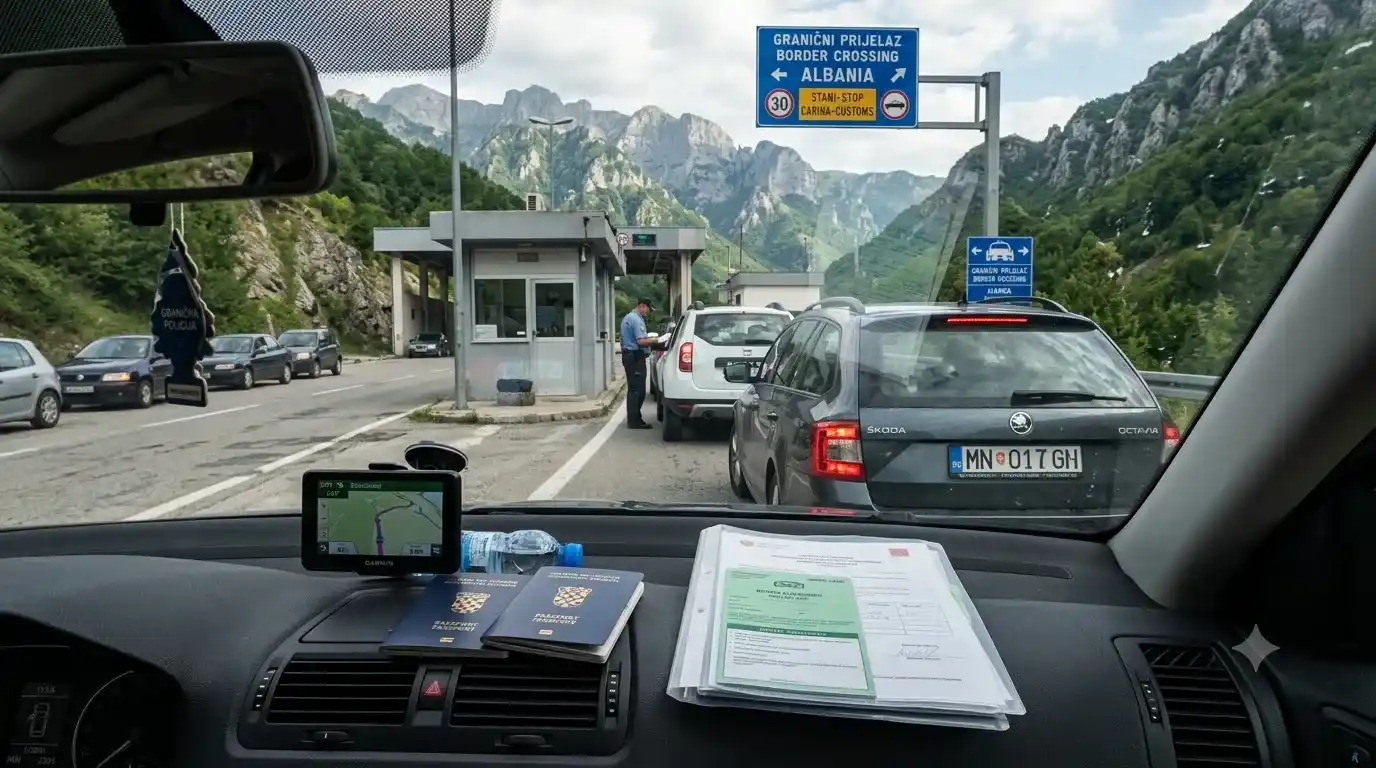
What Actually Happens at a Balkan Border by Car?
- Approach an open crossing: Follow the signposted lane for your vehicle and nationality/status; avoid freight-only and resident-only lanes.
- Present travel documents: Officials may inspect identity cards or passports of everyone in the car and assess entry conditions.
- Vehicle checks: The driver may need the registration, rental agreement, authorization, licence and insurance evidence.
- Customs questions: Declare regulated goods or currency when required; do not assume passenger and vehicle admission are the only processes.
- Insurance problem: If the vehicle lacks accepted motor-liability cover, obtain recognized border insurance where available rather than driving uninsured.
- Entry approval: Leave only when officials direct you to; do not photograph security or checkpoint personnel.
- After crossing: Check mobile roaming, motorway/vignette rules and the next country’s speed limits before resuming the drive.
Keep everyone’s documents ready but secure. Passenger checks, vehicle checks and customs can happen in different orders. Border police retain discretion to inspect luggage and verify a rental arrangement, and the process is not necessarily identical in both directions.
Passport, Visa and Driving Licence: Do Not Mix the Rules
Passports and Visas
A resident of a Schengen country may still require a visa for a separate Balkan destination depending on nationality and the entry policy. Equally, an eligible passport may permit travel in one country and not another. Check each destination’s official visa rules and any transit restrictions. A border-free Schengen internal journey is not the same thing as entering a non-Schengen state.
International Driving Permit (IDP)
Do not claim every tourist needs an IDP everywhere: acceptance depends on the issuing country of the national licence, the country of driving and often the rental company. Some licences are recognized directly; others need an IDP or certified translation. An IDP is not a replacement for the original national driving licence. Check both the local legal requirement and what the hire desk asks for.
Children, Additional Drivers and Pet Travel
Children should have the identity and travel documentation required for their own status, and families may need evidence of parental authority in particular circumstances. Every person who intends to drive must be approved under the rental contract. Pets may need microchip, vaccination and cross-border veterinary paperwork; these are separate from vehicle insurance and cannot be inferred from a tourist visa.
Road Conditions, Tolls and Parking: What Changes After the Border
Motorways, Vignettes and Fuel
Serbia, Croatia, Bosnia and Herzegovina, North Macedonia and Albania use different motorway charging arrangements. Bulgaria uses an electronic vignette for relevant road use, so check the vehicle plate and whether your rental already includes it before buying an extra one. Keep a payment card plus modest local cash, and ask the rental supplier about toll devices and any administrative fees for unpaid charges.
Mountain Roads and Winter
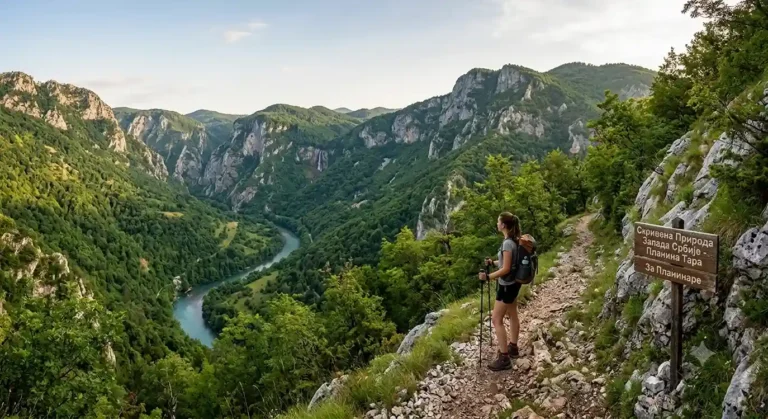
Durmitor, the Albanian Alps, Tara and other upland areas demand more time than a distance-only map suggests. Fog, rockfall, snow and unlit sections can make a planned scenic shortcut unsuitable. Different countries require winter equipment during specified periods or conditions; confirm tire and chain rules for the actual travel dates, and ask the supplier whether the vehicle will be correctly equipped.
Old Towns, Parking and Restricted Zones
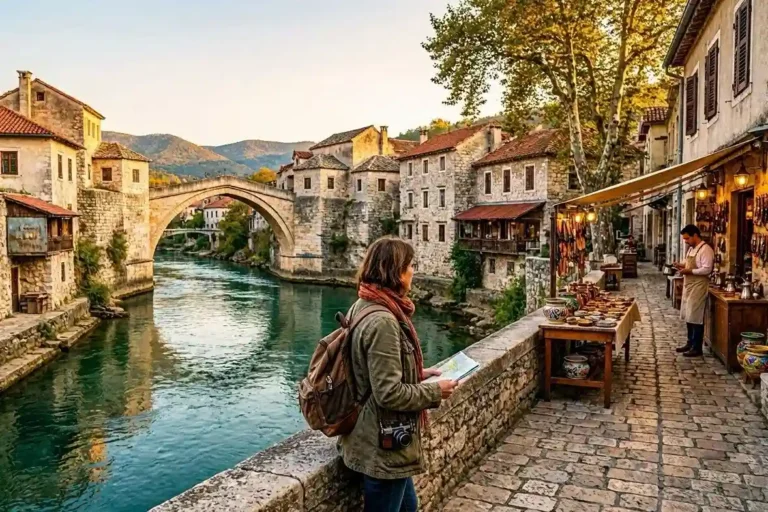
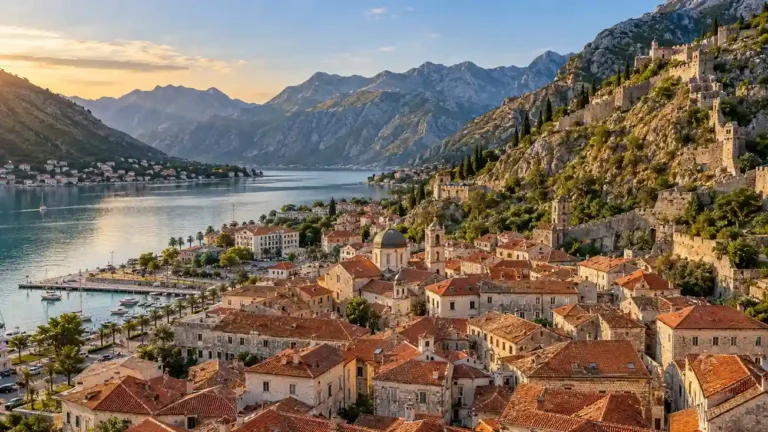
Kotor, Dubrovnik, Mostar, Sarajevo and other historic destinations are best approached with a parking plan. Do not assume a hotel inside an old town has drive-up access. Photograph the vehicle at collection and return, check parking zones, and avoid leaving luggage visible.
Choose accommodation with parking in mind
If you are self-driving, compare property locations, parking rules and cancellation conditions—not only the nightly room price. Compare accommodation on Agoda.
What if the Rental Car Breaks Down Abroad?
The rental contract should say exactly where roadside assistance operates and who authorizes repairs or towing. Before leaving the pickup country, get the international emergency number, claim procedure and the company’s instructions for accidents abroad. After a collision, follow local emergency and police directions and contact the supplier and insurer before arranging expensive repairs. Keep the police report, photos and receipts where appropriate.
Separate personal travel insurance
Medical evacuation, trip disruption and personal luggage coverage can be useful on a multi-country driving itinerary. These are not the same as the car’s mandatory liability insurance. Review travel insurance options on VisitorsCoverage.
Three Realistic Balkan Road Trip Plans With Fewer Border Surprises
These are illustrative routes, not pre-approved rentals. Each assumes that travel documents, road conditions and the supplier allow the plan. For a first international self-drive holiday, fewer crossings usually mean more time to enjoy the destinations.
Seven Days: Montenegro Loop Without an International Car Return
Route: Podgorica → Kotor Bay (two nights) → Budva/Ulcinj (one night) → Durmitor/Žabljak (two nights) → Podgorica. Stay within Montenegro if you want to avoid cross-border rental complications altogether. This also avoids trying to combine Durmitor, Bosnia and Croatia in a single rushed week.
For ideas about when weather is most suitable for coast and mountains, see the best time to visit the Balkans. Check the northern mountain roads carefully in shoulder season and winter.
Ten Days: Croatia, Montenegro and Bosnia Loop
Route: Dubrovnik → Kotor/Budva → Mostar → Sarajevo → Dubrovnik. Allow roughly two nights in Dubrovnik, three around Kotor, two in Mostar and two in Sarajevo, adjusting the final overnight for your return journey. You will make several international crossings even though the car returns to Croatia; obtain written approvals for both Montenegro and Bosnia and Herzegovina.
If the rental quote is high, compare this with our ten-day Serbia, Bosnia and Montenegro itinerary built around public transport. The road trip is more flexible, not automatically less expensive.
Fourteen Days: A North Macedonia and Albania Circuit
Route idea: Skopje → Ohrid → Berat → Gjirokastër → Tirana → Ohrid/Skopje. This gives time for a real Albanian stop rather than a border collection exercise. Obtain permission for Albania and confirm the accepted third-party liability proof for the specific registered car; do not add Kosovo or Serbia on a whim without rechecking route direction and insurance.
You can adapt the pace using our North Macedonia itinerary. If you would rather drive within only one country, the seven-day Serbia road trip demonstrates how one well-shaped national loop can be satisfying without international rental fees.
Common Balkan Border-Crossing Mistakes to Avoid
- Assuming every vehicle needs the same Green Card: Insurance recognition depends on registration territory, agreement and policy.
- Assuming Kosovo always requires purchase: BKS recognizes specific neighboring-country arrangements, subject to valid documentation.
- Assuming a Green Card makes Kosovo automatically covered: Kosovo is outside that system.
- Booking before requesting rental approval: Suppliers can prohibit a country even if its border is open.
- Mixing Schengen eligibility with non-Schengen entry: Check each passport holder’s status separately.
- Driving from Kosovo into Serbia without checking entry history: The sequence of international entry can matter.
- Underestimating international one-way fees: Returning the car abroad can change the budget.
- Assuming an IDP replaces the main licence: It normally accompanies it.
- Trusting a single dated queue estimate: Check official crossing reports on travel day.
- Driving a rural shortcut after dark: Mountain roads and limited lighting can make a short route unsafe.
- Confusing travel insurance with vehicle liability: Medical/trip cover does not satisfy compulsory motor-insurance requirements.
FAQ: Balkan Road Trip Border Crossings in 2026
Can I rent a car in Croatia and drive to Montenegro?
Often yes with an approved supplier, but ask for written permission, the appropriate insurance proof and the total cross-border fee. A valid highway crossing does not automatically make the rental contract valid there.
Do I always need a Green Card in Bosnia and Herzegovina?
No universal paper-card rule applies to every foreign vehicle. Bosnia and Herzegovina participates in the Multilateral Agreement; recognition depends on the registration country and valid motor insurance. The rental agreement is a separate requirement.
Is a digital Green Card valid in 2026?
An official electronic PDF IMIC is accepted across the Green Card circulation area when properly issued by an eligible insurer/national bureau. Paper remains accepted, and an offline backup is wise.
Do I need insurance when driving a rental car into Kosovo?
Yes, the car needs valid Kosovo-recognized motor liability cover. Depending on its registration country and recognized agreements, a separate purchased border policy may or may not be needed. Also obtain rental supplier permission.
Can I enter Serbia from Kosovo after arriving in Kosovo from Albania?
This can be problematic for foreign travelers without an eligible prior Serbian entry stamp. Consult the current Serbian entry guidance and consider a recognized international entry route via another country.
Does an EU rental agreement allow travel throughout the Balkans?
No. EU insurance rules, Schengen immigration rules, and the rental supplier’s list of permitted countries are different. Non-EU destinations may be restricted even when they are close to an EU pickup city.
How many minutes should I allow for a border crossing?
There is no dependable fixed duration. Allow substantial flexibility for summer weekends, holidays and Schengen external entry processing, and use official live reports before departure.
Can I return a rented car in a different Balkan country?
Only if the supplier and locations permit an international one-way rental, often with a substantial extra fee. A circular route or bus connection may be cheaper.
Does travel insurance replace Green Card motor coverage?
No. Personal travel insurance addresses medical and trip-related risks subject to its policy, while the compulsory motor liability cover addresses injury or damage caused to third parties by a vehicle.
Can I cross with just a passport photo and digital rental booking?
Do not depend on photos alone. Bring your original required travel and driving documents, plus the supplier-issued registration, authorization and accepted insurance paperwork. Keep copies as backups.
Final Checklist Before Driving Across a Balkan Border
- Write down every country you will enter, even when it is only a short transit.
- Confirm visas or visa exemptions for all passengers and check passport/ID validity.
- Confirm all drivers and the route with the actual rental supplier; obtain written permission.
- Check compulsory liability recognition for the car’s registration country, including Kosovo where relevant.
- Carry registration, contract, national licence, IDP if required, authorization and insurer-issued evidence.
- Price cross-border permission, separate insurance, one-way return, tolls and parking in advance.
- Recheck the exact border crossing, operating hours, live traffic and local road conditions.
- Protect buffer time before flights, ferries, check-in deadlines and the rental return.
- Keep roadside-assistance numbers and copies of important documents available offline.
Reliable Official Sources for Updates
- Council of Bureaux: Green Card and Multilateral Agreement — membership and plate-based recognition.
- Council of Bureaux: electronic Green Card PDF acceptance — 2025 change.
- Kosovo Insurance Bureau: border insurance and reciprocal arrangements — Kosovo-specific vehicle cover.
- UK government: Serbia entry requirements — Serbia–Kosovo route caution.
- Croatian Automobile Club (HAK): live traffic and border reports — crossing delays and closures.
- Europcar: written cross-border approval — example of supplier-specific rules.
- Council of the EU: Bulgaria and Schengen land-border changes — effective 2025.
Final Thoughts: Border Crossings Should Shape the Route, Not Ruin It
A successful Balkans road trip border crossing rests on four separate checks: traveler entry permission, rental-car approval, country-valid motor liability insurance and up-to-date checkpoint conditions. Most surprises happen when one of these is mistaken for another.
For a first trip, choose a practical loop, minimize unnecessary border crossings and use a car when it genuinely helps with coastlines, mountain villages and national parks. The shortest map route is not always the easiest legal or financial route. A slightly simpler itinerary usually buys more time for the places you came to see.