Best Time to Visit the Balkans: Seasons & Months (2026)

The best time to visit the Balkans depends on whether you want to swim in the Adriatic, hike high mountain passes, explore historic cities, or keep costs down. For a first multi-country trip, May, June, and September are often the most practical starting points. But a month that works beautifully for Dubrovnik or Sarajevo may be too early for a high-altitude trek in the Albanian Alps.
The region stretches from the Mediterranean-influenced coasts of Croatia, Montenegro, and Albania to the inland climates of Serbia, Bosnia and Herzegovina, North Macedonia, Bulgaria, and Kosovo, plus the alpine terrain of Slovenia and northern mountain ranges. Weather, transport services, crowd levels, and even what counts as “in season” change sharply within the same country.
This guide compares all twelve months, explains how to choose between coast, cities, and mountains, and gives season-specific itinerary ideas. It focuses on travel planning rather than promising exact weather: seasonal patterns help you decide when to book, but forecasts, park notices, transport timetables, and hotel rates still need checking for your dates.
Table of Contents
Quick Answer: When Should You Visit the Balkans?
Choose May or September for cities, scenic road trips, and generally lighter crowds. Choose June if you want beaches as well, but check snow on high hiking routes. Choose July or August for the broadest summer mountain access and lively resorts, while accepting greater coastal demand. Choose December to February for winter experiences, not summer-style island hopping.
| Your main goal | Strongest planning window | Important exception |
|---|---|---|
| Beach swimming and islands | Late June–September | September can still be pleasant; ferries and beach businesses taper off later |
| Historic cities and culture | April–June, September–October | Inland summer afternoons can be very hot |
| High-altitude hiking | Late June–September | Snow, storms, and hut schedules vary by route and year |
| Lower-elevation nature walks | April–October | Rain, flooding, heat, and trail closures still matter |
| Better-value coastal stays | May–June, September–early October | A cheaper room does not guarantee an open beach service |
| Skiing and snow sports | Generally January–March | Resort conditions depend on snowfall and operations |
If your calendar is fixed, adapt the destinations rather than trying to force every activity into the same month. A November city break in Sarajevo or Plovdiv can be rewarding even when summer-only mountain transfers have stopped. An August trip can work well if you emphasize mountains and schedule city sightseeing outside the midday heat.
Why the Balkans Have More Than One Travel Season
A broad “Balkans weather forecast” cannot describe a coastline, inland capital, and 2,000-metre mountain trail at once. The Adriatic and Ionian coasts usually experience hot, dry summers and wetter winters; inland cities can have warm-to-hot summers and genuinely cold winters; and the mountains can experience snow, sudden thunderstorms, and low temperatures well outside winter.
| Region | Main seasonal pattern | Why it changes your plans |
|---|---|---|
| Croatian, Montenegrin and Albanian coasts | High summer beach demand; quieter spring and autumn | Prices and sailing schedules may shift markedly after summer |
| Inland cities: Belgrade, Sarajevo, Sofia, Skopje | Good city walking in spring and autumn; hot spells in summer | Sightseeing hours and air-conditioning matter more than beach weather |
| Albanian Alps and Montenegro high mountains | Main high-route season often summer into early autumn | Snow can block passes even when valley roads are usable |
| Slovenian Julian Alps and Bulgaria high ranges | Altitude-dependent mountain season; winter sports in colder months | Technical trails require current conditions and appropriate experience |
| Lake Ohrid and Lake Prespa region | Useful spring to autumn sightseeing, cooler at elevation | Lakeside relaxation and alpine hiking have different windows |
For example, Montenegro’s tourism authority describes mountain hiking mainly from June to October, while coastal hiking can begin much earlier. Triglav National Park documents dramatic differences in snow-cover duration between valleys and upper elevations. These are useful checks against the common claim that all Balkan hiking is safe from May through October.
Best Time to Visit the Balkans: Month-by-Month Comparison
The table is a qualitative seasonal planning guide, not measured price data or a forecast for a particular year. “Crowds” mainly refers to popular holiday destinations; local festivals, school holidays, and special events can produce exceptions.
| Month | Where it works best | Main limitation | Crowd / value pattern |
|---|---|---|---|
| January | Ski areas; museums and winter city breaks | Snowy roads; reduced coastal and mountain services | Quiet cities, ski-area premiums |
| February | Winter sports; Zagreb, Sofia, Sarajevo city visits | Cold, short days; variable snow reliability | Mostly low outside winter resorts |
| March | City breaks, cafés, lower valley walks | Unsettled weather; high mountain snow | Often budget-friendly |
| April | Sarajevo, Mostar, Tirana, Belgrade, Plovdiv | Rain; early-season ferry and trail limits | Generally below peak crowds |
| May | Coastal sightseeing, road trips, historic cities | Sea may feel cool; high passes may be unsafe | Excellent mixed-trip value |
| June | Early beach holidays, lakes, cities, many nature walks | Some high trails retain snow; growing demand | Moderate rising to busy |
| July | Swimming, festivals, established mountain routes | Coastal prices, heat and crowding | High season |
| August | Warm-sea holidays and summer mountain trips | Peak coast demand, traffic, heat | Often busiest coastal month |
| September | Beaches, road trips, city walks, many high trails | Later-season services and storms need checking | Excellent balance for many trips |
| October | Historic cities, foliage, lower trails | Shorter days, rain, early mountain snow | Quieter; good city value |
| November | Museums, food, quieter capitals | Wet weather; reduced coastal services | Often inexpensive outside events |
| December | Festive cities and early ski travel | Winter roads and uncertain early-season snow | Holiday spikes in popular locations |
A “good month for hiking” means there are suitable hikes somewhere in the region—not that every mountain trail is open. A “cheap month” refers to typical demand, not a guarantee: flights, festivals, and limited winter services can reverse the apparent savings.
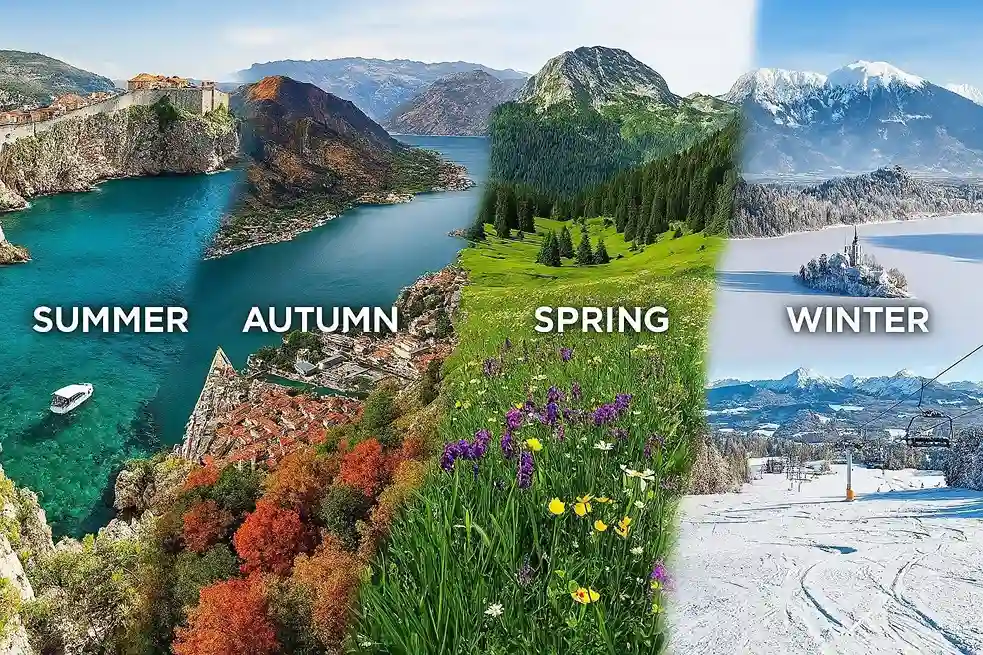
Spring in the Balkans (March to May): Best for Cities and Green Landscapes
March: a city-break month, not a mountain-pass month
March can be appealing in Sarajevo, Belgrade, Sofia, Tirana, and other cities if you prefer cafés, markets, museums, and shorter lines. Expect changeable weather and pack a warm layer plus waterproof protection. Spring-like afternoons can alternate with cold rain, particularly inland. Ski resorts may still operate, but snowfall and opening dates are not fixed.
April: good for sightseeing and lower-altitude outdoors
April is often a strong choice for walking historic centers in Mostar and Sarajevo, visiting Tirana and Berat, or exploring Plovdiv’s Old Town. Rivers and waterfalls can be impressive after seasonal precipitation, but that same rain can raise water levels and make some paths muddy or slippery. Plan nature stops conservatively rather than assuming every trail is open.
May: perhaps the best month for a first multi-country trip
May offers long sightseeing days, lively towns, and often attractive accommodation choices before the busiest summer beach period. A Croatia–Bosnia–Montenegro city-and-coast route is a particularly good fit: prioritize Dubrovnik or Split for sightseeing, Sarajevo and Mostar for cultural visits, and Kotor for bay views. Swimming is optional rather than the reason for the trip.
The main trap is treating green valleys as evidence that nearby alpine passes are clear. Valbona and Theth may look springlike while the upper crossing remains snowy or hazardous. If hiking is central to your itinerary, use the Valbona Valley hiking guide for route context and obtain a recent local trail report, not just a calendar recommendation.
Summer in the Balkans (June to August): Beach Season and High-Mountain Opportunities
June: the most flexible early-summer month
June is a strong compromise for travelers who want a mix of historical sites, coast, and lakes. Croatia’s Dalmatian coast, Montenegro’s Bay of Kotor, and Albania’s southern Riviera generally become more attractive for swimming as the month progresses. Early June seas may still feel cool to some travelers, especially farther north. Hotel and ferry demand rises toward late June.
June is also a transition month in the high mountains. A well-maintained valley walk may be reasonable while high crossings still require snow equipment or remain unsuitable. Check route-specific snow reports, especially early in June and after a colder spring.
July: best for a classic beach holiday, less comfortable for inland cities
July brings longer beach days, active coastal businesses, and a busy calendar of outdoor events. Book accommodation early in Dubrovnik, Split, Budva, Kotor, Ksamil, Sarandë, and the more sought-after island destinations. Consider morning city walks, midday indoor breaks, and evening sightseeing during hot spells in Belgrade, Skopje, Tirana, and Sofia.
For hikers, July often offers more opportunities in Durmitor, Prokletije, the Julian Alps, and the higher ranges of Bulgaria. It does not remove the risk of thunderstorms, strong winds, or sudden temperature changes. Early starts and a route-specific weather check are essential.
August: ideal for warm water, but expect peak demand
August is especially attractive to travelers who want the warmest coastal atmosphere, swimming, and summer nightlife. It can also be one of the most expensive and crowded times for popular Adriatic destinations. To reduce costs, consider a few nights inland, smaller towns, or a mountain-based trip rather than moving between premium coastal resorts every two days.
Remember that August is not a guaranteed fair-weather month in the mountains. Afternoon storms can still disrupt exposed ridges and water activities. If your trip is mainly cultural, you may find September much more pleasant.
Coastal accommodation can vary enormously between mid-May and August; check refundable options and the total stay cost before choosing the country. Compare accommodation on Agoda. Compare total prices and conditions for your actual dates.
Autumn in the Balkans (September to November): Best Balance for Many Travelers
September: the best all-round choice for coast, cities and many hikes
September often offers the most versatile trip: coastal water retains much of its summer warmth, cities become easier to explore on foot, and many hotels face less demand after the main holiday period. This is especially useful in Croatia, Montenegro, southern Albania, Bosnia and Herzegovina, and North Macedonia. An early September departure is often easier for summer transport connections than a late-October one.
For perspective, a 1996–2025 compilation of Croatian coastal observations reports a September mean around 23°C across six long-running measurement stations; that is a historical benchmark, not a forecast for every beach or year. See the station-based data and methods. Wind, local currents, and rain still affect how comfortable swimming feels.
October: stronger for city breaks and foliage than beach guarantees
October can be lovely around Sarajevo, Mostar, Ljubljana, Skopje, Plovdiv, Ohrid, and inland Croatia. Daylight shortens, weather becomes less settled, and mountain conditions can deteriorate quickly. Southern coastal days may still be mild, but planning an October trip around guaranteed swimming, every island ferry, or a high alpine crossing is risky.
November: choose culture and convenience
November works best for travellers who are happy with cultural activities, food, museums, and local cafés. It is usually not the first choice for remote hiking routes or summer coastal services. Accommodation may be relatively affordable, but reduced ferry frequency and transport alternatives can erase those savings for a complex island itinerary.
Choose September if swimming, summer-season ferries, or mountain guesthouses matter. Choose October if quiet cities, autumn scenery, and slower cultural travel are the priorities—and check weather and access before every nature day.
Winter in the Balkans (December to February): Cities, Snow and Shorter Days
Winter rewards a different style of trip. Slovenia, Bulgaria, Serbia, and Bosnia and Herzegovina have mountain areas with ski operations, while cities such as Zagreb, Ljubljana, Sarajevo, Belgrade, and Sofia can be enjoyable for museums, restaurants, and seasonal events. A mountain resort can be expensive while a nearby city is comparatively quiet; never assume winter equals the lowest prices everywhere.
Snow conditions and lift operations vary by elevation, snowfall, and the specific winter. For skiing, check an individual resort’s official snow and lift report before booking non-refundable accommodation. For winter roads, consider daytime driving and winter-equipment rules in each country. Some scenic mountain roads and hiking paths may be impassable without specialist skills.
December also includes holiday travel spikes. January or February can bring more reliable midwinter conditions than early December in some resorts, but nothing is guaranteed. Beach towns can be beautifully quiet, yet many tours, coastal restaurants, and island transport services run reduced winter schedules.
Best Time to Visit the Balkans for Beaches and Island Hopping
The main beach season on the Adriatic and Ionian coasts generally centers on late June to early September, with June and September offering attractive alternatives to peak summer. Greece’s northern mainland and nearby islands can fit a wider Balkans itinerary, but this guide prioritizes the destinations covered by BalkanTripGuide: Croatia, Montenegro, and Albania.
| Coast | Best practical window | Shoulder-season trade-off |
|---|---|---|
| Croatia: Dalmatia and islands | June–September | September often swims well; some boat services become less frequent afterward |
| Montenegro: Budva, Ulcinj, Bay of Kotor | June–September | Kotor is primarily a bay-and-old-town destination, not just a sandy-beach base |
| Albania: Himarë, Dhërmi, Sarandë, Ksamil | June–September | Some seasonal businesses wind down later in autumn |
| Bulgaria: Black Sea | Late June–early September | Sea warmth and resort activity are more reliable in high summer |
For a calmer southern Albanian beach trip, June or September can be better than August. If choosing between two popular bases, compare the practical differences in the Ksamil versus Himarë guide rather than relying on country-level weather alone.
Island-hopping adds a separate timing constraint: boat frequency can be seasonal even when the weather is pleasant. For Croatia, confirm the exact ferry and catamaran operator schedule for every leg. For Montenegro and Albania, distinguish short tourist boat excursions from genuine intercity services; they are not interchangeable.
The range of operating departures changes by destination and month. Check what is actually offered for your dates rather than assuming every summer activity runs through October. Browse activities on GetYourGuide. Compare total prices and conditions for your actual dates.
Best Time to Visit for Hiking: Valleys versus Alpine Passes
Hiking requires the clearest distinction of all. “The mountains are open” is not a meaningful statement unless you identify the trail, altitude, snow cover, exposure, and whether huts and transfers operate. A scenic lakeside walk can be feasible in April while a nearby 2,000-metre pass remains unsafe.
| Hiking area | Commonly practical period | Do not assume |
|---|---|---|
| Theth–Valbona high crossing, Albania | Usually summer to early autumn, conditions permitting | May is safe simply because guesthouses are open |
| Durmitor / Prokletije, Montenegro | Generally June–September; some routes into October | A forecast in Žabljak describes all summits |
| Triglav / Julian Alps, Slovenia | Main high-trail period often summer | All huts and passes remain accessible in spring or late autumn |
| Rila / Pirin higher summits, Bulgaria | Mainly summer into early autumn | Valley forecasts apply to ridge weather |
| Galičica / Pelister, North Macedonia | Varies by trail and elevation | Every trail around the lakes is an easy lakeside path |
| Lower hills and coastal routes | Spring or autumn can be preferable | There are no closures, storms or fire restrictions |
Montenegro’s tourism site explicitly distinguishes an earlier coastal walking season from a later mountain trekking season. For Albania, check real-time conditions on the pass and transportation through Shkodër; our Tirana to Theth bus guide explains why seasonal connections need careful confirmation.
In North Macedonia, higher hikes such as Magaro and routes toward Pelister’s Golemo Ezero are materially different from gentle shoreline strolls. Read our Lake Prespa hiking routes and difficulty guide before choosing a route. Never enter a snow-covered or exposed alpine area based only on a seasonal blog recommendation; use the park authority and a qualified local guide where necessary.
Check the precise trail status, forecast at elevation, daylight hours, refuge or cable-car availability, and emergency plans. If any of these are uncertain, choose a lower route. Summer is a planning advantage, not a guarantee of safety.
Best Time for Balkan Cities, Cultural Trips and Road Travel
April–June and September–October are often the easiest months for exploring urban neighborhoods on foot. Old towns in Dubrovnik, Kotor, Mostar, Berat, and Sarajevo can become more comfortable and less crowded outside peak summer, while inland capitals may have scorching afternoons in July or August.
Road trips add another consideration: a clear main highway does not guarantee that the high mountain road or viewpoint you want is accessible. May, June, and September are reasonable choices for many cross-country itineraries, but winter routes through mountain areas deserve far more contingency planning. Some border crossings, rental contracts, and transport services have restrictions unrelated to the weather.
For a geographically coherent car-free route, the Balkans itinerary without a car offers alternatives for seven, ten, and fourteen days. If self-driving, the seven-day Serbia road trip is a useful late-spring-to-autumn example with manageable stops.
Compare vehicles, deposits, and cross-border permissions before committing to a route, particularly if you are visiting multiple countries or mountainous regions. Compare rental cars on DiscoverCars. Compare total prices and conditions for your actual dates.
Best Time to Visit Each Balkan Country
These recommendations describe a typical first-time leisure trip, not a promise that every attraction in a country operates during the same months. A coastal holiday, city break, and high-altitude trek may each need a different answer.
| Country | Good all-round months | Where a different season wins |
|---|---|---|
| Albania | May–June, September | July–August for beaches; summer for high Albanian Alps trails |
| Bosnia and Herzegovina | April–June, September–October | Winter for mountain and ski experiences |
| Bulgaria | May–June, September | July–August for Black Sea resorts; winter for skiing |
| Croatia | May–June, September | July–August for maximum island and beach activity |
| Kosovo | May–June, September | Summer for some higher mountain hikes |
| Montenegro | May–June, September | Summer for high Durmitor routes and beaches |
| North Macedonia | May–June, September | Mid-summer for lake holidays; high hikes depend on conditions |
| Serbia | April–June, September–October | Winter for ski resorts and festive cities |
| Slovenia | May–June, September | Summer for Julian Alps high routes; winter for skiing |
For a trip focused on North Macedonia, a ten-day itinerary can work very well in late spring or September, but any higher mountain day still requires a separate forecast and current park guidance. Bulgaria also offers a useful alternative in its seven-day Sofia–Rila–Plovdiv itinerary; choose the Black Sea variation if beaches are more important than inland culture.
When Are Balkan Travel Costs Lowest?
For many coastal destinations, July and August place the greatest pressure on accommodation budgets. Late spring and September often offer a better balance of usable attractions and prices. November through March may be cheaper in some cities, but skiing areas and festive dates can be expensive, while reduced ferry or bus service may increase the cost of getting around.
It is more useful to compare the total cost of your exact trip than to call a single month “the cheapest.” A low-priced hotel can be offset by an expensive flight, few bus departures, long airport transfers, a rental car required by closed services, or extra days waiting for a seasonal connection.
| Planning choice | Potential saving | What might offset it |
|---|---|---|
| September instead of August coast | Lower room demand and lighter crowds | Some excursions and seasonal routes reduce frequency later |
| May instead of July city break | More comfortable walking and sometimes cheaper stays | Swimming and high alpine hikes may not be realistic |
| November city trip | Fewer leisure visitors and possible lodging deals | Rain, short days, winter travel disruptions |
| Winter ski trip | Not necessarily a saving | Lift passes, equipment and resort rooms can be pricey |
| Slow one-country itinerary | Fewer border transfers and transit days | Longer hotel stays still need a workable budget |
Use the separate Balkans travel budget guide for planning daily spending; this page focuses on choosing the travel month. For comparing destinations by cost, see our cheapest Balkan countries comparison. These guides answer different questions and work best together.
Three Practical Multi-Country Itineraries by Season
May: 10 days of coast and culture, without relying on beach weather
Suggested route: Dubrovnik (2 nights) → Mostar (2 nights) → Sarajevo (3 nights) → Kotor (2 nights), departing on Day 10. This is a 10-day, 9-night outline, not ten full sightseeing days. It prioritizes old towns, local food, viewpoints, and walking rather than island swimming. Check bus and border timetables before fixing the accommodation nights.
The key trade-off is transfer time. Dubrovnik–Mostar, Mostar–Sarajevo, and Sarajevo–Kotor require meaningful travel allowances; none should be advertised as a quick stop between two full sightseeing days. If your final flight is early, move the ninth night nearer your departure airport.
July or August: 8 days of southern Albania and Montenegro
Suggested route: Tirana (1 night) → Himarë or another southern Albanian coastal base (3 nights) → Shkodër (1 night) → Ulcinj (2 nights), departing on Day 8 if your airport transfer permits. The route involves long travel legs and is most convenient with a carefully planned car or pre-checked bus network; it is not intended as a comfortable daily-change itinerary.
For a slower alternative, stay in a single Albanian Riviera base for most of the week and leave the cross-border trip for another holiday. High summer is not the best moment to race through multiple crowded coastal cities.
September: 9 days of Serbia, Bosnia and Montenegro
Suggested route: Belgrade (2 nights) → Sarajevo (3 nights) → Mostar (2 nights) → Kotor (1 night), with departure on Day 9. Eight nights across nine calendar days allow a little more time for cities than a four-country sprint, though there are still three long intercity transfers. Extend Kotor to two nights if you can add a tenth day.
This matches the logic of our Serbia–Bosnia–Montenegro itinerary: keep the geography contiguous and avoid pretending that a border-transfer day offers unlimited sightseeing. September is attractive here because you can enjoy walking days in cities and finish with the coast.
Balkan Festivals, School Holidays and Seasonal Transport
Festival dates, school holidays, and local public holidays can change both crowd levels and accommodation prices in a single city. A normally quiet month may have unusually expensive weekends if a major concert, sports event, or national holiday overlaps your stay. Check official festival calendars and the accommodation inventory before assuming a broad regional season describes your exact dates.
Transport also follows its own calendar. Island ferries, coastal excursions, national park shuttles, mountain minibuses, ski lifts, and seasonal cross-border links may run differently by month or weekday. Confirm the final departure of the day and have a backup for remote places such as Theth, Valbona, Durmitor trailheads, or smaller islands. The absence of a service on your preferred day can matter far more than a few degrees of temperature difference.
Flight prices and airport connections sometimes change the best-value choice more than hotel seasonality. Compare practical arrival and departure cities before committing to an open-jaw Balkan itinerary. Check flights on Trip.com. Compare total prices and conditions for your actual dates.
What to Pack by Season
| Season | Useful clothing and equipment | Extra check |
|---|---|---|
| Spring | Walking shoes, waterproof outer layer, warmer evening clothes | Trail mud, rainfall, changing weather |
| Summer coast | Breathable clothes, hat, sunscreen, swimwear, refillable bottle | Heat warnings, shade, boat weather |
| Summer mountains | Boots suitable for the route, layers, waterproof jacket, navigation | Snow patches, storms, guide and hut availability |
| Autumn | Layers, rain shell, comfortable footwear, power bank | Short daylight, changing ferry and bus schedules |
| Winter | Insulated outerwear, warm footwear, gloves, suitable winter equipment | Road rules, resort operations, snow and ice |
A coast-and-mountain trip needs two clothing systems even in midsummer. The outfit that suits an August afternoon in Budva will not provide adequate protection on an exposed summit. Pack for the most demanding part of your itinerary, not simply for the beach photographs in the destination brochure.
Common Mistakes When Choosing When to Visit the Balkans
- Planning alpine passes in May just because spring weather has arrived in the valleys.
- Assuming June and September offer exactly the same swimming conditions at every beach.
- Booking multiple islands or remote mountain stays without checking seasonal transport.
- Treating the lowest hotel price as the lowest overall trip cost.
- Overloading a ten-day itinerary with four countries and no proper travel days.
- Ignoring inland city heat and scheduling long midday walking tours in August.
- Assuming “ski season” guarantees snow, open lifts, and road access.
- Choosing October for a beach-focused trip with no indoor alternatives.
- Copying last year’s festival dates or mountain shuttle timetable without confirmation.
- Failing to check travel insurance coverage for hiking, skiing, or adventure activities.
Frequently Asked Questions
What is the single best month to visit the Balkans?
September is often the most versatile month for combining coastal sightseeing, cities, and some mountain activities. May is excellent for culture and scenic routes, and June is attractive when beaches matter. There is no single best month for every trip.
Is May warm enough for swimming in the Balkans?
Some travelers swim in May, particularly at sheltered southern beaches, but sea temperatures can still feel cool. If warm-water swimming is your priority, late June through September is a more dependable planning window.
Is September too late for Croatia and Montenegro?
No. September often offers pleasant coastal conditions and lower demand than August. Some routes, tours, and beach services start reducing operations as autumn progresses, so confirm the exact schedule for your chosen island or resort.
Can I hike from Theth to Valbona in May?
Do not assume so. High sections may remain snow-covered or hazardous in May and sometimes into June. Check up-to-date trail conditions and local expert guidance; choose lower valley hikes if the pass is not suitable.
When are Balkan countries cheapest to visit?
Many city destinations can be cheaper outside summer, especially in parts of autumn, winter, and early spring. Coastal areas often offer better value in May or September than in July or August, but ski resorts and holiday events can be exceptions.
Which Balkan countries are best in October?
Bosnia and Herzegovina, Serbia, Bulgaria, North Macedonia, and many inland areas of Croatia and Slovenia can work well for culture and city breaks. Outdoor activities should be adjusted to the forecast, especially at higher elevations.
Is winter a bad time to visit the Balkans?
Not if you want winter city breaks, skiing, or seasonal events. It is a less convenient period for summer-style island hopping or casual high-mountain hiking, and transport may operate less frequently.
How far ahead should I book for July and August?
Start comparing options as early as practical for high-demand Croatian islands, Dubrovnik, Budva, Kotor, and Albania’s popular beaches. There is no universal deadline: book according to refund conditions, dates, and demand for the specific destination.
Sources, Method and Last Review
Last editorial review: 16 October 2026. Seasonal recommendations are editorial guidance based on regional geography, official park and tourism information, historical coastal observations, and practical transport considerations. Qualitative statements about crowding or cost are not presented as precise measurements or live hotel prices.
- Montenegro national tourism organisation: hiking and trekking seasons. Distinguishes coastal and higher-mountain windows.
- Triglav National Park: climate and snow cover. Explains elevation-dependent snow and precipitation.
- Albanian National Tourism Agency: Valbona River Valley. Background for mountain tourism season.
- Croatian coastal sea-temperature record: September station averages. Historical observations, not a forecast.
Final Verdict: Which Month Should You Choose?
For most first-time visitors, the best time to visit the Balkans is May, June, or September, with September the strongest all-round choice for travelers seeking coast, cities, and moderate crowds in one trip. Choose May for old towns, green scenery, and cultural routes. Choose late June through August for the fullest beach holiday experience and many alpine hiking opportunities. Choose October for quieter cities and autumn landscapes—not as a promise of swimming or snow-free passes.
Instead of trying to find one perfect season for the entire peninsula, choose your main activities first, then match each destination to its own conditions and operating schedule. A well-planned trip with two or three compatible stops is more enjoyable than a long list of famous places linked by difficult seasonal transfers.